Baby product development and juvenile product design
What is baby product development?
Baby product development for founders and brands: feeding, sleep, travel, safety and nursery products designed around CPSC juvenile-product rules, ASTM standards and the reality of exhausted parents using them one-handed at 3am.
Baby and juvenile product development is engineering under mandatory safety rules: CPSC durable infant product standards, ASTM juvenile specifications, CPSIA third-party testing and registration cards. LANPDT designs to the applicable standard from the first concept, builds test-ready prototypes, and hands over a factory package with the compliance path written into it.
Baby product development is the design and engineering of juvenile products - feeding, sleep, carriers, travel gear, monitors and nursery hardware - under children's-product safety regulation, with materials and mechanisms chosen for infant safety, cleanability and one-handed parent use.
Juvenile products in the US fall under CPSC durable infant and toddler product rules, which layer mandatory ASTM standards, third-party testing, tracking labels and registration cards on top of ordinary consumer development.
That regulatory floor is not optional and not cheap - which is exactly why the design decisions that determine testing scope need to be made deliberately in the first month.

Certified B Corp
Independently verified standards of social and environmental performance.

FDA-registered facility
Registered for device work, with the process discipline that comes with it.
- years developing physical products
- 10+years developing physical products
- projects taken from idea to build
- 1,000+projects taken from idea to build
- design, prototyping and short-run production
- In-housedesign, prototyping and short-run production
Products that pass testing and survive parents
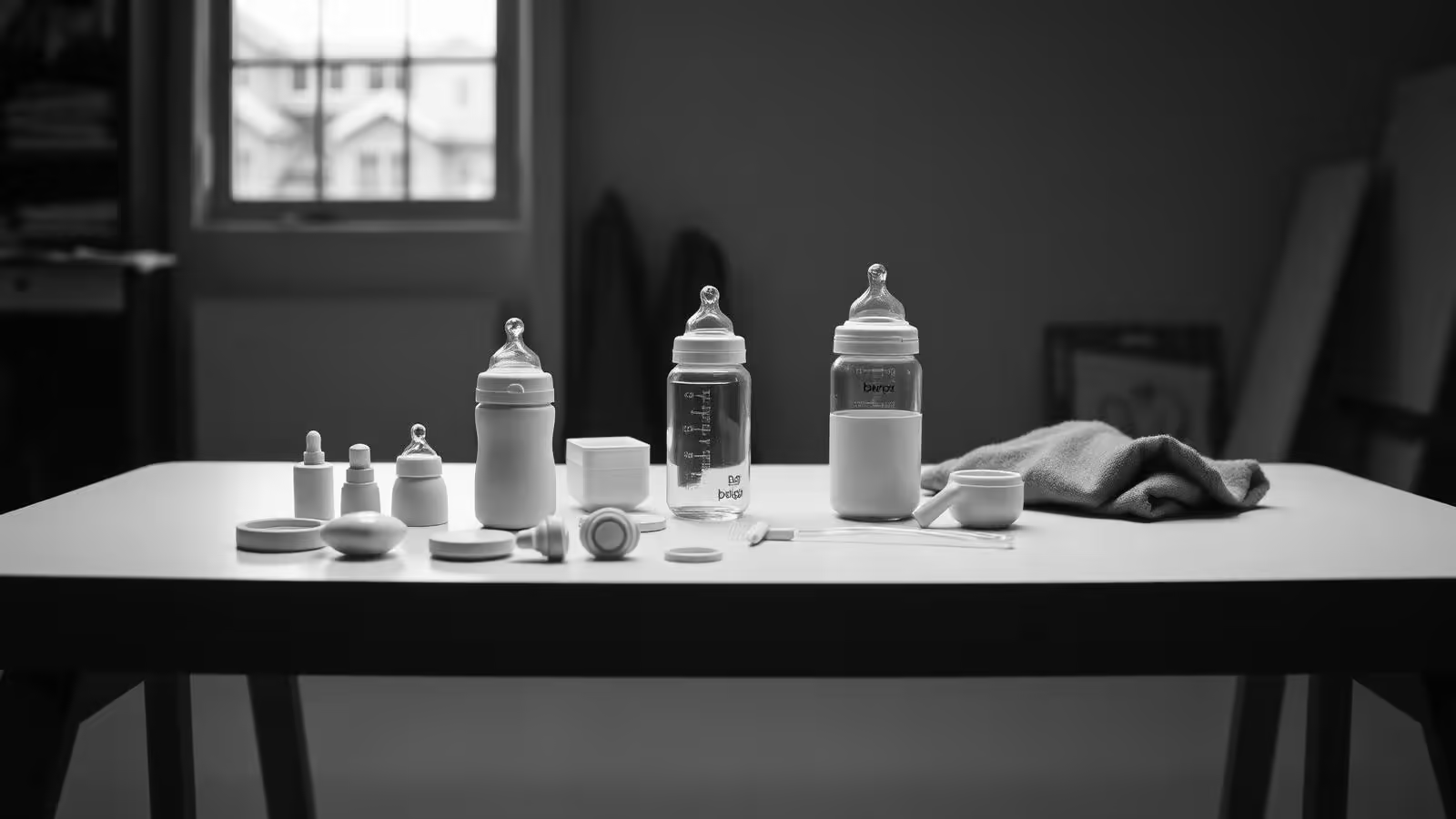
Our juvenile and family product work spans feeding and food storage, sleep and comfort products, sensory and developmental toys, carriers and travel gear, and safety hardware. We also handle the soft-goods side - fabric, fill, stitching and attachment safety - which most engineering shops outsource.
The design brief in this category is unusually specific: it must be usable with one hand, cleanable without disassembly instructions, safe with a child actively working against it, and priced for a category where parents comparison-shop relentlessly.
We prototype fast and test with real caregivers, because the failure modes here - a latch that needs two hands, a crevice that traps milk residue - are invisible in CAD and obvious in a nursery.
What makes juvenile products uniquely demanding
Every design choice is evaluated by two users with opposite intentions: a caregiver trying to use it correctly, and a child trying everything else.
- Mandatory standards and third-party testing
CPSC durable infant and toddler product rules invoke specific ASTM standards per product type, with mandatory testing at an accredited lab, tracking labels and registration cards. Scope is set by product category, so category choice is a budget decision.
- Entrapment, strangulation and small parts
Openings, cords, gaps and detachable components are governed by explicit dimensional rules. These constrain geometry directly and cannot be resolved with a warning label.
- Materials face chemical scrutiny
Phthalates, lead content and food-contact status for anything a baby mouths. BPA-free is table stakes; the full material dossier matters.
- One-handed use is the real test
A parent holding an infant has one hand. Latches, folds, straps and lids that need two are functionally broken regardless of how elegant they are.
- Cleanability drives geometry
Milk, formula and food residue find every crevice. Dishwasher safety, disassembly and drying all shape the part design.
- Parent trust is the marketing
This is the most risk-averse consumer category there is. Safety evidence, material transparency and build quality are the purchase argument.
Baby and juvenile product capabilities
| Capability | What it covers | Typical output |
|---|---|---|
| Category and safety scoping | Applicable ASTM standard, testing scope, cost implications | Compliance and test plan |
| Industrial design | Form, color, material and finish, parent-facing usability | Concepts and appearance models |
| Mechanical engineering | Latches, folds, straps, hinges, structural loads | Production CAD and DFM |
| Soft goods | Fabrics, fill, stitching, attachment safety, tech packs | Sewn samples and factory packs |
| Electronics | Monitors, sensors, sound, low-power design | Functional electronic prototypes |
| Prototyping and pilot runs | Caregiver testing units, pre-compliance samples, first runs | Testable prototypes and pilot inventory |
Swipe the table sideways to see every column.
How a baby product program runs

Compliance scope in week one, caregiver testing throughout.
01 · Safety and category scoping+
We identify the governing standard before design, because it sets the budget.
- Product category and applicable ASTM standard
- Third-party testing scope and cost
- Hazard analysis: entrapment, small parts, stability
- Target price and channel
02 · Concept and caregiver research+
Concepts tested against real one-handed use.
- Concept directions
- Caregiver interviews and observation
- Material and cleanability shortlist
- Direction selected
03 · Functional prototyping+
Units caregivers actually use, with a baby in the other arm.
- Functional prototypes
- In-home caregiver testing
- Cleaning and dishwasher trials
- Mechanism refinement
04 · Engineering and pre-compliance+
Design finalized against the standard's specific tests.
- Production CAD and DFM
- Pre-compliance dimensional checks
- Material documentation package
- Tooling strategy
05 · Testing, tooling and launch+
Certification testing coordinated, tooling cut, first run built.
- Accredited lab testing coordination
- Tracking label and registration compliance
- Tooling and first-article review
- Pilot production
Why compliance scope belongs in week one
The most expensive mistake in juvenile products is discovering the applicable standard after the geometry is frozen. A gap dimension, a strap length or a stability requirement can force a full redesign and a second round of lab testing.
Handled the other way around, the constraints become a design brief. Products engineered against the standard from the start usually test clean the first time and reach the shelf faster than competitors who improvised.
Design it for a parent with one hand, a child working against it, and a lab that will measure every gap. Everything else follows.
Frequently asked questions about baby product development
What safety standards apply to baby products?+
It depends on the category. CPSC durable infant and toddler product rules invoke specific ASTM standards for cribs, carriers, high chairs, sleep products and more, plus CPSIA chemical limits, tracking labels and registration cards. We identify your exact scope before design starts.
How much does baby product development cost?+
Design and engineering through prototypes typically runs in the tens of thousands. Third-party certification testing and tooling are separate line items, and testing cost varies significantly by product category.
Do you handle the certification testing?+
We design to the standard, prepare the test plan and documentation, and coordinate with an accredited third-party lab. The lab issues the certification.
Can you develop soft goods like carriers or sleep sacks?+
Yes. Pattern development, fabric and fill selection, stitching, attachment safety and factory tech packs are all in scope alongside hard goods.
How long does a baby product take to develop?+
Six to twelve months to first production is typical, with certification testing and tooling as the two longest blocks.
Can you help with a baby product that has electronics?+
Yes - monitors, sensors and sound features are within our electronics capability, and we account for the additional safety and battery-access requirements.
Start with the standard, not the sketch
Tell us the product category and who uses it. We will map the safety scope and give you a realistic program plan and budget.
Juvenile product rules that decide the design
Durable infant and toddler products carry some of the strictest consumer regulation in the US. Every one of these changes geometry, not just paperwork.
| Standard or rule | What it requires | What it changes in the design |
|---|---|---|
| CPSIA / durable infant products rule | Third-party testing at a CPSC-accepted lab plus a product registration card and permanent tracking label. | Requires a molded-in tracking label area and a registration insert in packaging. |
| ASTM juvenile specifications | Category-specific: high chairs, bassinets, carriers, gates, bath seats each have their own ASTM F-series standard. | Sets stability angles, restraint strength and opening dimensions for your exact category. |
| Entrapment and openings | Openings that admit a torso probe but not a head are prohibited. | Fixes slat spacing, frame gaps and mesh geometry. |
| 16 CFR 1303 + phthalates | 90 ppm lead in coatings; phthalate limits in plasticized parts. | Rules out most soft PVC; we specify TPE or food-grade silicone instead. |
| Flammability (16 CFR 1610 where textile) | Textile components must meet Class 1 flammability. | Constrains fabric and foam selection on pads and covers. |
Prototype rounds and budgets for a juvenile product
Baby products fail on stability, pinch points and cleanability far more often than on styling, so the prototype plan targets those first.
| Round | How it is built | What it proves | Typical cost |
|---|---|---|---|
| Ergonomic mock-up | Foam and printed parts, full scale | Caregiver reach, one-handed use, infant fit | $1,500 – $4,000 |
| Structural prototype | CNC or SLS parts, real fasteners and webbing | Stability angle, restraint pull, pinch-point clearance | $4,000 – $12,000 |
| Pre-compliance sample | Production-intent materials, tracking label placed | Internal testing before you pay for a CPSC lab round | $6,000 – $15,000 |
| Lab submission set | Bridge-tooled or cast units, typically 5–10 pieces | Formal ASTM/CPSIA certification | $8,000 – $25,000 plus $2,000 – $8,000 lab fees |
Ranges are what comparable projects have actually cost here, not list prices. Every project is quoted stage by stage, so you approve the next step with real numbers in front of you. See the prototype cost calculator for a first estimate on your own part.
A juvenile product we carried end to end
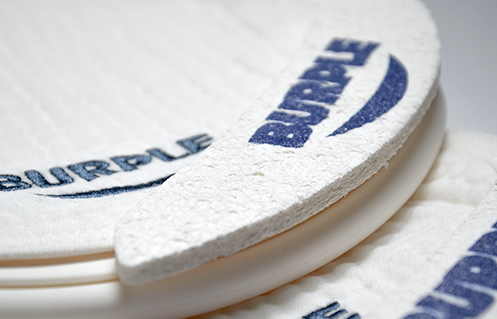
Concept through manufacturing handoff on a nursery product: caregiver research, safe-geometry engineering, structural prototypes, materials chosen for cleanability and phthalate compliance, and a supplier package the client could quote in two countries.
Baby product development questions
When do I have to do CPSC third-party testing?
Before the first unit is imported or sold. Testing happens on production-intent samples, which means your tooling and materials must be final. Budget two to six weeks and $2,000 to $8,000 per SKU, plus the registration card and tracking label artwork.
Which ASTM standard applies to my product?
It depends on the category — F404 high chairs, F2194 bassinets, F2236 soft carriers, F1004 gates, and so on. We identify the governing standard during feasibility, because the stability, restraint and opening requirements drive the frame design.
How long does a baby product take from idea to shelf?
Ten to eighteen months is realistic: three to five months of engineering and prototypes, three to four months of tooling, one to two months of certification, then packaging and retail lead times.
Can you help with the tracking label and registration card?
Yes. We place the permanent tracking label in the mold, and we build the registration card and instruction artwork alongside the packaging so the compliance package ships with the product rather than chasing it.
Standards and regulations we work to
Other industries we build for
Personal Care
Beauty, grooming and personal hygiene products, from formula-adjacent hardware to packaging.
Pet Products
Pet care, feeding, comfort and interactive toy products developed end to end.
Sports & Fitness
Training aids, outdoor gear, wearables and equipment built for real use in the field.
Product Packaging
Retail-ready structural and graphic packaging that protects the product and sells it.
IoT & Consumer
Connected consumer devices: electronics, enclosures, firmware and the app that drives them.
Medical Devices
Class I and Class II devices, diagnostics and patient-safety hardware developed to the pathway.
Industrial Equipment
Custom machines, automation and commercial equipment engineered and built in-house.
Food & Beverage
Containers, closures, kitchen tools and food-contact equipment for CPG brands.
Toys & Games
Play patterns, mechanisms and pitch-ready prototypes for toy and game inventors.
Home & Housewares
Cleaning tools, storage, organization and home hardware engineered to a shelf price.
Outdoor & Hunting
Hunting, camping, marine and recreation gear built for weather, abuse and field use.
Funded Startups & Grants
SBIR Phase I and II prototypes and investor-ready hardware for funded teams.
SBIR & Grant-Funded Projects
Concept design, feasibility work and proof-of-concept prototyping for SBIR, STTR and other federal grant applicants.
What founders say after working with us
“Konstantin has been so amazing and his entire team is A+. I researched and interviewed many product development companies across the country and ultimately decided on LA NPDT... and I'm so glad I did. The attention to detail and overall effort has been exactly what I needed and then some. If you are looking for a company to help you bring your product to life, look no further!”
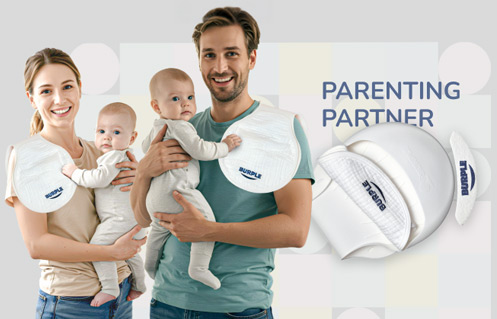
 William EvansCEO, Burple
“This company is awesome. I run a medical device company and we required a number of accessories to be designed and built for our medical device. They delivered a polished design and printed the accessories on time using high-quality materials. I continue to work with them for all of our material needs.”
 Matteo ZiffFounder, Virtual Vision
“I highly recommend the LA New Product Development Team for any of your new product development needs. From the development of my concept to the actual prototype, the process was seamless. I especially loved the quick responsiveness, and I received regular updates during every stage, so I was never left wondering how things were going. The steps were clearly outlined, along with estimated costs.”
 Dr. Sharada DamarajuFounder, Dignity & Empowerment
Three reasons founders keep working with us
- 1
One team from sketch to shipped parts. Industrial design, mechanical and electrical engineering, prototyping and manufacturing sit under one roof, so nothing is lost in a handoff.
- 2
You own the work. Native CAD, drawings and source files are yours at the end of every phase — no lock-in, no re-buying your own design later.
- 3
Fixed scope, fixed price. Every phase is quoted up front with a deliverable list and a date. No hourly meters, no surprise invoices.
If you ever thought of developing a new product, don’t wait any longer. Talk with one of our experts today.
Tell us about your product
Send us the idea, the drawing or the problem. We reply within one business day with the next practical step.
Ready to scope the work? Start your product · Request a quote