
Distribution Strategy Examples: How Products Reach Customers
Distribution strategy examples for physical products - direct, retail, wholesale, marketplace and hybrid - with the margin math behind each channel.
August 1, 20187 min read

Written by Yelena Rymbayeva, MPhil Communication & Media Studies, BTech Quality Control
Marketing & Product Leader, Technology Commercialization
Published August 1, 2018Updated August 19, 2026
A distribution strategy is the plan for how a product moves from manufacturer to end customer: which channels carry it, who holds inventory, who owns the customer relationship, and how the retail price is divided among everyone in the chain. It is a product decision, not just a sales decision — packaging, unit cost and even enclosure design change depending on the channel.
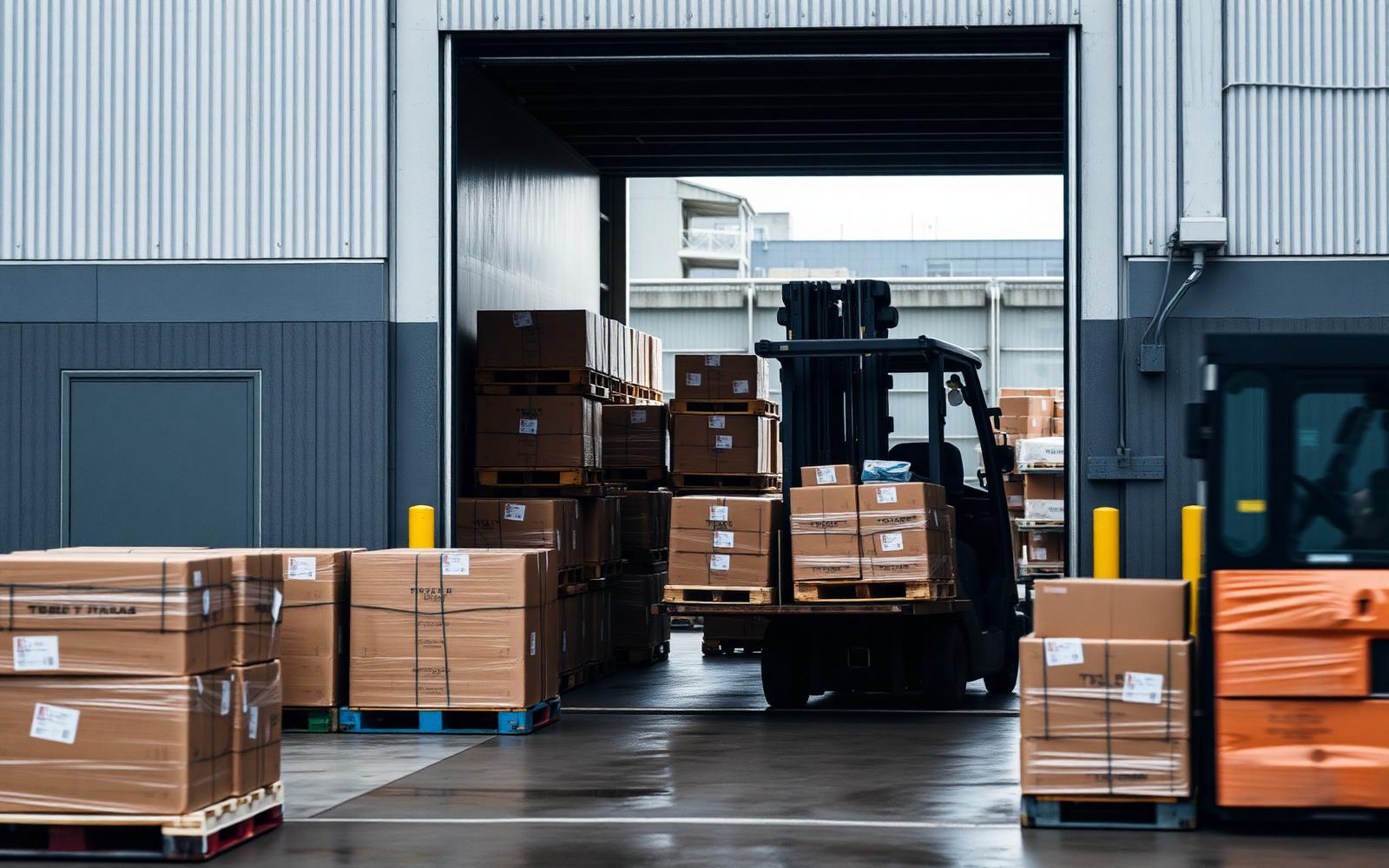
Why distribution strategy matters before launch
Teams commonly finish a product and then look for a way to sell it. By then, several channel-defining decisions are already locked: box size, whether the pack survives a drop test on a shelf, whether there is a UPC, whether the unit cost leaves room for a retailer's markup. Choosing the channel during product development keeps those decisions cheap.
- Margin structure — a retail path typically needs your landed cost at roughly 20 to 25 percent of the shelf price.
- Packaging — retail demands shelf-ready graphics, hang tabs or a specific footprint; direct shipping demands a box that survives parcel handling.
- Volume commitment — distributors and big-box buyers order in quantities your tooling plan has to support.
- Customer data — direct channels give you it; retail generally does not.
The main distribution channels compared
Channel | Typical margin to you | Control | Time to revenue | Best for |
|---|---|---|---|---|
Direct to consumer (own store) | Highest | Full | Fast | Differentiated products with a findable audience |
Online marketplace | High minus fees (roughly 8 to 20 percent) | Medium | Fast | Products with existing search demand |
Retail (direct to chain) | Low to medium | Low | Slow (buyer cycles) | Impulse and mass-market goods |
Wholesale to independents | Medium | Medium | Medium | Specialty and regional products |
Distributor or rep network | Lowest | Low | Medium | Industrial and B2B products needing coverage |
OEM or white label | Low but high volume | None over brand | Slow | Components and platform technology |
How the retail price gets divided
A common consumer hardware structure looks like this. It is not universal, but it is close enough to plan against and it explains why channel choice must precede cost targets.
Layer | Share of retail price |
|---|---|
Landed manufacturing cost | 20 to 25% |
Manufacturer margin and overhead | 25 to 30% |
Distributor margin | 10 to 20% |
Retailer margin | 30 to 50% |
If your unit cost is 40 percent of your intended shelf price, retail is not available to you without a redesign. That is a design constraint, and it belongs in the requirements document, not in a sales meeting a year later.
Need a product designed to hit a channel cost target?
Request a quoteIntensive, selective and exclusive coverage
- Intensive distribution — everywhere possible. Correct for low-consideration, high-frequency goods where availability is the purchase driver.
- Selective distribution — a curated set of outlets that fit the brand and can support the product. The default for most considered purchases.
- Exclusive distribution — one partner per territory. Buys strong partner commitment and protects price, at the cost of reach and leverage.
Choosing a distribution strategy
If this is true | Lean toward |
|---|---|
Product needs explanation or demonstration | Direct or specialty retail with trained staff |
Purchase is impulsive and price-sensitive | Intensive retail and marketplaces |
Buyers are businesses with existing suppliers | Distributor or rep network |
You need customer data to iterate quickly | Direct to consumer first |
Cash is tight and inventory risk is fatal | Direct plus dropship before committing to channel fill |
Category is dominated by a few chains | Retail, and design to their cost and packaging rules from day one |
Common distribution mistakes
- Costing the product before choosing the channel. The channel sets the cost ceiling, not the other way around.
- Launching everywhere at once. Channel conflict and price erosion follow quickly, and early retailers stop supporting you.
- Ignoring returns. Retail return rates and restocking terms can erase the margin a spreadsheet promised.
- Underestimating channel fill. Stocking a national chain is a large inventory purchase you finance before any sell-through.
- No pricing policy. Without MAP-style discipline, discounters train your customers to wait.
Distribution decisions interact with everything upstream. If you are still defining the product, see the new product development process and our product development consulting work.
Landed cost by channel: a worked example
Line item | Direct to consumer | Marketplace | Wholesale to retail | Distributor |
|---|---|---|---|---|
Price received | $99.00 | $99.00 | $49.50 | $39.60 |
Factory cost | $22.00 | $22.00 | $22.00 | $22.00 |
Inbound freight and duty | $2.40 | $2.40 | $2.40 | $2.40 |
Channel fee or commission | $3.20 (payments) | $14.85 (15%) | $0 | $0 |
Outbound fulfillment | $8.50 | $6.90 | $1.10 (pallet) | $0.80 (pallet) |
Marketing to make the sale | $18.00 | $9.00 | $4.00 (co-op) | $2.00 |
Returns and allowances | $3.00 | $4.00 | $2.50 | $1.50 |
Contribution per unit | $41.90 | $39.85 | $17.50 | $10.90 |
Channel readiness checklist
- GS1 GTIN and UPC assigned per SKU and printed on both the unit carton and the master carton.
- Retail-ready packaging tested for the intended presentation: hang tab, shelf footprint, or pallet display.
- ISTA 3A transit testing passed for parcel channels and ISTA 1H or 3E for palletized freight.
- Required compliance marks in place: FCC, UL or ETL, CPSIA children's testing, Prop 65 where applicable.
- MAP policy in writing before the first reseller signs, or your direct channel will be undercut within a quarter.
- Case pack and pallet configuration that matches the buyer's standard: TI/HI counts, pallet height, and label placement.
- Lead time and safety stock plan covering the reorder window plus one manufacturing cycle.
- Chargeback exposure understood: routing guide compliance, EDI capability, and on-time-in-full expectations.
Sequencing channels over the first 24 months
Phase | Primary channel | Objective | Signal to advance |
|---|---|---|---|
Months 0-6 | Direct to consumer | Prove demand and gather review volume | Repeatable acquisition cost below contribution margin |
Months 6-12 | Marketplace | Capture existing search demand and scale volume | Organic marketplace rank and stable return rate under 4% |
Months 12-18 | Specialty and independent retail | Build category credibility and sell-through data | Reorder rate above 50% at pilot accounts |
Months 18-24 | National retail or distributor | Reach and shelf presence | Landed cost supports a 50% off-invoice structure |
Key takeaways
- Channel choice sets your allowable product cost — decide it during design, not after tooling is cut.
- Contribution per unit, not gross margin percentage, is the number that pays for the next production run.
- Retail readiness is a documentation and packaging project that runs months ahead of the first purchase order.
- Stage channels so direct sales fund the inventory that retail requires.
Frequently asked questions
What is a distribution strategy?
A distribution strategy is the plan for how a product travels from manufacturer to end customer — which channels carry it, who holds inventory, who owns the customer relationship, and how the retail price is split among the manufacturer, distributor and retailer.
What are the main types of distribution channels?
The main channels are direct to consumer through your own store, online marketplaces, direct-to-retail chains, wholesale to independent retailers, distributor or manufacturer rep networks, and OEM or white-label supply.
What is the difference between intensive, selective and exclusive distribution?
Intensive distribution places the product in as many outlets as possible and suits impulse goods. Selective distribution uses a curated set of outlets that fit the brand. Exclusive distribution grants one partner per territory in exchange for stronger commitment and price protection.
How much margin do retailers take?
Retail margins commonly run 30 to 50 percent of the shelf price, with distributors taking a further 10 to 20 percent when they are involved. That is why landed manufacturing cost usually has to sit around 20 to 25 percent of the intended retail price.
Should a startup sell direct to consumer or through retail?
Most hardware startups start direct to consumer because it preserves margin, provides customer data and requires no channel fill inventory. Retail becomes attractive once demand is proven, the product cost supports channel margins, and you can finance stocking orders.
When should distribution strategy be decided?
During product development, not after. Channel choice determines the landed cost ceiling, packaging format, minimum order quantities and certification requirements — all of which are expensive to change once tooling is cut.
Distribution strategy examples by product category
Channel choice is largely determined by three things: how much explanation the product needs, how often people buy it, and how much service comes after the sale. The categories below show how those forces produce different distribution strategies for products that look superficially similar.
Category | Typical channel mix | Why it lands there | Margin reality |
|---|---|---|---|
Low-cost accessory | Marketplace plus intensive retail | Impulse purchase, no explanation needed, availability wins | Thin per unit, volume dependent |
Connected consumer device | Direct first, then selective retail | Needs demonstration and support; direct builds the review base | Best margin direct, roughly halves at retail |
Professional tool | Distributor and dealer network | Buyers expect local stock, service and credit terms | Two layers of margin, offset by volume |
Medical or regulated device | Direct sales plus specialist distributors | Compliance, training and reimbursement paperwork | High margin, long sales cycle |
Industrial equipment | Direct with regional reps | Configuration, installation and service dominate | High margin, low unit count |
Notice that nothing in that table is about preference. A product needing a five-minute explanation cannot succeed on a shelf next to eleven competitors, and a $12 accessory cannot carry a field sales visit. The channel is chosen by the product, and the product cost target is then chosen by the channel.
Preparing for a retail buyer meeting
Retail buyers assess risk, not enthusiasm. They are deciding whether shelf space allocated to you will earn more than the product it displaces, and whether you can supply reliably enough that they never have to think about you again.
- Sell-through evidence, not just sales — units per store per week from any channel you already run.
- A wholesale price that survives their margin, plus a plan for promotional funding and returns allowance.
- Packaging that merchandises, readable from three feet, with the shelf orientation they actually use.
- Supply proof: current inventory, lead time on a reorder, and what happens if they double their forecast.
- A marketing commitment that drives traffic to their store, not only to your site.
Distribution terms worth knowing before you negotiate
Term | What it means | Why it matters to you |
|---|---|---|
MAP policy | Minimum advertised price you enforce across resellers | Without it, marketplace sellers erode the price your retail partners rely on |
Net 60 or Net 90 | Payment 60 or 90 days after invoice | You finance production and the shipment before revenue arrives |
Chargebacks | Deductions for labelling, routing or delivery errors | Can consume 2 to 6% of an invoice on a first retail order |
Consignment | Retailer pays only for what sells | Removes buyer risk, transfers all inventory cost to you |
Exclusivity window | One partner holds a channel or territory for a period | Only trade it for volume commitments in writing |
These terms decide whether a large order is a milestone or a cash-flow crisis. A 5,000-unit purchase order on Net 90 with a 3% chargeback exposure requires you to fund manufacturing, freight and warehousing for roughly five months before the first payment lands.
Fulfilment is part of the distribution strategy
Choosing a channel decides who sells the product; fulfilment decides whether the economics survive contact with reality. A direct-to-consumer strategy with a $14 pick-pack-and-ship cost on a $39 product is not a strategy, it is a slow loss. Model the physical flow at the same time you model the margin.
Fulfilment model | Typical cost per order | Best for | Watch out for |
|---|---|---|---|
Self-fulfilment from a garage or office | Labour plus postage | First few hundred orders, learning the packaging | Founder time, no coverage during launches |
Third-party logistics provider | $3 to $8 pick and pack plus freight and storage | Steady direct volume, multi-channel brands | Receiving fees, long-term storage charges, minimums |
Marketplace fulfilment programs | 10 to 20% of revenue all in | Reach and conversion on marketplaces | Commoditised listings, limited brand control |
Retail direct import | Freight only, buyer takes it from port | Large purchase orders | Chargebacks for routing and labelling errors |
Packaging drives these numbers more than most founders expect. Dimensional weight rules mean an oversized box can double a shipping cost that a 15 mm reduction in carton depth would have avoided, and a carton that fails a drop test generates replacement shipments that erase a season of margin. Decide the retail carton and the shipper together, and test both before the first container ships.
Building a price list that supports every channel
Once more than one channel exists, one price stops working. You need a single published retail price and a structured set of discounts off it, so a distributor, a dealer and your own website can all coexist without undercutting each other. Set that structure before the first wholesale conversation, because discounts are almost impossible to claw back later.
Buyer | Discount off retail | Expectation attached |
|---|---|---|
End customer, direct | 0% | Fast shipping and support from you |
Small dealer or boutique | 40 to 45% | Small orders, prepayment, no marketing support |
National retailer | 50% | Terms, promotional funding, returns allowance, EDI |
Distributor | 55 to 60% | Volume commitment, holds stock, services dealers |
Employee, press and seeding | Varies | Never advertised, always tracked |
Two rules protect this structure. Never sell direct below the price your retail partners charge — winning a single sale is not worth losing the shelf. And put the discount schedule in writing internally, so the salesperson closing a deal on a Friday cannot invent a new tier that the whole channel later demands.
Reviewing channel performance quarterly
A distribution strategy is a set of assumptions, and assumptions expire. Review each channel every quarter on four numbers: contribution margin after all channel-specific costs, sell-through rate, cost to acquire a customer or a reorder, and the working capital tied up serving it.
A channel that grows revenue while consuming cash and returning nothing to margin is not growth; it is a subsidy you are paying to somebody else. Cut or renegotiate it while the decision is still yours to make, and reinvest that capacity in the channel that is already earning its place.
Work with LA NPDT: if you are moving from here to execution, start with our new product marketing or talk to us about market research.
Filed under:EducationInspirationNews
Related articles
All articles
Industrial Design Portfolio Examples: What Reviewers Look For
A structure for an industrial design portfolio that gets read: case study anatomy, how much process to show, page counts and common rejection reasons.

Material Qualification Strategy: Reducing Risk Before Production
Modern manufacturing relies on raw materials that make it possible to produce the goods driving economic growth and improving everyday living standards. Companies depend on everyth

Innovation Portfolio Strategy: Balancing Incremental and Breakthrough Products
Innovation is widely recognized as a major driver of productivity, economic growth, and improved living standards. It represents the moment when new ideas, technologies, or organiz
Services related to this guide
- Product design servicesIndustrial design and CAD taken all the way to manufacturable files.
- Rapid prototypingWorking prototypes in days, from 3D printing to vacuum casting.
- Electronic design servicesSchematic, PCB layout, firmware and bring-up, through to production handoff.
- Product development examplesReal projects we designed, prototyped and shipped.