Medical Device Design Consultancy
Design, engineering and design-control support for Class I and Class II devices, from concept through verification and manufacturing transfer.

Written by Konstantin Dolgan, Ph.D., NPDP
Founder & CEO, Product Development Engineer
Published August 20, 2026
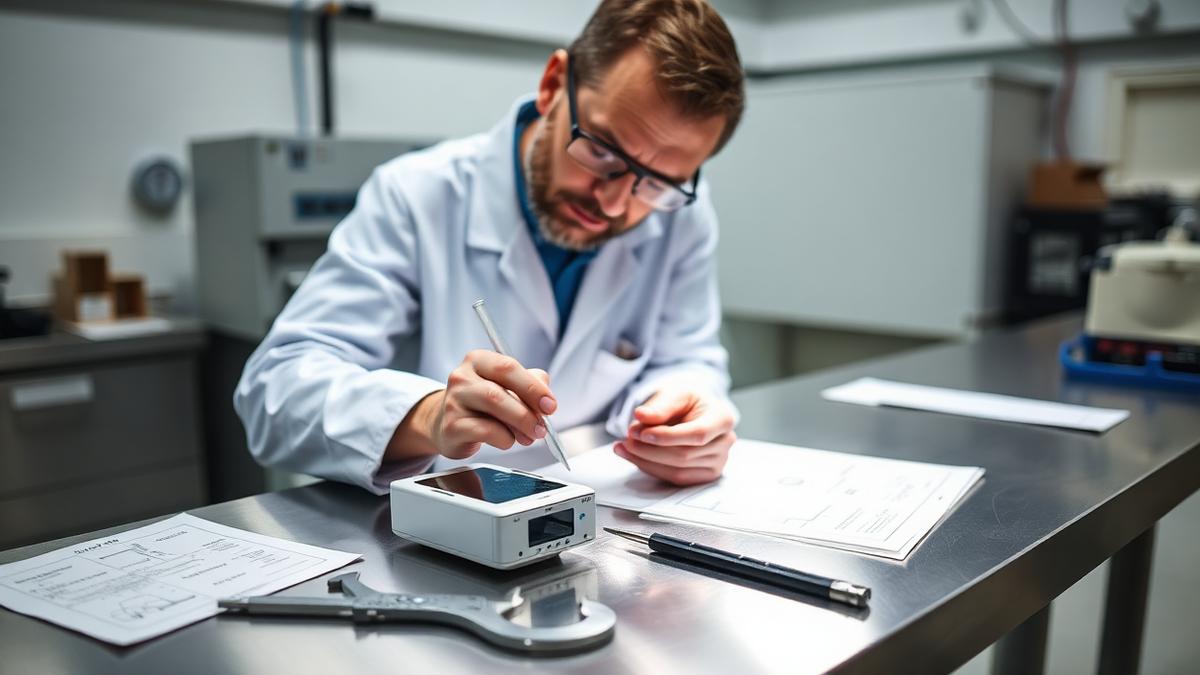
Medical device design consultancy for Class I and II devices: concept, engineering, human factors, design controls and manufacturing transfer. A medical device design consultancy takes a clinical need and turns it into a manufacturable device with the documentation a regulator expects.
A medical device design consultancy takes a clinical need and turns it into a manufacturable device with the documentation a regulator expects. For Class I and Class II devices that means design inputs, risk management, human factors, verification testing and a design history file assembled as the work happens - not reconstructed the month before submission.
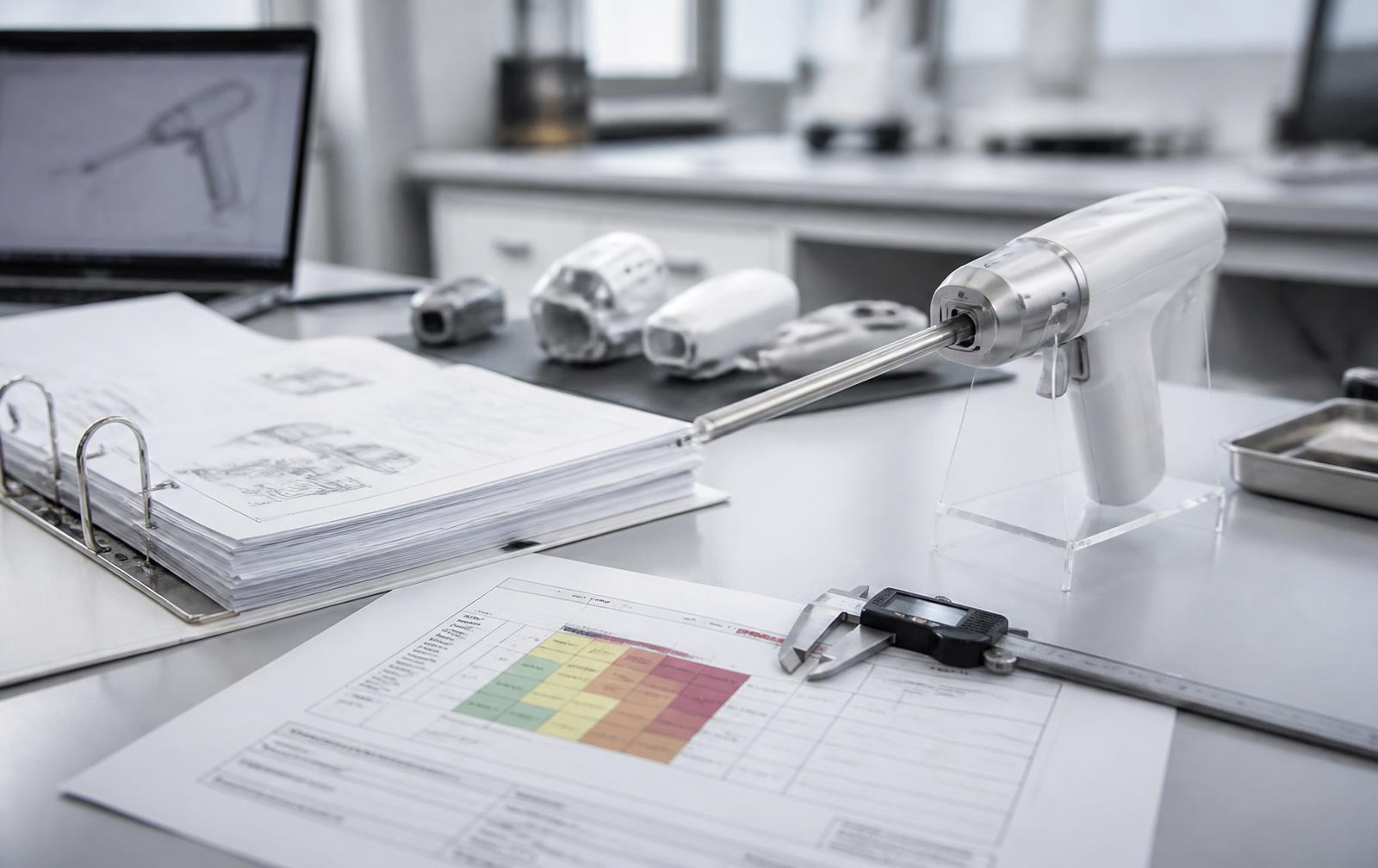
Where a consultancy fits
Three situations bring companies here. A startup with clinical validation and no engineering team. An established manufacturer whose internal team is fully loaded and needs a program run in parallel. And a company whose device works but cannot be built at a viable cost, which is a design-for-manufacturing problem wearing a regulatory costume.
In all three cases the work is the same shape: define the inputs precisely, retire the technical risk with the cheapest possible build, then spend real money only on a design you have already proven.
Scope by phase
| Phase | Deliverables | Typical duration | Cost band |
| Feasibility | User needs, device classification view, technical risk list, plan | 3-6 weeks | $10k - $30k |
| Concept and industrial design | Concept directions, ergonomics, use-scenario studies | 4-8 weeks | $15k - $50k |
| Detailed engineering | Mechanical and electrical design, materials, tolerance analysis | 10-20 weeks | $60k - $200k |
| Verification | Test protocols, verification builds, reports, DHF assembly | 8-16 weeks | $50k - $200k |
| Transfer | Manufacturing package, supplier qualification, process validation support | 6-12 weeks | $30k - $100k |
What we handle, and what we do not
| We do | We coordinate | We do not |
| Concept, mechanical and electrical design | Test lab scheduling and biocompatibility | Clinical trials |
| Human factors and use-related risk | Sterilization validation with the contract sterilizer | Regulatory submission as the sponsor |
| Risk management inputs per ISO 14971 | Contract manufacturer selection and quoting | Legal or reimbursement advice |
| Design controls documentation per 21 CFR 820.30 | Notified body and consultant coordination | Quality system ownership |
Standards the work is built around
- 21 CFR 820.30 design controls - design inputs, outputs, reviews, verification, validation and transfer.
- ISO 13485 quality management for design and development activities.
- ISO 14971 risk management, applied from the first requirement rather than at the end.
- IEC 60601-1 for electrically powered devices, including applied-part and leakage requirements.
- IEC 62366 usability engineering, and FDA human factors guidance for use-related risk.
- ISO 10993 biocompatibility for anything with patient contact.
Primary sources: FDA quality and compliance for medical devices and ISO 14971. Nothing here is regulatory or legal advice; confirm your regulatory strategy with your own consultant or counsel.
Medical device design consultancy: common questions
What does a medical device design consultancy do?
A medical device design consultancy takes a clinical need through concept, engineering, human factors, verification testing and manufacturing transfer, producing the design controls documentation and design history file that a regulator expects along the way.
How much does medical device design consulting cost?
Feasibility typically runs $10,000 to $30,000, concept and industrial design $15,000 to $50,000, detailed engineering $60,000 to $200,000, verification $50,000 to $200,000, and manufacturing transfer $30,000 to $100,000. Class II devices sit at the higher end because verification is broader.
Do you handle the FDA submission?
No. We produce the design and engineering evidence a submission relies on — design inputs and outputs, risk management inputs, verification protocols and reports, and the design history file — and we coordinate with your regulatory consultant. The sponsor and their regulatory advisor own the submission itself. Nothing here is regulatory or legal advice.
How long does Class II device development take?
Twelve to twenty-four months from concept to design freeze is typical for a Class II device. Verification testing, sterilization validation and supplier qualification usually determine the schedule rather than the design work.
Do you work under ISO 13485 design controls?
Yes. Design and development activities follow 21 CFR 820.30 design controls within an ISO 13485-aligned process, with risk management per ISO 14971 applied from the first requirement rather than retrofitted at the end.
What founders say after working with us
“This company is awesome. I run a medical device company and we required a number of accessories to be designed and built for our medical device. They delivered a polished design and printed the accessories on time using high-quality materials. I continue to work with them for all of our material needs.”
 Matteo ZiffFounder, Virtual Vision
“Partnering with LA NPDT to bring LEIA to life was a game-changer. Their blend of market analysis, design expertise, prototyping, and manufacturing streamlined my vision into a tangible solution. For medical professionals with a product idea, there's no team I'd recommend more.”
 Dr. Elena DolganFounder, LEIA Cup
“Konstantin has been so amazing and his entire team is A+. I researched and interviewed many product development companies across the country and ultimately decided on LA NPDT... and I'm so glad I did. The attention to detail and overall effort has been exactly what I needed and then some. If you are looking for a company to help you bring your product to life, look no further!”
 William EvansCEO, Burple
Three reasons founders keep working with us
- 1
One team from sketch to shipped parts. Industrial design, mechanical and electrical engineering, prototyping and manufacturing sit under one roof, so nothing is lost in a handoff.
- 2
You own the work. Native CAD, drawings and source files are yours at the end of every phase — no lock-in, no re-buying your own design later.
- 3
Fixed scope, fixed price. Every phase is quoted up front with a deliverable list and a date. No hourly meters, no surprise invoices.
If you ever thought of developing a new product, don’t wait any longer. Talk with one of our experts today.
Tell us about your product
Send us the idea, the drawing or the problem. We reply within one business day with the next practical step.
Ready to scope the work? Start your product · Request a quote