Do you need a patent before you build a prototype?
Short answer: no, and building first usually makes the patent better. Here is how the two timelines actually fit together, and when to file.
August 29, 20262 min read

Written by Konstantin Dolgan, Ph.D., NPDP
Founder & CEO, Product Development Engineer
Published August 29, 2026
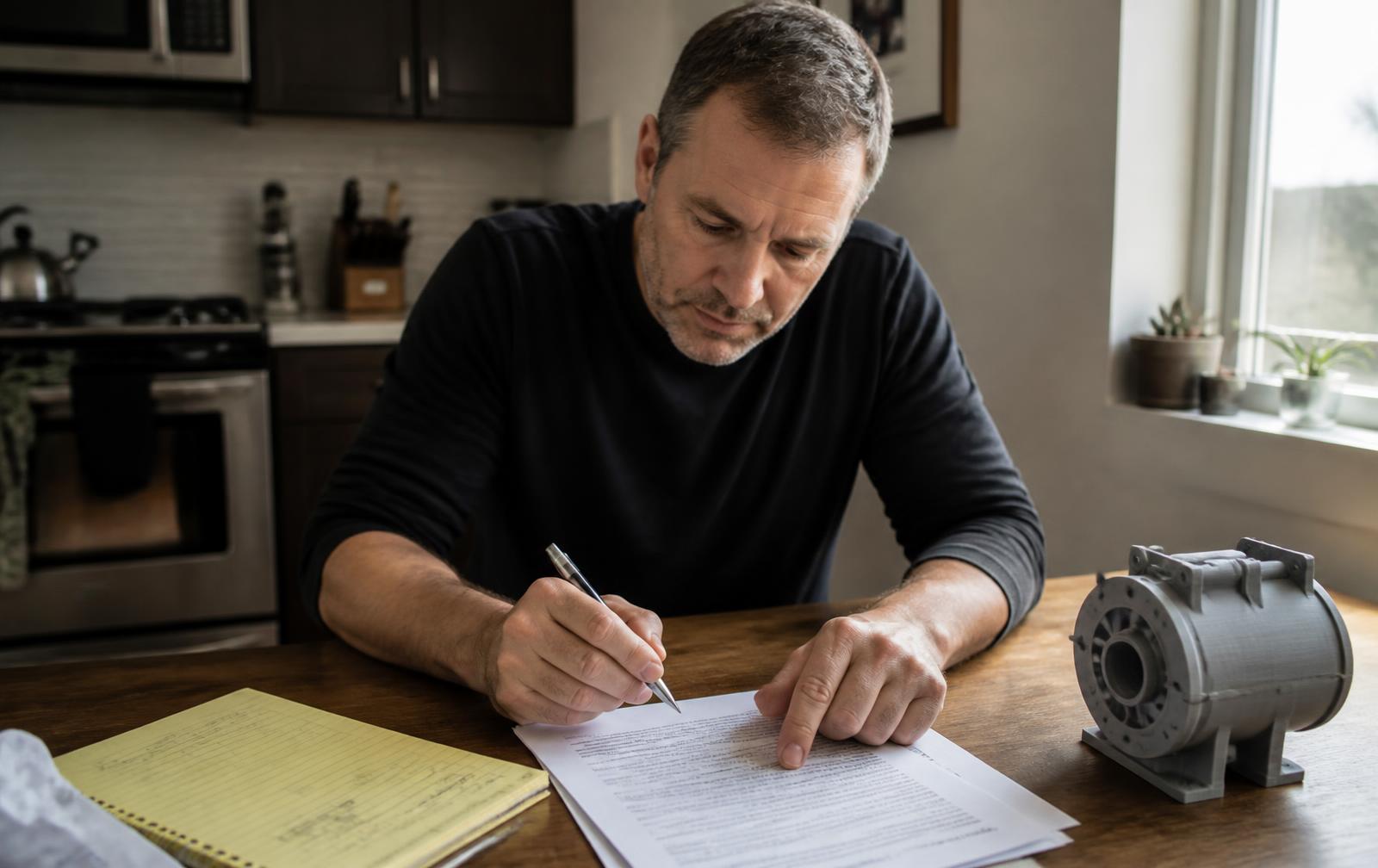
You do not need a patent to build a prototype, and in most cases you should build first. A prototype teaches you what the invention actually is, and a patent written after that covers the real thing instead of your first guess at it. This is general information, not legal advice — talk to a patent attorney about your specific situation.
Frequently asked questions
Why building first usually produces a better patent?
Claims are written around specific structure and function. Before you have built anything, you are describing an intention. After three iterations you know which feature does the work, which alternatives you tried, and which embodiments are worth claiming. Attorneys write stronger applications from that material, and it costs less because you are not paying them to imagine the device with you.
What about the risk of disclosure?
In the US you have a one-year grace period after your own public disclosure to file. Most other countries have no grace period at all, so a public disclosure before filing can end your foreign rights permanently. If international matters to you, file before you show anyone outside an NDA.
Where does a provisional application fit?
A provisional application is a relatively cheap way to lock in a filing date and get twelve months to develop and decide. It is only as good as what it describes, so a provisional filed on a napkin sketch protects a napkin sketch. The common sequence that works: prototype enough to know what the invention is, file a provisional on that, keep developing during the twelve months, then file the non-provisional with what you learned.
When you should file before building?
The invention is a method or a chemistry, where the concept is the invention. You must present publicly, pitch on stage or launch a crowdfunding page soon. You are in a crowded space where a competitor is visibly working on the same thing. Foreign rights matter and you cannot control who sees the device.
Where LA NPDT fits?
We build prototypes under NDA and coordinate with your patent attorney, including drawings that support a filing. Start with our free trademark search and idea analyzer , or read what an invention prototype costs . Proof from our own work: the Hand Tennis Glove went from a founder sketch to a working, testable product before any tooling money was spent.
Services related to this guide
- Best prototyping companiesDevelopment firms, instant-quote bureaus and local shops — who fits which job.
- Free prototype cost calculatorFive to eight questions, an instant cost range for a first prototype.
- Prototype development companiesWhich firms take a sketch to a working prototype — and which only fabricate parts.
- Rapid prototypingWorking prototypes in days, from 3D printing to vacuum casting.