Our work / InventDraft
AI Patent Drawings, Patent Search Services, and Market Research in One Platform
- AI PLATFORM ARCHITECTURE
- FULL-STACK SAAS DEVELOPMENT
- PATENT DRAWING ENGINE
- RESEARCH DATA PIPELINES
- CONTEXT-AWARE
- DRAFTING SYSTEM

Written by Ashok Chintagunta, MS Computer Science, Louisiana Tech University
CTO & Software Engineer, AI and Automation
Updated August 30, 2026
Traditional patent preparation is fragmented: a search vendor, a drawings vendor, a market research consultant and a drafter, each with their own turnaround and their own file formats.
InventDraft began as our internal execution system for exactly that problem and became a public platform — prior art search, patent landscape analysis, patent drawings, annotation and draft specification in one AI-powered workspace, with professional review preserved at the end.
Project at a glance
- Product
- InventDraft — AI invention preparation workspace
- Origin
- Built as an internal execution system inside LA NPDT, then released as a standalone platform
- Users
- Inventors, founders, patent professionals and R&D teams
- Capabilities
- Prior art search, patent landscape analysis, market research, patent drawings, annotation and drafting
- Drawing inputs
- Plain text, photos or sketches, and 3D models in STL, OBJ or STEP
- Boundary
- Outputs are preparatory drafts for professional review; the platform does not provide legal advice or replace attorneys
The client
The challenge
Our solution
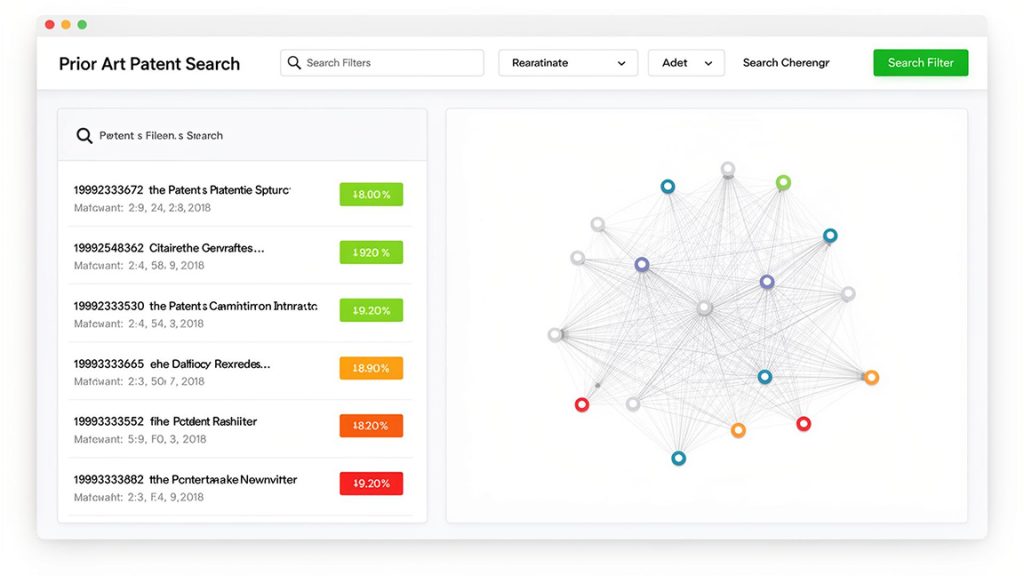
Patent search and landscape analysis, integrated
- Relevance-ranked prior art
- Citation networks
- Semantic clustering
- Feature comparison matrices
- Risk scoring indicators
- Exportable patent analysis reports
Market research built into the same workflow
- Market viability scoring
- Competitive landscape summaries
- Pricing benchmarks
- Demand indicators
- SWOT analysis
- Voice-of-customer insights
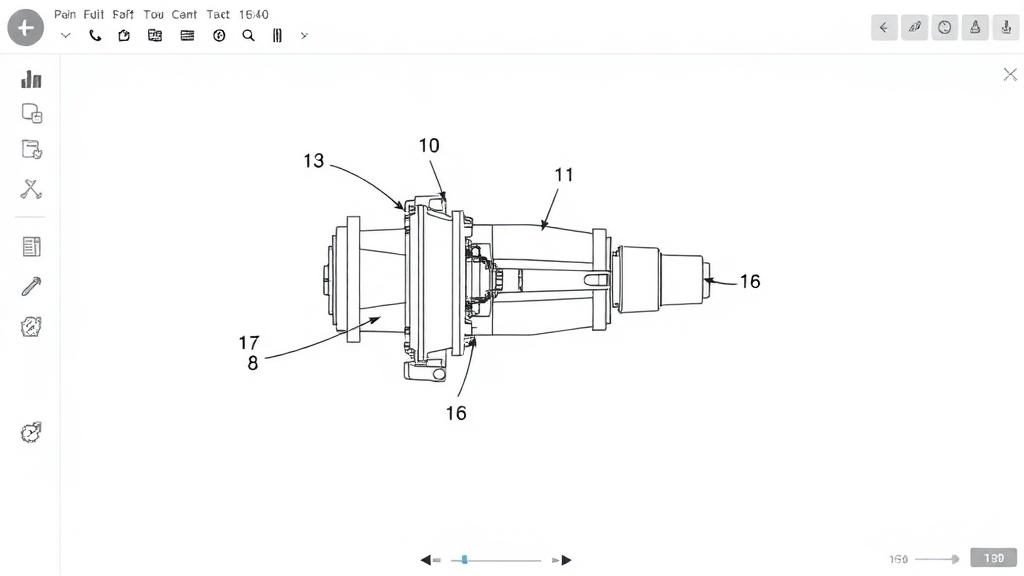
Patent drawings generated instantly
- Plain-text descriptions
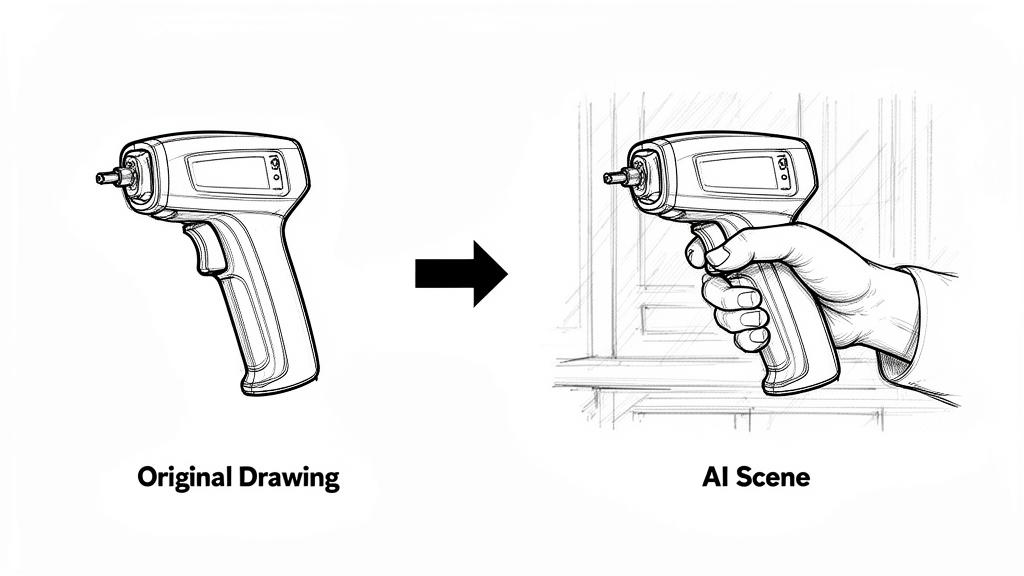
- Uploaded photos or sketches
- 3D models in STL, OBJ, or STEP format
Structured annotation and context-aware descriptions
- Add reference numerals and leader lines
- Generate AI-powered component descriptions
- Batch create figure descriptions
- Convert raster drawings to vector (SVG)
- Maintain consistent terminology across drawings and text
Full draft specification and claims preparation
- Title and abstract
- Background and summary
- Detailed description
- Claims draft
- Claims worksheet for refinement
Speed as the defining advantage
- Faster iteration
- Lower early-stage cost
- Improved decision-making
- Efficient collaboration with attorneys and teams
A demonstration of platform-building capability
- Full-stack SaaS architecture
- AI orchestration across research, drawings, and drafting
- Patent drawing generation engines
- Patent landscape analysis pipelines
- Market research aggregation systems
- Structured drafting modules
- Secure collaboration and export systems
- Credit-based monetization model
The result
Building platforms that accelerate innovation
How invention preparation works when the steps share one workspace
We built the system we needed for our own invention work, then turned it into a platform. Each step below replaces a vendor handoff.
1. Search prior art from a plain-language description
The user describes the invention in ordinary language and the platform searches patents, academic literature, non-patent sources and product listings — no classification codes or Boolean syntax required to get a first read on novelty.
2. Read the landscape, not a static report
Results come back as structured patent landscape analysis: relevance-ranked prior art, citation networks, semantic clustering, feature comparison matrices, risk scoring indicators and exportable reports — interactive and immediately shareable.
3. Test the market in the same session
Technical novelty without commercial viability is incomplete. The platform aggregates e-commerce, search, forum, academic and commercial sources into market viability scoring, competitive summaries, pricing benchmarks, demand indicators, SWOT and voice-of-customer insight.
4. Generate drawings from whatever you have
Patent drawings are produced from plain-text descriptions, uploaded photos or sketches, or 3D models in STL, OBJ or STEP — as standard views, cross-sections, exploded views and process diagrams in black-and-white patent style, with immediate revisions.
5. Annotate and describe without losing consistency
Reference numerals and leader lines, AI-generated component descriptions, batch figure descriptions, raster-to-vector (SVG) conversion, and consistent terminology across drawings and text — removing the classic disconnect between figures and specification.
6. Assemble a draft, then hand it to a professional
The platform prepares a structured draft — title, abstract, background, summary, detailed description, claims draft and a claims worksheet. These are explicitly preparatory materials for professional review; the platform does not give legal advice or replace attorneys.
| Step | Traditional route | InventDraft |
|---|---|---|
| Prior art search | Search vendor, days to weeks | Plain-language query, ranked results in minutes |
| Landscape analysis | Static PDF summary | Interactive clustering, citation networks, risk scoring |
| Market research | Separate consultant | Viability scoring and benchmarks in the same session |
| Patent drawings | Draftsman per revision round | Generated from text, photos or CAD, revised instantly |
| Draft specification | Starts from scratch | Structured draft prepared for attorney review |
Questions about this project
Straight answers from the engineers who ran the build. Have a different question? Ask us directly.
Talk to an engineerCan AI replace a patent attorney?
No, and InventDraft is explicitly built not to. It compresses the preparation work — search, landscape analysis, drawings, structured drafts — so that the attorney's time goes to strategy and claim quality rather than to assembling materials.
What formats can patent drawings be generated from?
Plain-text descriptions, uploaded photos or sketches, and 3D models in STL, OBJ or STEP. Output covers standard views, cross-sections, exploded views and process diagrams in black-and-white patent style, and styles can be regenerated without waiting on a draftsman.
Why combine market research with prior art search?
Because they answer two halves of one decision. An invention that is novel but has no demand, and one that sells but is blocked by prior art, both fail — and finding that out weeks apart, from two vendors, wastes the time that mattered.
Why did LA NPDT build its own platform?
We were running the fragmented process ourselves on client inventions and paying for the coordination overhead. Building the workspace we needed made our own invention preparation faster, and it turned out to be exactly what inventors and R&D teams were missing too.