
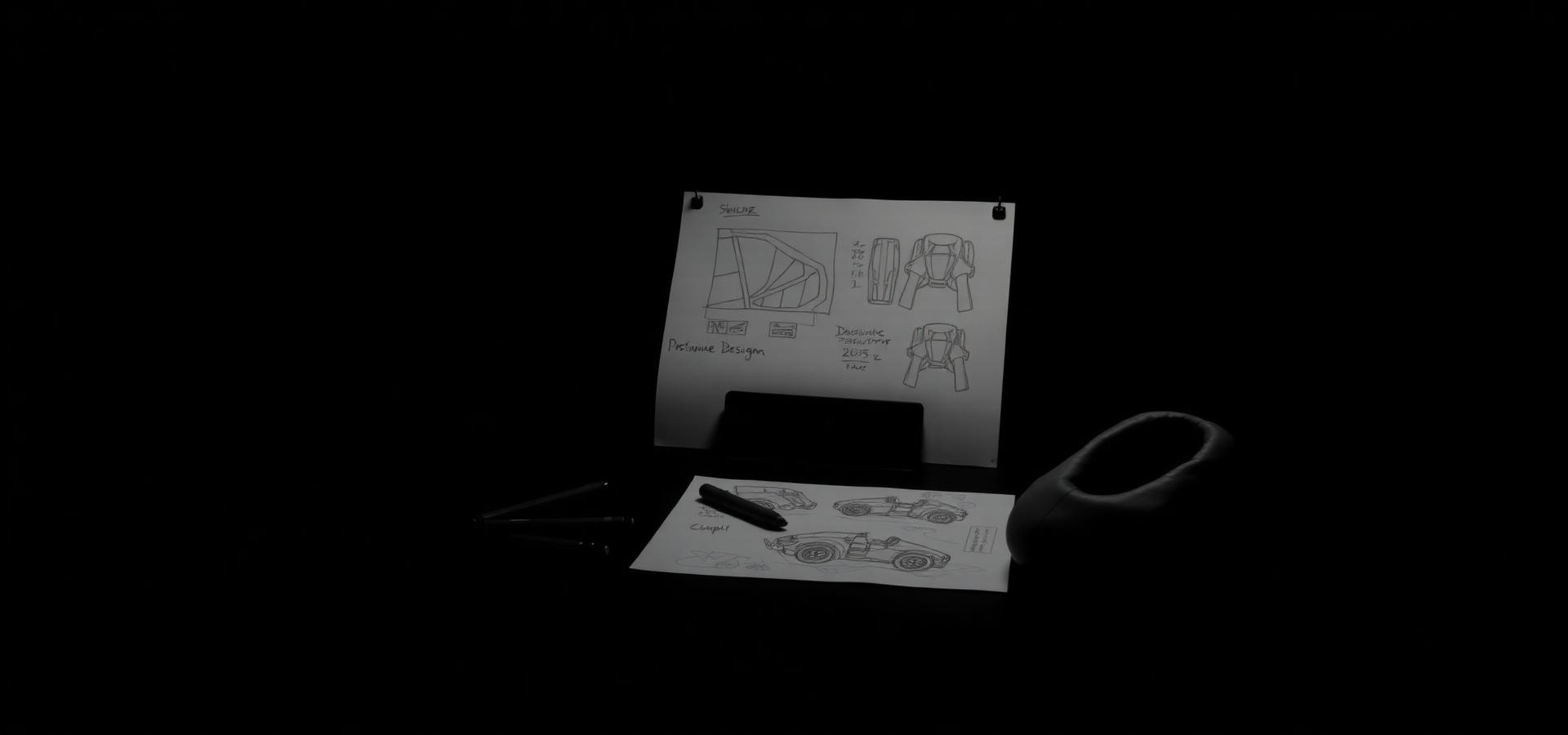
Concept design
Concept Design Cost and Timeline
What product concept work actually costs, and what makes it cost more
The honest answer is that concept design is priced by complexity, not by page count. This page gives the ranges we quote most often, the variables that move a project between them, and how to scope the work down when a budget is fixed.
Every figure below is a range we would stand behind in a quote, not a marketing number.
The sequence
Where concept design sits in the process
Stage 1
Product discovery
Is it worth building? Users, market, feasibility
See the service →
Stage 2
Concept design
Sketches, directions, the form settled
Priced on this page
See the service →
Stage 3
Engineering & CAD
Parts, materials, drawings, tolerances
See the service →
Stage 4
Prototype build
Parts made, assembled, wired
See the service →
Stage 5
Test & iterate
It fails, you learn, version two
Stage 6
Production
Tooling, suppliers, first run
See the service →
Concept design is the first paid stage. Engineering, prototyping, testing and production all follow it, and each has its own cost page.
Price a different stage
- Product design costDesign and engineering through production-ready CAD, before anything is built.
- Prototype cost calculatorWhat it costs to build the first working unit.
- Product development costThe whole program — idea through first production run.
- Industrial design costForm, ergonomics, CMF and surfaced CAD, priced as a service.
Typical concept design ranges
Ranges assume US-based engineers doing the work, not offshore drafting. These cover concept design bought on its own; the full Technical Concept Design engagement, with a costed BOM and manufacturable CAD, runs $15,000 to $40,000.
| Project type | Typical concept cost | Typical duration |
|---|---|---|
| Simple single-part accessory | $1,500 – $4,000 | 1 – 3 weeks |
| Multi-part mechanical product, no electronics | $4,000 – $12,000 | 3 – 6 weeks |
| Powered consumer device with a PCB | $8,000 – $25,000 | 5 – 10 weeks |
| Connected or regulated device (IoT, wearable, medical-adjacent) | $20,000 – $60,000+ | 8 – 16 weeks |
Simple single-part accessory
- Typical concept cost
- $1,500 – $4,000
- Typical duration
- 1 – 3 weeks
Multi-part mechanical product, no electronics
- Typical concept cost
- $4,000 – $12,000
- Typical duration
- 3 – 6 weeks
Powered consumer device with a PCB
- Typical concept cost
- $8,000 – $25,000
- Typical duration
- 5 – 10 weeks
Connected or regulated device (IoT, wearable, medical-adjacent)
- Typical concept cost
- $20,000 – $60,000+
- Typical duration
- 8 – 16 weeks
What pushes a project to the top of its range
- Mechanisms. Anything that moves, latches, folds or seals multiplies the iterations.
- Electronics packaging. Fitting a board, battery and antenna into a shape someone wants to hold is the most common source of rework.
- Regulatory targets. FDA, FCC, UL or food-contact requirements change material and geometry decisions at concept stage, not later.
- Unfixed requirements. Concepts that change scope mid-way cost more than complex concepts with a stable brief.
- Volume ambition. A 500-unit product and a 500,000-unit product are designed for different processes from the first sketch.
How to spend less without wasting the money
The cheapest useful package is a constrained one: one direction instead of six, CAD without photoreal renders, and a single review round. That works when you already know the form and need buildable geometry.
The most expensive mistake is the opposite — buying beautiful renders before anyone has checked that the internals fit. Renders sell; they do not de-risk.
Concept sprint
One direction, concept CAD, one revision. Good for a founder who needs something quotable fast.
Full concept
Research, wide ideation, scored selection, CAD and renders. The default for a product you intend to tool.
Concept plus proof
Full concept plus a printed fit or appearance model, so the shape is validated in the hand before engineering.
What concept design saves you later
Concept work is a small share of a development budget — typically 5 to 15 percent — and it is the cheapest place to change your mind. Moving a wall in CAD costs an hour. Moving it after a steel tool exists costs thousands and weeks.
It also makes every later quote real. Factories price geometry; without it, any manufacturing estimate you receive is a guess.
- The concept design process, step by stepWhat each stage delivers and how to tell it is finished.
- Rapid prototypingHow we build working prototypes and what they cost.
Questions
Frequently asked questions
How much does concept design cost?
Concept design on its own runs between $1,500 for a simple single-part accessory and $25,000 for a powered consumer device with electronics; connected or regulated products start around $20,000. Our full Technical Concept Design engagement — CAD built for manufacturability, a costed BOM, drawings and renders — runs $15,000 to $40,000 over 6 to 12 weeks.
How long does concept design take?
One to three weeks for a simple part, five to ten weeks for a powered device, and up to sixteen weeks for a connected or regulated product.
Do you charge hourly or fixed price?
Concept work is quoted as a fixed-price phase with a defined number of review rounds, so the budget does not drift while you decide.
Where to go next
- Concept designThe full guide to turning an idea into sketches, CAD and renders.
- Industrial design servicesForm, ergonomics, CMF and surfaced CAD — what it includes and what it costs.
- Rapid prototypingHow we build working prototypes and what they cost.
- Product development portfolioProducts we designed, engineered and manufactured.
- All development servicesResearch, design, engineering, prototyping and short-run production.