EU Machinery Regulation 2027: What Industrial Hardware Founders Should Design Into the Prototype Now
What's changing now
Regulation (EU) 2023/1230 replaces the Machinery Directive on 20 January 2027. For founders and product teams building automated equipment, benchtop machines, or connected industrial products, here is what changes in safety software, digital instructions, conformity routes, and harmonised standards, plus a checklist to apply before the next prototype build.
October 5, 20267 min read

Written by Konstantin Dolgan, Ph.D., NPDP
Founder & CEO, Product Development Engineer
Published October 5, 2026
Short answer
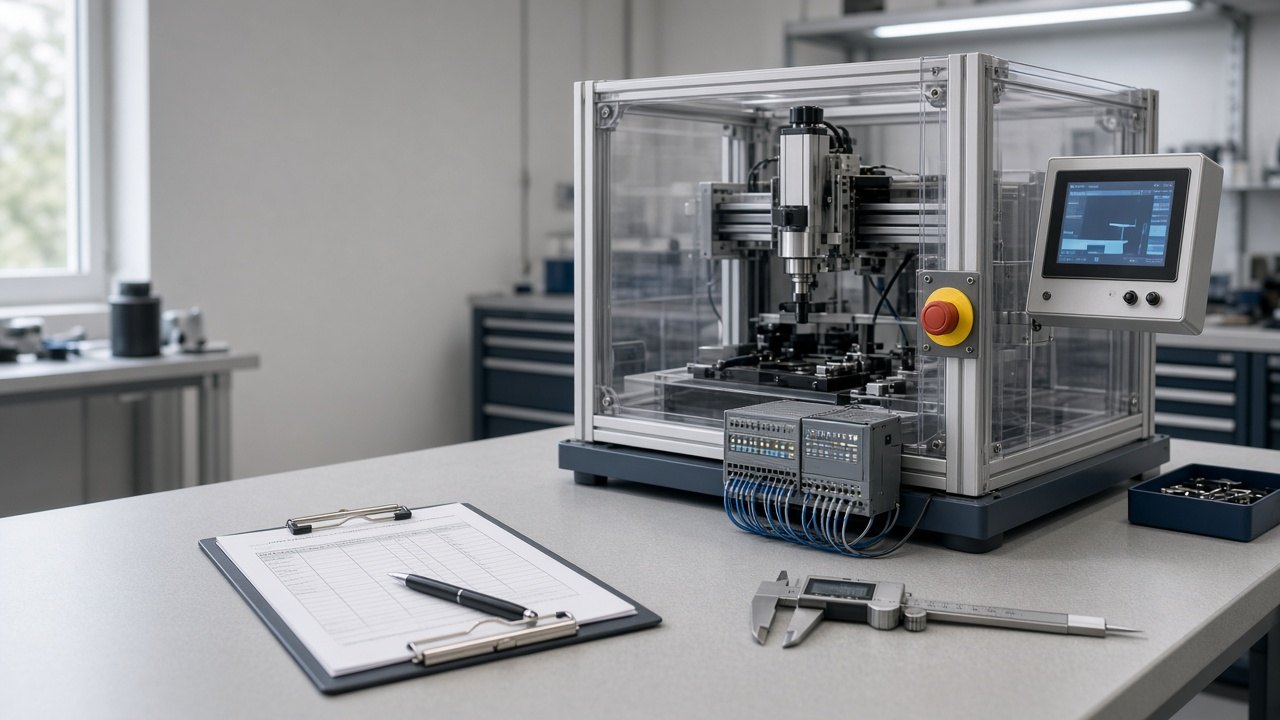
If you are building a machine, an automated cell, or an electromechanical product with moving parts that you plan to sell into the European Union, the rulebook changes on 20 January 2027. Regulation (EU) 2023/1230 replaces Machinery Directive 2006/42/EC on that date.
Most of the core safety logic carries over, but the Regulation adds explicit requirements for protecting safety-relevant software and data against corruption, sets conditions for digital instructions, tightens conformity routes for higher-risk categories (including machine-learning safety functions), and starts a new list of harmonised standards.
If your first EU units will ship after 20 January 2027, design the prototype to the Regulation now rather than retrofitting after the design freeze.
Key takeaways
- The Machinery Regulation (EU) 2023/1230 applies on a mandatory basis from 20 January 2027. Machinery placed on the EU market before that date must comply with the current Machinery Directive.
- New essential requirements cover protection against corruption (Annex III, section 1.1.9): connected devices must not create hazardous situations, safety-critical software and data must be identified and protected, and the machine must record evidence of legitimate or illegitimate software interventions.
- Instructions for use may be digital, but they must be downloadable and printable, available during a breakdown, kept online for the expected lifetime and at least 10 years after placing on the market, and supplied on paper free of charge within one month if the user asks at purchase.
- Annex I Part A categories, which include safety components and embedded systems with self-evolving machine-learning behaviour that ensure safety functions, cannot use self-assessment alone. A notified body is required.
- Harmonised standards cited under the Directive do not automatically give a presumption of conformity under the Regulation. The European Commission says the first list under the Regulation is being prepared and is expected before the end of 2026.
- Regulation (EU) 2026/1744, the Digital Omnibus on AI, entered into force on 27 July 2026 and amends the Machinery Regulation. Check the current consolidated text, not a 2023 summary.
What changes on 20 January 2027
The Machinery Regulation was adopted on 14 June 2023 and published in the Official Journal on 29 June 2023. It repeals Directive 2006/42/EC and applies on a mandatory basis as of 20 January 2027. According to the European Commission, the Regulation:
- integrates provisions for machinery with safety functions that are AI-powered
- integrates provisions for cyber-safety for compliance-relevant software, data, and safety control systems
- addresses conformity assessment of machinery presenting a higher risk factor
- updates certain product category-specific provisions
- clarifies when instructions for use and the EU declaration of conformity can be provided in digital format
Because it is a regulation rather than a directive, it applies directly and uniformly in every EU country without national transposition. For a small hardware team, the practical effect is simple: the date your first production units are placed on the EU market decides which text you certify against.
What is new for the prototype
Change | What the Regulation says | What to build into the prototype |
|---|---|---|
Protection against corruption (Annex III, 1.1.9) | Connecting another device, locally or remotely, must not lead to a hazardous situation. Safety-critical software and data must be identified and protected against accidental or intentional corruption. The machine must identify the safety software installed and collect evidence of legitimate or illegitimate interventions. | Separate safety logic from convenience features, lock firmware and configuration that affect safety, add a readable software version and an intervention or change log. |
Safety and reliability of control systems (Annex III, 1.2.1) | Control systems must be safe and reliable, and the Regulation links this requirement with cyber-safety. A certificate or statement under an EU cybersecurity certification scheme adopted under Regulation (EU) 2019/881 can give a presumption of conformity for 1.1.9 and 1.2.1, to the extent it covers them. | Treat the safety PLC or controller, its update path, and remote access as one design decision, not three. |
Digital instructions (Article 10) | Instructions may be digital if they can be printed, downloaded, and saved, remain accessible during a breakdown (including when embedded in the machine software), and stay online for the expected lifetime and at least 10 years after placing on the market. Paper must be provided free of charge within one month on request at purchase. | Plan the documentation host, version control, and a paper fallback before the pilot build. |
Self-evolving or machine-learning safety functions (Annex I, Part A) | Safety components and embedded systems with fully or partially self-evolving behaviour using machine learning that ensure safety functions fall in Part A. A notified body route is required (EU type-examination plus conformity to type, full quality assurance, or unit verification). | Decide early whether any safety function will depend on a learning model. If it does, budget notified body time. |
Technical documentation | Technical documentation and the EU declaration of conformity must be kept for at least 10 years. Where relevant, source code or programming logic must be made available to national authorities on a reasoned request when needed to check compliance. | Keep a traceable risk assessment, safety software baseline, and test evidence from the first functional prototype onward. |
Which conformity route your machine is likely to follow
Article 25 starts from Annex I:
- Annex I Part A (for example removable mechanical transmission devices and their guards, vehicle servicing lifts, portable cartridge-operated fixing and other impact machinery, and the machine-learning safety categories): a notified body route is mandatory. Internal production control (module A) alone is not available.
- Annex I Part B: internal production control (module A) is allowed only when the machine is designed and built to harmonised standards or common specifications specific to that category that cover all relevant essential health and safety requirements. Otherwise a notified body route applies.
- Machinery not listed in Annex I: internal production control (module A) applies, with the manufacturer responsible for the risk assessment, technical file, and EU declaration of conformity.
Do not guess the category from a product name. Check the current Annex I text and, when in doubt, ask a notified body or EU compliance advisor before the design freeze.
The harmonised standards gap to watch in late 2026
Harmonised standards give a presumption of conformity only when their references are published in the Official Journal for that specific law. The Commission notes that 20 January 2027 may appear as the end of legal effect for standards cited under the Machinery Directive, because the Directive is repealed on that date.
It also states that a new implementing decision listing harmonised standards under the Machinery Regulation is being prepared, that it will feature the vast majority of standards currently cited under the Directive, that coverage gaps against new or updated requirements will be clarified, and that the first list can be expected before the end of this year.
What this means for a prototype program: keep designing to the current state-of-the-art standards (for example the type-C standard for your machine family), but do not assume they will fully cover the new cyber-safety or digital instruction requirements. Plan for a short documentation gap analysis when the first Regulation list is published.
Prototype checklist before the next build
- Confirm the target market date. If the first EU units will be placed on the market on or after 20 January 2027, design and document to Regulation (EU) 2023/1230.
- Classify the machine against Annex I (Part A, Part B, or not listed) and write down the conformity route you expect.
- Run the risk assessment against Annex III, including sections 1.1.9 (protection against corruption) and 1.2.1 (control systems), not only the mechanical hazards.
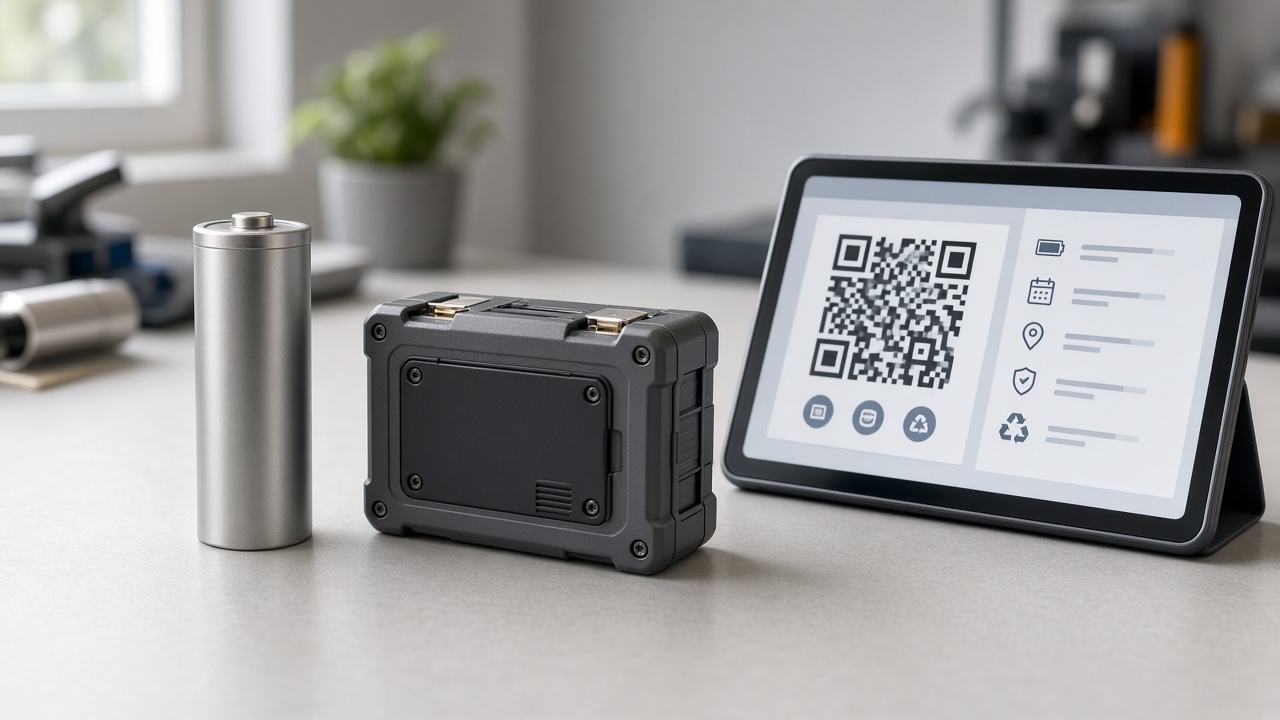
- Map every connection to the machine: USB, Ethernet, wireless, cloud dashboard, service laptop. Note which ones can reach safety-critical software or parameters.
- Separate safety functions from non-safety features in the control architecture, and make the safety software version readable on the machine.
- Add a change or intervention log for safety-relevant software and configuration.
- Decide whether any safety function relies on machine learning. If yes, plan for a notified body before you commit tooling.
- Choose the instruction format, the online host, and the paper fallback process, and draft instructions alongside the prototype rather than after it.
- Track the first harmonised standards list under the Regulation (expected before the end of 2026 per the Commission) and the current consolidated text after the Digital Omnibus on AI.
- If your product also has network connectivity, review the EU Cyber Resilience Act timeline in parallel.
Machines placed before vs after 20 January 2027
- Placed on the EU market before 20 January 2027: comply with Machinery Directive 2006/42/EC. The Commission allows manufacturers to also state conformity with the Regulation on the EU declaration of conformity, if applicable.
- Placed on the EU market on or after 20 January 2027: comply with Regulation (EU) 2023/1230.
A pilot batch that slips by a few weeks can cross that line. Build the schedule with the regulatory date in view.
What changed in 2026: the Digital Omnibus on AI
Regulation (EU) 2026/1744 of 8 July 2026 (the Digital Omnibus on AI) amends the AI Act, the EASA Regulation, and the Machinery Regulation. It was published in the Official Journal on 24 July 2026 and entered into force on 27 July 2026.
The current consolidated Machinery Regulation text on EUR-Lex is dated 27 July 2026 and lists it as an amendment.
Industry summaries describe the machinery changes as integrating AI-related health and safety requirements progressively, including through AI Act standards until sector-specific standards are available (secondary source).
If your design uses AI in any safety-relevant function, read the amended text directly before you lock the architecture.
How this fits prototype-to-production timing
For founders, the cheapest moment to address the Machinery Regulation is during the functional prototype, when the control architecture, enclosure, guarding, and firmware update path are still flexible.
Changes after a design freeze tend to touch firmware, wiring, labels, documentation, and sometimes tooling at the same time.
A short design for manufacturing review that includes the safety architecture and documentation plan is usually enough to catch the big items early. See also prototype-to-production steps.
What this article is not
- Not legal advice or a conformity assessment. Confirm classification and the conformity route with a notified body or qualified EU compliance advisor.
- Not a claim that every machine needs a notified body. Most machinery outside Annex I uses internal production control.
- Not a substitute for reading the consolidated text. The Regulation was amended in 2024 and again in July 2026.
- Not a replacement for the Cyber Resilience Act, the Radio Equipment Directive, or other EU rules that may apply to the same product.
Sources
Review the prototype while it is still flexible
If you are building a machine or automated product and want the safety architecture, guarding, and documentation plan reviewed while the prototype is still flexible, our industrial equipment and machine design team can help you scope it.
For a focused advisory review, explore product development consulting.
Frequently asked questions
When does the EU Machinery Regulation apply?
Regulation (EU) 2023/1230 applies on a mandatory basis from 20 January 2027. Machinery placed on the EU market before that date must comply with Machinery Directive 2006/42/EC.
Does the Machinery Regulation require a notified body for every machine?
No. Annex I Part A categories always need a notified body route. Annex I Part B can use internal production control only when category-specific harmonised standards or common specifications cover all relevant requirements. Machinery not listed in Annex I generally uses internal production control.
Can instructions for use be digital under the Machinery Regulation?
Yes, with conditions. They must be printable, downloadable, and saveable, accessible during a breakdown, and online for the expected lifetime and at least 10 years after placing on the market. If a user asks at purchase, the manufacturer must provide paper instructions free of charge within one month.
What does protection against corruption (section 1.1.9) mean for a prototype?
Connected devices must not create hazardous situations, safety-critical software and data must be identified and protected, and the machine must record evidence of legitimate or illegitimate software interventions. In practice that affects control architecture, firmware update paths, and logging.
Will harmonised standards under the Machinery Directive still give a presumption of conformity in 2027?
Not automatically. A presumption of conformity under the Regulation requires references published for the Regulation. The Commission says the first list is being prepared and is expected before the end of 2026, and will include most standards currently cited under the Directive.
Did the Machinery Regulation change in 2026?
Yes. Regulation (EU) 2026/1744, the Digital Omnibus on AI, entered into force on 27 July 2026 and amends the Machinery Regulation. Use the current consolidated text on EUR-Lex.
Services related to this guide
- Best prototyping companiesDevelopment firms, instant-quote bureaus and local shops — who fits which job.
- Free prototype cost calculatorFive to eight questions, an instant cost range for a first prototype.
- Prototype development companiesWhich firms take a sketch to a working prototype — and which only fabricate parts.
- Rapid prototypingWorking prototypes in days, from 3D printing to vacuum casting.