EU Digital Battery Passport 2027: What Hardware Founders Should Design Into the Prototype Now
For founders and product teams building battery-powered industrial, energy/storage, micromobility/LMT-adjacent, or other hardware that may place EV, LMT, or industrial batteries (greater than 2 kWh) on the EU market: what the August 2026 Commission guidance clarifies, and what to design into the prototype before passport requirements begin applying in February 2027.
September 28, 20266 min read

Written by Konstantin Dolgan, Ph.D., NPDP
Founder & CEO, Product Development Engineer
Published September 28, 2026
Short answer: This guide is for founders and product teams whose products may place an EV battery, LMT battery, or industrial battery with capacity greater than 2 kWh on the EU market, or put one into service. From 18 February 2027, each battery in those categories must have a battery passport.
The practical prototype task is to define the data trail, responsible economic operator, durable identity, and QR code plan before enclosure and battery management system decisions are frozen.
Key takeaways
- Start date: Passport requirements begin applying 18 February 2027 for each EV battery, each LMT battery, and each industrial battery greater than 2 kWh placed on the market or put into service.
- Structured guidance: The August 2026 Commission guidance organises 71 data points by EV, LMT, and industrial battery category and indicates whether each point is mandatory, optional, conditional, or not required to be completed or displayed as of February 2027.
- QR-linked record: The passport is linked to the battery through a QR code, while detailed data is maintained by the responsible economic operator in a decentralised system.
- Responsibility: The obligation sits with the economic operator placing the finished battery on the market, not suppliers of individual components or modules.
- Registry timing: The Commission Batteries page gives 20 July 2026 as the indicative date for the DPP Registry to become operational. Confirm current Commission pages before locking the process because timelines are indicative and subject to publication requirements.
- Prototype implication: Capture identity, category, capacity, chemistry, manufacturing, performance and durability, and circularity-related fields before enclosure and BMS freeze so the team is not reverse-engineering a data trail after tooling.
What the Commission published in August 2026
On 21 August 2026, the European Commission published an updated Guidance Document: Digital Batteries Passport - data points by category. It provides a structured overview of data points for EV batteries, LMT batteries, and industrial batteries covered by the passport requirement.
For each battery category, the guidance indicates whether individual data points are mandatory, optional, applicable only in specific circumstances, or do not have to be completed or displayed as of February 2027. It brings together 71 data points with their legal sources and category-specific applicability.
The guidance should be read with Regulation (EU) 2023/1542 of 12 July 2023 and relevant delegated and implementing acts. The guidance does not introduce additional legal requirements and is not an authoritative interpretation of EU law.
Who must have a battery passport from 18 February 2027
From 18 February 2027, each EV battery, each LMT battery, and each industrial battery with a capacity greater than 2 kWh that is placed on the EU market or put into service shall have a battery passport.
The obligation to create and maintain the passport lies with the economic operator placing the finished battery on the market. It does not sit by default with a supplier of an individual cell, component, or module. A product team therefore needs to identify who will take that finished-battery role and what supplier data that operator will need.
This threshold and category check comes first. The rule is not a claim that every battery in every product needs a passport.
What a battery passport carries
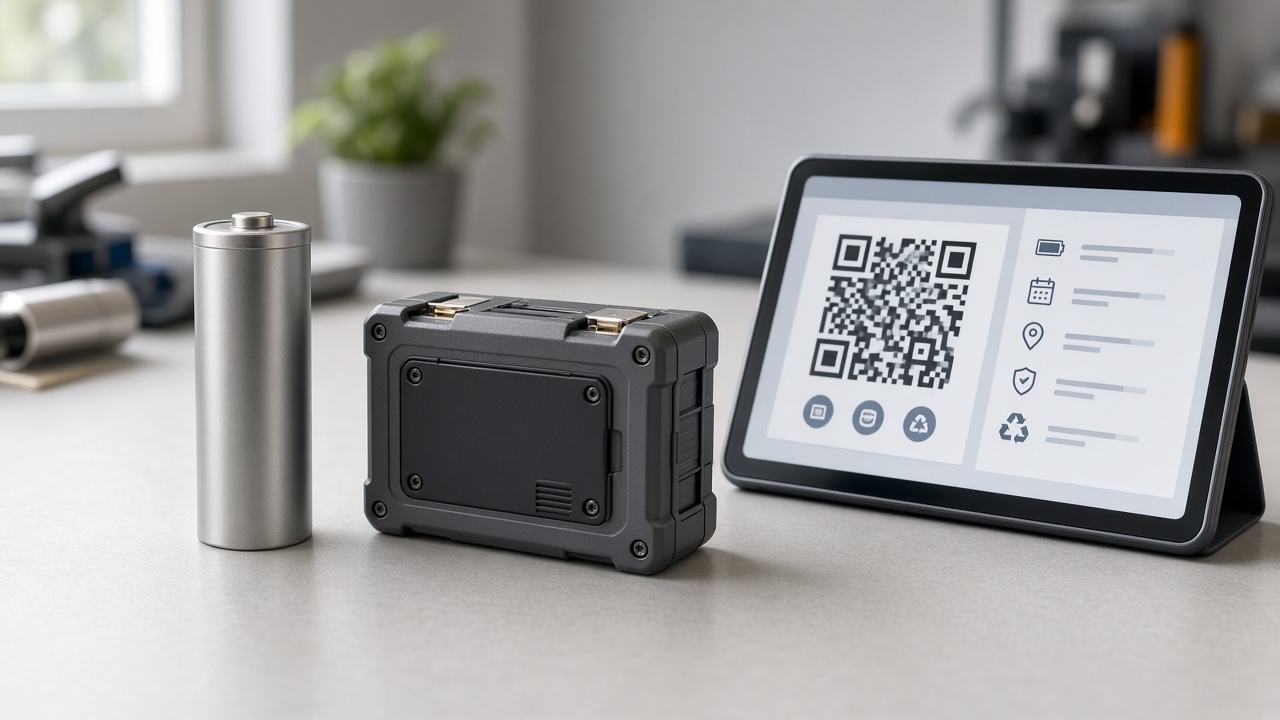
The Commission Batteries and Battery Passport page explains that the passport is linked to the battery through a QR code. Information may include battery identification and technical characteristics, manufacturer and economic operator information, performance and durability data, information supporting repair, reuse, and recycling, and sustainability and circularity-related information.
The passport operates through a decentralised system. Detailed information is maintained by the responsible economic operator. The exact field applicability varies by EV, LMT, and industrial battery category in the 71-point guidance, so teams should not treat every example field as mandatory for every category.
Prototype design checklist before enclosure and BMS freeze
Use these ten gates while battery architecture, supplier choices, labeling space, service access, and evidence collection can still change. The aim is to design a reliable data trail into the product rather than reconstruct it after tooling.
Gate | What to decide before freeze | Project evidence |
|---|---|---|
1. Confirm scope | Determine whether the product places an EV battery, LMT battery, or industrial battery greater than 2 kWh on the EU market, or will put one into service. | Record the battery category, capacity basis, market route, and scope review date. |
2. Name the responsible operator | Identify the economic operator that will place the finished battery on the market. The passport owner is not the cell supplier by default. | Record the legal entity and responsible contact. |
3. Define durable identity | Assign a unique identifier, model identification, and batch, serial, or equivalent strategy that can survive into production. | Link identifiers to design records, units, and production history. |
4. Capture manufacturing identity | Collect manufacturer name or trademark, postal contact point, place of manufacture, and manufacturing month and year fields early. | Define owners and sources for each field, subject to category applicability. |
5. Lock core characteristics | Keep battery category, rated capacity, chemistry, and weight in the controlled design record, not only in a vendor datasheet PDF. | Record values, source documents, revisions, and approval state. |
6. Plan evidence collection | Decide how performance and durability evidence will be measured and stored. | Link test methods, results, and revision history so passport fields are not invented later. |
7. Plan service and circularity access | Review dismantling sequences, pack, module, and cell access, and joining choices that affect repair, reuse, recycling, or later claims. | Capture design decisions and the evidence supporting them. |
8. Reserve the QR path | Reserve physical space and a process for the QR code that links to the passport. | Set label location, enclosure artwork rules, durability needs, and a usable scan path. |
9. Map supplier data | Separate data needed from cell and module vendors from data only the finished-battery placer can assert. | Add required supplier fields, evidence format, and update obligations to sourcing records. |
10. Schedule readiness review | Put a February 2027 readiness review on the project calendar and re-check Commission guidance updates and DPP Registry status before EU launch. | Record the latest official-source check and unresolved actions. |
Data categories founders should plan for
The supporting guidance PDF lists examples such as a unique identifier, the identity of the party registering or responsible for the passport, manufacturer name or trademark, manufacturer postal address with a single contact point, battery category, model identification, batch or serial information, place and date of manufacture, weight, capacity, and chemistry.
Applicability varies by EV, LMT, and industrial battery columns. Use the category-specific guidance rather than assuming every example below is mandatory.
Category | Why it matters at prototype | High-level examples from Commission materials |
|---|---|---|
Identification and economic operator | The data model needs a durable link between the physical battery, responsible party, and controlled product record. | Unique identifier; registering or responsible party; manufacturer name or trademark; postal contact point; model and batch or serial information. |
Technical characteristics | Architecture and sourcing choices establish core attributes that become difficult to reconstruct after design freeze. | Battery category; capacity; chemistry; weight; place and month and year of manufacture. |
Performance and durability | Evidence needs a defined measurement and storage path before testing begins. | Performance and durability information, with exact applicability determined by battery category. |
Repair, reuse, and recycling | Enclosure, fastener, joining, and access choices affect later service information and claims. | Information supporting repair, reuse, and recycling. |
Sustainability and circularity | Supplier evidence and finished-product decisions need traceable ownership. | Sustainability and circularity-related information, subject to the applicable legal and guidance columns. |
Why this belongs before enclosure and BMS freeze
The passport is not only a final label. Durable identity, QR placement, capacity and chemistry records, supplier evidence, manufacturing data, performance testing, and service access all touch decisions made during development. Waiting until launch can expose gaps after the enclosure, battery management system, artwork, sourcing package, and test plan are harder to change.
Teams can place this review alongside the architecture and sourcing work in our electronic product prototyping guide, electronic product development guide, and IoT product development process. Cost planning should also connect prototype choices to prototype cost and mass-production cost decisions.
What this article is not
- It is not legal advice. It is not a substitute for Regulation (EU) 2023/1542, relevant delegated or implementing acts, or qualified counsel for a specific product.
- It is not a claim that every battery in every product needs a passport. Scope depends on battery category, capacity, and whether it is placed on the market or put into service under the Regulation.
- It is not a fixed mandatory-field count for every category. The 71-point guidance shows mandatory, optional, conditional, and not-required applicability by EV, LMT, and industrial battery columns.
- It is not a duplicate of other regimes. The CPSC lithium battery guide and EU Cyber Resilience Act guide address different questions.
- It is not a permanent snapshot of implementation timing. Commission guidance and indicative registry timelines may be updated, so confirm current official pages before launch.
Where to go next
If the next prototype includes an EV, LMT, or industrial battery that may fall within the February 2027 passport requirement, LA NPDT can help turn the guidance into an engineering-ready data map, enclosure and QR plan, supplier-information checklist, and evidence strategy before BMS and enclosure freeze. Start with product development consulting, apply to partner with us, or contact the team for a focused discussion.
Sources
Frequently asked questions
When do EU battery passport requirements begin applying?
They begin applying on 18 February 2027 for each EV battery, each LMT battery, and each industrial battery with a capacity greater than 2 kWh that is placed on the EU market or put into service.
Which batteries need a digital battery passport?
The Commission states that each EV battery, each LMT battery, and each industrial battery greater than 2 kWh placed on the market or put into service must have a battery passport from 18 February 2027. Teams should confirm the category and capacity of the finished battery against Regulation (EU) 2023/1542 and current Commission guidance.
Who is responsible for creating and maintaining the battery passport?
The obligation lies with the economic operator placing the finished battery on the market. Suppliers of individual components or modules do not carry that obligation by default, although their data may be needed by the responsible economic operator.
What did the August 2026 Commission guidance add?
The updated guidance brings together 71 data points and organises them by EV, LMT, and industrial battery category. For each category it indicates whether individual data points are mandatory, optional, applicable only in specific circumstances, or do not have to be completed or displayed as of February 2027, with legal sources and applicability.
What should hardware founders design into the prototype now?
Define the finished-battery economic operator, durable identity and model or batch strategy, supplier-data map, controlled technical-characteristic record, performance and durability evidence path, service and circularity access, and physical QR code location before enclosure and BMS freeze. Re-check exact category applicability in the current Commission guidance.
Is this legal advice?
No. This article is a prototype-planning guide, not legal advice or an authoritative interpretation. Review Regulation (EU) 2023/1542, relevant delegated and implementing acts, current Commission materials, and qualified counsel for the specific battery and market route.
Tagged:Product Development
Services related to this guide
- Best prototyping companiesDevelopment firms, instant-quote bureaus and local shops — who fits which job.
- Free prototype cost calculatorFive to eight questions, an instant cost range for a first prototype.
- Prototype development companiesWhich firms take a sketch to a working prototype — and which only fabricate parts.
- Rapid prototypingWorking prototypes in days, from 3D printing to vacuum casting.