
How To Develop a Product or Service as a Business
Learn more about developing your product or service idea into a thriving business.
August 23, 20229 min read

Written by Konstantin Dolgan, Ph.D., NPDP
Founder & CEO, Product Development Engineer
Published August 23, 2022Updated August 19, 2026
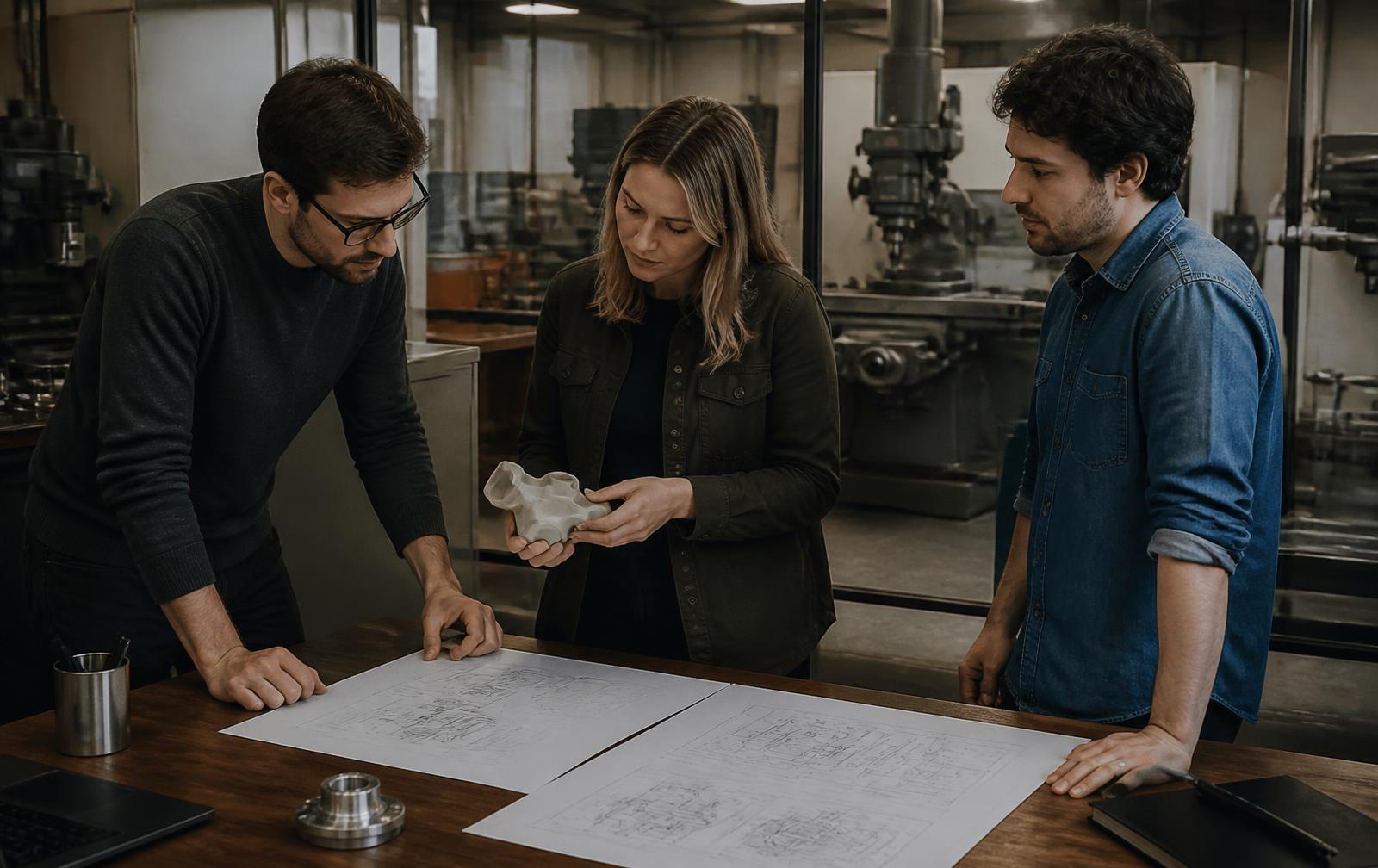
Are you ready to develop your product or service idea and make it a lucrative, thriving business? If so, you need the guidance and expertise of a knowledgeable and capable product development team.
Learn more about the methods used to properly develop a concept through each stage and how the most successful start-ups get their foot in the door of consumer markets.
Determine the product or service
What is product development, and how do I develop a product idea? The first step toward product development is deciding on the product’s or service’s specifics.
The idea for the product then converts into a software service or SaaS or an actual physical product/prototype. Before creating the product or service, there are many points to consider and a process to complete. So what is product development, and how does it help bring ideas to life?
Solve a problem
Most people wonder, “How do I develop a product idea?” Most products and services exist to solve a problem, which is where entrepreneurs come in. Determine a problem and pose a solution via a marketable idea. Once the idea is polished, a product solves that problem by making it available to the public for purchase.
One of the best ways to develop a viable idea is to consider your experiences and the daily problems you face. One of the best methods for coming up with a viable idea is to consider your own experiences related to problems you face in everyday life. How can a product or service solve this issue?
If you don’t use your own experiences as a basis for an idea, you can use feedback from people you know or colleagues.
How do I develop a product line?
Entrepreneurs wanting to know what product development is and how to develop a product line need to know about the product development process. A series of steps helps shed light on a product’s potential and creates a prototype and marketing strategy to ensure success. The following is how the process works.
Determine the product’s market appeal
Once you have an idea for a product or service, the next step is to determine the potential demand in the market. The method for finding out if there is a potential demand is to experiment with feedback from market professionals and potential buyers through market research. This process can take some footwork and analysis to assess the product’s potential accurately.
This process includes interviewing individuals regarding their reactions to the product in question. Gauging interest and converting those findings into usable analytics defines the likelihood of success and demand. If there’s no demand, this process identifies an issue.
You also can compare the potential idea to others already available in the market. Knowing the likelihood of success helps identify if this product has a chance for profitability.
Costing
How much does it cost to develop a new product? The costing portion of product development answers these very relevant questions. The goal of the cost is to determine a working figure to completely bring the product to market.
This figure considers all aspects, from testing and research to prototyping and manufacturing. You use this figure to set your budget and identify a price point for the product.
Prototype and product creation
Of course, a prototype is the first part of the production. A solid prototype provides a visual aid or representative item to bring the idea to life. The prototype may change according to response and help create the finished design.
Plan for change
Even when a product successfully launches on the market, plan for ups and downs. Frequent changes and fluctuations are parts of the process. Prepare to take action when necessary to tweak and develop a product further.
Remember that a product isn’t static once it’s released. Discover new ideas and put them through the product development process too.
How to start product development
So, what is product development? If you want to find out, you can rely on LA New Product Development Team to explain how the proper product development process occurs and what the team does to implement those measures.
There are also tools and features such as a virtual assistant to ensure success and added convenience. Reach out to get started and begin working with a top team of professional experts who know how to assess the potential of an idea, develop a prototype, and more.
FAQ Questions:
Q. What are the five stages of product development?
A. The five phases of product development include idea generation, screening, concept development, product development, and commercialization.
Q. What is product development?
A. Product development means introducing a new or improved product idea into the market. This process involves concepts, testing, prototyping, cost, and bringing the idea to the market.
Q. What is the product development process?
A. The product development process involves taking an idea and creating a viable product that can be effectively introduced into the market. It involves taking an idea or improving on one and running it through the five stages of product development.
Case study reference: ScienceDirect: study on new product development practice
The development of new products yields better results when following a systematic approach. From surveys to technical requirements, having the right process and financial research available can boost effectiveness.
Product Development Process Steps
Step | Description |
|---|---|
Determine the Product or Service | Decide on the specifics of the product or service idea. |
Solve a Problem | Identify a problem and propose a marketable solution. |
Determine Market Appeal | Assess potential demand through market research and feedback. |
Costing | Determine the budget and price point for bringing the product to market. |
Prototype and Product Creation | Create a visual or representative item to develop the idea. |
Plan for Change | Prepare for ongoing adjustments and further development after launch. |
What each stage of product development actually costs
Most people asking how to develop a product want a number and a date, not a diagram. The honest answer is that a consumer hardware programme is a sequence of six funded stages, and each one exists to buy information cheaply enough that you can stop before the next one.
The table below reflects typical small-to-mid consumer products with moderate mechanical complexity and no regulatory burden; medical, automotive and anything with a battery certification path run higher.
Stage | What it produces | Typical spend | Typical duration | Decision at the end |
|---|---|---|---|---|
Concept definition | Written product definition, user, price point, constraints | $2k-$8k | 1-3 weeks | Is there a specific customer with a specific problem? |
Market and demand validation | Competitive teardown, interviews, landing-page or pre-order test | $3k-$15k | 2-6 weeks | Will enough people pay the target price? |
Industrial design and engineering | CAD, mechanism design, electronics architecture | $15k-$60k | 6-14 weeks | Can it be built to hit the cost target? |
Prototype and test | Works-like and looks-like units, test data | $8k-$40k | 3-8 weeks per round | Does it survive real use? |
Design for manufacturing | Tooling-ready files, supplier quotes, BOM | $10k-$35k | 4-10 weeks | Is unit cost inside the margin you need? |
Tooling and pilot run | Hard tools, first-article samples, pilot units | $20k-$150k+ | 8-16 weeks | Are pilot units consistent enough to sell? |
Caption: indicative ranges for a moderately complex consumer product. Regulated categories add 30-100%.
Solve a problem you can describe in one sentence
The projects that stall are almost always the ones whose problem statement needs a paragraph. Before spending on design, write the problem as: "[specific user] cannot [specific outcome] because [specific obstacle], and today they cope by [current workaround]."
If the workaround column is empty, there is usually no problem — people who have a real problem always have a bad solution already. Our product discovery engagement exists to close that sentence with evidence rather than opinion.
Validating demand before the expensive stages
Validation is not asking friends whether they like the idea. It is finding the cheapest artefact that produces a number you would bet money on. Ranked by cost per unit of certainty:
- Competitive teardown — buy the three closest products, take them apart, price the BOM. Cost: a few hundred dollars. Tells you the cost floor and the incumbent's compromises.
- Problem interviews — 12-20 conversations with target buyers about their current workaround, not your concept. Tells you whether the problem is worth money.
- Landing page with price — real traffic, real price, email capture or pre-order. A 2-4% conversion from qualified traffic is a genuine signal.
- Concierge test — deliver the outcome manually for a handful of customers before building anything. Slow, but the highest-confidence result available.
- Pilot units with real users — 10-25 units in the field for 30 days. The only test that surfaces durability, misuse and support load.
Costing: the number that decides everything
Landed unit cost drives the whole business model, and it is set during design, not during negotiation with the factory.
A useful working rule for consumer products sold through retail: target a landed cost at or below 20-25% of the intended shelf price, because distributor and retail margins typically consume half the shelf price before you see anything.
Direct-to-consumer is more forgiving — 30-35% is workable — but shipping, returns and paid acquisition eat the difference. Run this arithmetic during concept definition; discovering it after tooling is the most common way a technically successful product fails commercially.
Prototype before you commit to tooling
Split prototyping into two tracks so each answers one question. A works-like prototype ignores appearance and proves the mechanism, electronics and firmware. A looks-like model ignores function and tests appearance, ergonomics and shelf presence. Combining them too early doubles the cost of every iteration. Our rapid prototyping shop builds both from the same CAD, and design for manufacturing converts the surviving design into tooling-ready files.
Product development checklist
- Write the problem sentence, including the current workaround, before any CAD.
- File a provisional patent application before any public disclosure or crowdfunding page.
- Set the target landed unit cost in stage one and re-check it at every design review.
- Keep works-like and looks-like prototypes separate until both are stable.
- Get three supplier quotes on the same drawing package, not on three different revisions.
- Budget at least two prototype rounds; single-round programmes almost always need a third.
- Plan certification (FCC, UL, CPSC, FDA as applicable) into the schedule, not after pilot.
- Define the go/no-go criterion for each stage in writing before the stage begins.
Frequently asked questions
How long does it take to develop a product from idea to market?
For a moderately complex consumer product with no regulatory path, 9-18 months from concept to first shipment is realistic: roughly 3-5 months of design and prototyping, 2-3 months of design for manufacturing and supplier selection, and 3-5 months of tooling and pilot production. Regulated products add 6-18 months.
How much does it cost to develop a product?
Development through tooling-ready files usually runs $40k-$150k for a consumer product of moderate complexity. Hard tooling and the pilot run add $20k-$150k more depending on part count and cavitation. The largest single variable is the number of prototype iterations, which is driven by how well the concept was defined at the start.
What are the stages of product development?
Concept definition, market validation, industrial design and engineering, prototyping and testing, design for manufacturing, then tooling and pilot production. Each stage ends with a written go/no-go decision, which is the mechanism that keeps a weak concept from consuming the whole budget.
Should I develop a product or a service first?
A service is cheaper to test and can be delivered manually while you learn what customers actually value; a product scales but front-loads cost into tooling. Many hardware businesses start by delivering the outcome as a service to a small group, then productise what proved repeatable.
From idea to a business that can actually ship it
Most first products do not fail on the drawing board. They fail because the business around them was never designed: no landed cost model, no minimum order quantity the founder can finance, no channel that will stock a product without a track record. Treat product development and business development as one plan with shared gates, and the expensive surprises arrive while they are still cheap to fix.

What each stage costs and how long it takes
Stage | Typical spend (US) | Elapsed time | Gate to pass before spending more |
|---|---|---|---|
Discovery and requirements | $3k-$12k | 2-4 weeks | A written spec and a named buyer |
Concept and industrial design | $8k-$30k | 4-8 weeks | One concept with proven purchase intent |
Engineering and DFM | $25k-$120k | 10-20 weeks | Quotes from two manufacturers within budget |
Prototypes and testing | $5k-$40k | 4-10 weeks | Units that survive the abuse the field will apply |
Tooling and pilot run | $15k-$150k | 8-16 weeks | Purchase orders or pre-orders that cover the run |
The unit economics worksheet to build first
- Landed cost: factory price plus freight, duty, inspection and scrap, not the quoted unit price
- Wholesale and retail ladder: retail is typically 2x wholesale, and wholesale is typically 2.5-4x landed cost
- Minimum order quantity and the cash it locks up for a full production cycle
- Warranty and returns reserve, 2-5% of revenue for a first hardware product
- Cost of customer acquisition per unit, measured on real ad spend rather than an assumption
- Tooling amortization spread over a realistic first-year volume, not a hoped-for one
If the ladder does not close at your target retail price, the fix is upstream in design, not downstream in negotiation. That is the work we do in product design and validate again during manufacturing support before tooling is cut.
Frequently asked questions
How much money do I need before I start? Enough to reach the next gate, not the whole program. A funded discovery and concept phase is usually $10k-$40k and produces the evidence needed to raise or self-fund engineering.
Should I patent before I develop? File a provisional once the concept is specific enough to describe, then keep developing. A provisional buys twelve months and costs a fraction of a utility filing.
Can I skip tooling with 3D printing? For runs under a few hundred units, often yes. Above that, printed parts usually cost more per unit than an injection-molded part including amortized tooling.
What is the most common first-product mistake? Designing to a feature list instead of to a landed cost. Cost is a requirement; treat it like one from the first sketch.
Filed under:EducationInspirationWords
Related articles
All articles
You used Chatgpt to develop a product idea. Now what?
Blog · AI Product Development · 9 min read You used ChatGPT to develop a product idea. Now what? Real AI product development starts the morning after the chat ends. Here is how L

Voice of the Customer vs. Voice of the Business
Balancing the Voice of the Customer (VoC) and the Voice of the Business (VoB) is now essential for companies in competitive, customer‑driven markets. To succeed long‑term, orga
Service Blueprint vs Journey Map: Which to Use in Product Development
Service blueprint vs journey map: what each one reveals, when storyboards or experience flows fit better, and how to build one that changes engineering decisions.
Services related to this guide
- Product design servicesIndustrial design and CAD taken all the way to manufacturable files.
- Rapid prototypingWorking prototypes in days, from 3D printing to vacuum casting.
- Electronic design servicesSchematic, PCB layout, firmware and bring-up, through to production handoff.
- Product development examplesReal projects we designed, prototyped and shipped.