What it costs to develop a connected hardware product
A line-by-line budget for a smart device with a PCB, an enclosure, a battery, an app and certification, plus where the money actually goes.
August 29, 20261 min read

Written by Konstantin Dolgan, Ph.D., NPDP
Founder & CEO, Product Development Engineer
Published August 29, 2026
A connected consumer device with a custom PCB, a molded enclosure, a battery, a phone app and FCC certification typically costs $120,000 to $400,000 to develop and takes nine to fourteen months. The hardware is rarely the biggest line. Firmware, app and certification together usually exceed it.
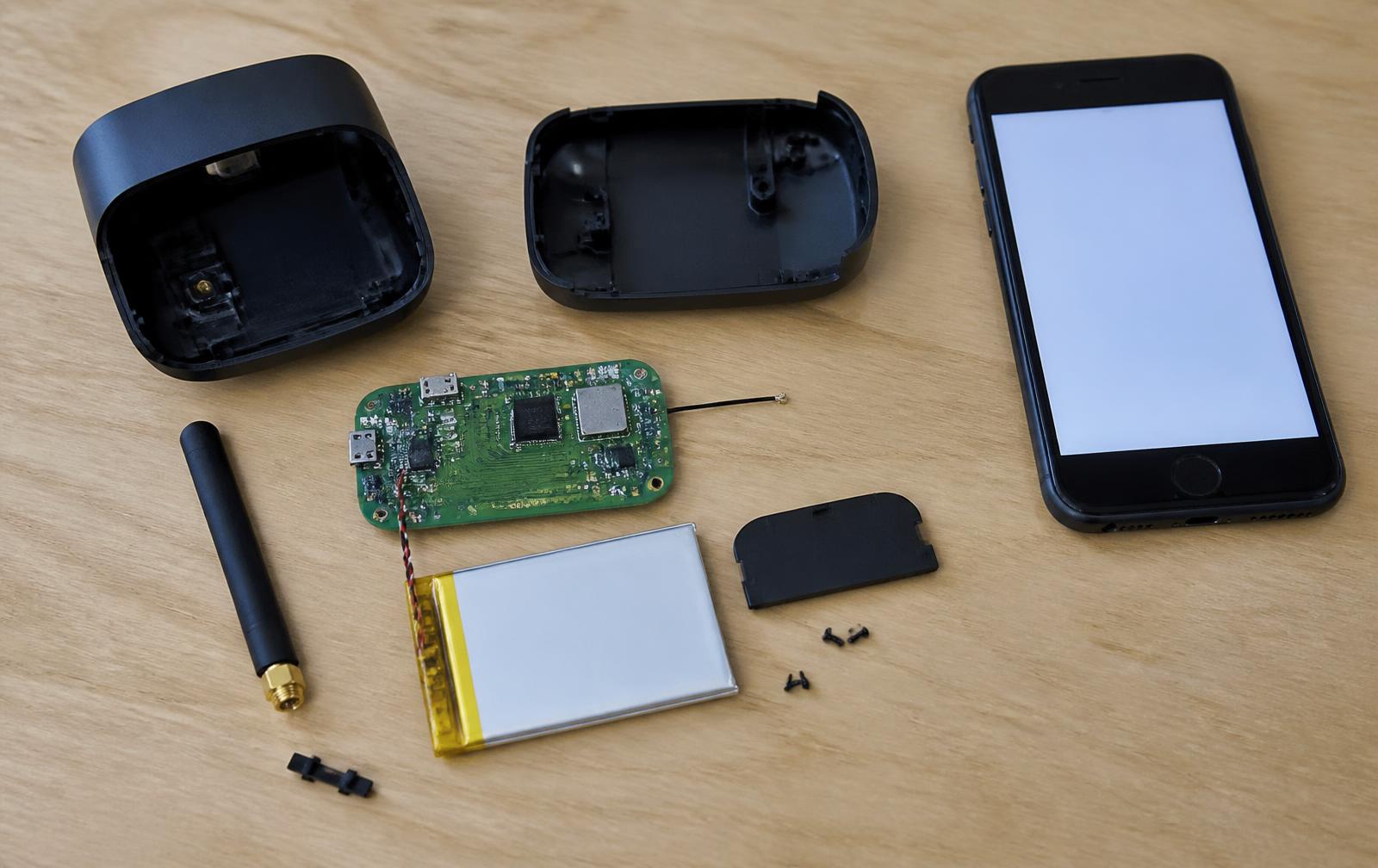
What does a connected device cost to develop?
Workstream | Typical range | Notes |
|---|---|---|
Industrial design and concept | $8,000 - $30,000 | Includes user research and form studies |
Electrical engineering, 2 board revisions | $40,000 - $120,000 | Schematic, layout, bring-up, BOM |
Firmware | $25,000 - $90,000 | Grows fast with OTA updates and power management |
Mechanical design and enclosure | $20,000 - $60,000 | Molding-ready CAD, seals, drop performance |
Mobile app, iOS and Android | $25,000 - $120,000 | Provisioning and pairing are the hard part |
Cloud and backend | $10,000 - $60,000 | Only if the device must talk to a server |
Certification (FCC, CE, battery) | $12,000 - $40,000 | UN 38.3 for lithium shipping is separate |
Tooling | $15,000 - $80,000 | Depends on part count and finish |
Frequently asked questions
Why the range is so wide?
Battery powered and waterproof roughly doubles the mechanical work. A pre-certified radio module removes an entire certification path. Every extra sensor adds firmware, calibration and test time. A phone app with account management costs more than a local Bluetooth control app. Any medical or child-safety claim adds testing and documentation.
What can you cut without breaking the product?
Ship one platform first, usually iOS. Use a pre-certified module. Launch without OTA if the firmware is simple and stable. Skip the cloud until you have users who need remote access. Keep the enclosure to two molded parts. None of these choices reduce quality; they reduce scope, which is the only reliable way to reduce cost.
Where LA NPDT fits?
We run connected product programs end to end, so the electronics, enclosure, firmware and app answer to one schedule. See IoT consumer product development , electronic prototyping stages , or the QMS2GO recorder case study .
Services related to this guide
- Free prototype cost calculatorFive to eight questions, an instant cost range for a first prototype.
- Prototype designLooks-like, works-like or pre-production: what each proves and what it costs.
- Rapid prototypingWorking prototypes in days, from 3D printing to vacuum casting.
- Best product development companiesHow the leading US firms compare, and which one fits your stage and budget.