Our work

Designed, engineered and manufactured end to end

QMS2GO Voice Recorder: Consumer Electronics Product Development, End to End

A wearable recorder built to capture quality findings on a loud, phone-restricted plant floor.

  • INDUSTRIAL DESIGN
  • ELECTRONICS & FIRMWARE
  • DSP AUDIO TUNING
  • MECHANICAL ENGINEERING
  • PROTOTYPING & TESTING
  • DESIGN FOR MANUFACTURING
  • MANUFACTURING
Start a project
QMS2GO Voice Recorder: Consumer Electronics Product Development, End to End

Project at a glance

Client
QMS2GO — AI quality management platform for manufacturers
Category
Wearable consumer electronics / industrial hardware
Starting point
A software company with no way to capture spoken findings on the plant floor
What we delivered
Industrial design, mechanical and electronic engineering, DSP audio tuning, prototyping, DFM, packaging and manufacturing of the finished branded product
Key specs
6061 aluminum alloy body, DSP noise cancellation, 16 GB storage, 12+ hours of recording, standalone MP3 capture, USB connection, magnetic clip and lanyard
Key constraints
No Bluetooth or Wi-Fi in security-restricted plants, intelligible speech over machinery noise, glove-operable controls, all-shift wearability
Outcome
A manufactured, QMS2GO-branded device shipping with retail packaging and feeding audio straight into the platform
QMS2GO builds AI quality management software for manufacturers. Its users are quality managers, auditors and line supervisors, and the most valuable information they produce is spoken: a non-conformance noticed at a machine, a corrective action agreed in the aisle, a walkthrough narrated during an audit. Almost none of it was being captured. By the time anyone reached a keyboard, the detail was gone.
The obvious answer — a phone app — was not available. Many of the plants QMS2GO serves restrict camera-equipped and wireless devices on the floor, and a phone is the wrong tool while wearing gloves anyway. QMS2GO came to LA NPDT for a dedicated hardware product, and we ran the whole program: industrial design, mechanical and electronic engineering, audio DSP work, prototyping, design for manufacturing and production.

The Challenge: Clean Speech in a Room That Is Never Quiet

A recorder is a simple product until you specify where it has to work. This one had to hold up against constraints that pull against each other.
  • Industrial noise. Compressors, conveyors, presses and HVAC sit right on top of the human voice band. Raw audio recorded three feet from a machine is unusable and untranscribable.
  • No wireless. No Bluetooth, no Wi-Fi. Secured plants do not allow radios on the floor, so the recorder had to move files by wire and work as a completely standalone device.
  • Worn, not held. It had to survive being clipped to a shirt or a lanyard all shift, operated by feel, with gloves on.
  • A full shift and then some. 12+ hours of continuous recording so nobody has to think about charge state mid-audit.
  • Enough storage to forget about. 16 GB — weeks of recording — so a full device never becomes the reason a finding goes uncaptured.
  • Credible in the field. It sits in the hands of plant managers next to calibrated instruments. A soft plastic gadget would not have been taken seriously.

Industrial Design: A Tool, Not a Gadget
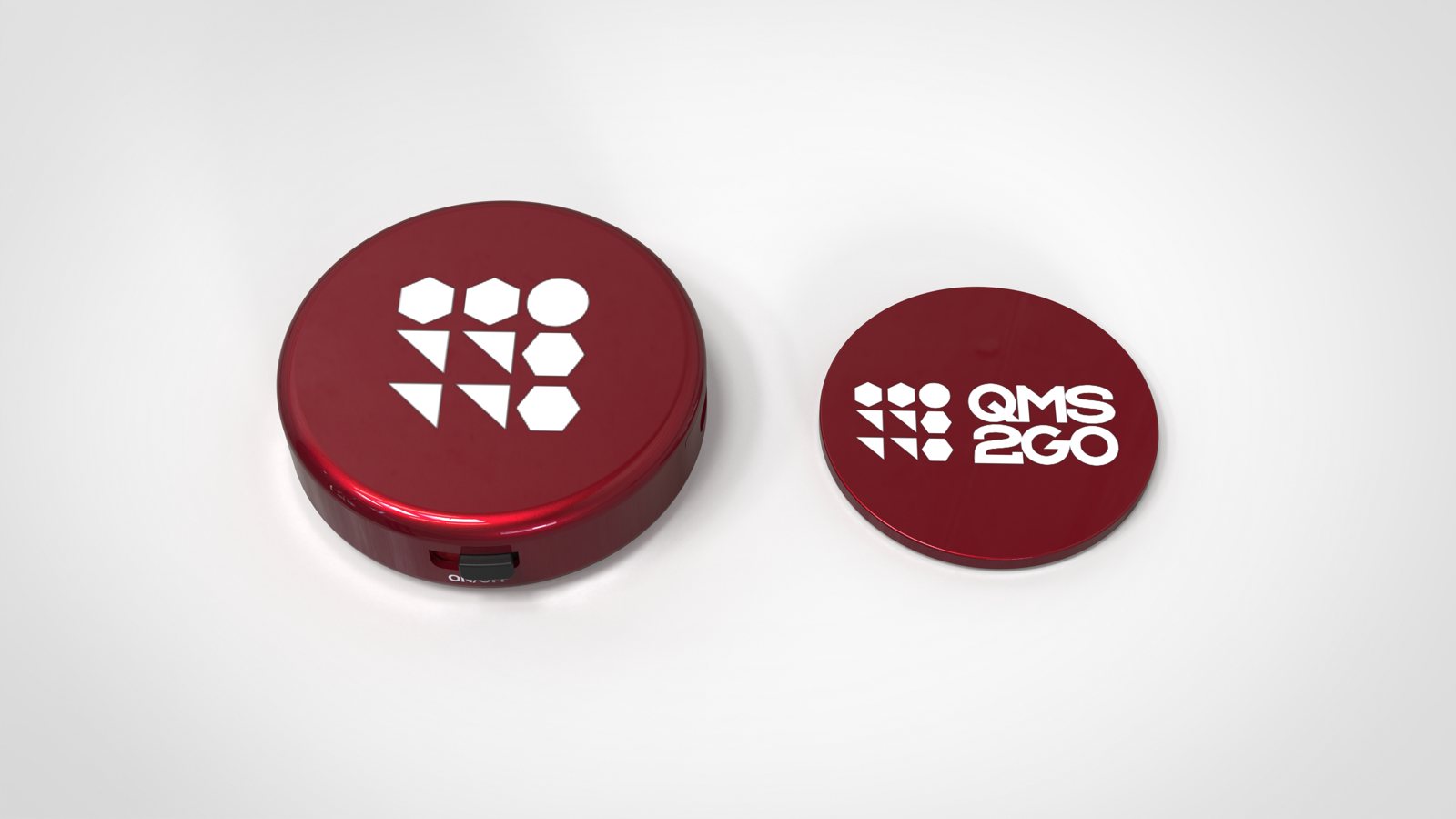
We designed the recorder around a 6061 aluminum alloy body. The alloy was chosen for what it does, not for looks: it is rigid enough to protect the internals through drops onto concrete, it takes a hard anodized finish that survives oil, solvent and repeated cleaning, and it acts as a heat and EMI-friendly shell in an electrically noisy building. The result also feels like an instrument in the hand, which mattered for adoption.
CAD renders of the front and back of the QMS2GO aluminum digital voice recorder
Front and back CAD renders of the production recorder.
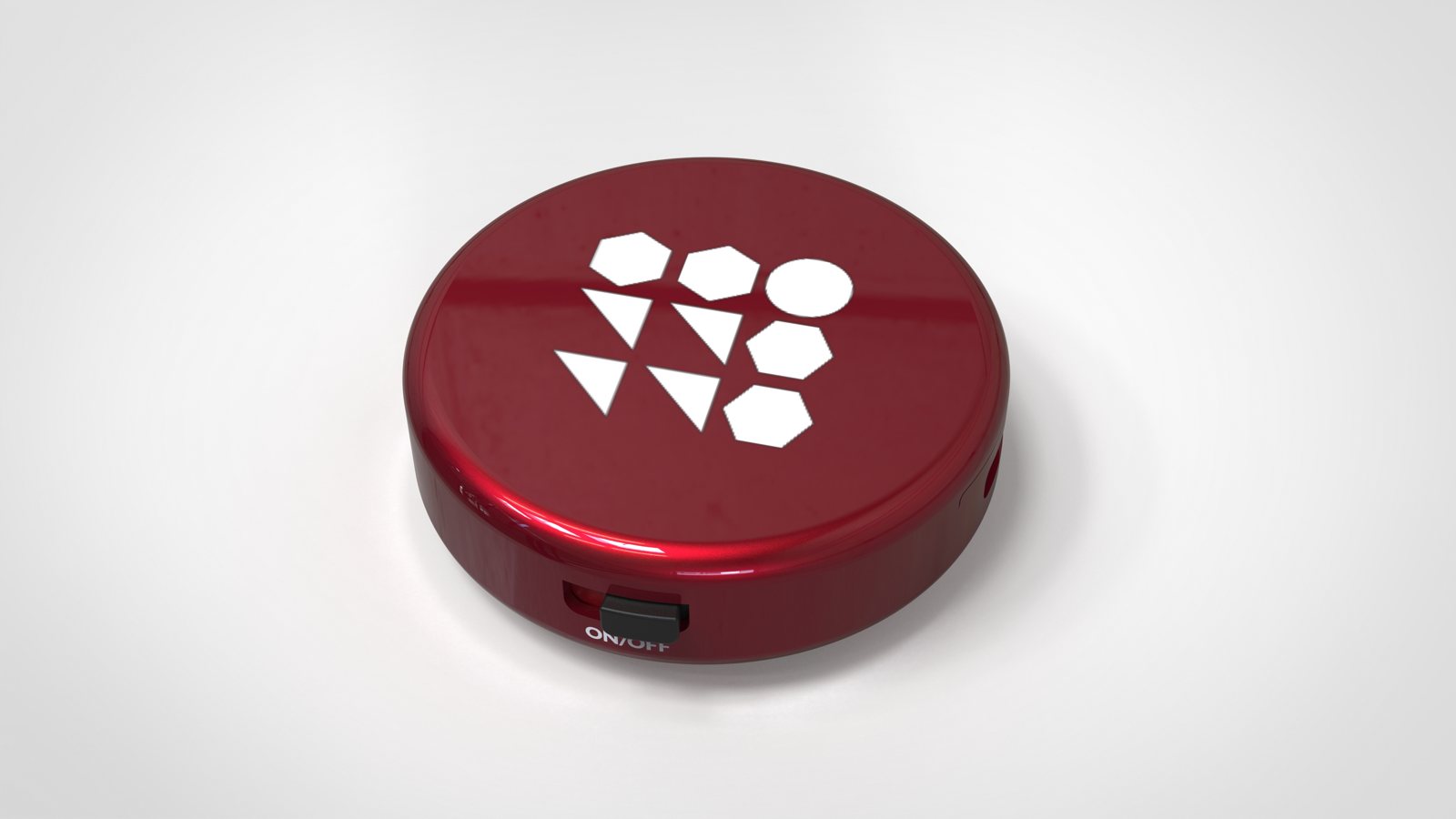
Top view render of the QMS2GO voice recorder showing the microphone ports and top control surface
Top surface: microphone ports positioned to aim at the speaker at chest height.
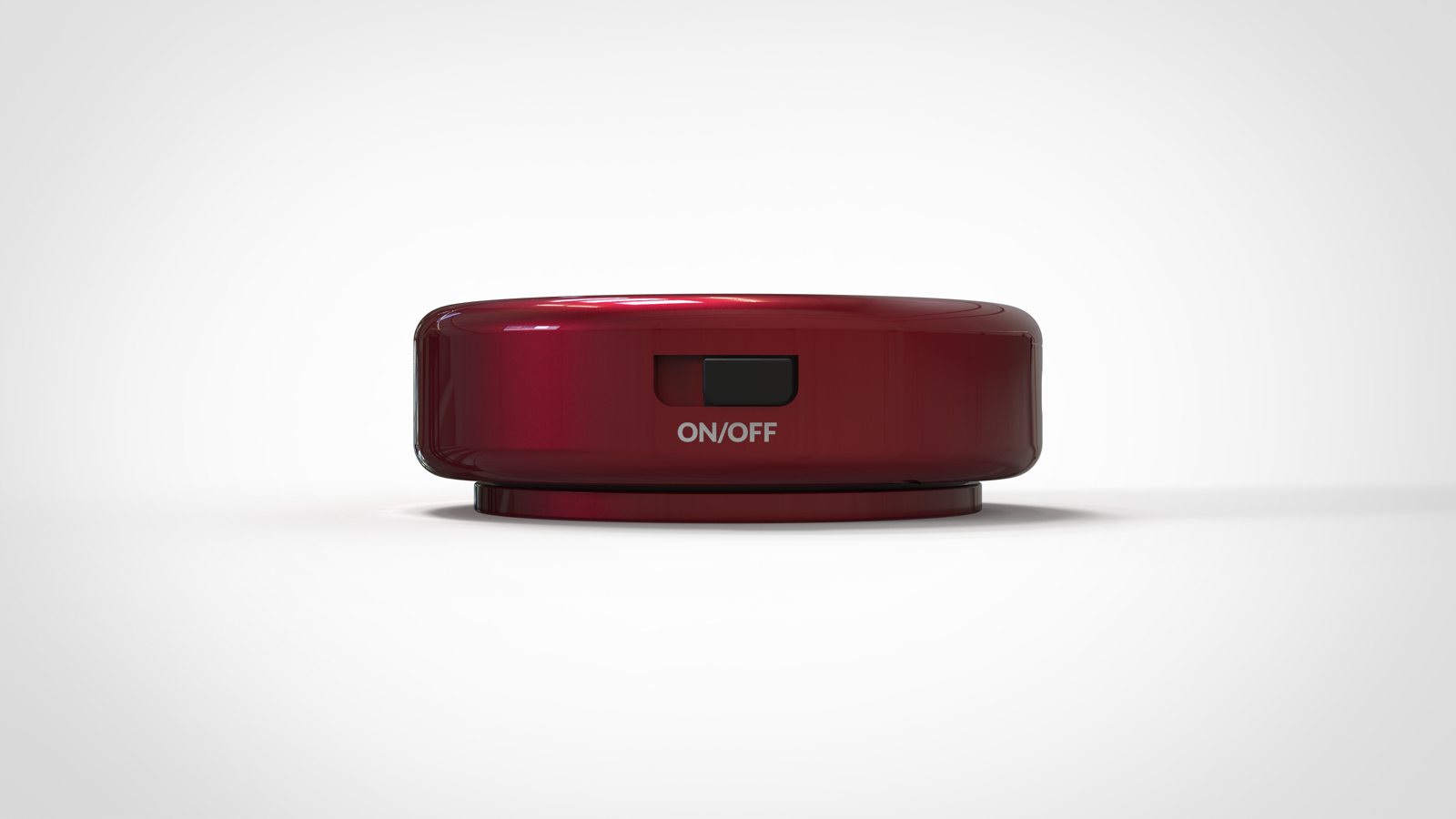
The control layout was reduced to what a gloved hand can find without looking: a single large record action, a positive mechanical power switch that cannot be nudged in a pocket, and tactile detents rather than a menu. Microphone ports, the clip geometry and the lanyard point were positioned together so the device sits at chest height, aimed at the speaker, whichever way it is worn.
Render of the QMS2GO recorder power switch and side controls designed for gloved operation
A positive mechanical power switch a gloved thumb can find — and a pocket cannot nudge.
Mounting is deliberately redundant. A magnetic clip holds it to a shirt, a pocket or a badge strap; a lanyard covers people who move between lines all day; and the same body works handheld when someone wants to hold it up to a machine or a colleague.
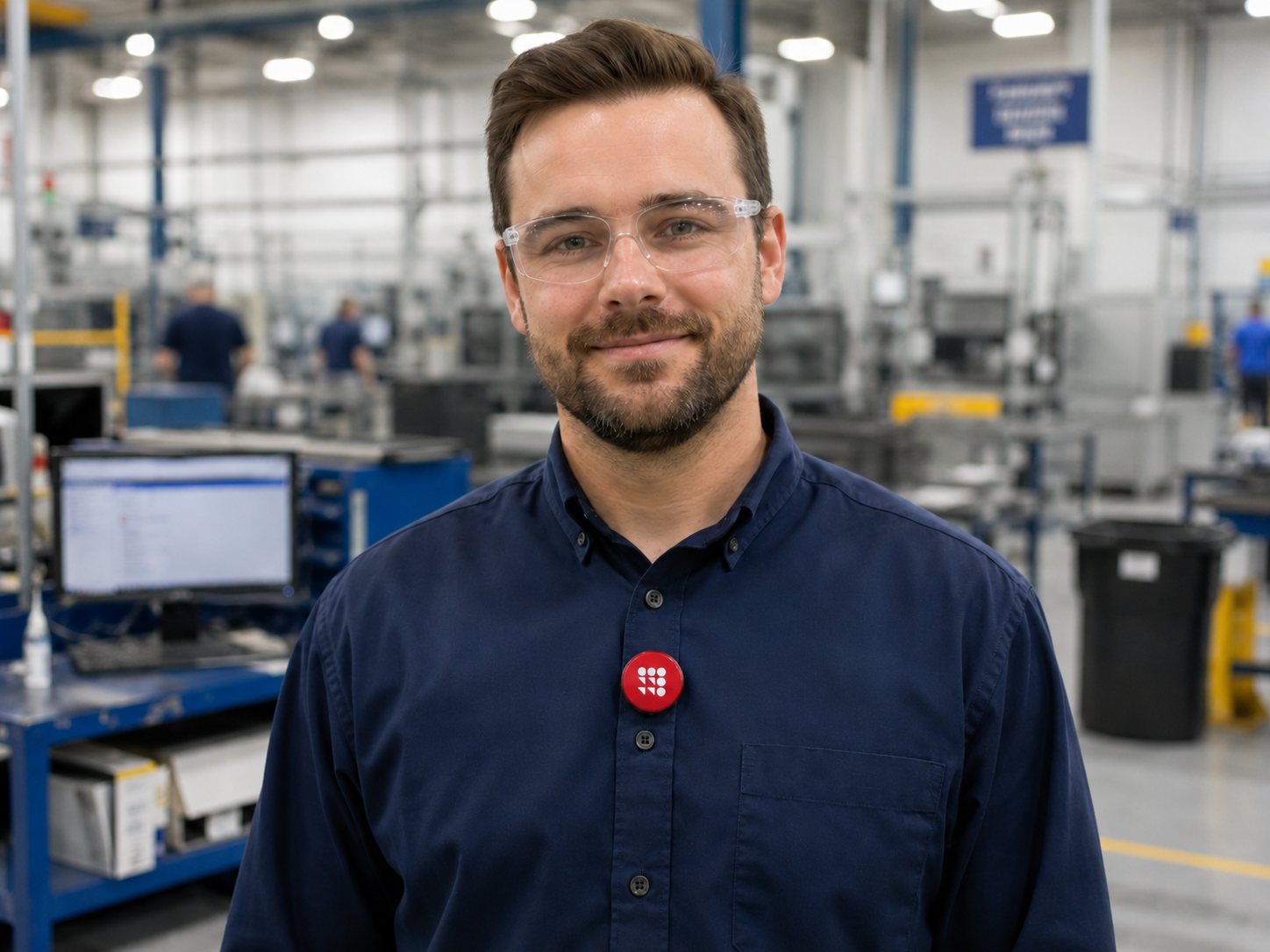
QMS2GO digital voice recorder worn clipped to a shirt during a plant walkthrough
Clipped at chest height, aimed at the speaker, whichever way it is worn.

Electronics, Audio and DSP Noise Cancellation
The engineering effort concentrated on the audio chain, because everything downstream — transcription, AI summarization, the quality record itself — depends on intelligible speech. We specified the microphone array and its acoustic porting, the preamp and converter stages, and the on-device DSP that runs noise cancellation in real time as the file is written.
Tuning was done against real conditions rather than a lab tone. Plant-floor noise is broadband, mechanical and repetitive; the near-field human voice sits on top of it. We tuned the filtering to suppress that steady machinery bed and the handling noise a worn device generates, without the artifacts that make aggressive noise cancellation destroy consonants — the exact thing that makes a transcript useless.
The rest of the electronics followed the same rule: nothing that needs a companion device. The recorder captures standalone to MP3, stores 16 GB internally, runs 12+ hours per charge, and exposes a USB connection so a user plugs it directly into a workstation like a jump drive. Files copy over as ordinary audio, ready to be dropped into the QMS2GO platform — no app, no radio, no pairing.
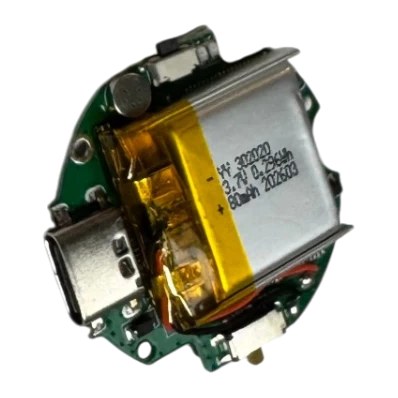
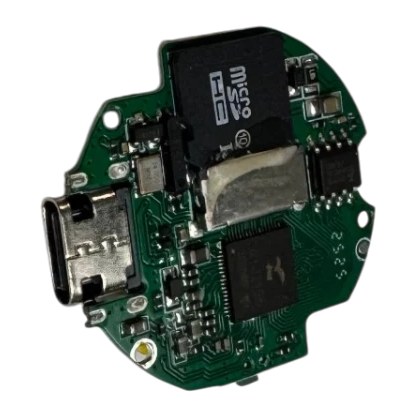
The board itself was laid out to the enclosure envelope rather than the other way around: a round PCB carrying the USB-C connector, onboard storage, the audio front end and the lithium-polymer cell inside a footprint the size of a coin.
Custom round PCB for the QMS2GO voice recorder with USB-C connector, onboard storage and audio processor
Front of the board: USB-C connector, onboard storage and the audio processor.
Reverse side of the QMS2GO recorder circuit board showing the lithium-polymer battery and microphone placement
Back of the board: lithium-polymer cell and microphone placement.
Render of the QMS2GO recorder with the USB connection used to offload recordings
The USB connection used to offload recordings — no wireless radios, per plant rules.
Angled product render of the QMS2GO aluminum voice recorder
Production-intent render of the anodized aluminum body.

Prototyping and Field Testing

Prototype rounds were split between form and function. Appearance and fit models resolved how the device sits when clipped, whether the switch can be found by feel, and how the clip and lanyard behave when someone leans into a machine. Functional units went into working plants so the audio chain could be judged on the only benchmark that counts: whether the recording is intelligible and transcribable after a real walkthrough.
Each round tightened something specific — port placement to reduce breath and clothing rub, DSP thresholds to stop the filter chewing speech during a quiet moment, switch force so gloves work but pockets do not, and thermal and power behavior across a full 12-hour recording.
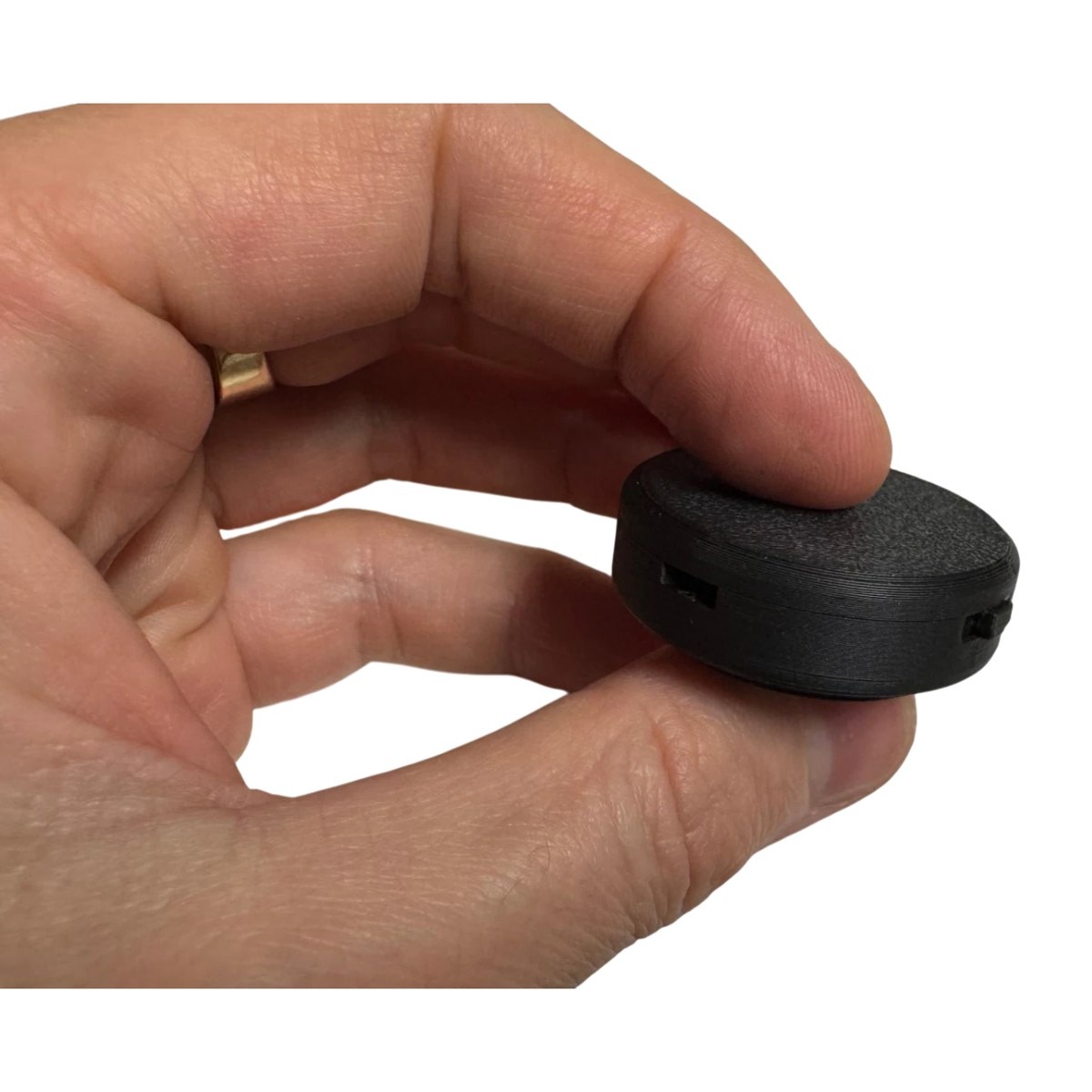
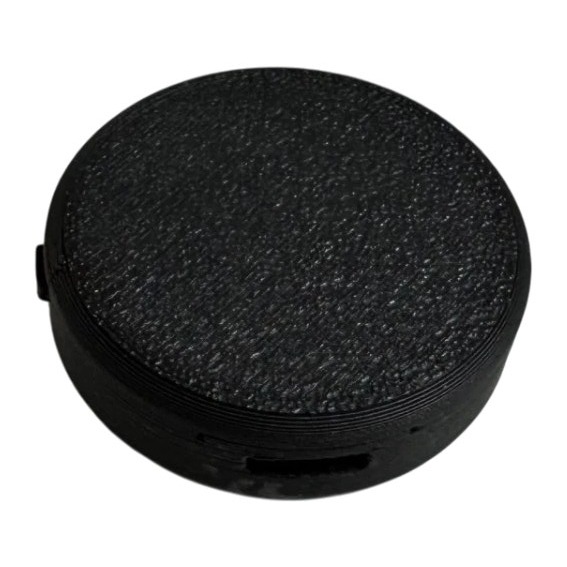
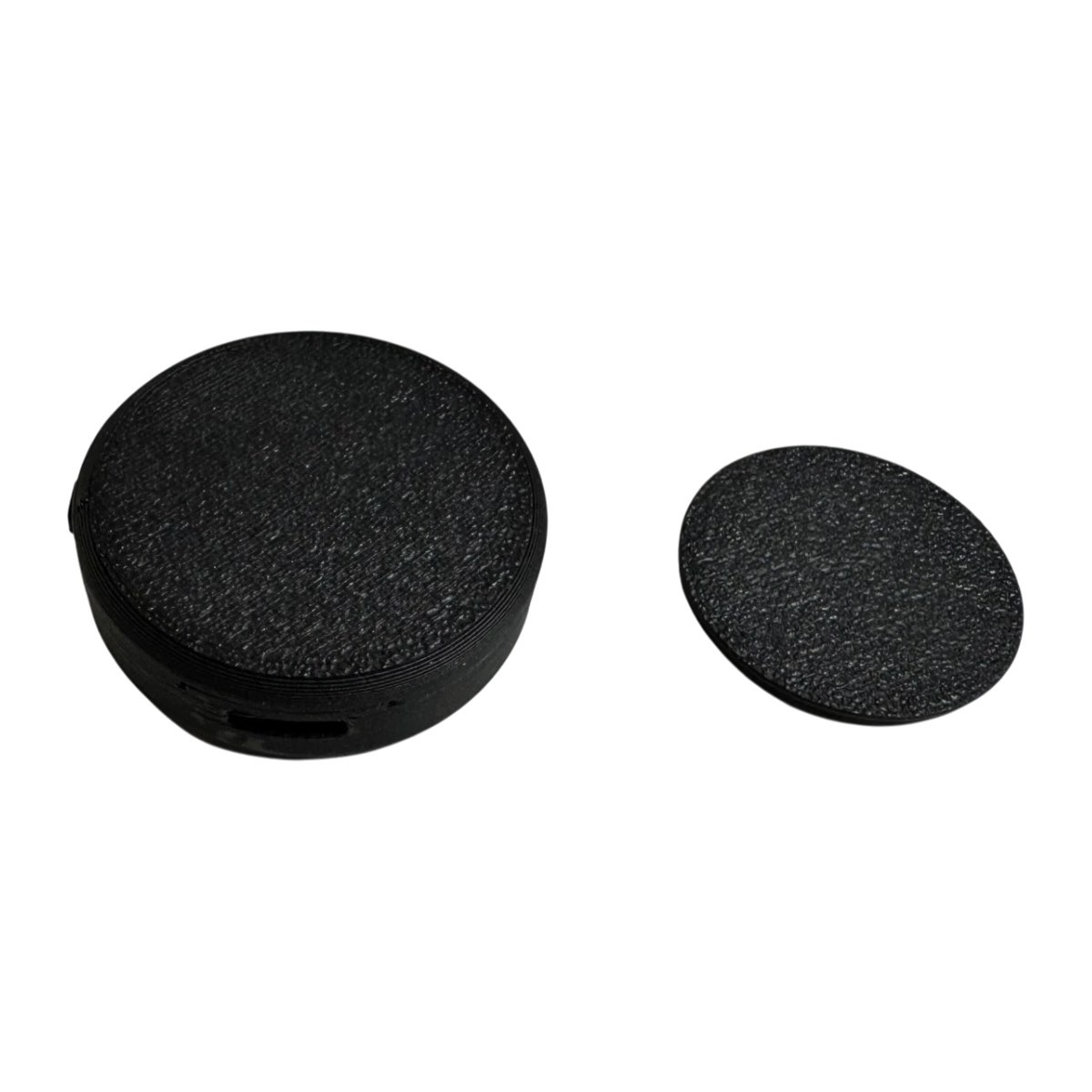
Before any metal was cut, 3D printed appearance and fit models locked the diameter, thickness, switch position and USB-C cutout. Holding a printed puck answers questions a CAD screenshot never will — whether it disappears under a shirt, whether a gloved thumb finds the switch, whether it feels like a tool or a toy.
3D printed prototype of the QMS2GO voice recorder held between two fingers to show its size
A printed puck in hand for scale.
3D printed enclosure prototype of the QMS2GO recorder showing the USB-C port cutout
Checking the USB-C cutout and switch position.
3D printed prototype housing and cover for the QMS2GO wearable voice recorder
The two-part printed housing and cover.
3D printed appearance and fit models locked the diameter, thickness, switch position and USB-C cutout before any metal was cut.
Quality manager using the QMS2GO voice recorder during an inspection walkthrough
Field testing in a working plant — the only benchmark that mattered for the audio chain.

Design for Manufacturing and Production
We prepared the product for manufacture and then manufactured it. That covered the enclosure process and tolerances, the anodized finish and branding, the internal stack-up and fastening scheme, cable and connector selection, the assembly sequence and the test steps that confirm a unit records, cancels noise and mounts as a drive before it ships.
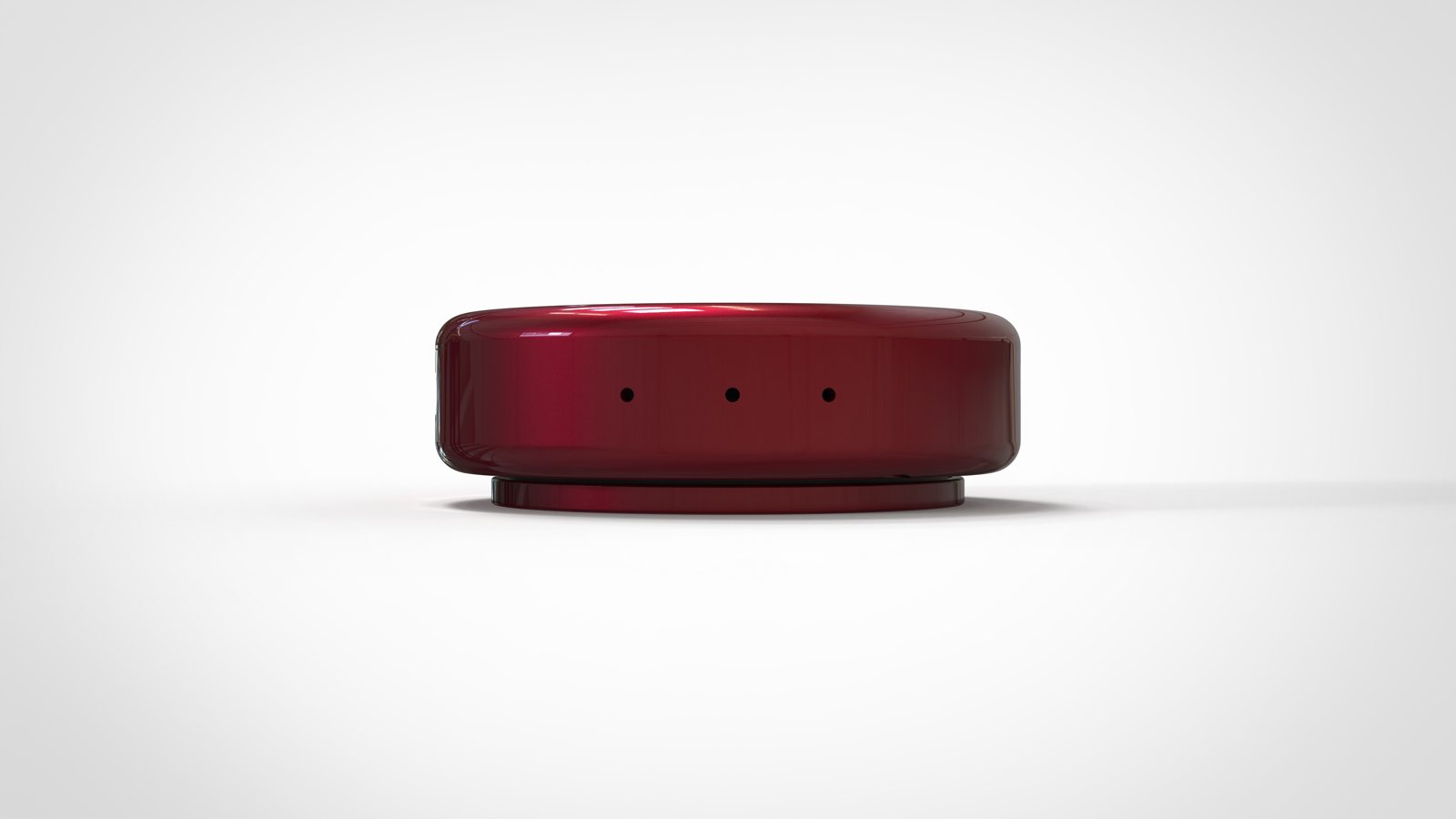
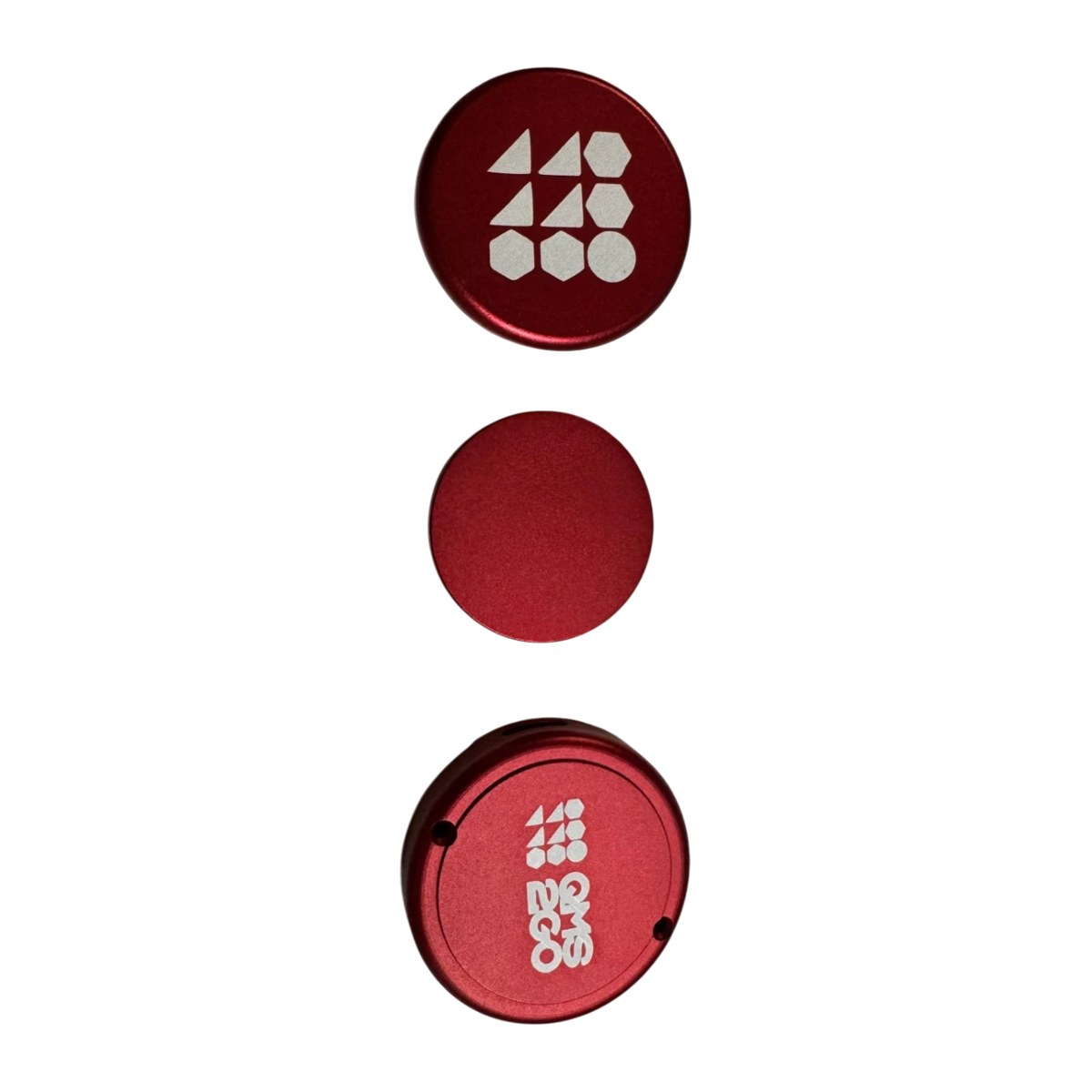
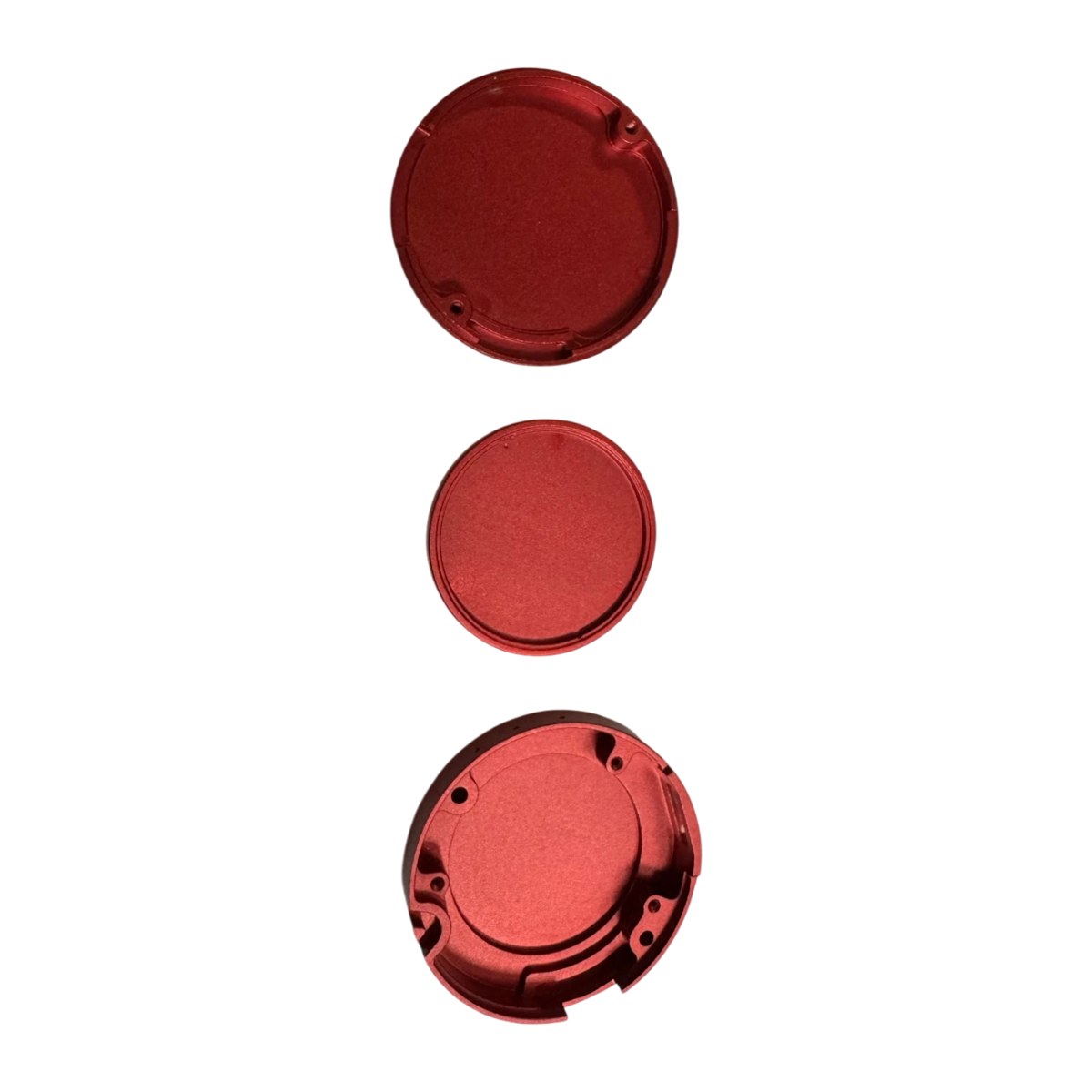
The production shell is machined from 6061 aluminum in three parts — top cover, magnet disc and body — then anodized in the QMS2GO red and printed with the brand mark on the face and the wordmark on the back. Screw bosses, the seam line and the switch aperture were adjusted for the machining and finishing process before the first batch ran.
Machined 6061 aluminum enclosure parts for the QMS2GO voice recorder before assembly
Machined 6061 aluminum parts — top cover, magnet disc and body — before assembly.
Anodized red aluminum recorder housing printed with the QMS2GO logo on the face and wordmark on the back
Anodized in the QMS2GO red, with the logo on the face and wordmark on the back.
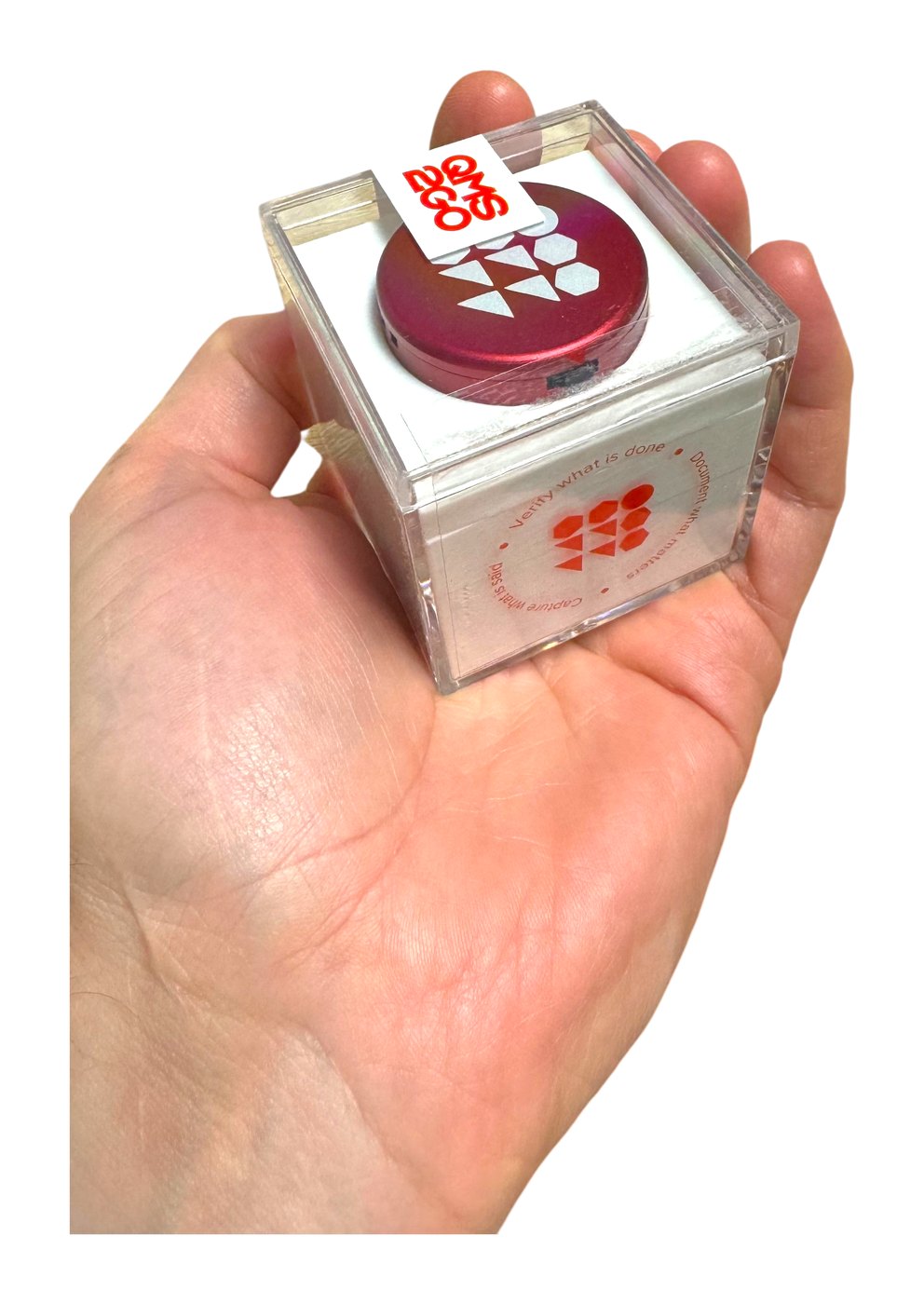
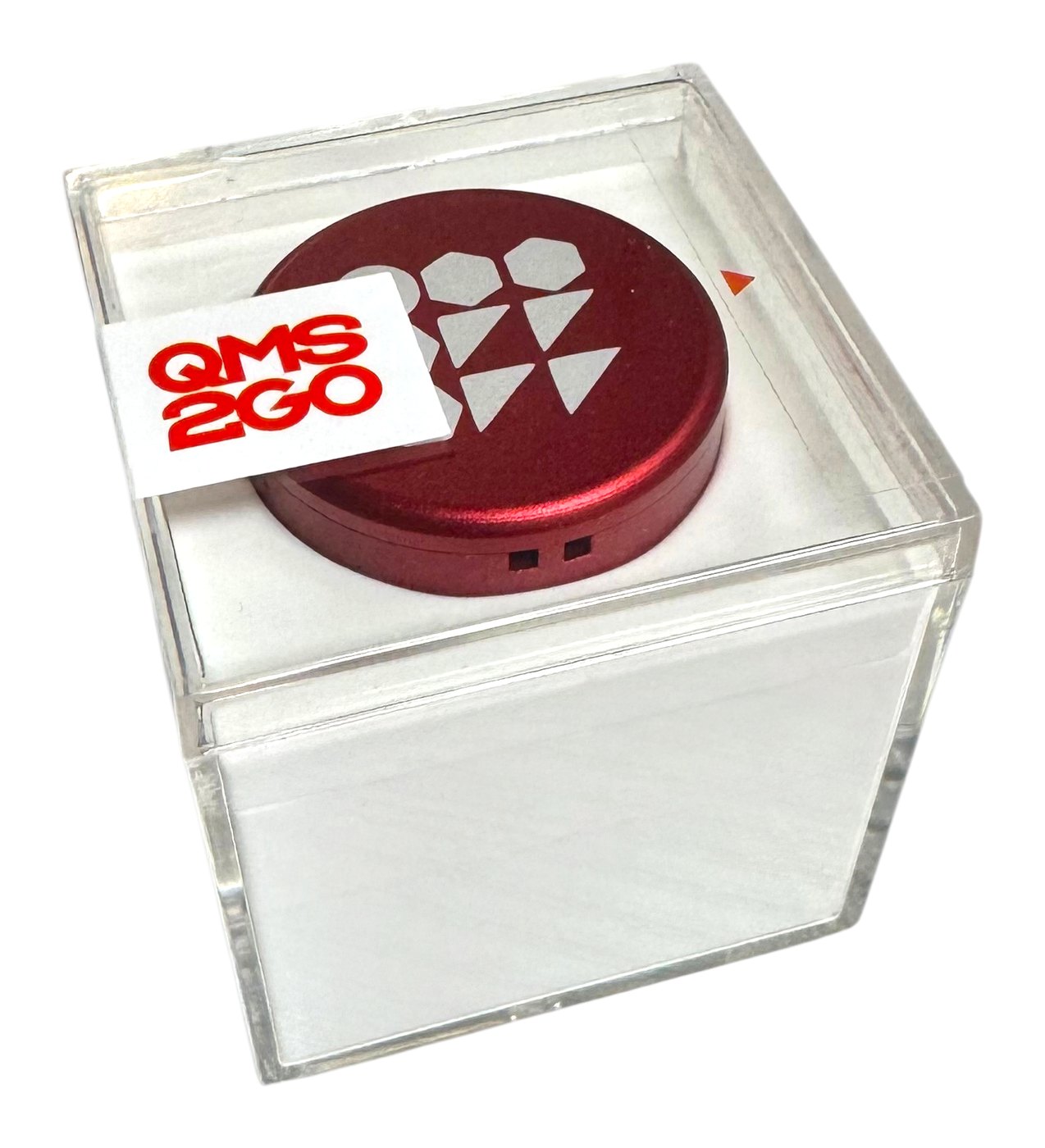
QMS2GO branding is applied to the housing and the packaging, so what arrives is a finished, sellable product rather than a bare device. Retail-ready packaging was designed alongside the hardware for the same reason: the recorder is handed to customers during pilots and demos, and it has to look like part of the platform.
QMS2GO branded voice recorder retail packaging held in hand
The recorder in its retail-ready packaging.
Retail box for the QMS2GO digital voice recorder
The branded retail box, designed alongside the hardware.

The Result: Software Company, Hardware Product
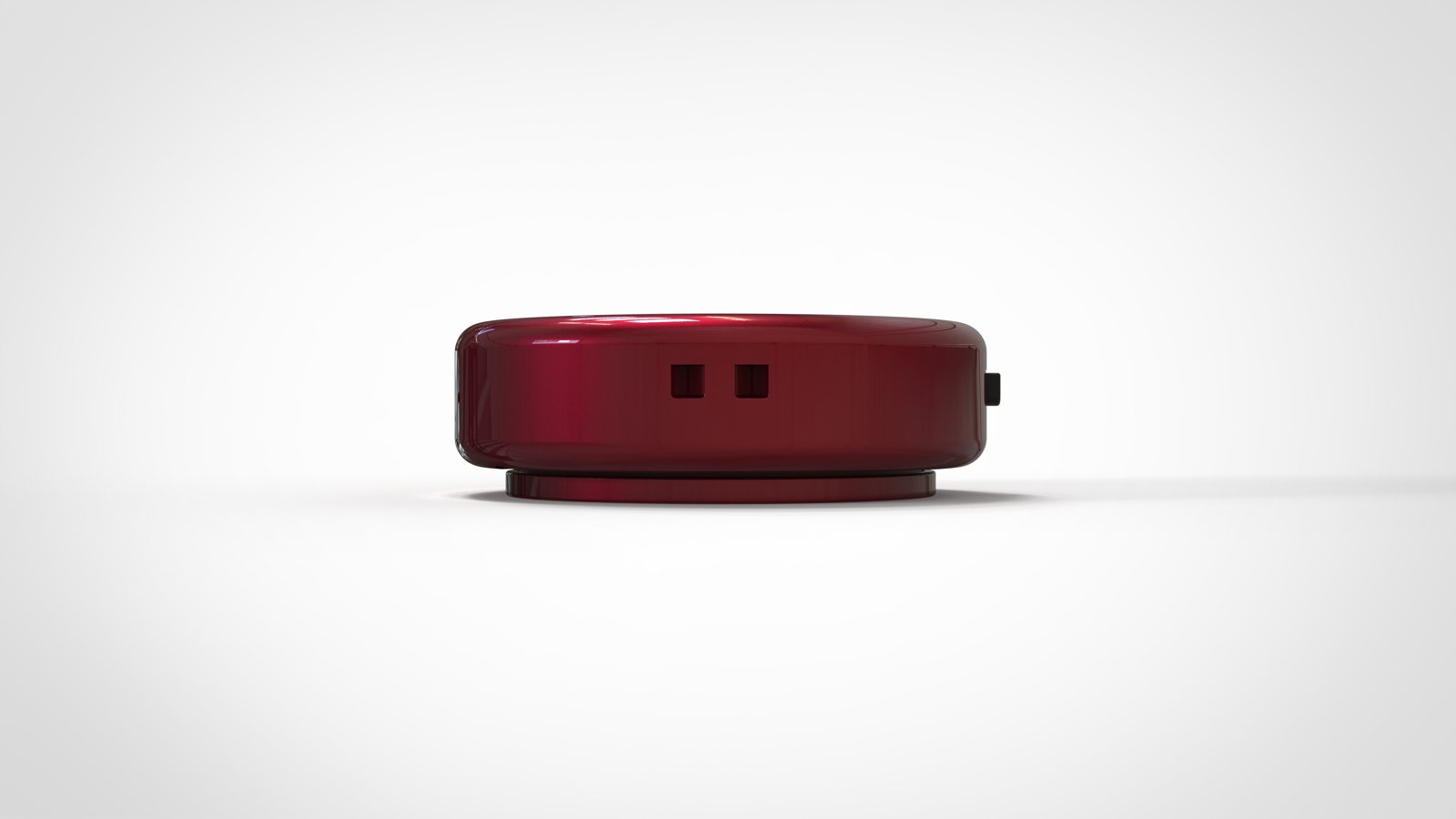
QMS2GO now has a physical product that carries its brand into the plant and feeds its software the input it was always missing. Quality managers speak their findings where the findings happen, plug the recorder into a workstation at the end of a walkthrough, and the audio becomes part of the quality record.
It is also the second program we have run for this client. LA NPDT previously built the QMS2GO AI SaaS platform itself — see the QMS2GO AI SaaS product development case study for the software side of the same business.
Final product render of the QMS2GO digital voice recorder
The finished, branded product — machined, anodized and assembled.

Services Provided by LA NPDT

Industrial design. Wearable form factor, 6061 aluminum enclosure, glove-operable controls, clip and lanyard mounting, branding and finish.
Mechanical engineering. Internal packaging, drop and ingress resilience, USB connection integration, tolerances and fastening.
Electronics and firmware. Microphone array, audio front end, storage and power architecture for 16 GB and 12+ hours, standalone MP3 capture, USB mass-storage behavior.
DSP audio tuning. Real-time noise cancellation tuned against genuine plant-floor noise for intelligible, transcribable speech.
Prototyping and testing. Appearance, fit and functional prototype rounds, with field testing in working manufacturing environments.
Design for manufacturing and production. Process selection, documentation, assembly and test sequence, packaging design, and manufacture of the finished branded product.

Need a device your software depends on?

QMS2GO started with a workflow problem and ended with a manufactured product carrying its logo. If your platform needs hardware in the field — captured audio, sensor data, a device that has to work where phones are not allowed — we can take it from requirements to production. Talk to our team or read about our product development process.

Capabilities used on this project

Questions about this project

Why build hardware instead of a phone app?

Many of the plants QMS2GO serves restrict camera-equipped and wireless devices on the floor, and a phone is impractical with gloves on. A dedicated recorder with no radios, one obvious control and a wired file transfer works where a phone is not allowed in the building.

How do you get usable speech in a noisy factory?

Microphone selection and acoustic porting first, then on-device DSP noise cancellation tuned against real plant-floor recordings rather than lab tones. The goal is a transcribable file: suppress the steady machinery bed and handling noise without the artifacts that destroy consonants.

Why a 6061 aluminum enclosure?

It survives drops onto concrete, takes a hard anodized finish that stands up to oil and solvents, helps with heat and EMI in an electrically noisy building, and gives the device the credibility of an instrument rather than a plastic gadget.

Did LA NPDT manufacture the product as well as design it?

Yes. We ran the program end to end — industrial design, engineering, prototyping, design for manufacturing, packaging and production of the branded units.

Can you develop a device for our software platform?

That is exactly this project. If your platform needs field hardware — audio capture, sensors, a device that works where phones are banned — we take it from requirements through to production.

More of our work

Get in touch

Tell us about your product idea

Send us a few details and one of our product development experts will get back to you within one business day.

Your information stays confidential and is never shared.