The Consumer Product Development Process, Step by Step
Seven stages from idea to shelf, walked through with a real product: the GoNutz waterproof shaver, which went from a personal problem to a Shark Tank appearance.
August 22, 202610 min read

Written by Konstantin Dolgan, Ph.D., NPDP
Founder & CEO, Product Development Engineer
Published August 22, 2026
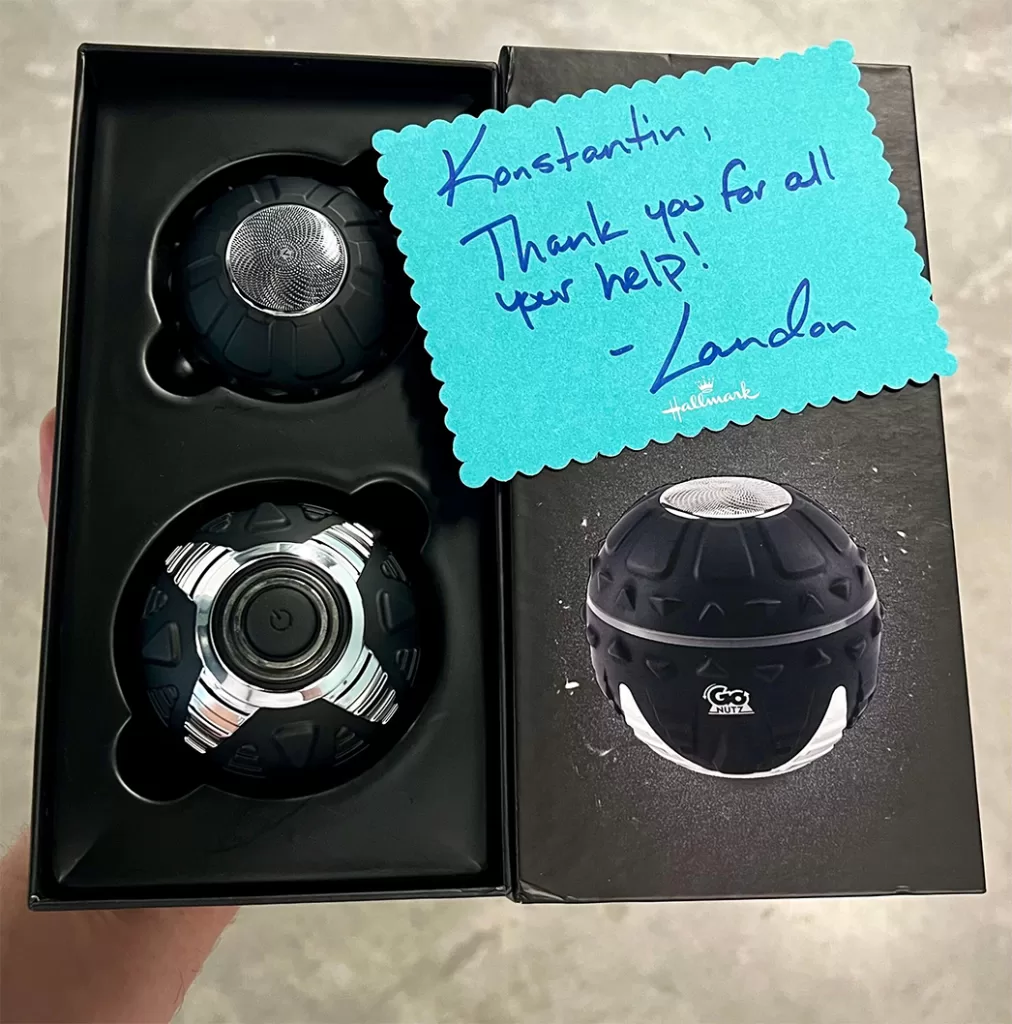
The consumer product development process runs from a defined user problem through concept, industrial design, engineering, prototyping and design for manufacturing, to tooling, first articles and launch. Each stage exists to remove one kind of risk before you spend on the next. The stages are easier to understand against a real product, so this walks through them using GoNutz - a waterproof, rechargeable shaver built for sensitive skin, developed with us and later featured on Shark Tank.

The seven stages at a glance
Stage | What it produces | The risk it removes |
|---|---|---|
1. Problem definition | A specific user, a specific failure of existing products | Building something nobody needs |
2. Concept development | Sketches, options, a chosen direction | Locking into the first idea you had |
3. Industrial design | Form, ergonomics, CMF, the shape a buyer reacts to | A product that works but nobody picks up |
4. Engineering | CAD, electronics, mechanism, materials | Discovering physics late |
5. Prototyping | Something you can hold, use and break | Assumptions you never tested |
6. Design for manufacturing | Production-ready files, tolerances, process choice | A design that cannot be made at your price |
7. Tooling, first articles and launch | Real production samples, packaging, retail readiness | Committing to volume before you have seen a good part |
1. Start with a problem someone actually has
GoNutz began with a grooming problem that existing razors handled badly: shaving sensitive skin without irritation, nicks or the awkwardness of using a tool designed for a face. The founder was the user, which is the strongest starting position in consumer products - you know precisely how the current options fail, because they fail on you.
The output of this stage is not a product idea. It is a written statement of who has the problem, what they use today, and what specifically goes wrong. Everything downstream gets judged against it.
2 and 3. Concept and industrial design
Concept work explores the ways the problem could be solved before committing to one. Industrial design then turns the chosen direction into something with a shape: how it is held, where the controls sit, how it reads on a shelf.
On GoNutz this stage carried real weight. The product is used one-handed, wet, and often without looking at it, so ergonomics were a functional requirement rather than a styling exercise. Grip, control placement and the geometry of the head all had to work blind and in the shower.

4. Engineering: where the hard requirements land
GoNutz had four engineering problems stacked in one small handheld body: a cutting system gentle enough for sensitive skin, full waterproofing for shower use, a rechargeable battery system with sealed charging, and self-cleaning so the product stays hygienic without disassembly.
Those requirements interact. Waterproofing constrains how the housing splits and how it charges. The battery drives internal volume and therefore the grip. Self-cleaning affects the head geometry that the cutting system depends on. This is why engineering is not simply drawing up the industrial design - it is negotiating between requirements until a single object satisfies all of them.
5. Prototyping: the stage that saves money
Prototypes convert opinions into evidence. For a product like this you build to answer specific questions: does the grip work wet, does the seal hold, does the battery last a realistic number of uses, does the head clean itself properly. Each prototype should have a question attached to it, and a result recorded against it.
Prototyping is also what makes a product fundable. A working unit that a person can hold changes every conversation with an investor, a retail buyer or a manufacturer, in a way that renders never do.

6 and 7. Design for manufacturing, then production
Design for manufacturing is where unit cost is actually set: part count, tooling complexity, assembly sequence, tolerances and process choice. Skipping it is the most expensive mistake in consumer products, because the alternative is discovering the problem after the tool has been cut.
After that comes tooling, first articles, and the commercial layer around the product - packaging, positioning and retail readiness. GoNutz also went through patent work along the way, which is a parallel track rather than a stage: protection is worth pursuing while the design is still being defined, not after launch.
The product went on to a Shark Tank appearance, which is a useful reminder that the media moment is the visible end of a long, unglamorous process of removing risk one stage at a time.
What each stage costs, and where programmes overrun
Most consumer programmes do not fail on a single big mistake. They drift, because a decision that should have been made in week three is deferred until after tooling, where it costs twenty times more to change. The table below is a planning baseline for a moulded consumer product with modest electronics.
Stage | Typical cost | Typical time | Decision that must be closed |
|---|---|---|---|
Problem definition and research | $2k - $8k | 2 - 4 weeks | Who buys it and what it must beat |
Concept and industrial design | $5k - $15k | 3 - 6 weeks | One chosen form direction |
Engineering and CAD | $12k - $45k | 6 - 12 weeks | Part breakdown and materials |
Prototyping and user testing | $3k - $20k | 3 - 8 weeks | The design is good enough to freeze |
Design for manufacturing | $5k - $15k | 2 - 4 weeks | Which supplier and which process |
Tooling and first articles | $15k - $80k | 8 - 16 weeks | Geometry is final - no more changes |
Certification and packaging | $5k - $25k | 4 - 10 weeks | Markets, claims and retail format |
The retail requirements that arrive late and hurt
Founders plan the product and improvise the commercial layer. Retailers and marketplaces do not accept improvisation: barcodes, case packs, carton dimensions, safety marks, instruction content and returns handling are all gating items with their own lead times. Every one of them can force a change to the physical product if it is discovered after tooling.
- GTIN or UPC allocation, and labelling that matches the listing exactly.
- Retail-ready packaging sized to a shipper carton and a shelf, not just to the product.
- Required marks and test reports for the markets you sell into.
- Instruction and warning content, printed or in-box, in the required languages.
- Warranty and returns policy, with a spare-parts or replacement plan behind it.
- Photography and listing content produced from production parts, not prototypes.
How exposure changes the plan
A product that gets national attention converts a schedule risk into a business risk overnight. If demand arrives before tooling is validated, the choice is to sell stock you cannot replace or to lose the moment. The practical hedge is to have a low-volume route running in parallel with the production tool, so there is something to ship while the tool is proven. That is what short-run manufacturing exists for.
What a stage gate should actually check
Stage gates fail when they become status meetings. A gate is only useful if it has a written pass condition and someone is willing to say no. The list below is the minimum we use before letting a consumer programme spend the next stage of budget.
Gate | Pass condition | Evidence required |
|---|---|---|
Concept approved | One direction chosen, target cost set | Costed bill of materials estimate |
Design frozen | No open geometry questions | Signed-off CAD and drawings |
Supplier selected | Quote and DFM feedback received | Written quote and marked-up file |
Tooling release | Design frozen and cost validated | Approved prototype in production material |
Production release | First articles meet the drawing | Dimensional report and approved sample |
Unit cost, landed cost and the margin that actually matters
The factory quote is the smallest part of what a product costs to sell. Freight, duty, packaging, warehousing, returns and platform fees regularly double the number founders plan around, which is why so many products launch with no margin left. Build the landed cost model before tooling, when the design can still be simplified to hit it.
- Ex-works unit price at your realistic first order quantity, not at 100,000.
- Packaging and any assembly or kitting done at the factory.
- Freight and duty, quoted for the actual carton dimensions.
- Warehousing, fulfilment and the platform or retailer margin.
- An allowance for returns and replacements - two to five percent is common.
- Amortised tooling across the first order, so the true early cost is visible.
Which parts to keep in-house and which to hand over
Founders who outsource everything lose the product; founders who outsource nothing lose two years. The split that works is simple: keep the decisions that define the business, buy the execution that has a learning curve you cannot afford to climb once.
Activity | Usually keep | Usually buy | Why |
|---|---|---|---|
Customer definition and positioning | Yes | Nobody else can decide what the product is for | |
Industrial design | Yes | Specialist skill, short engagement | |
Mechanical engineering and DFM | Yes | Mistakes here are paid for in tooling | |
Supplier relationships | Yes | You need them to survive the agency | |
Certification management | Yes | Process knowledge, one-off need | |
Brand, packaging and listings | Yes | Partly | Core to the sale, cheap to keep close |
Preparing for demand you did not plan for
Attention is not a schedule you control. Press, a viral clip or a broadcast appearance can compress a year of demand into a fortnight, and the product that can serve it is the one that had a fallback route ready. The preparation is cheap if it is done early and impossible if it is done during the spike.
- A low-volume production route that can make hundreds while the tool is being proven.
- Pre-order or waitlist mechanics on the site, ready to switch on.
- Packaging and labels printed in a quantity that is not the bottleneck.
- A fulfilment partner briefed before you need them, not during.
- Clear stated lead times, so a delay is a fact rather than a complaint.
- Enough cash headroom to place a larger factory order at short notice.
The first ninety days after launch
The launch is a data-collection exercise as much as a revenue event. Most of what you need for version two arrives in the first quarter, and it arrives in a form that is easy to ignore while firefighting. Decide in advance what you will look at and who owns it.
Metric | Why it matters | Action if it is bad |
|---|---|---|
Return rate and reason codes | Direct evidence of design failure | Fix the top reason before scaling the order |
Review themes | Names the gap between promise and product | Adjust the listing copy first, the product second |
Sell-through rate | Decides whether a retailer reorders | Support the shelf before making more |
Support contacts per unit | Predicts your true cost per sale | Fix the instruction or the feature causing it |
Repeat and referral | The only real proof of product-market fit | Interview the buyers who came back |
Planning version two while version one sells
Version two should be scoped from evidence rather than ambition. Collect the change requests as they arrive, cost them in tool-modification terms, and batch them - many small revisions in one tool change is far cheaper than three separate rounds. Hold the line on cosmetic changes that carry a tooling cost and no customer complaint behind them.
- Keep a single change log with the evidence for each item.
- Classify each change as steel-safe, tool modification or new tool.
- Batch changes into one tool visit rather than several.
- Re-run the landed cost model before committing - it drifts.
- Keep the outer dimensions stable so packaging survives the revision.
Terms founders meet for the first time
Term | Meaning | Why it matters |
|---|---|---|
BOM | Bill of materials - every part and its cost | The foundation of every price decision |
DFM | Design for manufacturing review | Where avoidable cost is removed, before tooling |
MOQ | Minimum order quantity | Often set by materials, not the factory |
Landed cost | Unit cost plus freight, duty and fulfilment | The number your margin is actually built on |
First article inspection | Measured report on the first tooled parts | Your evidence the tool is correct |
Sell-through | Rate at which retail stock sells | Decides whether you get a reorder |
A realistic first-year plan
Written as quarters, because that is how the money and the lead times actually arrive.
Quarter | Focus | What exists at the end |
|---|---|---|
Q1 | Definition, concept, first prototypes | A physical thing to show, and a target cost |
Q2 | Engineering, DFM, supplier selection | A frozen design and a real quote |
Q3 | Tooling, first articles, certification | Parts that match the drawing |
Q4 | Packaging, listings, first production, launch | Product in customers' hands and early data |
Programmes slip when a quarter's decision is deferred rather than when work is slow. If you want the whole sequence run as one engagement, that is what our end-to-end service is. If you only need the first quarter, start with discovery and prototyping.
Frequently asked questions
How much money do I need to launch a consumer product?
For a simple moulded product, plan $80k - $150k to have sellable stock on hand: development, tooling, certification, packaging and a first production run, plus working capital for the inventory itself. Founders routinely fund the development and forget the inventory, which is the larger cheque and the one that arrives with the least warning.
Should I crowdfund a consumer product?
Crowdfunding works best as a demand test and a working-capital source for a product that is already engineered and quoted. Campaigns that launch from a rendering and discover manufacturing afterwards are how delivery dates slip by a year. If the design is frozen, the tool is quoted and the landed cost is known, a campaign is a reasonable way to fund the first run.
How do I know when the design is ready to freeze?
When the open questions are commercial rather than technical. If the remaining debates are about colour options, pricing or which retailer to approach, the geometry is done. If anyone is still asking whether a feature works, whether it fits, or whether the material is right, freezing now simply moves that question to the tooling invoice.
What does a product development partner actually do?
Turn an intention into a manufacturable, costed, documented product - research and concept work, engineering and CAD, prototypes that answer specific questions, DFM against a real supplier, and the drawing package the factory builds from. The measure of a good one is not the renderings; it is whether the first tool produces parts that match the drawing and the cost you were promised. That is what our end-to-end programme is built around.
Do I need a prototype before pitching a consumer product?
Yes, and it should be the most convincing thing you can afford. Buyers, investors and broadcast producers all make decisions from something they can hold; a rendering invites doubt that a physical part removes instantly. It does not need production materials - it needs to be the right size, the right mass and to work in the way the pitch claims.
How much of the budget should go to tooling?
Plan for tooling to be roughly a third of the programme on a simple moulded product, and expect it to be the single largest invoice. The corollary matters more than the number: because tooling is that large and that irreversible, every dollar spent on engineering and prototyping before it is spent to protect it. Cutting the engineering stage to afford the tool is the classic way to buy an expensive mould for the wrong part.
How long does the consumer product development process take?
For a simple moulded product, several months from concept to production-ready files. For an electromechanical consumer product with waterproofing, a battery and a mechanism, plan on roughly nine to eighteen months to first production, with tooling and first articles adding a further couple of months on top of the design work.
When should I start talking to manufacturers?
During engineering, not after it. A supplier brought in while the CAD is still editable will tell you which features are expensive, and that feedback is free. Brought in after the design is frozen, the same supplier quotes what you drew and you pay for every avoidable feature for the life of the product. See design optimisation for what that review covers.
How much does it cost to develop a consumer product?
Design and engineering for a straightforward consumer product typically falls in the tens of thousands of dollars, and an electromechanical product with custom electronics and enclosure engineering usually runs well into six figures across the full programme. Tooling is separate and is driven by part complexity. You can get a rough figure for the build phase from our prototype cost calculator .
What is the most common reason consumer products fail?
Freezing the design too late. Everything downstream - tooling, packaging, certification, listings and photography - depends on final geometry, so each week the design keeps moving multiplies across five other workstreams. The second most common reason is a unit cost discovered after tooling that leaves no margin at the price the market will pay.
Services related to this guide
- Consumer product design firmsFirms compared for retail-bound goods: packaging, cost targets and first production runs.
- Best product design companiesDesign studios compared by scope, industry and what they hand off.
- Low-volume manufacturingFirst production runs without full injection-mould tooling.
- Product development examplesReal projects we designed, prototyped and shipped.