Engineering Design Lifecycle: From Requirements to Testing
In the 21st century, industrial design — often labeled concurrent engineering — has become an inherently collaborative and multidisciplinary pursuit. Engineers operate within teams of specialists drawn from diverse fields,…
July 17, 202510 min read

Written by Konstantin Dolgan, Ph.D., NPDP
Founder & CEO, Product Development Engineer
Published July 17, 2025Updated September 2, 2026
In the 21st century, industrial design is a team effort. People call it concurrent engineering. Engineers work in groups with experts from many fields. They face fast tech changes and global competition. These forces require creative problem-solving and teamwork. New tools also create more choices for designers. Parsons and Campbell call this a complex set of decision points. It affects engineers, scientists, and product creators.
The term engineering design shows a new way of thinking. Engineering is a method to solve problems. Technology is the result of that work. Most outputs are new tools or systems. These solve human needs or specific tasks. Innovation is not a random act. It comes from mixing materials and skills. The goal is often to gain speed or efficiency.
The design process has three main parts. First, you must define the problem. You set goals and list the limits. Second, you create and check ideas. Designers brainstorm and then test them against the needs. Third, you polish the best choice. You test and tune the features. You keep what works and cut what does not.
These steps do not always follow a set order. Engineering design uses cycles, just like science. New facts often come to light. You might learn more about users or materials. Then you may go back to an earlier step. You might rethink the problem or try new ideas. Many cycles of testing and change are normal. This helps you reach a strong result.
You must talk with your team, mentors, and users. Listen to different views and real-world feedback. This helps your team meet technical needs. It also makes sure the product works well for people. Sharing ideas at every step is vital for success.
Engineering design has moved us forward for ages. Ancient people used stone tools and simple machines. Over time, we built wheels, aqueducts, and computers. These show great skill and thought. Yet we also learn from bad failures. Some projects had flaws that caused great harm. We study both to learn the best methods. This shows why team cycles are so important.
Learning from Major Failures
Even the best systems can fail due to design flaws. Major disasters show how small errors lead to huge human and money costs.
- Chernobyl Nuclear Disaster (1986) The 4th reactor at the Chernobyl Plant in Ukraine exploded during a safety test, releasing massive radiation. Design shortcomings — an unstable reactor core and lack of a robust containment structure — combined with operator errors under ambiguous test protocols. Over 336,000 people were displaced; 56 died within weeks; and thyroid cancer surged among exposed children.
- Concorde Paris Crash (2000) Shortly after takeoff, Concorde Air France Flight 4590 ran over metal debris on the runway, tearing a tire that ruptured a fuel tank. The ensuing fire caused both engines on one wing to fail. The supersonic airliner crashed into a hotel, killing 113 people and grounding the fleet for 15 months, signaling the end of commercial supersonic travel.
- Space Shuttle Challenger Explosion (1986) An O-ring seal in one of Challenger’s solid rocket boosters failed in unusually cold launch-day temperatures. The compressed rubber lost elasticity, allowing hot gases to breach the joint and ignite the external fuel tank. Seventy-three seconds into flight, the vehicle disintegrated, killing all seven crew members.
- Hyatt Regency Skywalk Collapse (1981) Two suspended walkways at the Kansas City Hyatt Regency hotel gave way under the weight of roughly 2,000 people gathered during a dance. A last-minute design change doubled the load on a single support rod, which failed, causing 114 fatalities and nearly 200 injuries.
- Space Shuttle Columbia Tragedy (2003) Foam insulation from Columbia’s external tank broke off during launch and struck the orbiter’s left wing. The puncture went undetected, and upon reentry, superheated gases entered the wing structure, leading to the vehicle’s breakup and the death of seven astronauts.
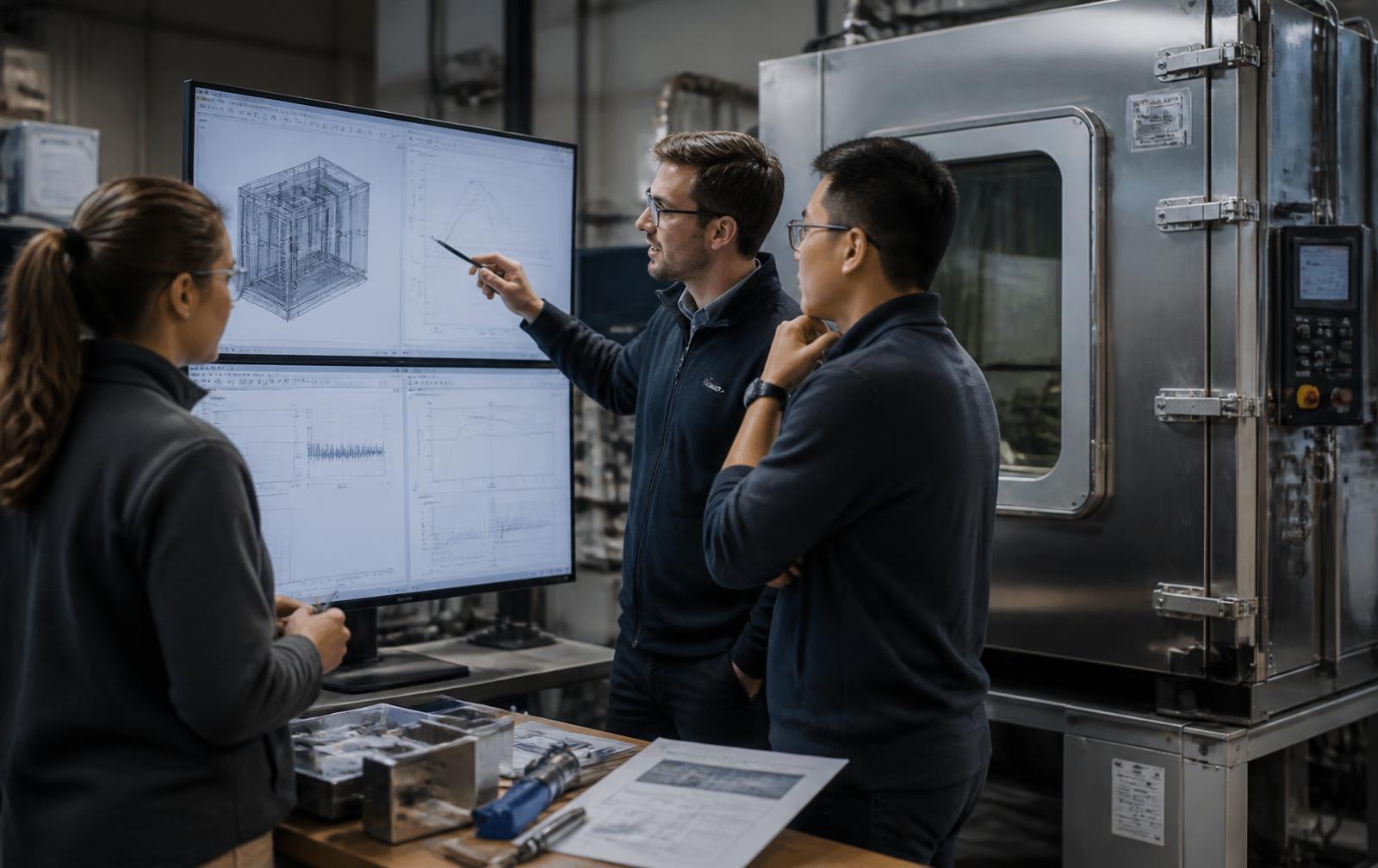
Chernobyl Nuclear Disaster
Root Causes of Design Breakdowns
In his look at engineering failures, Walton finds factors. These factors often lead to disaster. They can act alone or together.
- Unrealistic or exaggerated assumptions about operating conditions
- Inadequate understanding of the core problem’s complexity
- Improperly defined design parameters or constraints
- Manufacturing and assembly defects that compromise component integrity
- Errors in calculations, often under tight schedules
- Insufficient prototyping, experimentation, and data collection
- Technical drawings that omit critical details or contain inaccuracies
- Flawed reasoning processes despite correct initial assumptions
It is important to find and avoid these problems early. This helps prevent expensive changes. It also stops major failures.
The Systems Engineering Perspective
Every system starts with a clear need or a new chance. Systems engineering focuses on early trade-offs for cost and performance. Decisions still benefit from a full view in late stages. Teams use phases like design, testing, and retirement. These stages provide natural spots to check risks and budgets.
fundamentals of Systems Engineering. Nasa Systems Engineering Handbook. Sp-2016-6105 Rev2
A Five-Stage Framework for Design Problem-Solving
No single plan fits every job. Still, a basic five-stage method guides most work. This cycle acts like science. New facts found at any stage may send you back to earlier steps.
Five essential stages guide the engineering-design process:
- Problem Definition
- Data Gathering
- Option Generation
- Solution Evaluation
- Validation and Implementation
- Understand the problem. This defines the issue.
Precisely defining the challenge is the critical first step. Design problems often arise from vague or conceptual prompts, so teams must:
- Understand and explain the main need. Make sure it is clear.
- Write a short, clear statement about the problem.
- Set clear goals for success. Define what is in and out of scope.
As insights accrue, this definition may be iteratively refined.
- Data Gathering
Before you start new ideas, gather all important information. Skipping this step can hide needs. It can also repeat past mistakes. Common research sources include:
- These are scientific and industry reference books.
- You can use online technical databases and digital libraries.
- We have academic journals and conference papers.
- There are also trustworthy internet resources available.
Thorough background study often leads to a sharper, more actionable problem description.
- This is about Option Generation.
Now the problem is clear. So, we focus on creative solutions. Good brainstorming in engineering needs these traits.
- Be curious and comfortable with unclear situations. You should not fear the unknown.
- Be open to new experiences and different viewpoints. Embrace new ideas.
- Be ready to take smart, thought-out risks. Do not be afraid to try new things.
- Pay close attention to small details. Also, understand the bigger picture. See how everything connects.
- Be persistent and confident. Actively look for problems to solve. Be proactive.
This stage produces a diverse suite of feasible concepts for later appraisal.
- We evaluate the solution.
Proposed concepts must be checked against design needs. This check usually includes:
- We compare different options carefully. We use engineering principles for this.
- We use tools to help us decide. Examples include Pugh matrices and cost-benefit analyses.
- Experienced people are involved. End users are included when possible.
- We write down why we chose a certain option. This is our documented reason.
This judgment process is partly subjective. However, it makes sure the chosen design best meets the set criteria.
- This is about validation and implementation.
The final phase makes the design real. This happens through prototyping, parallel engineering, and strong testing. Key activities include:
- Prototyping involves building working models. These models verify performance in real-world settings. For example, wind-tunnel tests check aircraft parts. It confirms they work as expected.
- Concurrent engineering combines design and production tasks. These tasks run at the same time. This helps find problems early. It also speeds up how fast products get to market.
- Detailed documentation means creating full technical reports. These reports help others understand the design. They also allow others to copy or make the design again.
- Intellectual property management involves filing patents. Patents secure exclusive rights for a design. In return, the design must be fully disclosed to the public.
- Testing and verification mean doing repeated trials. These trials happen at every step. They find and fix flaws. This happens before a product goes into mass production.
Teams go back to earlier steps when they find new data or risks. This makes sure the product works well and meets real needs.
Are you ready for concept testing? Get started now with the LA NPDT solution.
The Iterative Nature of Design
Modern design is rarely a straight line. The Wright brothers faced many surprises during their first flight tests. Prototypes show new facts about materials and how people use tools. Teams then redefine the problem or find new solutions. Talking to users and peers helps products meet technical needs and human goals.
Conclusion
Look at objects like phones, bikes, and medical tools. None of these things appeared by chance. Each one comes from a strict path from idea to reality. A flexible design process helps us turn ideas into new tools. Learning from the past helps us build things that are safe and help society.
Engineering Design Process Stages
Stage | Description |
|---|---|
1. Define the Challenge | Articulate the problem, establish success criteria, map out relevant constraints. |
2. Generate & Evaluate Solutions | Brainstorm concepts, assess options against predefined requirements. |
3. Refine the Solution | Enhance features through iterative testing and optimization, adjust or discard less critical elements. |
Frequently asked questions
What is engineering design?
Engineering design is a set method for solving problems. It involves creating new tools or systems. You can also improve old ones to meet human needs. This process uses materials, methods, and facts. Its goal is to make things faster or more efficient.
What are the stages of the engineering design process?
The design process has three linked stages. First, define the task and map out limits. Second, create ideas and check them against needs. Third, polish the best choice through testing and tuning. This leads to the best final result.
Is the engineering design process linear?
No, the design process repeats as needed. The stages do not follow a stiff order. New facts or user needs can change the plan. You may need to redefine problems or try new ideas. Many cycles of testing and change are vital.
Why is collaboration important in engineering design?
Work closely with your team, mentors, and users. Using many points of view makes sure the product meets technical needs. Feedback from the real world helps a lot. Teamwork helps you make a product that works well for people.
Sources and standards
- Industrial Designers Society of America is a professional group. It serves industrial design in the US. This society helps design practice.
- Nielsen Norman Group conducts usability research. They use proven usability facts. These facts apply to how people interact with products.
- USPTO offers patent basics. This is official guidance. It covers filings for new products, both provisional and non-provisional.
Verification and validation are not the same activity
Verification asks if the product meets its written rules. Validation asks if those rules match what the user needed. A product can pass every test and still fail to help. This is why some good products go unused.
Verification | Validation | |
|---|---|---|
Question | Did we build the product right? | Did we build the right product? |
Reference | The requirements specification | The user need |
Environment | Lab, controlled conditions | Real use, real users |
Typical evidence | Test reports, measurement data | Field trial findings, usability results |
Timing | Throughout detailed design | Late design and pilot |
Failure means | The design missed the spec | The spec missed the need |
Building a traceable test plan
- Every requirement has an ID. It also has an acceptance rule and a way to check it. This check can be a test, analysis, inspection, or demonstration.
- Before testing, each method names the sample size. It also states the conditions and the passing rule.
- Results connect to the requirement ID. This shows any gaps in coverage. These gaps are seen right away, not found later during an audit.
- If something fails, it creates a change record. This change then causes a retest. All things it might affect are retested.
- Verification uses parts intended for production. These parts are made by the actual production process. It does not use prototypes.
- Validation involves real users. They perform real tasks. No engineer stands next to them during this process.
Typical test costs and durations
Test | What it establishes | Cost | Duration |
|---|---|---|---|
EMC pre-compliance | Emissions and immunity risk | $3k-$8k | 1-3 days |
EMC full compliance | Regulatory evidence (FCC/CE) | $8k-$25k | 1-3 weeks |
Safety (IEC/UL) | Electrical and fire safety | $10k-$45k | 4-12 weeks |
Environmental (temp, humidity, vibration) | Survival in shipping and use | $5k-$20k | 2-6 weeks |
Drop and abuse | Mechanical robustness | $2k-$8k | 1-2 weeks |
Accelerated life testing | Expected field life and wear-out | $10k-$60k | 6-16 weeks |
Ingress protection (IP rating) | Dust and water claim | $2k-$7k | 1-2 weeks |
Caption: This shows typical prices from US third-party labs. A retest, after a design change, often costs 40-70% of the first test.
Where V&v Programs Go Wrong
- We tested prototypes. These were not production parts. So, the results did not transfer.
- The design changed during testing. We did not retest affected requirements. This was a problem.
- Requirements lacked measurable acceptance criteria. So, it was hard to say what passed or failed.
- Tests used a sample size of one. But variation was the main question for these tests.
- We skipped pre-compliance testing. This led to finding an EMC problem late. The schedule had no room for fixes.
- There was no validation at all. The product was checked against a spec. But users never checked the spec.
V&v Readiness Checklist
- All requirements are numbered and measurable. Each requirement has a specific verification method assigned.
- The test plan is reviewed and approved. This happens before any samples are built.
- Samples should reflect final production. They come from production tooling and processes when possible.
- EMC and safety pre-compliance is completed. This occurs before booking full certification slots.
- A change control process is active. The retest impact is assessed for every change made.
- Validation sessions are scheduled with real users. These happen in their actual environment before production release.
Plan for product testing during the requirements phase. Do not wait until after the detailed design. We follow this order in product engineering. We use needs that come from discovery.
Frequently asked questions
What is the difference between design verification and validation?
Verification checks if the product follows its own rules. Validation checks if those rules met the real user need. Lab tests prove verification against needs. Real users prove validation in real worlds.
When should verification testing start?
Planning begins when you write down the requirements. Work on the project starts once you have parts ready for production. Pre-compliance testing should happen even sooner. This helps you find problems while the design can still change easily.
How much does design verification testing cost?
A connected consumer product costs about $40,000 to $170,000 for testing. The same is true for a light industrial product. This covers EMC, safety, environment, life, and ingress tests. This price is before any retests due to design changes.
What is a verification traceability matrix?
This table links each requirement to its acceptance rule. It shows the test method and the final result. It makes gaps in coverage easy to see. An auditor usually asks for this document first.
Filed under:Uncategorized
Services related to this guide
- Product design servicesIndustrial design and CAD taken all the way to manufacturable files.
- Best industrial design firmsWhich studios take an idea from form to manufacturable hardware, and what they charge.
- Prototype designLooks-like, works-like or pre-production: what each proves and what it costs.
- Product development examplesReal projects we designed, prototyped and shipped.