Engineering change order process: how to change a released hardware design without breaking production
Once a design is released to a factory, every change costs more than a CAD edit. The engineering change order process is how you make that change on purpose: documented, approved, timed, and checked.
October 7, 20267 min read

Written by Konstantin Dolgan, Ph.D., NPDP
Founder & CEO, Product Development Engineer
Published October 7, 2026
What is an engineering change order?
An engineering change order is a controlled, approved instruction to change a released product definition: a drawing, CAD model, bill of materials (BOM), specification, or the process used to build it. It says what changes, why, who approved it, when it takes effect, and what to do with existing parts.
The key word is released. While a design is still in concept or early prototyping, changing it is normal iteration. Once you hand a package to a supplier, quote tooling, or build units you intend to sell, that package becomes a baseline.
From then on, the engineering change order process is what keeps the factory, your purchasing, and your test data pointed at the same revision.
NASA describes the same idea as configuration control against defined baselines with a named change authority (NASA Systems Engineering Handbook, 6.5 Configuration Management).
For the path that leads up to release, see prototype to production steps and invention prototype to production.
ECR vs ECO vs ECN
Document | Question it answers | Typical owner | Output |
|---|---|---|---|
Engineering change request (ECR) | Should we change this, and why? | Anyone: engineer, factory, quality, support, founder | Problem statement + proposed fix, ready for review |
Engineering change order (ECO) | Exactly what changes, approved by whom, effective when? | Engineering lead / change owner | Approved redlines, new revisions, BOM delta, effectivity, disposition |
Engineering change notice (ECN) | Who needs to know it is done? | Document control / program manager | Notification to suppliers, purchasing, production, service |
Some companies use different names, and many small teams run one combined form. That is fine. What matters is that request, decision, and notification each happen, and that nobody builds to the new design before the ECO is approved. The Wikipedia overview of engineering change orders is a useful neutral reference for the terminology.
When you need an ECO (and when you do not)
Use an ECO when any of these are true for a released item:
- A drawing dimension, tolerance, material, finish, or note changes.
- A BOM line changes: new part, removed part, quantity, approved alternate, or supplier for a controlled part.
- Firmware or a programmed part that ships in the product changes version.
- The manufacturing process, tooling, or work instruction changes in a way that can affect fit, form, or function.
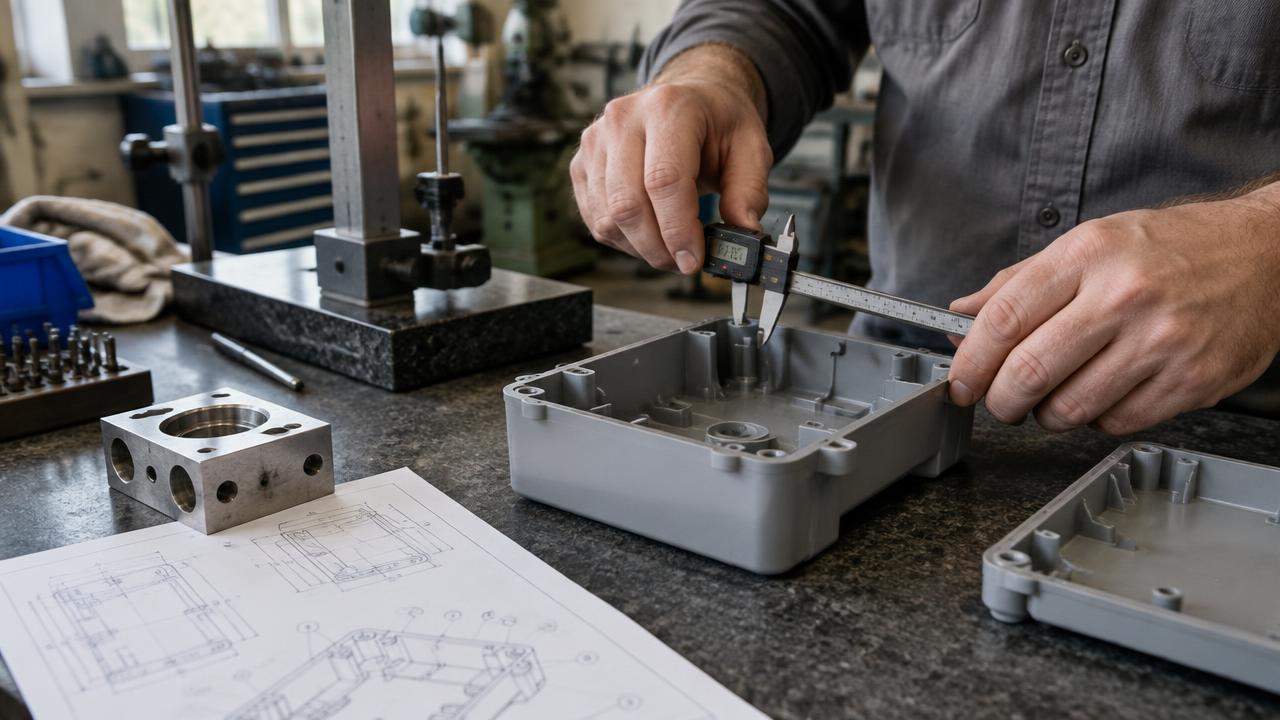
- A first article or production lot fails and the fix is a design or process change. (See the first article inspection checklist.)
- A component goes end of life and you must qualify a replacement. (See designing for component obsolescence.)
You usually do not need an ECO for unreleased concept or prototype revisions, purely internal working files, or fixing a typo that changes nothing a supplier builds or inspects (many teams still log those as a minor administrative change).
The engineering change order process, step by step
This is a practical eco process sized for founders and small hardware teams. Larger companies add PLM workflows and formal change boards, but the logic is the same.
- Capture the request (ECR). Describe the problem with evidence: inspection data, photos, test failure, supplier note, or field return. Name the affected part numbers and current revisions.
- Assess impact. Check what else the change touches: mating parts, tolerance stacks, tooling, firmware, packaging, labels, test fixtures, cost, lead time, and certifications. A small dimension change on a molded part can mean steel modification and new samples.
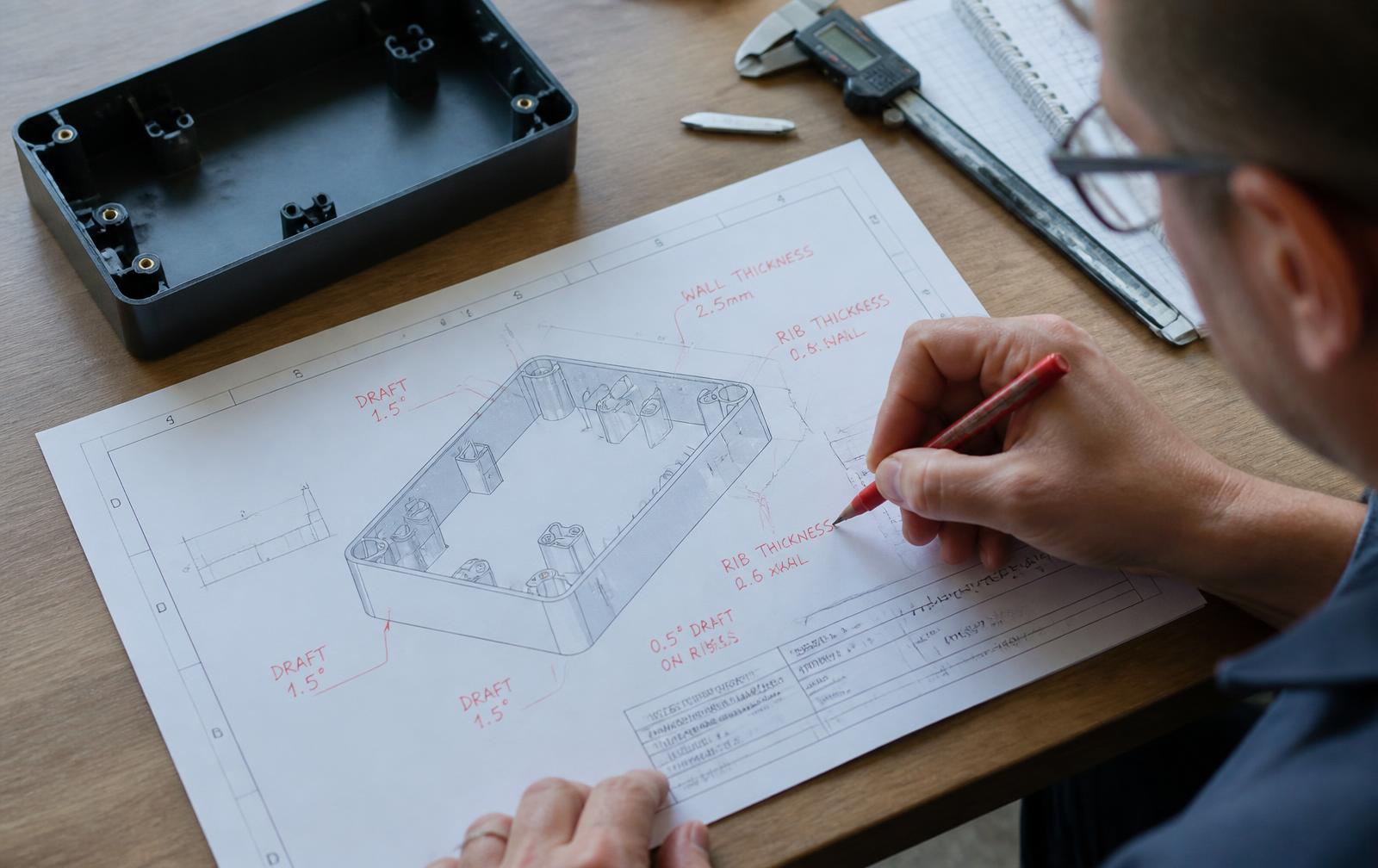
- Decide and define the ECO. Pick the solution, then create redlined drawings, the updated CAD, and the BOM delta. Write it so a supplier could act on the document without a phone call.
- Set effectivity and disposition. Decide when the change takes effect (date, lot, serial number, or "next tooling run") and what happens to stock, work in progress, and units already shipped.
- Approve. The change owner plus the people whose areas are affected: engineering, quality, manufacturing or the factory, and the business owner when cost or schedule moves. Keep approvals in writing.
- Release and notify (ECN). Publish the new revisions in one controlled place, retire the old ones, and notify every supplier and internal user who holds a copy.
- Implement and verify. Confirm the factory built to the new revision, run the re-checks the impact assessment called for, and close the ECO with evidence attached.
Quality system standards treat this the same way.
ISO 9001 includes requirements for reviewing and controlling design and production changes, and for medical devices the FDA Quality Management System Regulation (effective February 2, 2026) now incorporates ISO 13485:2016 by reference, including control of design and development changes (FDA QMSR overview, 21 CFR Part 820 on eCFR).
Our overview of quality management systems in new product development covers where change control sits in a design control process.
What goes on an engineering change order form
A good engineering change order form is short, but complete. Use this as a starting template:
Field | What to write |
|---|---|
ECO number and title | Unique ID and a plain one-line summary |
Originator and date | Who raised it, when |
Reason for change | Problem statement with evidence (link the ECR) |
Affected items | Part numbers, current revision, new revision or new part number |
Description of change | What changes, with redlined drawing or CAD reference |
BOM delta | Lines added, removed, or changed, with quantities |
Interchangeability | Can old and new parts be mixed in assembly and service? Yes or no |
Impact assessment | Fit, function, cost, tooling, firmware, test, labeling, compliance |
Effectivity | Date, lot, serial number, or build event |
Disposition | Stock, WIP, in transit, field units: use as is, rework, scrap, or return |
Verification required | Partial FAI, tests to re-run, certifications to recheck |
Approvals | Names, roles, dates |
Notification list | Suppliers and internal teams that must receive the ECN |
Closure | Evidence that the change was implemented and verified |
Revision or new part number?
A common rule of thumb: if the new part is fully interchangeable with the old one in form, fit, and function, bump the revision. If it is not interchangeable (it will not fit older assemblies, behaves differently, or service must tell them apart), give it a new part number. Mixing non-interchangeable parts under one number is how wrong spares and confusing field failures happen.
Write the interchangeability decision on the ECO so purchasing, the factory, and support do not have to guess.
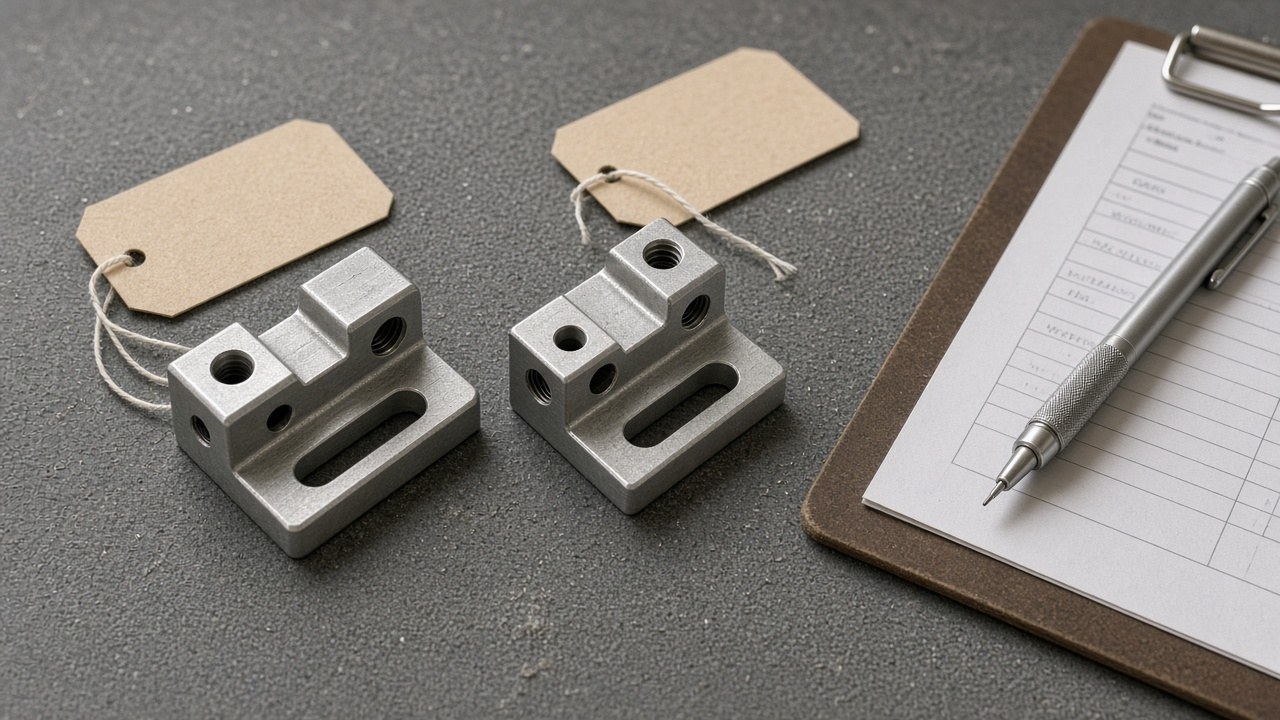
Effectivity and inventory disposition
Effectivity answers "starting when?" Disposition answers "what about everything we already have?" Founders often skip both, and that is where the money goes.
Situation | Typical disposition options |
|---|---|
Raw stock and purchased parts | Use up first, rework, return to supplier, or scrap |
Work in progress on the line | Finish as old revision, stop and rework, or hold |
Finished goods in the warehouse | Ship as is, rework before shipping, or quarantine |
Units in the field | No action, fix at next service, voluntary replacement, or recall-level action for safety issues |
Safety and regulatory issues usually override cost. Cosmetic or convenience changes can often wait for a natural break, such as the next tooling run or next purchase order, which keeps the change cheap.
Re-verification after the change
An approved ECO is not finished until you prove the change worked and did not break something else:
- Partial first article on the characteristics the change touched, using the same ballooned-drawing method as the original FAI.
- Regression tests for function, fit with mating parts, drop or environmental tests the change could affect, and firmware checks.
- Compliance check. Some changes can affect electrical safety, EMC, or wireless test results; ask your test lab whether the change needs re-evaluation. For medical devices, FDA has guidance on when a change to an existing device needs a new 510(k) (Deciding When to Submit a 510(k) for a Change to an Existing Device).
- Update the record. Released drawings, BOM, work instructions, test procedures, and the golden sample if appearance or fit changed.
Common ECO mistakes on small hardware teams
- Verbal fixes on the line. The factory "just adjusts it," and the drawing never changes. The next supplier builds the old design.
- CAD sent by email with no revision control. Three versions exist and nobody knows which one was quoted.
- No effectivity. Old and new parts mix in the same lot.
- Ignoring disposition. Thousands of obsolete parts are discovered after the new order arrives.
- Revision bump when a new part number was needed. Spares and service get confused.
- Skipping re-verification. The fix solves one problem and creates another.
- Batching too late. Holding many small changes until a big "cleanup" release makes impact assessment harder. Batch when it is natural, not to avoid paperwork.
If your program is still before release, a design for manufacturing review or an engineering design review is the cheaper time to catch issues, because changes before the baseline do not need an ECO.
Where LA NPDT fits
LA NPDT is a Louisiana product development firm (Ruston / statewide). On programs that reach manufacturing handoff, we push for a released package a factory can build to and a simple change process both sides follow: controlled CAD, drawings, and BOM, plus an ECO log once the baseline is set. That applies to low-volume manufacturing, mechanical CAD services, and electronic design services.
If a factory is asking for a design change, a first article failed, or a part went end of life, you can book a free initial consultation or apply to partner with us. Phone: +1 318-200-0526.
Factory asking for a change, or a first article that did not pass?
Talk with an engineer about how to change the design without scrapping what you already built. Phone: +1 318-200-0526.
Sources
Frequently asked questions
What is an engineering change order?
An engineering change order (ECO) is an approved, documented instruction to change a released design or process. It lists the affected parts, the exact change, approvals, when the change takes effect, and what happens to existing inventory.
What is the difference between an ECR and an ECO?
An engineering change request (ECR) proposes a change and explains why. An engineering change order (ECO) is the approved decision that defines exactly what changes and when. The engineering change notice (ECN) then tells suppliers and teams the change is released.
What are the steps in the engineering change order process?
Capture the request, assess impact, define the change with redlines and a BOM delta, set effectivity and disposition, get approvals, release and notify, then implement and verify with evidence before closing the ECO.
What should an engineering change order form include?
ECO number, reason with evidence, affected part numbers and revisions, description of change, BOM delta, interchangeability, impact assessment, effectivity, disposition, verification required, approvals, and the notification list.
When should a change get a new part number instead of a new revision?
When the new part is not interchangeable with the old one in form, fit, or function. If old and new parts can be mixed safely in assembly and service, a revision change is usually enough.
Does every design change need an ECO?
Changes to released items that a supplier builds, buys, or inspects should go through an ECO. Changes to unreleased concepts and prototypes are normal iteration and usually do not.
Tagged:ManufacturingQuality
Services related to this guide
- Product design servicesIndustrial design and CAD taken all the way to manufacturable files.
- Rapid prototypingWorking prototypes in days, from 3D printing to vacuum casting.
- Electronic design servicesSchematic, PCB layout, firmware and bring-up, through to production handoff.
- Product development examplesReal projects we designed, prototyped and shipped.