
Our work / Dignity & Empowerment | Nurse Call Cover
Empowering Patients Through Safe, Visible Design
- Product Design
- Prototyping
- Engineering
- Manufacturing
- Branding
- Marketing
Written by Onega Ulanova, IRCA Lead Auditor, MS Eng. & Tech. Management, Executive MBA
Co-Founder, Quality Management Executive & Lead Auditor
Updated August 31, 2026
A patient-contact medical accessory is designed around three constraints at once: the material has to be safe on fragile skin, the geometry has to fit hardware the hospital already owns, and the whole part has to survive repeated cleaning or autoclaving.
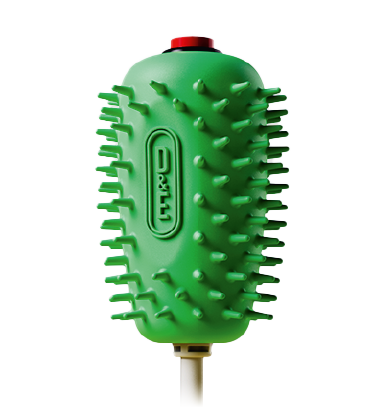
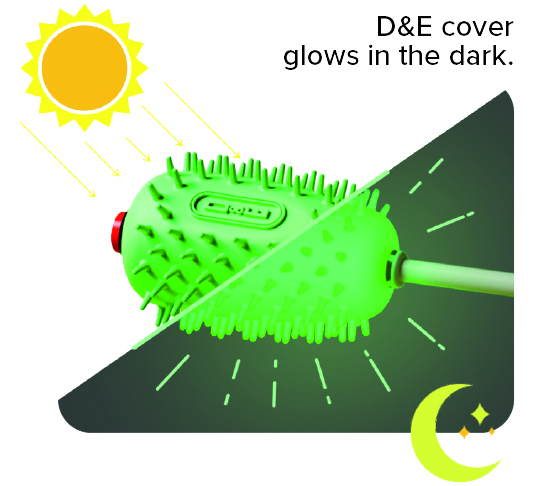
Dignity & Empowerment's glow-in-the-dark nurse call cover — invented by clinical neuropsychologist Dr. Sharada Damaraju — went through that sequence with us: silicone and pigment trials, iterative fit prototypes, then DFM documentation and a first low-volume production run.
Project at a glance
- Client
- Dr. Sharada Damaraju — Dignity & Empowerment
- Category
- Medical / patient-safety accessory
- Product
- Glow-in-the-dark silicone sleeve for standard nurse call devices
- Material
- Medical-grade silicone at 20 Shore A with validated glow pigment ratio
- What we delivered
- Product design and engineering, prototype and material trials, DFM documentation, first low-volume production run, brand identity, packaging and instruction design, website and marketing content
- Key constraints
- Visible in low light, safe on fragile skin, fits existing call buttons, survives cleaning and autoclave
The client
The challenge
“When engineering meets empathy, innovation becomes healing.”
Our solution
“Softness that protects. Visibility that empowers.”
Materials and safety validation
“Engineered for safety. Designed for humanity.”
Services provided
- 01
Product design and engineering
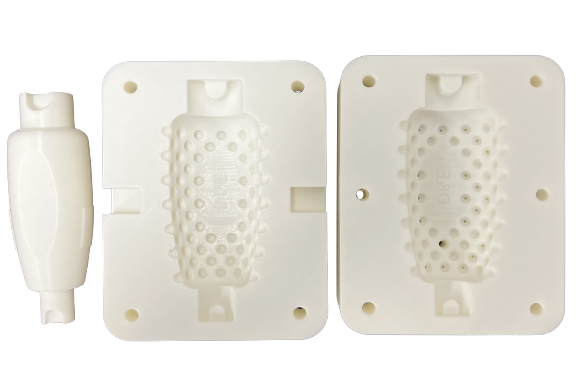
We transformed an early idea into a fully engineered solution, optimizing ergonomics, surface texture, and visual performance. Each curve, opening, and bristle pattern was refined to protect frail skin while ensuring durability. - 02
Prototyping and materials testing
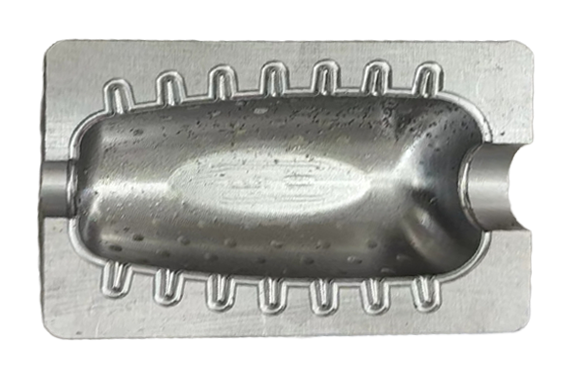
Our team produced multiple 3D-printed and cast prototypes, testing silicone blends and glow materials for brightness, tactile response, and sterilization tolerance. Each iteration was validated for use in medical product development. - 03
Design for manufacturing and production
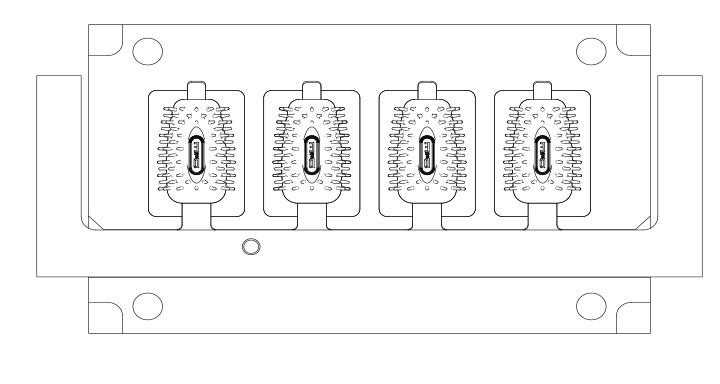
We prepared complete DFM documentation, selected tooling methods, and managed the first low-volume manufacturing run. This ensured repeatability, cost efficiency, and consistent quality control. - 04
Branding and logo design
We created the Dignity & Empowerment brand identity, symbolizing safety, visibility, and compassion. The logo and color palette were designed to resonate with healthcare professionals and patients alike. - 05
Website and marketing support
We developed website content, product descriptions, and imagery, and created educational materials that helped launch the company’s digital presence to reach hospitals, nursing homes, and care facilities. - 06
Packaging and instruction design
Our design team produced clear packaging layouts and instruction manuals detailing installation, cleaning, and charging processes.
“From concept to care, every detail matters.”
The result
“Designing dignity back into patient care.”
Customer testimonial
I highly recommend the LA New Product Development Team for any of your new product development needs!!! From the development of my concept to the actual prototype, the process was seamless! I especially loved the quick responsiveness to any questions I had about the product development. As well, I received regular updates during stages of development, so I was not left wondering how things were going. The steps were clearly outlined, along with estimated costs. I could not be happier!
Capabilities used on this project
Rapid prototyping services
3D printing, CNC machining, urethane casting and functional prototype builds with published materials, tolerances and lead times.
How a patient-contact medical accessory gets developed
Every decision below was made on this project, in this order. Skipping one of them is what turns a promising clinical idea into a part that cannot be cleaned, cannot be molded, or cannot be sold.
1. Define the clinical failure you are removing
The starting point was observed, not assumed: a white plastic call button disappears against white sheets at night, so patients reach, strain and sometimes fall. Naming the failure precisely sets the acceptance test — the device must be findable in the dark without being touched first.
2. Design to fit hardware you do not control
Hospitals will not replace their call systems for an accessory. The cover was designed as a sleeve that slips over any standard nurse call device, so the geometry had to accommodate a family of existing shapes rather than one.
3. Trial materials before you trial form
We tested several medical-grade silicone formulations and glow pigment ratios together, because pigment loading changes both brightness and durometer. The result landed at 20 Shore A — soft enough for fragile skin, firm enough to hold shape.
4. Prototype the human details
Small collapsible bristles were added to reduce drag on thin skin and give tactile feedback for grip. Details like that only survive if they are printed and cast early, handled by real users, and revised across several iterations.
5. Validate against cleaning, not just use
In a care setting, the cleaning cycle is the harshest load case. The final part was validated to perform under sterilization and cleaning and to withstand autoclave conditions, which constrained both the polymer and the pigment.
6. Prepare DFM, then run low volume first
We produced complete DFM documentation, selected tooling methods and managed the first low-volume manufacturing run — proving repeatability and cost before scaling, and giving the company sellable units for hospital and nursing-home trials.
| Decision | Consumer product | Patient-contact product | Why it matters |
|---|---|---|---|
| Material | Any durable polymer | Medical-grade silicone, known durometer | Skin contact and biocompatibility drive the shortlist |
| Cleaning | Wipe down | Repeat sterilization / autoclave | Sets the temperature and chemical resistance floor |
| Fit | Fits your own product | Fits equipment the facility already owns | Adoption dies if hardware has to be replaced |
| Validation | Looks and feels right | Usability, safety and manufacturability documented | Facilities buy on evidence, not impressions |
Questions about this project
Straight answers from the engineers who ran the build. Have a different question? Ask us directly.
Talk to an engineerHow long does it take to develop a medical accessory like this?
Products that sit outside the regulated device itself — sleeves, covers, holders — move much faster than the device they attach to, because the clinical hardware is unchanged. The schedule is driven by material trials and fit iterations rather than by submissions, so it behaves like a consumer program with medical-grade material discipline.
Why does silicone hardness matter so much?
Durometer sets whether a part protects skin or abrades it. Too soft and the sleeve deforms and slips off the button; too firm and it presses on thin skin. We converged on 20 Shore A by making parts at several hardnesses and having them handled, not by picking a number from a datasheet.
Can you handle manufacturing as well as design?
Yes. We prepared the DFM package, selected the tooling method and ran the first low-volume production batch in-house, which is usually the right first step: it proves the process and gives the company real inventory before committing to hard tooling.
Do you also handle branding and packaging for medical products?
On this project we did — brand identity, packaging layout and the instruction manual covering installation, cleaning and charging the glow material. Care facilities evaluate the whole package, and unclear instructions are a real adoption barrier for a product used by night staff.
Industries this project belongs to
See how we approach development in each of these categories, and the other products we have taken from sketch to production there.


