SaaS & Software Product Development
SaaS product development from discovery to launch: MVP scope, team shape, typical budgets and timelines, and how software pairs with hardware.
SaaS product development from discovery to launch: MVP scope, team shape, typical budgets and timelines, and how software pairs with hardware. SaaS product development turns a software idea into a running, paid product: discovery and scope, product design, architecture, build, launch and the first iteration cycles after real users arrive.
SaaS product development turns a software idea into a running, paid product: discovery and scope, product design, architecture, build, launch and the first iteration cycles after real users arrive. Most first releases fail on scope, not code — the team builds ten features when three would have proven the business.

What a SaaS engagement includes
| Stage | What we deliver | Typical duration |
| Discovery and scope | User journeys, feature cut list, success metrics, costed plan | 1-3 weeks |
| Product and UX design | Flows, wireframes, UI kit, clickable prototype | 2-5 weeks |
| Architecture | Data model, auth and roles, integrations, hosting plan | 1-2 weeks |
| MVP build | Working product, admin tooling, billing, analytics | 8-16 weeks |
| Launch and iterate | Onboarding, instrumentation, fixes and the first feature cycles | Ongoing |
What SaaS product development costs
| Program type | Scope | Typical budget |
| Validation MVP | One core workflow, auth, billing, basic admin | $25k - $60k |
| Full first release | Several workflows, roles, integrations, analytics | $60k - $150k |
| Platform or multi-tenant product | Complex permissions, API, data pipeline, compliance | $150k - $400k |
Ranges assume a production-intent build, not a research project. They exclude ongoing hosting, third-party service fees and paid acquisition. If you already have a codebase, we quote an audit first and tell you plainly what is worth keeping.
Software that ships with hardware
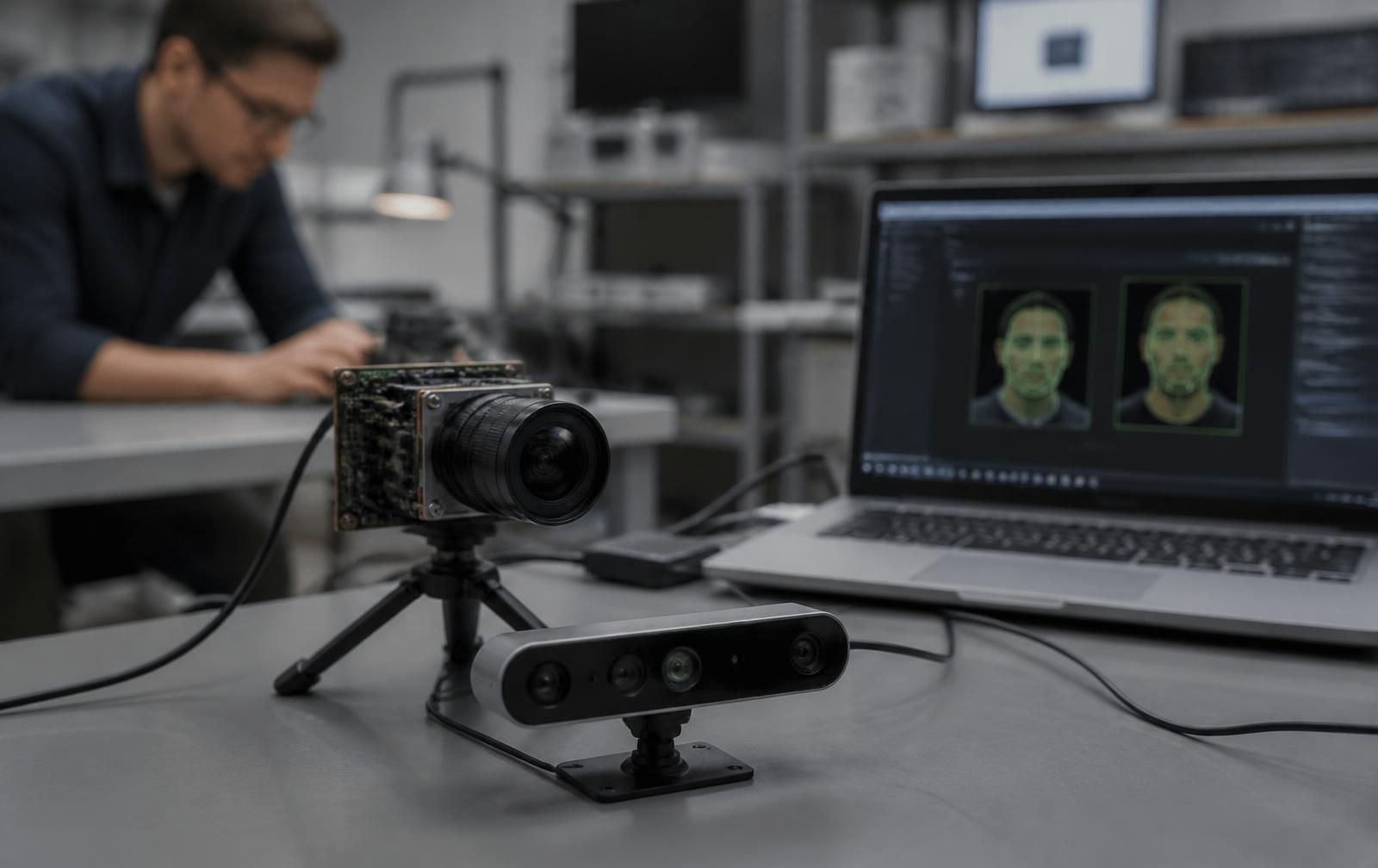
A large share of the software we build is attached to a physical product — a companion app, a provisioning flow, a fleet dashboard, or the cloud services behind a connected device. When the software and the device are designed together, the interface contract is written once instead of renegotiated after the first integration build. If your product has hardware in it, start at digital product development services instead.
How the engagement runs
- Discovery and scope — we cut the feature list to what proves the business, and price the rest as later phases.
- Design before build — clickable prototype reviewed with real users, so changes happen in a design file rather than in code.
- Two-week build cycles — a deployed, usable environment at the end of each one.
- Launch — onboarding, instrumentation and a backlog ranked by what usage data actually shows.
- Handover — you own the repository, infrastructure and documentation from day one.
How to choose a SaaS development partner
Most SaaS builds fail on scope and ownership, not on engineering talent. Four questions separate a partner who ships a business from one who ships a backlog.
Do they cut scope with you?
A partner who accepts your full feature list without argument is pricing a project, not building a business. Ask which three features they would cut and why.
Who owns the accounts?
Repository, cloud, domain and analytics should be in your name from day one — not handed over at the end.
What lands every two weeks?
A deployed environment you can log into beats a status report. Written acceptance criteria per cycle keep a fixed scope fixed.
Can they support the launch?
Instrumentation, onboarding and a ranked backlog matter more in month four than in month one. Ask what the first 90 days after launch look like.
| Area | Share of a first release | Why it costs what it does |
|---|---|---|
| Discovery, design, prototype | 20-30% | Decisions made in a design file are an order of magnitude cheaper than the same decisions made in code |
| Core workflow build | 35-45% | The feature customers pay for, including the edge cases support will otherwise absorb |
| Platform work: auth, roles, billing, admin | 20-25% | Multi-tenant plumbing every SaaS needs before its first paying customer |
| Launch, instrumentation, hardening | 10-15% | Onboarding, analytics, error tracking and the fixes real usage exposes |
If your product has hardware in it, see digital product development services, compare budgets on product development cost, or read the QMS2GO platform case study.
In-house, freelancers, offshore or a product studio?
The four ways founders get a SaaS built cost different amounts and fail in different ways. Pick on how much product thinking you need to buy, not on hourly rate.
| Route | Typical first-release cost | Works well when | Where it breaks down |
|---|---|---|---|
| Hire in-house engineers | $250k+ per year, fully loaded | You have funding, a product leader in place, and a roadmap past the first release | Three to six months of recruiting before code exists; wrong first hire is expensive to unwind |
| Individual freelancers | $20k-$70k | Scope is small, you can write the spec yourself and manage the work daily | No one owns architecture or QA; availability disappears exactly when launch pressure peaks |
| Low-cost offshore agency | $25k-$80k | The spec is fully settled and you only need hands on keyboards | Ambiguity gets built literally; rework and time-zone lag erase the rate savings |
| Product studio (what we do) | $25k-$150k by scope | You need scope cut, design, build and launch handled by one accountable team | Higher day rate than offshore; overkill if you truly only need one screen built |
Whichever route you take, hold the same three things: fixed scope per two-week cycle, a deployed environment at the end of each one, and accounts in your name.
What the first six months look like
| Phase | Weeks | What you get |
|---|---|---|
| Discovery and scope | 1-3 | Workflow map, ranked feature list, the cut list, fixed-scope estimate |
| Product and UX design | 3-8 | Clickable prototype of the core workflow, design system, edge-case states |
| Architecture and setup | 7-9 | Data model, tenancy and roles model, environments, CI, error tracking |
| Build cycles | 9-22 | Deployed increment every two weeks against written acceptance criteria |
| Launch and hardening | 20-24 | Onboarding, billing live, analytics events, performance and security pass |
| Post-launch iteration | 24+ | Ranked backlog driven by usage data, monthly or per-cycle engagement |
A good fit if
- You have a workflow real users perform today, however manually.
- You can name the one thing the first release must prove.
- Your budget covers design and build, not build alone.
- Your software sits alongside a physical or connected product.
Not a fit if
- You need a single screen added to an app you already run well.
- The requirement is staff augmentation under your own tech lead.
- The whole feature list is non-negotiable and none of it can be phased.
- You are looking for the lowest hourly rate available.
SaaS product development: common questions
What is SaaS product development?
SaaS product development is building a subscription software product end to end: discovery and scope, product and UX design, architecture, the build itself, launch instrumentation, and the iteration cycles once paying users arrive. The defining constraint is that the product has to run reliably for many tenants at once, so auth, roles, billing and data isolation are first-release work rather than later additions.
How much does it cost to build a SaaS product?
A validation MVP covering one core workflow with auth, billing and basic admin typically runs $25,000 to $60,000. A full first release with several workflows, roles, integrations and analytics runs $60,000 to $150,000. A multi-tenant platform with complex permissions, a public API and compliance requirements runs $150,000 to $400,000. Hosting, third-party service fees and paid acquisition sit outside those ranges.
How long does it take to build a SaaS MVP?
Three to five months is typical: one to three weeks of discovery and scope, two to five weeks of product design, one to two weeks of architecture, then eight to sixteen weeks of build in two-week cycles with a deployed environment at the end of each one.
What should be in the first release and what should wait?
Ship the one workflow that proves someone will pay, plus the machinery that workflow cannot run without — sign-up, permissions, billing and enough admin tooling to support a customer. Reporting dashboards, integrations beyond the first, native mobile apps, and self-serve configuration are the usual candidates to price as later phases.
Do you work on an existing codebase?
Yes. We quote a short audit first — architecture, data model, test coverage, deployment and security posture — and then tell you plainly what is worth keeping, what should be rewritten, and what it costs either way. Taking over a codebase without that audit is how fixed quotes turn into open-ended ones.
Can you build the software for a connected hardware product?
That is a large share of what we build: companion apps, device provisioning flows, fleet dashboards and the cloud services behind a connected device. When the software and the device are scoped together the interface contract is written once. If your product includes hardware, start at digital product development services.
Who owns the code and the infrastructure?
You do, from the first commit. The repository, cloud accounts, domains and documentation are yours throughout the engagement, not transferred at the end — so you can change teams at any phase boundary without a migration project.
What founders say after working with us
“Konstantin has been so amazing and his entire team is A+. I researched and interviewed many product development companies across the country and ultimately decided on LA NPDT... and I'm so glad I did. The attention to detail and overall effort has been exactly what I needed and then some. If you are looking for a company to help you bring your product to life, look no further!”
 William EvansCEO, Burple
“This company is awesome. I run a medical device company and we required a number of accessories to be designed and built for our medical device. They delivered a polished design and printed the accessories on time using high-quality materials. I continue to work with them for all of our material needs.”
 Matteo ZiffFounder, Virtual Vision
“I highly recommend the LA New Product Development Team for any of your new product development needs. From the development of my concept to the actual prototype, the process was seamless. I especially loved the quick responsiveness, and I received regular updates during every stage, so I was never left wondering how things were going. The steps were clearly outlined, along with estimated costs.”
 Dr. Sharada DamarajuFounder, Dignity & Empowerment
Three reasons founders keep working with us
- 1
One team from sketch to shipped parts. Industrial design, mechanical and electrical engineering, prototyping and manufacturing sit under one roof, so nothing is lost in a handoff.
- 2
You own the work. Native CAD, drawings and source files are yours at the end of every phase — no lock-in, no re-buying your own design later.
- 3
Fixed scope, fixed price. Every phase is quoted up front with a deliverable list and a date. No hourly meters, no surprise invoices.
If you ever thought of developing a new product, don’t wait any longer. Talk with one of our experts today.
Tell us about your product
Send us the idea, the drawing or the problem. We reply within one business day with the next practical step.
Ready to scope the work? Explore a partnership · Request a quote