Types of Prototypes Explained: Mockup, Proof of Concept, Functional
What each prototype type proves, when you need it, and how mockup, proof-of-concept and functional prototypes compare.
August 27, 20261 min read

Written by Konstantin Dolgan, Ph.D., NPDP
Founder & CEO, Product Development Engineer
Published August 27, 2026
A prototype is a physical sample of your product idea, built to answer one question at a time: does it look right, does the concept work, or does the whole product function. This guide covers what a prototype is, who needs one, and how mockup, proof-of-concept and functional prototypes compare. If you are ready to build, see our rapid prototyping and prototype manufacturing services.
WHAT IS A
PROTOTYPE?
A prototype is a tangible sample or model of your product idea. It is not a final product by any means. You might need a prototype to perform marketing surveys, fundraising campaigns, or preparation for manufacturing among other reasons. In some cases, a 3D virtual prototype might be sufficient.
Above all, a physical prototype gives you an opportunity to really feel and touch your invention. You can see its strengths and weaknesses, and modify the design so that your final product will work as intended.
A prototype brings your
idea into a physical world

A physical prototype at your disposal is a very useful tool. You can see the real size of your product, how the selected materials are behaving, what they feel like, and what their true colors are. Having all that physically available enables you to make observations and ask for feedback from your product’s end-users. Then you can play with design iterations as necessary for the betterment and optimization of every detail of your product.
You need at least several
prototypes to reach the
balance

How many prototypes are needed?
It’s almost never the case to have just one prototype during a product development process. Usually, you need several prototypes in order to achieve a perfect balance between functionality, performance, production costs, and visual appearance of the product.
Let’s take Dyson’s vacuums based on cyclone technology as an example. He made 5,127 prototypes to achieve the desired results and bring his vision to the market. Just imagine, 5, 127 prototypes!
In his interview with Inc. magazine Jason Dyson said: “It didn’t happen overnight but after years of testing, tweaking, fist-banging and after more than 5,000 prototypes, it was there, or nearly there. I still needed to manufacture it and go sell it.”
Of course, nowadays, due to technological development and the existence of rapid prototyping companies, the process of product development became faster. All that allows you to reduce the number of iterations dramatically.
SKIPPING PROTOTYPE MANUFACTURING
LEADS TO INCREASED PRODUCTION COST

There is an important aspect of building physical prototypes when it comes to manufacturing. Oftentimes, inventors take risks of investing in product manufacturing without having a prototype made. That choice usually leads to a quite substantial loss of money. Yes, they save some by skipping a prototyping stage, but they lose more in the long run.
Overall development process and prototype manufacturing help find the design flaws. It also shows how much time and resources the assembly process takes. To correct those issues the molds would have to be corrected or even changed completely.
However, to fix those problems during the prototyping stage will not require substantial investments. So then, those who skipped the prototyping have to pay more for the design and tooling modifications. But they could’ve avoided that by having an invention prototype made first.
Gauge product-market-fit with your prototype
There is also a less quantifiable aspect – how much consumers will like your product. Typically, the prototype testing reveals possible design improvements. Some of them could lead to higher product appreciation and consumer satisfaction. For example, improved ergonomics could result in customers using your product more often because it feels more comfortable to them.
The more time you spend testing the prototypes and optimizing your design, the more perfected your product will become. Of course, it’s important to know when the product is good enough for your target market and when to stop. At that point all additional changes and improvements will yield diminishing returns.
CASE STUDY: UP dock.
How prototyping
helped to save $12,950
on manufacturing
Here is an example of how our team was able to save $12,950 on manufacturing by going the extra mile with prototyping and design optimization. Building over 14 prototypes allowed us to optimize the design for mass production.
We reduced the assembly time and the number of manufacturing steps while also improved the look of the product. Our team was able to iterate the design-prototype-test cycle quickly due to the rapid prototyping technologies. Our professionals used CNC milling, routing, and 3D printing. You can read the whole story here

WHO NEEDS A
PRODUCT PROTOTYPE?
- An entrepreneur raising capital for his/her idea
- An inventor who wants to license his/her idea to a larger company and needs it for presentations
- A small business looking for distribution channels and ways to secure deals or pre-orders prior to larger investments to manufacturing and marketing
- A small business that wants to test the market with its new product
- A dreamer who had this idea for years and wants to develop a product for him-/herself and potentially sell it to others
TYPES OF
PROTOTYPES
There are several types of prototypes. The choice will depend on many factors including the stage of the product development. Some of the most frequently used prototypes are:
Mockup prototype
“looks-like prototype”
Proof of concept prototype
“works-like prototype”
Functional prototype
“works and looks-like” prototype
Each of them serves its own purpose. Depending on what stage of the idea development you are and your objective, we will help you to determine which type of prototype you need. Let’s look at the purpose of each more closely.

3D printed plastic housing
3D printed mock-up PCB
MOCKUP PROTOTYPE
This prototype is usually required at the early stages of product development. Whether you need to do an initial target audience survey or market research, the looks-like prototype might be sufficient.
MOCKUP PROTOTYPE
3D printed plastic housing
3D printed mock-up PCB
This prototype is usually required at the early stages of product development. Whether you need to do an initial target audience survey or market research, the looks-like prototype might be sufficient.
PROOF OF CONCEPT PROTOTYPE
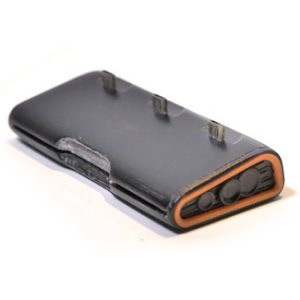
3D printed plastic housing
Functional PCB
This type is necessary to test mechanical, electrical, and other functional features of the product, as well as to prove that your idea can be realized. For instance, when you’re at the stage of meeting with investors or potential partners, you need to give them a solid proof that your product will work, has true value, and is worth their investment.
FUNCTIONAL PROTOTYPE
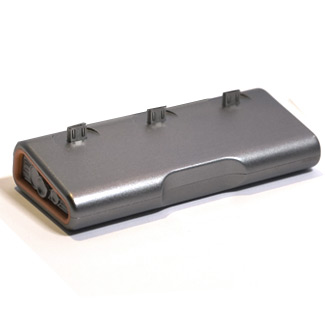
CNC-machined aluminum housing
Functional PCB
The most complete and complicated type of prototype includes both visual and technical features. Usually, this prototype is required during the latest stages of product development, prior to manufacturing or demonstrating the product to a wide audience.
PROOF OF CONCEPT PROTOTYPE
This type is necessary to test mechanical, electrical, and other functional features of the product, as well as to prove that your idea can be realized. For instance, when you’re at the stage of meeting with investors or potential partners, you need to give them a solid proof that your product will work, has true value, and is worth their investment.
3D printed plastic housing
Functional PCB
CNC-machined aluminum housing
Functional PCB
FUNCTIONAL PROTOTYPE
The most complete and complicated type of prototype includes both visual and technical features. Usually, this prototype is required during the latest stages of product development, prior to manufacturing or demonstrating the product to a wide audience.
COMPARISON OF DIFFERENT PROTOTYPE TYPES
| Prototype Type | Description | Advantages | Disadvantages |
|---|---|---|---|
| Mockup Prototype | A visual representation of the product’s design, layout, and appearance | Can be used to test the product’s design and aesthetics, suitable for presentations and marketing | Not suitable for testing the product’s functionality or performance |
| Proof-of-Concept Prototype | A prototype that demonstrates the feasibility of the product concept | Can be used to test the product’s basic functionality and performance, helps to validate the concept | May not be fully functional or representative of the final product, not suitable for testing detailed design or materials |
| Functional Prototype | A prototype that closely resembles the final product and is fully functional | Can be used to test the product’s functionality, performance, and materials, helps to validate the design | Can be expensive and time-consuming to create, may not be visually representative of the final product |
| Demo Model Prototype | A visually representative and partially functional prototype used for demonstrations and sales pitches | Can be used to showcase the product’s design and features, helps to generate interest and secure funding | May not be fully functional or representative of the final product, not suitable for testing detailed design or materials |
Prior to ordering your prototype, the number one step is to understand why you need a prototype, what you want from it, and where you are in the product development process.
After those questions are answered, you can set your goals accordingly. Share these goals with your product development team, so they can help you choose the best option to move forward with.
or give us a call


Ready to build one? LA NPDT builds mockup, proof-of-concept and functional prototypes in-house — see our rapid prototyping services or estimate your prototype cost.
Services related to this guide
- Best prototyping companiesDevelopment firms, instant-quote bureaus and local shops — who fits which job.
- Free prototype cost calculatorFive to eight questions, an instant cost range for a first prototype.
- Prototype development companiesWhich firms take a sketch to a working prototype — and which only fabricate parts.
- Rapid prototypingWorking prototypes in days, from 3D printing to vacuum casting.