Our work / Virtual Vision
Enabling Clinical-Grade Vision Testing in Virtual Reality
- Mechanical design & engineering
- 3D scanning & reverse engineering
- Prototyping
- Design for manufacturing
- Short-run production
- Long-term hardware support

Written by Konstantin Dolgan, Ph.D., NPDP
Founder & CEO, Product Development Engineer
Updated August 30, 2026
Hardware for a regulated clinical workflow has to fit equipment you did not design, disappear from the patient's experience, and be supplied reliably for years.
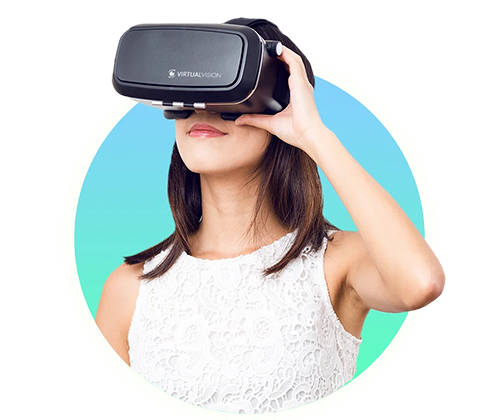
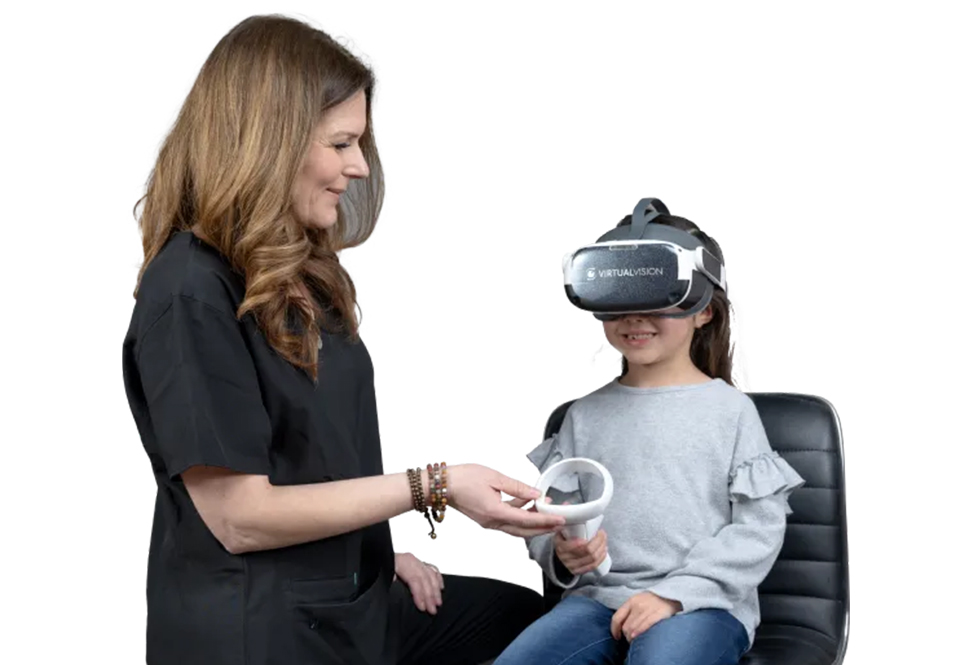
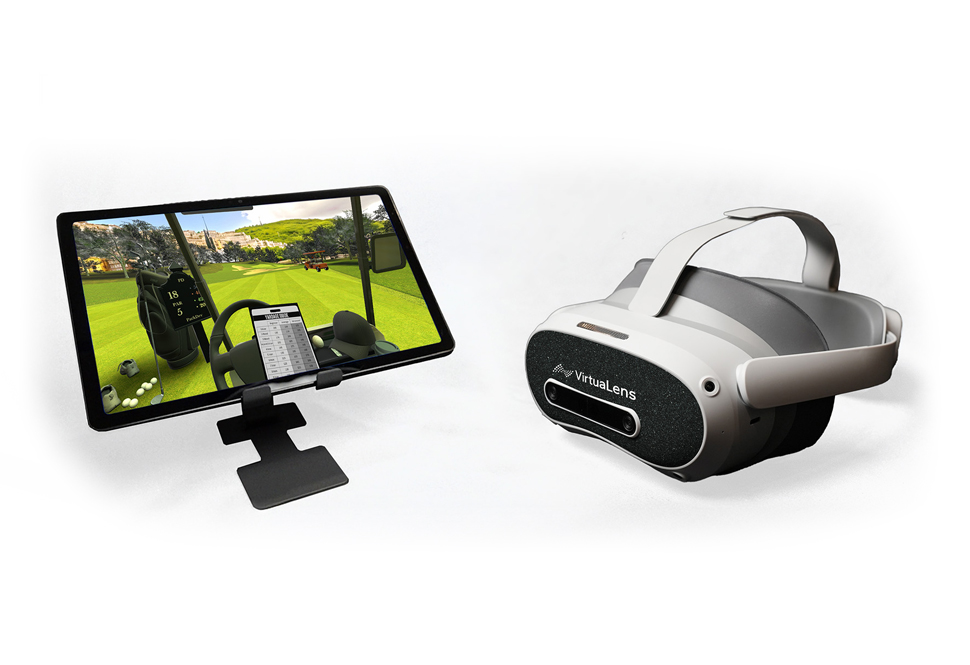
Virtual Vision needed trial lens holders so doctors could run VR-based vision exams without patients' own glasses. We 3D scanned each headset, designed and validated holders per platform, and now manufacture and ship batches on demand — a partnership running several years across multiple hardware products.
Project at a glance
- Client
- Virtual Vision — VR-based clinical vision testing platform
- Category
- Healthcare hardware / clinical accessory
- Product
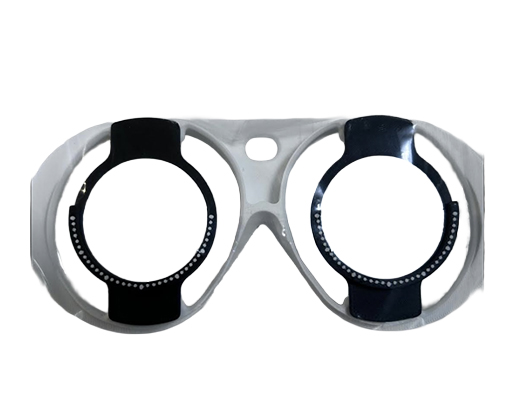
- Trial lens holders that mount inside or onto VR headsets for refractive testing
- Compliance environment
- HIPAA-verified platform, ADA-aligned, DICOM-compatible workflows
- Method
- High-resolution 3D scanning and reverse engineering per headset model, 3D-printed functional prototypes validated in real exams
- Ongoing role
- Short-run manufacturing, packaging and direct shipment; multiple hardware products across several years
The client
The challenge
- Compatible with multiple VR headset models
- Comfortable and unobtrusive for patients
- Easy and fast for clinicians to use
- Secure enough for repeated clinical use
- Reliable for long-term deployment
Our solution
Designing for accuracy starts with 3D scanning
From concept to clinically reliable hardware
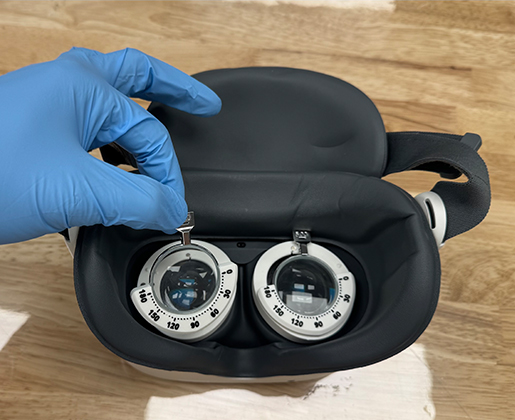
Manufacturing, short-run production, and ongoing supply
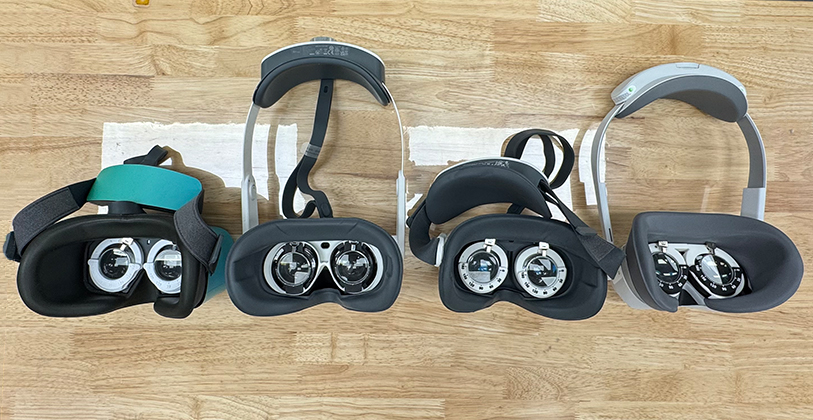
A long-term strategic partnership
Services provided
- 01
Product strategy & hardware architecture
Defined how trial lens systems integrate into VR-based vision exams while meeting clinical requirements. - 02
3D Scanning & Reverse Engineering
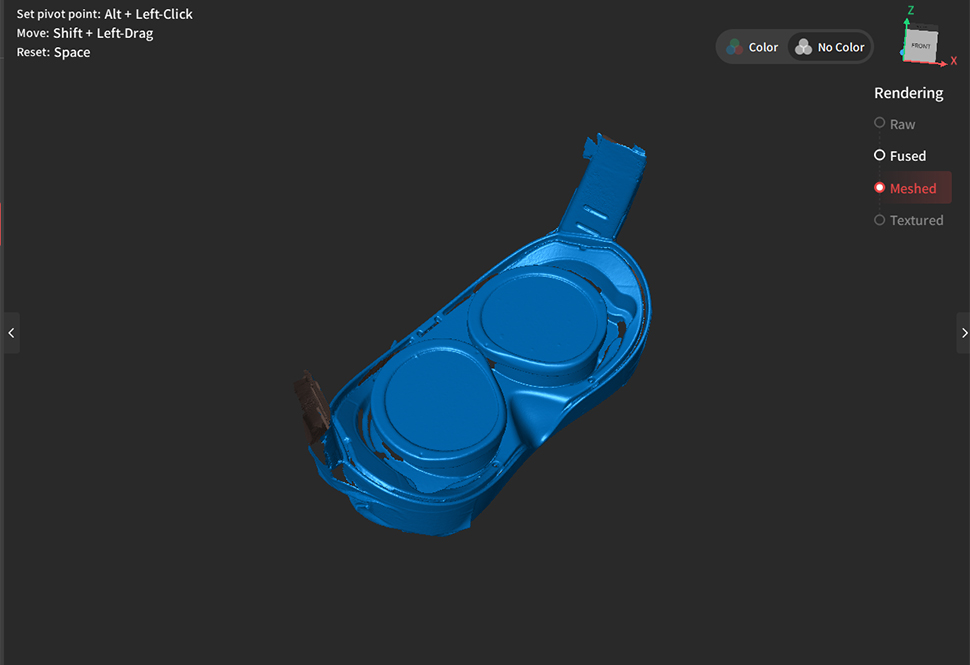
Captured accurate headset geometry to ensure precise fit and alignment. - 03
Mechanical Design & Engineering
Designed ergonomic, unobtrusive trial lens holders compatible with multiple VR platforms. - 04
Prototyping & validation
Produced and tested functional prototypes in real clinical workflows. - 05
Design for manufacturing (DFM)
Prepared designs for repeatable, cost-effective production. - 06
Short-run manufacturing & supply
Produced and delivered hardware batches on an as-needed basis. - 07
Ongoing product development support
Continued development of new variants as headset platforms evolved. - 08
The result
By enabling the use of trial lenses inside VR headsets, this project removed a major barrier to clinical adoption of virtual vision testing. Doctors can now conduct more flexible, accurate exams without relying on patient eyewear.
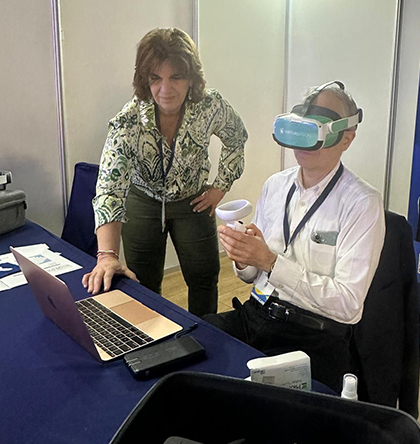
Customer testimonial
“This company is awesome. I run a medical device company and we required a number of accessories to be designed and built for our medical device. They delivered a polished design and printed the accessories on time using high-quality materials. I continue to work with them for all of our material needs.”
Matteo Ziff, Founder, Virtual Vision
Capabilities used on this project
Low-volume manufacturing
Bridge tooling, short-run production and supplier management for first commercial batches.
Rapid prototyping services
3D printing, CNC machining, urethane casting and functional prototype builds with published materials, tolerances and lead times.
How clinical accessory hardware gets designed and supplied
Virtual Vision's platform is HIPAA-verified, aligned with ADA accessibility standards and compatible with DICOM workflows. Accessory hardware has to be worthy of that environment.
1. Write the requirement as a clinical workflow
The need was specific: hold one or two trial lenses inside or on a VR headset so a clinician can swap configurations quickly mid-exam, across multiple headset models, comfortably for the patient and securely enough for repeated clinical use.
2. Scan the hardware you must fit
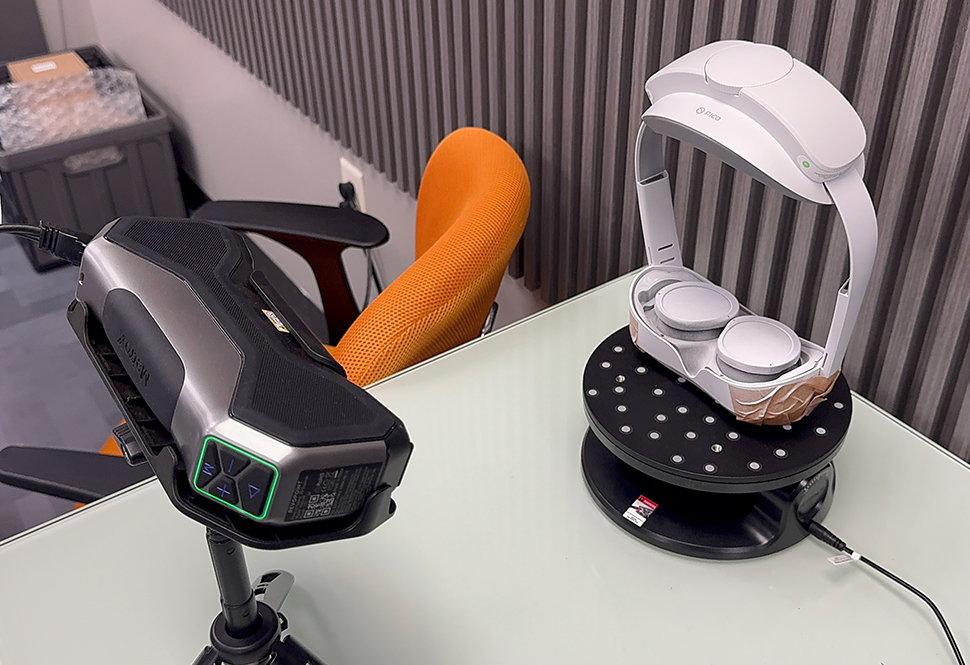
Each headset has unique geometry, tolerances and internal constraints. High-resolution 3D scanning captured the exact dimensions of each platform so holders would seat correctly, align with the user's eyes, and avoid interference with headset optics and electronics.
3. Design around eyes, not just space
Holders were optimized for ergonomics, minimal visual obstruction and fast lens insertion and removal. In an eye exam, an obstruction or a misalignment is not a comfort issue — it is a measurement error.
4. Test inside the actual exam
Functional prototypes were 3D printed and tested in real clinical workflows, then iterated on feedback from doctors and the Virtual Vision team, until the holders were intuitive for clinicians and comfortable for patients.
5. Repeat the process per platform
Every new headset configuration starts from the same scan-design-validate sequence. That repeatability is what allows one product family to span several VR platforms without redesigning from scratch each time.
6. Supply on demand, not in one big run
We produce batches of trial lens holders as needed, package them and prepare them for shipment directly to the client. Short-run supply keeps Virtual Vision's capital in their software and clinical partnerships instead of in inventory.
| Requirement | Consumer | Clinical | Consequence |
|---|---|---|---|
| Fit | Close enough | Scanned per hardware model | Misalignment corrupts the exam result |
| Handling | Occasional use | Repeated use across patients | Durability and cleanability drive material choice |
| Validation | Looks right in testing | Tested inside the real workflow | Clinicians reject anything that slows an exam |
| Supply | One large production run | Short runs on demand, ongoing | Platforms change; inventory becomes obsolete |
Questions about this project
Straight answers from the engineers who ran the build. Have a different question? Ask us directly.
Talk to an engineerWhy is 3D scanning necessary for a headset accessory?
VR headsets differ in geometry, internal clearance and optical placement, and none of that is published to the tolerance an accessory needs. Scanning the real hardware is what lets a holder seat securely, align with the eyes and stay clear of optics and electronics.
Do accessories for clinical use need regulatory clearance?
It depends on the claim being made and the device it attaches to, and that determination belongs to the client and their regulatory counsel. What we control is designing and documenting the hardware so it holds up under the platform's compliance requirements rather than undermining them.
Can you manufacture in small batches instead of one big run?
Yes, and for evolving platforms it is usually the right call. We produce batches on demand, package them and ship them to the client, so they are not holding inventory for a headset model that may be superseded.
Do you support long-term hardware partnerships?
Virtual Vision has worked with us for several years across multiple hardware products. In regulated markets, continuity matters more than price — the partner who already knows your workflow can respond when a platform changes without relearning the constraints.
Industries this project belongs to
See how we approach development in each of these categories, and the other products we have taken from sketch to production there.