Our work / venthalpy
IoT Product Development: From Sensor to Dashboard
What a custom IoT build actually includes
- Hardware Development
- Software & Mobile App Creation
- IoT Integration


Written by Ashok Chintagunta, MS Computer Science, Louisiana Tech University
CTO & Software Engineer, AI and Automation
Updated September 3, 2026
An IoT product is really three products that have to ship together: instrument hardware that measures accurately, firmware that gets the data off the device reliably, and an app that turns the readings into a decision someone will pay for.
Venthalpy hired us as a single partner for all three — Air and Fluid diagnostic probes, the firmware, and the mobile app that grades HVAC efficiency and produces customer-facing reports.
Project at a glance
- Client
- Venthalpy — smart HVAC diagnostics platform
- Category
- IoT instrumentation and mobile app
- Hardware
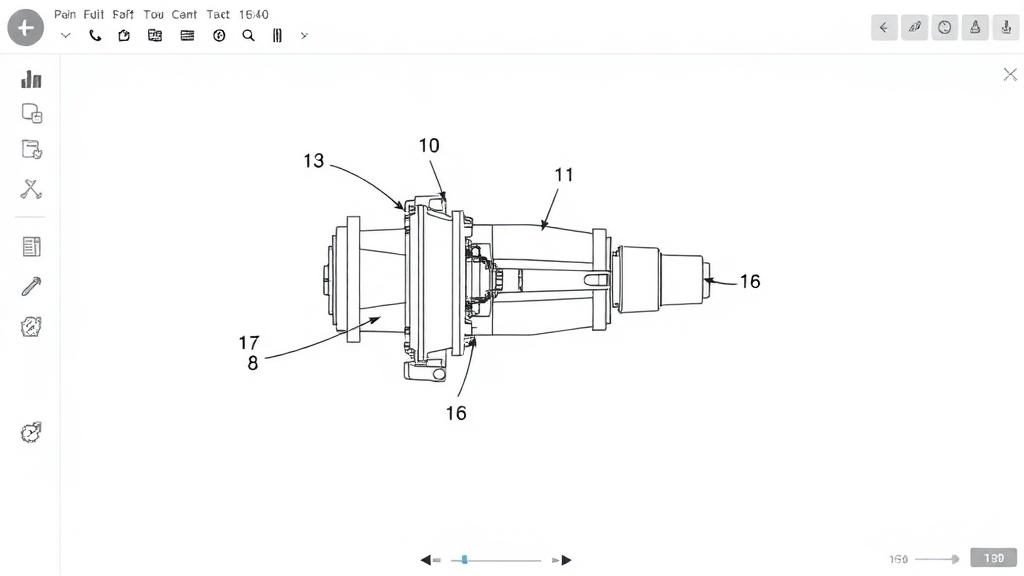
- Air probes for air-to-air heat exchange; fluid probes for chillers, cooling towers and hot water boilers
- Measured
- Temperature, pressure, relative humidity, air quality, airflow rate, duct leakage, insulation efficiency
- What we delivered
- Mechanical and electronics engineering, firmware, IoT integration and the iOS mobile application
- Why it matters
- HVAC accounts for close to 40% of energy use in commercial buildings
- Sensor hardware: probe or board selection, analog front end, and a custom enclosure that survives the field environment
- Firmware: measurement loop, calibration, power management, and over-the-air update capability
- Connectivity: BLE for technician tools, Wi-Fi or cellular for always-connected devices, with a provisioning flow a non-engineer can complete
- App and dashboard: the screens that turn raw readings into a recommendation, a grade or an alert
- Cloud pipeline: ingestion, storage and the API the app and dashboard share
Case study: Venthalpy — IoT HVAC diagnostic probes and iOS app
The client
The challenge


Our solution
The result
Customer testimonial
“Partnering with LA NPDT was pivotal for Venthalpy. Their comprehensive product development expertise, encompassing mechanical and electronics engineering to firmware and mobile app creation, was instrumental in bringing our vision to life. Thanks to our collaboration, our system now has the potential to improve HVAC efficiency nationwide, paving the way for more sustainable buildings. Engaging with a singular, unified development company like LA NPDT streamlines the journey from concept to reality.”

Services provided
Hardware development
Software and mobile app
IoT integration
What an IoT product costs to develop
How the build runs
- Prove the physics first: a bench rig confirms the sensor and measurement approach before any enclosure design starts
- Prototype the full chain: probe, firmware, app screen — so the data flow is real, not a mockup
- Harden for the field: sealing, drop and thermal work, battery life, and a provisioning flow tested on non-technical users
- Scale the back end last: cloud and dashboard features grow once the device is stable
Frequently asked questions
How long does it take to develop a custom IoT product?
Do you build both the hardware and the app?
Which connectivity should a field device use?
Can you start from an existing prototype or proof of concept?
Related resources
- IoT and consumer product development — our connected-product service page
- Prototype cost calculator — estimate your build budget in five questions
- Electronic design services — PCB and firmware engineering
- What a prototype costs — real numbers across every process
Capabilities used on this project
Rapid prototyping services
3D printing, CNC machining, urethane casting and functional prototype builds with published materials, tolerances and lead times.
Electronic design and PCB engineering
Schematic capture, PCB layout, firmware and electromechanical integration for connected hardware.
How a connected diagnostic instrument gets built
HVAC systems account for close to 40% of energy use in commercial buildings. Turning that into a business means measuring it credibly, which is an engineering problem across four disciplines at once.
1. Start from the measurement, not the app
Everything downstream inherits the sensor's accuracy. The Venthalpy air probes measure temperature, pressure, relative humidity and air quality for air-to-air heat exchange; the fluid probes are built for liquid-to-air equipment such as chillers, cooling towers and hot water boilers.
2. Design the probe as a field tool
These instruments live in trucks and mechanical rooms. Housing, sealing, connector choice and probe geometry are set by the working environment and by how a technician actually holds and inserts the tool, not by the PCB outline.
3. Build firmware around what the app must guarantee
Sampling, filtering and the connection protocol determine whether a reading is trustworthy and whether it appears when the technician expects it. The firmware contract is agreed before the app UI, because the UI cannot fix an unreliable stream.
4. Turn raw data into a verdict
The Venthalpy app translates the metrics into digestible insight — airflow rates, duct leakage detection, insulation efficiency and an efficiency grade for the unit. A number a homeowner can act on is the product; the reading is only the input.
5. Give the technician something to hand over
Report generation and before-and-after efficiency comparisons let a novice technician diagnose a whole space and justify the recommendation. That output is what converts a service call into an approved repair or upgrade.
6. Keep hardware, firmware and app on one schedule
Split these across three vendors and every defect becomes a negotiation. Running mechanical, electronics, firmware and app development under one team is what let Venthalpy move from concept to a working platform without integration stalls.
| Layer | What it decides | Typical failure if rushed |
|---|---|---|
| Sensing and mechanical | Accuracy, durability, how the tool is held | Readings that drift or a probe that breaks in the field |
| Electronics | Power, sampling, connectivity | Battery life and dropouts discovered after tooling |
| Firmware | Reliability of the data stream | Data that arrives late, out of order, or not at all |
| Mobile app and cloud | Whether the data becomes a decision | A beautiful dashboard nobody acts on |
Questions about this project
Straight answers from the engineers who ran the build. Have a different question? Ask us directly.
Talk to an engineerShould hardware and the app be developed by the same company?
For a connected instrument, yes. Most IoT programs fail at the seams — a firmware timing issue looks like an app bug, an accuracy problem looks like a sensor defect. One team holding mechanical, electronics, firmware and app removes the finger-pointing and the schedule risk that comes with it.
What does IoT development actually cost to get to a working system?
It is driven by how many sensing modalities you need and how regulated the environment is. A single-sensor device with a simple app is a fraction of a multi-probe platform like Venthalpy, which needed two distinct instrument families plus reporting. We scope it against the measurements you truly need on day one.
How do you keep an app from just being a data dashboard?
By deciding early what verdict the user needs. Venthalpy grades a unit's efficiency and shows before-and-after comparisons, so a technician can justify work to a customer. Raw metrics belong underneath that answer, not in place of it.
Can you support the product after launch?
Yes — connected products change after they ship, because firmware, app platforms and sensor supply all move. We stay engaged for revisions, added probe types and platform updates rather than handing over files and disappearing.
Industries this project belongs to
See how we approach development in each of these categories, and the other products we have taken from sketch to production there.