Patent-pending wearable prototypes
Apparel Prototyping: Kool Pressions Therapeutic Compression Leggings
- GARMENT DESIGN
- COMPRESSION ENGINEERING
- PATTERN & PRINT DESIGN
- MATERIAL SELECTION
- PROOF-OF-CONCEPT PROTOTYPING
- HIGH-FIDELITY PROTOTYPING

Written by Ralph Hill, Mechanical & electrical systems, 3D manufacturing
Prototyping Engineer
Published August 30, 2026
Apparel prototyping is the process of turning a garment concept into sewn, wearable samples that prove fit, function and appearance before anyone commits to a production run. For a performance garment it also has to prove a physical requirement — in this case therapeutic compression.
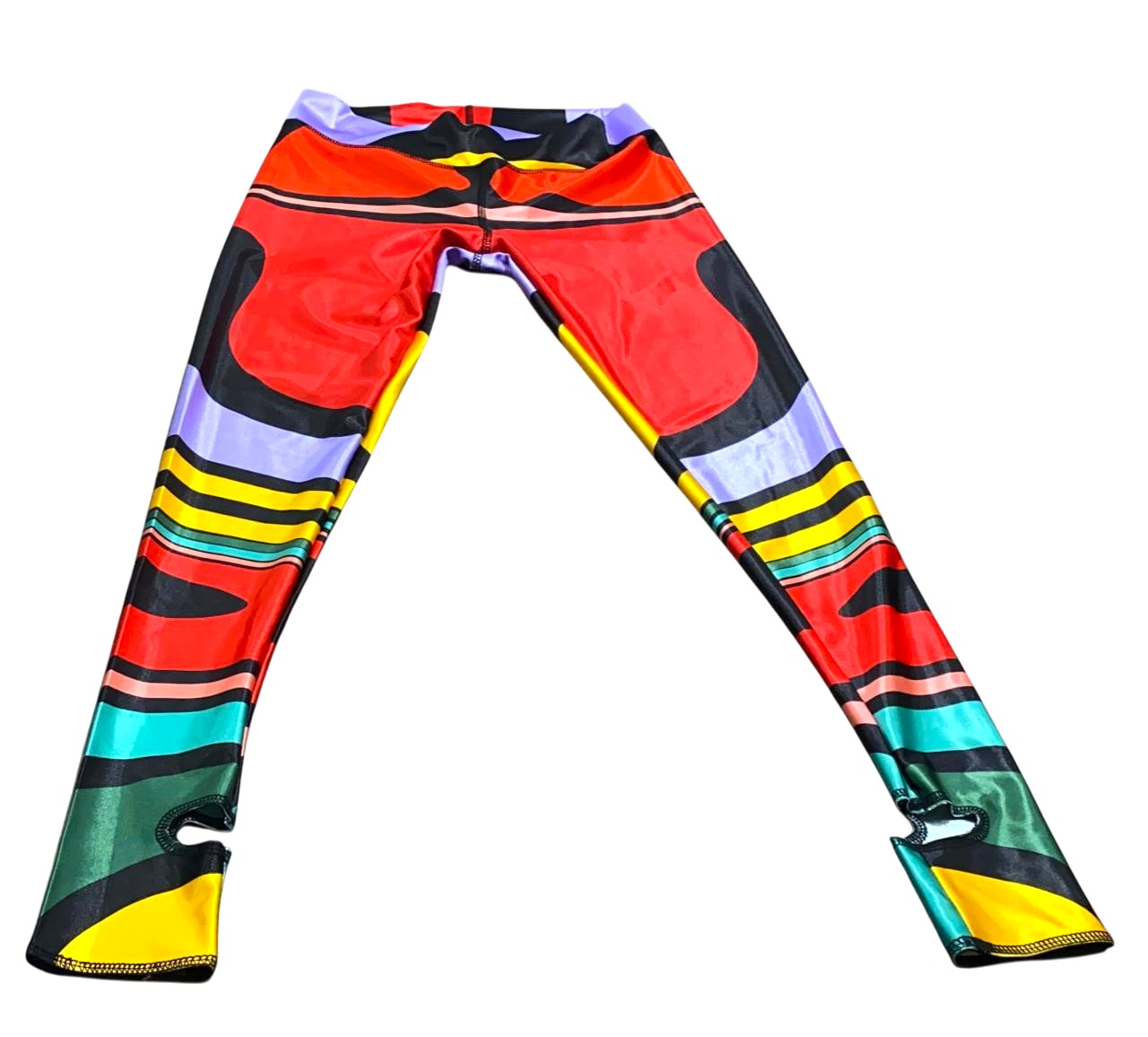
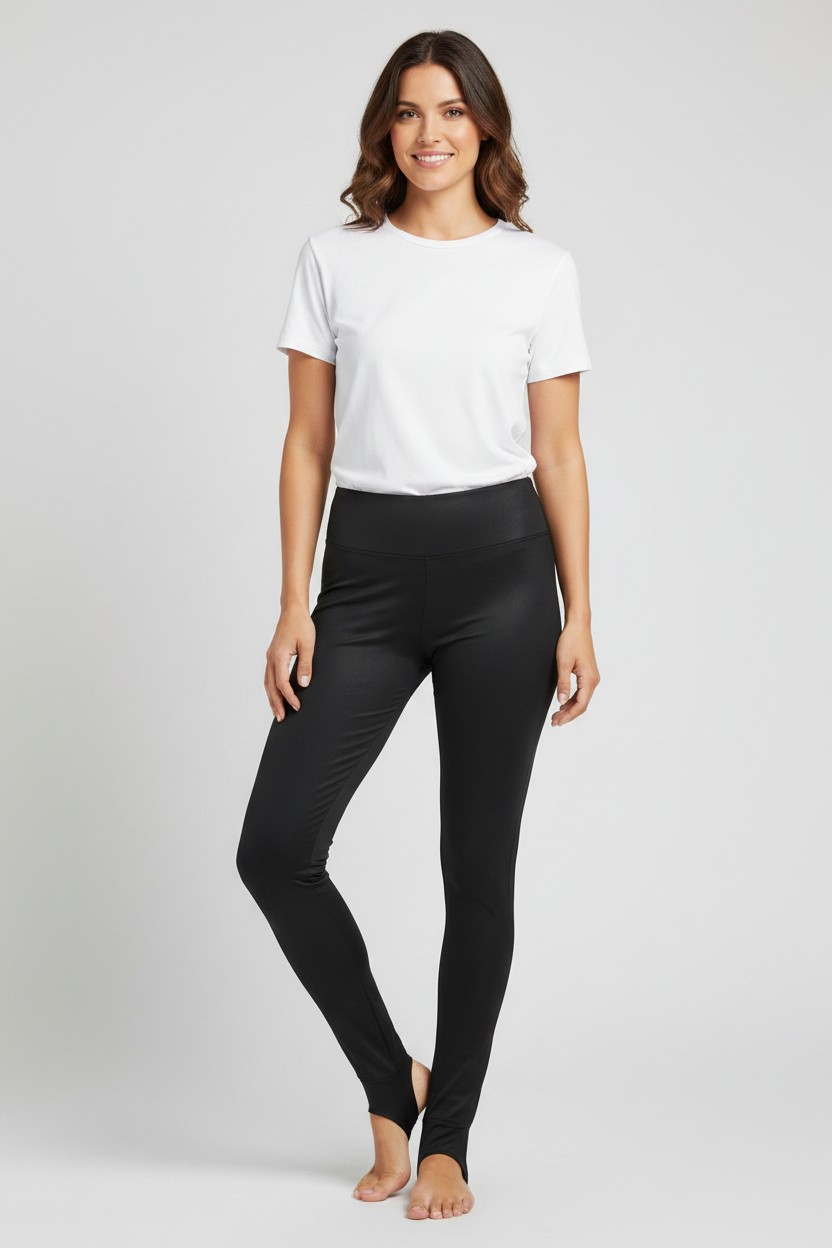
Kool Pressions, founded by Rhonda Young, is a patent-pending therapeutic compression legging cut as a stirrup so the toes and heels stay exposed, finished in bold custom prints. LA NPDT designed the garment, engineered how the compression is achieved, built a plain-fabric proof of concept, then produced custom-printed high-fidelity prototypes in several colourways for validation.
Project at a glance
- Client
- Rhonda Young, founder of Kool Pressions
- Product
- Patent-pending therapeutic compression stirrup legging with exposed toes and heels
- Scope
- Garment design, compression engineering, custom print development, proof-of-concept and high-fidelity prototypes
- Colourways prototyped
- Plain black plus custom multi-colour and grey geometric prints
- Why it is unusual
- Soft goods, not LA NPDT's usual mechanical and electromechanical work — taken on because the core problem was a functional one
- Outcome
- Wearable, photographable prototypes Rhonda could use to validate the concept before committing to production
A patent-pending stirrup legging taken from sketch to custom-printed, wearable prototypes.
The client
The challenge
- Garment design. Silhouette, panel layout, seam placement and the stirrup cuff geometry that holds the legging down without cutting into the arch.
- Compression engineering. Fabric selection, stretch and recovery targets by zone, and the pattern reductions that turn a stated pressure into a cut piece of cloth.
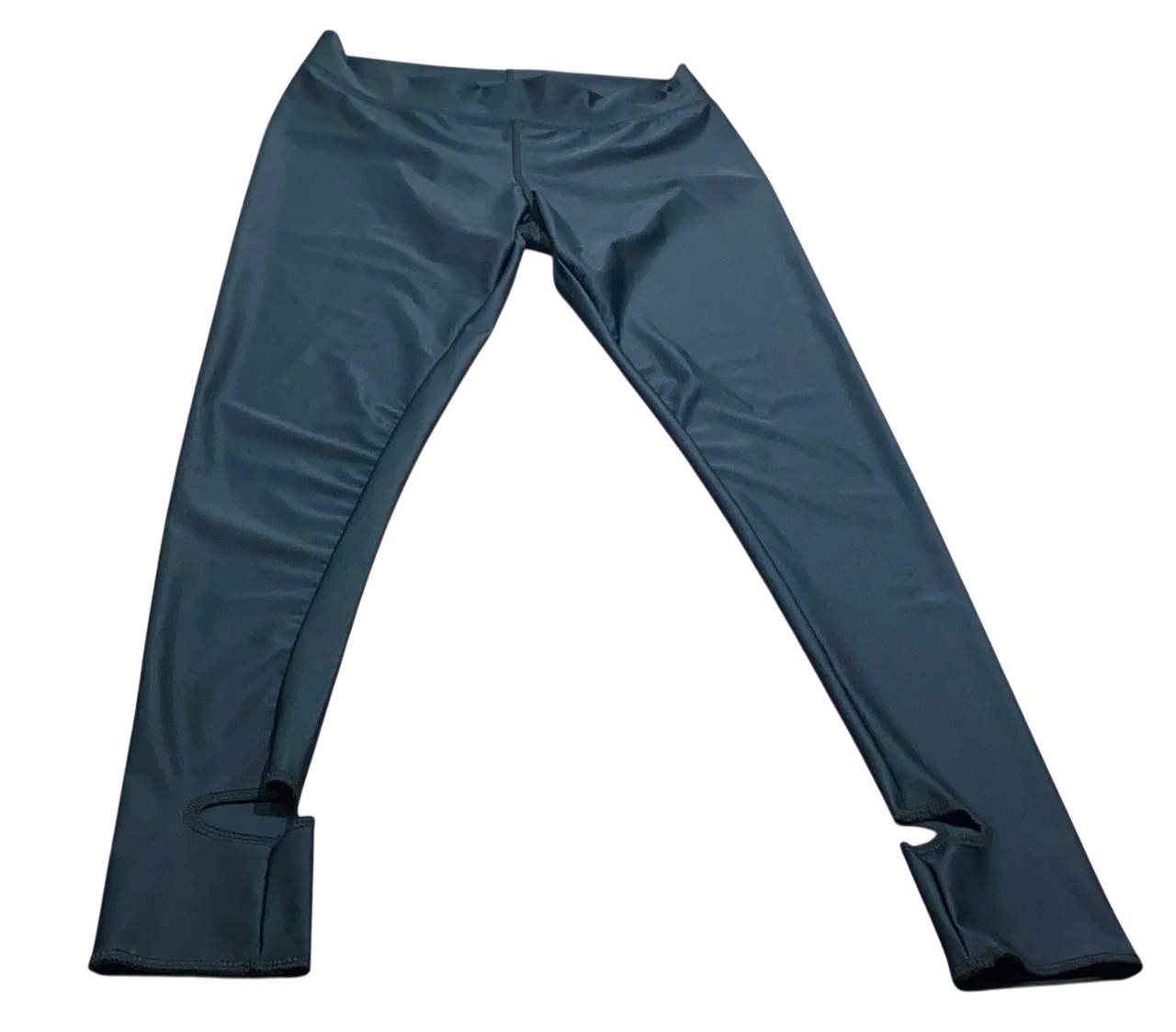
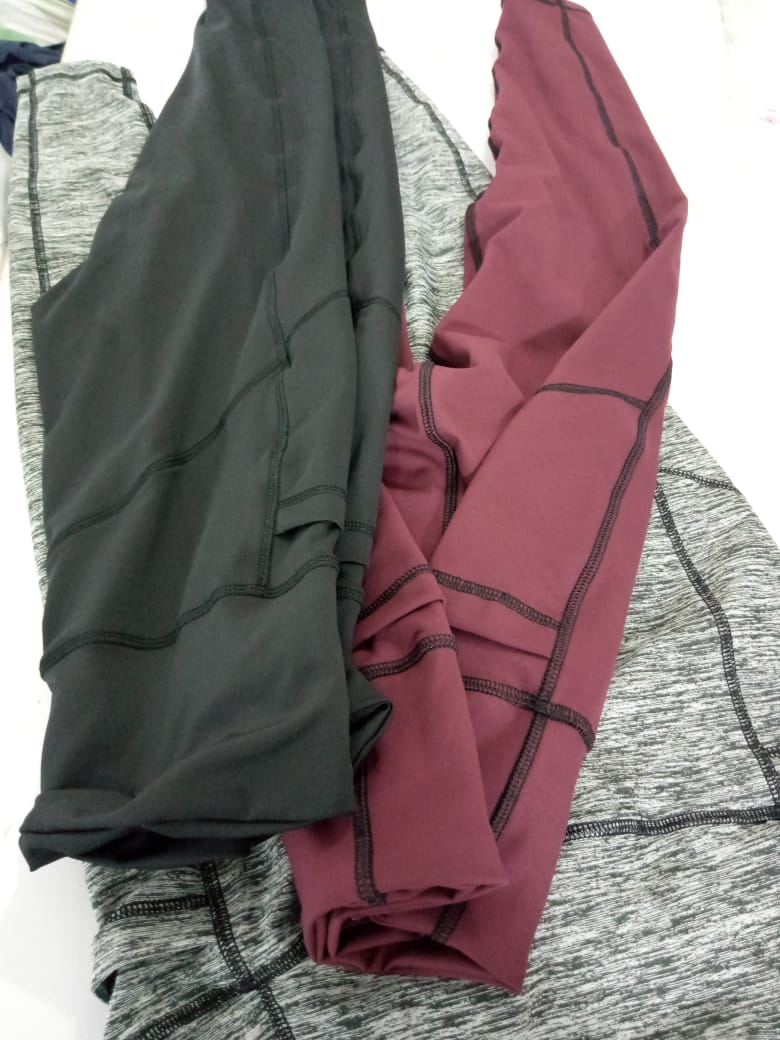
- Proof-of-concept prototype. A first sewn garment in plain fabric, made to test fit and pressure before any money went into printing.
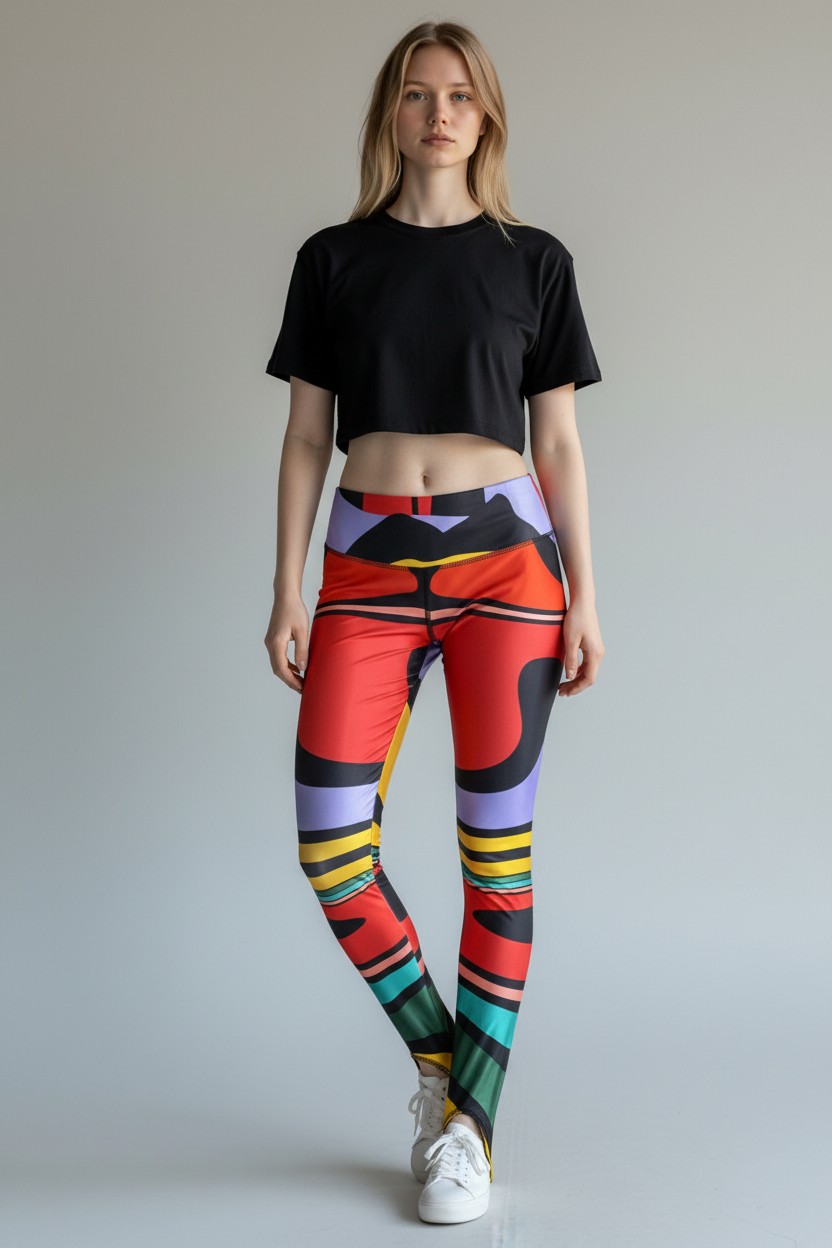
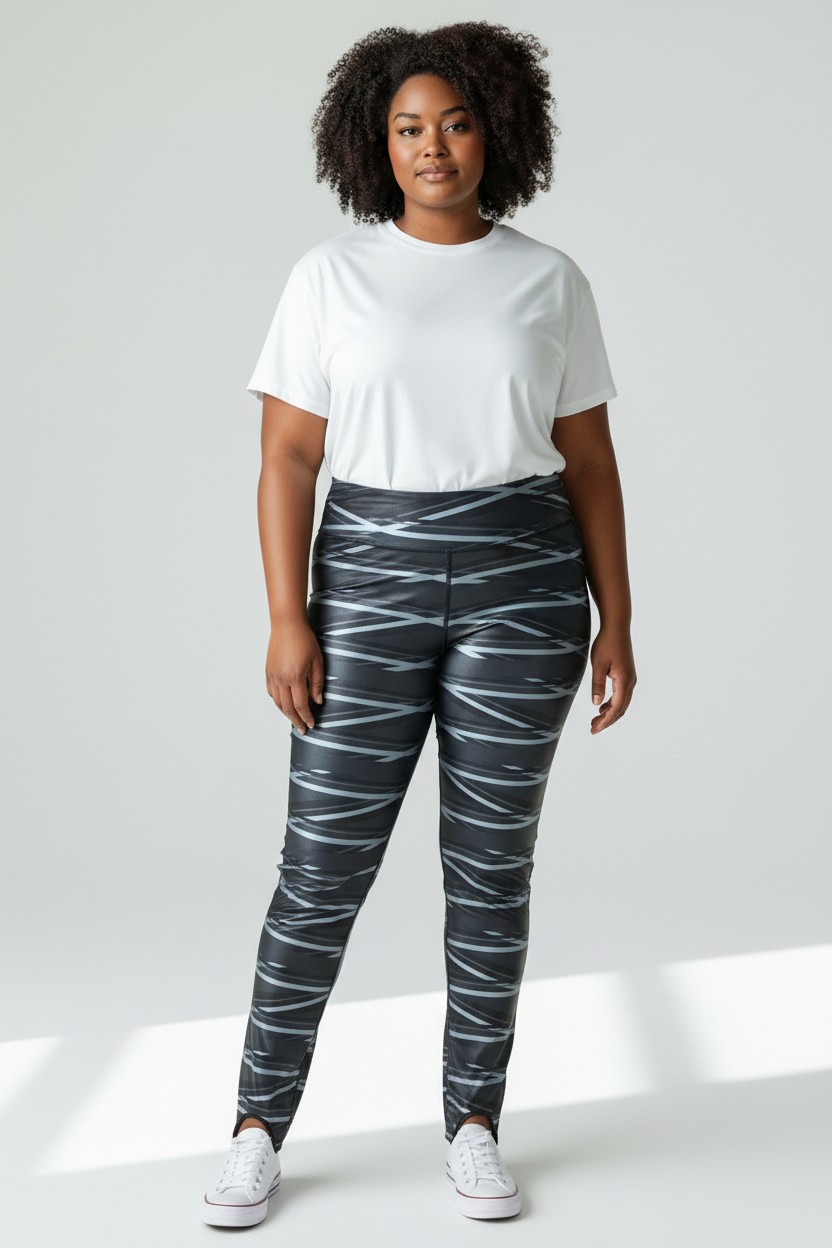
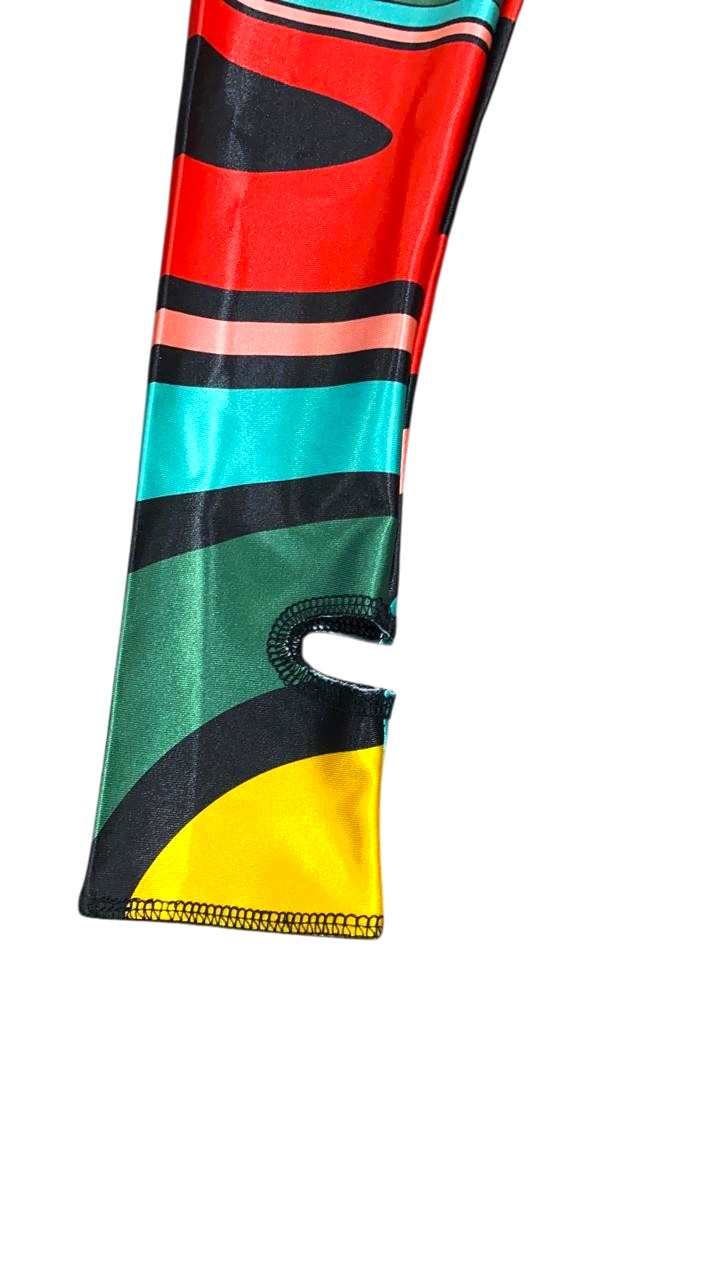
- Custom print development. Original repeating patterns laid out and printed on the fabric so the artwork lines up across panels and seams.
- High-fidelity prototypes. Finished, wearable samples in several colourways for fit testing, photography and buyer conversations.
Our solution
Engineering the Compression
Custom Prints and High-Fidelity Prototypes
Why an Engineering Firm Took On a Soft-Goods Project
The result
Capabilities used on this project
Rapid prototyping services
3D printing, CNC machining, urethane casting and functional prototype builds with published materials, tolerances and lead times.
Low-volume manufacturing
Bridge tooling, short-run production and supplier management for first commercial batches.
How a performance garment gets prototyped
The order matters: settle pressure and fit in cheap fabric, then spend money on print and finish.
Define the functional requirement, not just the look
For compression wear the requirement is a pressure profile — how much at the ankle, calf and thigh, and how it should taper. Everything downstream (fabric, pattern, seam plan) is derived from that number rather than from a sketch.
Select fabric for recovery, not only stretch
Any knit stretches. The property that decides whether a compression garment still works at hour eight is recovery — how completely the fabric returns after being held under strain. Candidate knits are compared on stretch and recovery together before the pattern is drafted.
Draft the pattern as a pressure calculation
Compression comes from cutting each panel smaller than the body it wraps. The reduction per zone is what converts the target pressure into cloth, so the pattern is graded against real measurements rather than a standard size block.
Sew a plain-fabric proof of concept
The first garment exists to be argued with. Made in undyed stock, it settles fit, cuff geometry, seam comfort and whether the pressure feels right — all before a single print file is produced.
Print, then build high-fidelity samples
With the pattern frozen, artwork is laid out to the cut pieces so the repeat reads correctly across panels and seams. Finished samples in each colourway then support wear testing, photography and buyer conversations.
| Route | What it does | Where it falls short |
|---|---|---|
| Sample from an overseas factory | Produces a sewn garment against a tech pack you supply | Assumes the design and the pressure engineering are already correct; iteration costs weeks per round |
| Fashion design studio | Delivers silhouette, styling and print artwork | Rarely engineers a functional requirement such as graduated compression |
| Engineering-led apparel prototyping | Derives fabric, pattern and seam plan from the stated function, then proves it in sewn samples | Best suited to garments with a performance claim; overkill for pure fashion pieces |
Questions about this project
Straight answers from the engineers who ran the build. Have a different question? Ask us directly.
Talk to an engineerWhat is apparel prototyping?
It is the process of turning a garment concept into sewn, wearable samples that prove fit, function and appearance before production. For performance garments it also validates the functional claim — compression, moisture handling, protection — in physical form rather than on paper.
How is compression actually engineered into a legging?
By combining a knit chosen for its stretch and recovery with a pattern that is deliberately smaller than the body measurement in each zone. The size of that reduction, zone by zone, is what produces the graduated pressure; seam placement then keeps that pressure from concentrating into ridges.
Why did the plain prototype come before the printed ones?
Because fit and pressure arguments are cheap to settle in undyed fabric and expensive to settle after print files, screens and finished samples exist. Freezing the pattern first meant the printed prototypes were presentation-quality rather than another test round.
Does LA NPDT normally do soft goods?
No. Our core work is mechanical and electromechanical products — enclosures, mechanisms, electronics and low-volume manufacturing. We took Kool Pressions on because the problem underneath the fabric was an engineering problem: a specified pressure, a material chosen for its stress–strain behaviour, and iteration to prove it.
What does an inventor get at the end of an apparel prototyping project?
Wearable samples in the intended materials and prints, the patterns behind them, and the evidence needed to talk to manufacturers, test with real users and shoot marketing imagery — without having paid for inventory first.
Industries this project belongs to
See how we approach development in each of these categories, and the other products we have taken from sketch to production there.