Shark Tank Success for Gelato for Your Face, Powered by LA NPDT
Gelato for Your Face secured a deal with two sharks on Shark Tank with a product developed by LA NPDT, demonstrating the impact of strategic product development.
December 16, 20256 min read

Written by Yelena Rymbayeva, MPhil Communication & Media Studies, BTech Quality Control
Marketing & Product Leader, Technology Commercialization
Published December 16, 2025Updated September 2, 2026

Shark Tank Success, How Gelato for Your Face Secured
a Deal with Two Sharks with Support from LA NPDT
a Deal with Two Sharks with Support from LA NPDT
At LA New Product Development Team (LA NPDT), our role is to equip entrepreneurs with the strategic product development resources they need in order to capture the opportunities in front of them.
A strong example is the journey of Gelato for Your Face, a natural skincare brand that moved from concept to a fully developed product line and ultimately secured a deal with two sharks on Shark Tank México.
Building a Product Ready for the Market and for Investors
When the founders approached us, they had a compelling idea: a natural, sensory-driven skincare kit inspired by the aesthetics and experience of gelato. What they needed was a partner capable of transforming that vision into a manufacturable, scalable, and distinctive product.
LA NPDT supported the development process through:
- Product design and engineering
- Prototyping and refinement
- Packaging design
- Manufacturing setup
- Branding and digital presence
- Fulfillment and supply chain support
Our impact comes from building the infrastructure and foundational components that enable entrepreneurs to present credible, polished, investment-ready products.
The Shark Tank Breakthrough
When Gelato for Your Face appeared on Shark Tank México, they presented a complete and professionally developed product line supported by cohesive branding, premium packaging, and manufacturing readiness.
This level of preparedness allowed them to communicate their value proposition clearly and stand out among other pitches.
The sharks highlighted the originality and innovative qualities of the product, which contributed to the founders securing an investment deal with two sharks.
This outcome validated both the strength of the concept and the disciplined development behind it.
Why This Matters
Opportunities like Shark Tank require more than a compelling idea. Entrepreneurs must demonstrate:
- A reliable, manufacturable product
- A consistent and scalable brand identity
- A well-structured user experience
- A credible operational and supply chain foundation
- A clear and validated value proposition
LA NPDT provides the development expertise, structure, and strategic support that allow innovators to pursue opportunities at this level with confidence.
Innovation Enabled Through
Strategic Product Development
Strategic Product Development
Gelato for Your Face demonstrates what becomes possible when a strong vision is supported by rigorous product development. The founders created a unique skincare concept, and our team ensured the idea became real, functional, and ready for investment.
Their successful deal on Shark Tank illustrates how the right preparation and product development foundation empower entrepreneurs to achieve their goals.
LA NPDT Support for Gelato for Your Face
Development Area | Specific Support Provided |
|---|---|
Product Development | Product Design and Engineering |
Product Refinement | Prototyping and Refinement |
Presentation Readiness | Packaging Design, Branding, Digital Presence |
Operational Readiness | Manufacturing Setup, Fulfillment and Supply Chain Support |
Frequently asked questions
What services did LA NPDT provide to Gelato for Your Face?
LA NPDT supported Gelato for Your Face with product design and engineering, prototyping and refinement, and packaging design. We also assisted with manufacturing setup, branding, digital presence, and fulfillment and supply chain support. This comprehensive assistance helped transform their concept into a market-ready product line.
How did LA NPDT help Gelato for Your Face prepare for Shark Tank?
LA NPDT helped Gelato for Your Face build a complete, professionally developed product line. This included cohesive branding, premium packaging, and manufacturing readiness. This level of preparedness allowed them to present a clear value proposition and secure an investment deal.
What is LA NPDT's role in supporting entrepreneurs?
LA NPDT's role is to provide strategic product development resources. We aim to equip entrepreneurs to capture opportunities by building infrastructure and foundational components. This enables them to present credible, polished, investment-ready products to potential investors.
What does Gelato for Your Face's success demonstrate about product development?
Gelato for Your Face demonstrates that a strong vision combined with rigorous product development makes innovation possible. The founders created a unique skincare concept, and LA NPDT helped make it real, functional, and ready for investment. This preparation led to their successful Shark Tank deal.
Choosing the best packaging for a new product
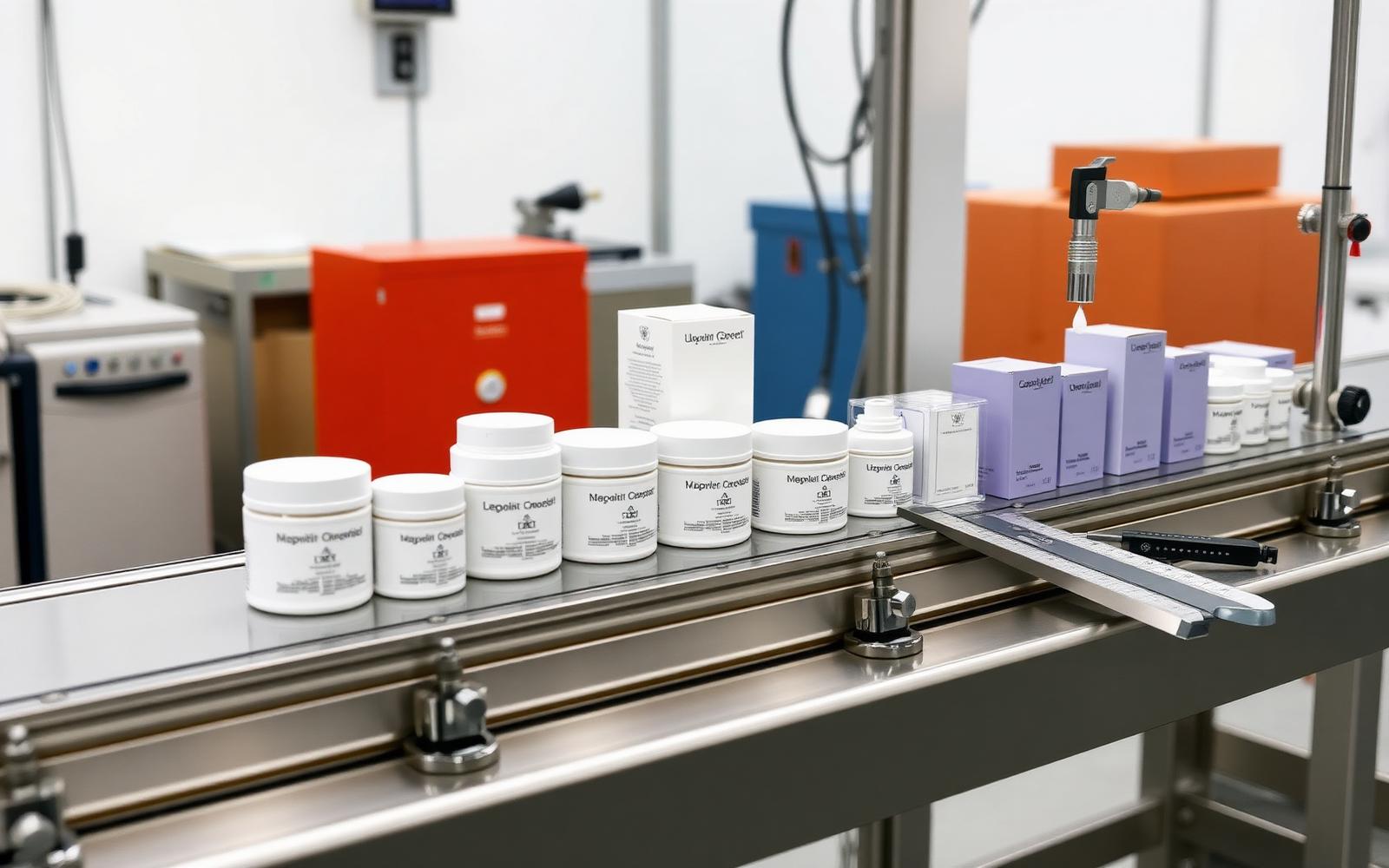
Packaging decides three numbers that founders usually discover too late: unit cost, shipping damage rate and shelf conversion. For a personal care product like a facial gelato, the primary container also has to be chemically compatible with the formula, survive a temperature cycle in a delivery van and open without a tool after six months on a shelf. Choosing it is a qualification exercise, not a shopping trip.
The cheapest path for a first run is nearly always a stock container with custom decoration. Tooling a custom jar costs $12,000-$40,000 and locks the brand into a shape before demand is proven. Stock plus a printed sleeve or a silkscreen gets a distinctive shelf presence for a few cents a unit and preserves the option to tool later once volumes justify it.
Packaging options and what they cost
Option | Tooling | Unit cost at 5k | Lead time | Best for |
|---|---|---|---|---|
Stock jar + label | $0 | $0.45-$1.20 | 2-4 weeks | First production run, testing demand |
Stock jar + shrink sleeve | $800-$2,000 | $0.70-$1.60 | 4-6 weeks | Full-wrap graphics without tooling |
Custom injection-molded jar | $12k-$40k | $0.35-$0.90 | 10-16 weeks | Proven volume above 50k units |
Airless pump bottle | $0-$25k | $1.10-$3.00 | 4-14 weeks | Oxidation-sensitive formulas |
Folding carton (secondary) | $300-$1,500 die | $0.18-$0.55 | 2-4 weeks | Retail presentation and tamper evidence |
Add 6-9% for spoilage on decorated components and budget a compatibility study of four to eight weeks at elevated temperature before you commit to a resin. A formula that etches a PET jar at 40 C will do it on a store shelf in summer too.
Qualification checklist before the first run
- Run a formula-container compatibility study for at least 12 weeks, including one accelerated 40 C leg.
- Torque-test the closure at the factory setting and after a temperature cycle - loose caps cause most leak returns.
- Drop-test the shipper per ISTA 3A with real product inside, not water.
- Confirm label adhesion after 24 hours in a humidity chamber; cold-chain products need a different adhesive.
- Verify fill weight tolerance on the actual filler, then set the label declaration below the worst case.
- Check that the carton, insert and shipper all fit standard pallet patterns before you print anything.
Key takeaways
- Start with stock primary packaging and custom decoration; tool a custom shape only after volume is proven.
- Compatibility and drop testing cost a few thousand dollars and prevent a five-figure recall.
- Secondary packaging drives shipping damage more than the jar does - test the shipper with real product.
Packaging compliance and artwork: the details that stop a launch
Packaging decisions rarely fail on aesthetics. They fail on a missing net-contents statement, an unregistered barcode, or artwork sent to the printer in the wrong color space two weeks before a retail delivery window. Treat the artwork package as an engineering deliverable with its own review and sign-off, because reprinting a carton run costs more than the design work that produced it.
Artwork and compliance checklist by element
Element | Requirement | Who signs off | Common mistake |
|---|---|---|---|
GTIN / UPC barcode | Registered to your company prefix | Ops | Recycled or borrowed prefix |
Net contents statement | Correct units and placement | Regulatory | Wrong panel or type size |
Ingredient or material list | Descending order, standard names | Regulatory | Marketing names instead of INCI |
Country of origin | Marked on retail packaging | Ops | Missing on inner carton |
Print files | Vector, CMYK plus spot, with dielines | Design | RGB art or missing bleed |
Recycling and disposal marks | Region-specific symbols | Regulatory | Using US marks in the EU |
Run a physical proof before the full run: a printed and folded sample on the actual substrate reveals color drift, misregistration and readability issues that no screen proof shows. Retail buyers also expect a shelf-ready presentation, so check the packed case on a real shelf, not just on the desk.
Pre-print sign-off list
- Scan the printed barcode with two different scanners before approving the run.
- Confirm dielines against a physical structural sample, not a drawing.
- Verify claims and certifications you print are actually held and documented.
- Check the drop and vibration performance of the packed configuration.
- Lock a color standard and hold press proofs against it for every future run.
Key takeaways
- Compliance details, not design, cause most packaging reprints.
- Approve a physical printed proof on the real substrate every time.
- Treat artwork as a controlled deliverable with named sign-offs.
Scaling a cosmetics line after a televised launch
A national broadcast compresses a year of demand into a weekend, and the constraint is almost never the formula. It is the component with the longest lead time: decorated jars, custom closures, or a carton that has to be re-plated because the artwork changed after the last run.
Brands that survive the spike are the ones that pre-positioned inventory of the slow components and kept the fast ones flexible, rather than the ones that ordered evenly across the bill of materials.
The second scaling test is filling capacity. A contract filler that ran a 5,000-unit pilot on a semi-automatic line may need a different line, a different fill nozzle and a fresh stability sign-off to run 50,000 units. Qualify that second line before you need it, so the first big purchase order is a scheduling question rather than a re-validation project.
- Identify the single longest-lead component and hold safety stock of it, not of everything.
- Qualify a second filling line and a backup decorator before the demand spike, not during it.
- Freeze artwork earlier than feels comfortable; plate changes are the most common reprint cost.
- Agree tiered pricing with the filler at pilot, spike and steady-state volumes up front.
- Track returns and leakage by lot so a packaging defect is caught before the second run.
Working on a product like this? We start with a paid discovery that produces a requirements document, a risk list and a phase-by-phase budget you can act on.
Work with LA NPDT: if you are moving from here to execution, start with our our product development process or talk to us about end-to-end product development.
Filed under:InspirationNews
Tagged:2025
Services related to this guide
- Product design servicesIndustrial design and CAD taken all the way to manufacturable files.
- Rapid prototypingWorking prototypes in days, from 3D printing to vacuum casting.
- Electronic design servicesSchematic, PCB layout, firmware and bring-up, through to production handoff.
- Product development examplesReal projects we designed, prototyped and shipped.