
Trending Products 2018 – Where to Invest – LA NPDT
Find out about the trending products 2018! Explore product sustainability. Why smart products and 3D printing are poised for more?
May 6, 20187 min read

Written by Konstantin Dolgan, Ph.D., NPDP
Founder & CEO, Product Development Engineer
Published May 6, 2018Updated August 19, 2026
The current trends in product development show that it evolves continuously. It’s not only about innovating but also standing out from the crowd. Now more than ever, Trending Products 2018 are changing everything.
Smart products
Today’s products have gone far than being basic. They now incorporate electronics, and Artificial Intelligence elements also. Even basic home appliances now are also smart, and this will only continue to grow.
From the smallest inventions like smart switches to smart homes, smart products are also becoming famous. They also provide viable and easy solutions to our everyday problems. Just take an example of cell phones.
Only in the last decade, they have changed our idea of a phone. Smart watches are also another marvel. You can easily communicate with your smartwatch.
And also keep a track of your health and even listen to music. Now isn’t that amazing? Smart products are increasingly becoming famous.
Also, their prices have dropped down over the years. They are now in reach of almost everybody.
This trend also means that hunting, fishing, health, fitness equipment and household products will continue to get smarter as Trending Products 2018. Not sure what smarter means? Think Alexa, Google home or the Fitbit.
Connectivity
You must have also heard about “The Internet of Things”. This is the ability to remotely control products. It is one major opportunity that Trending Products 2018 have created. A lot of new products today are developed with connectivity. Which fills the gap between developers and buyers. And this also brings us to the next massive trend…
Servitization
Servitization is a new concept. It is a transformation. Where firms go an extra mile, to provide extra services for their products.
A perfect example would be to buy insurance with a new car. Product developers need to add service lifecycles into the product design for this to work. The big and established multinationals will benefit more from this Trending Products 2018.
So you need to keep up your pace with latest developments. So that you are not left behind. Also, keep an open-minded approach. And add value to your product.
Sustainability and responsibility
Over the years, consumer behavior has changed. Consumers are now also demanding responsibility in product design. Millennials are stepping up their game as the agents of product development change.
They have taken product design approach beyond the basic question of “what problem do we need to solve”. They have gone a step further to ask “how it will positively impact the society”? and also what social responsibility can be taken on by the product’s functionality.
This trend isn’t going away anytime soon. For a product design to be considered, certain social principles have to be met.
3D Printing Process
Earlier, 3D prototypes of a product were not very common because it was costly. Today, the 3d printing process is used for almost every internal product design. The 3d printing process has also revolutionized the product design industry.
And with the continuous growth and improvement of the 3D printers, the possibilities are endless. A detailed study of the product design and development process shows several ways the 3d printing process can be used by manufacturers to improve performance, innovation, and growth.
This trend has been growing rapidly and we can even expect it to also completely revolutionize the Trending Products 2018.
Outsourcing
Outsourcing is also a term that is not very well understood by all. When most people hear “outsourcing”, shoddy work, missed deadlines and also lack of responsibility often comes to mind. But this isn’t always this case.
Companies have also realized now that outsourcing is also a crucial part of product development. Especially if they also aim to remain competitive in their industry. This will also lead to the induction of modern trends in product design.
Because they are also able to explore diverse opinions and ideas. Outsourcing different stages of the product development to trustworthy individuals is also crucial for the creation of a viable product.
Ready to Start!
Our experts are happy to help!
So these are some of the trending products 2018. Keep your pace up with these trends. For more information, keep reading. You can also check other posts on our blogs.
Stay tuned to learn about marketing the existing product tips!
2018 Product Development Trends
Trend | Description |
|---|---|
Smart Products | Incorporates electronics and Artificial Intelligence elements; devices become more intelligent. |
Connectivity | Products developed with remote control capabilities, leveraging 'The Internet of Things'. |
Servitization | Firms provide extra services alongside products, integrating service lifecycles into design. |
Sustainability | Focus on social responsibility and positive societal impact in product design. |
3D Printing Process | Used for internal product design and prototyping; revolutionizes product development. |
Outsourcing | Engaging external partners for different stages of product development to remain competitive. |
Frequently asked questions
What are some trending product categories for 2018?
Trending product categories for 2018 include smart products, which integrate electronics and AI into devices like home appliances and wearables. Products with enhanced connectivity, often referred to as 'The Internet of Things,' are also significant. Additionally, product development trends emphasize servitization, sustainability, and the use of 3D printing processes.
How are smart products evolving in 2018?
Smart products are evolving by incorporating electronics and Artificial Intelligence elements. Even basic home appliances are becoming smart. This trend extends to various sectors, including hunting, fishing, health, fitness equipment, and household products. Examples include devices like Alexa, Google Home, and Fitbit, indicating an increasing integration of smart technology into daily life.
What is servitization in product development?
Servitization is a concept where firms provide extra services for their products beyond the basic offering. An example is buying insurance with a new car. For this to work, product developers need to integrate service lifecycles into the product design. This trend is expected to benefit large multinational companies by adding value to their products.
How does sustainability influence product design in 2018?
Sustainability influences product design by demanding social responsibility from product developers. Consumers are now asking how a product will positively impact society and what social responsibility its functionality can undertake. This trend requires product designs to meet certain social principles, moving beyond just solving a problem to considering broader societal impacts.
What role does 3D printing play in product development trends for 2018?
The 3D printing process has revolutionized the product design industry. While previously costly, it is now commonly used for internal product design and prototyping. Its continuous growth and improvement offer endless possibilities for manufacturers. A detailed study shows 3D printing can improve performance, innovation, and growth in product design and development.
Sources and standards
- ISO/ASTM 52900 additive manufacturing terminology — Standard definitions for additive manufacturing processes.
- NIST additive manufacturing research — Process and material research underpinning 3D printing quality.
- USPTO — patent basics — Official guidance on provisional and non-provisional filings for new products.
Packaging trends that changed what products ship in
Packaging stopped being an afterthought once e-commerce became the default channel. A box designed for a retail shelf performs badly in a parcel network, and one designed only for parcel looks weak in a store. The current direction is toward material reduction, ship-in-own-container formats and packaging validated by drop and vibration testing rather than appearance alone.
Packaging approaches compared
Approach | Best for | Cost impact | Trade-off |
|---|---|---|---|
Retail-ready printed carton | Shelf presence | Baseline | Needs an overbox for parcel shipping |
Ship-in-own-container | Direct-to-consumer | -10 to -25% total | Less shelf impact |
Molded pulp inserts | Sustainability messaging | Similar to foam at volume | Tooling lead time |
Expanded foam inserts | Fragile or heavy items | Low tooling, higher material | Poor recyclability perception |
Right-sized automated packing | High-volume fulfillment | Lower freight cost | Equipment investment |
Recycled mono-material | Regulatory and brand pressure | 0 to +10% | Print quality limitations |
Whatever the format, validate it: ISTA parcel test protocols are inexpensive relative to the damage rate they prevent, and damaged arrivals are one of the most expensive failure modes in direct-to-consumer sales.
Packaging development checklist
- Decide the primary channel before designing the pack.
- Run ISTA drop and vibration testing on production-intent packs.
- Model dimensional weight; a smaller box often beats a cheaper one.
- Check regulatory marking and recyclability labeling for your markets.
- Proof artwork physically, on the real substrate, before print approval.
Key takeaways
- Channel choice, not aesthetics, should drive the packaging format.
- Dimensional weight often matters more than box cost.
- Validate packs with ISTA testing before committing to a print run.

Planning a new product and its packaging?
Talk to our product teamWhat Are the Latest Trends in New Product Packaging?
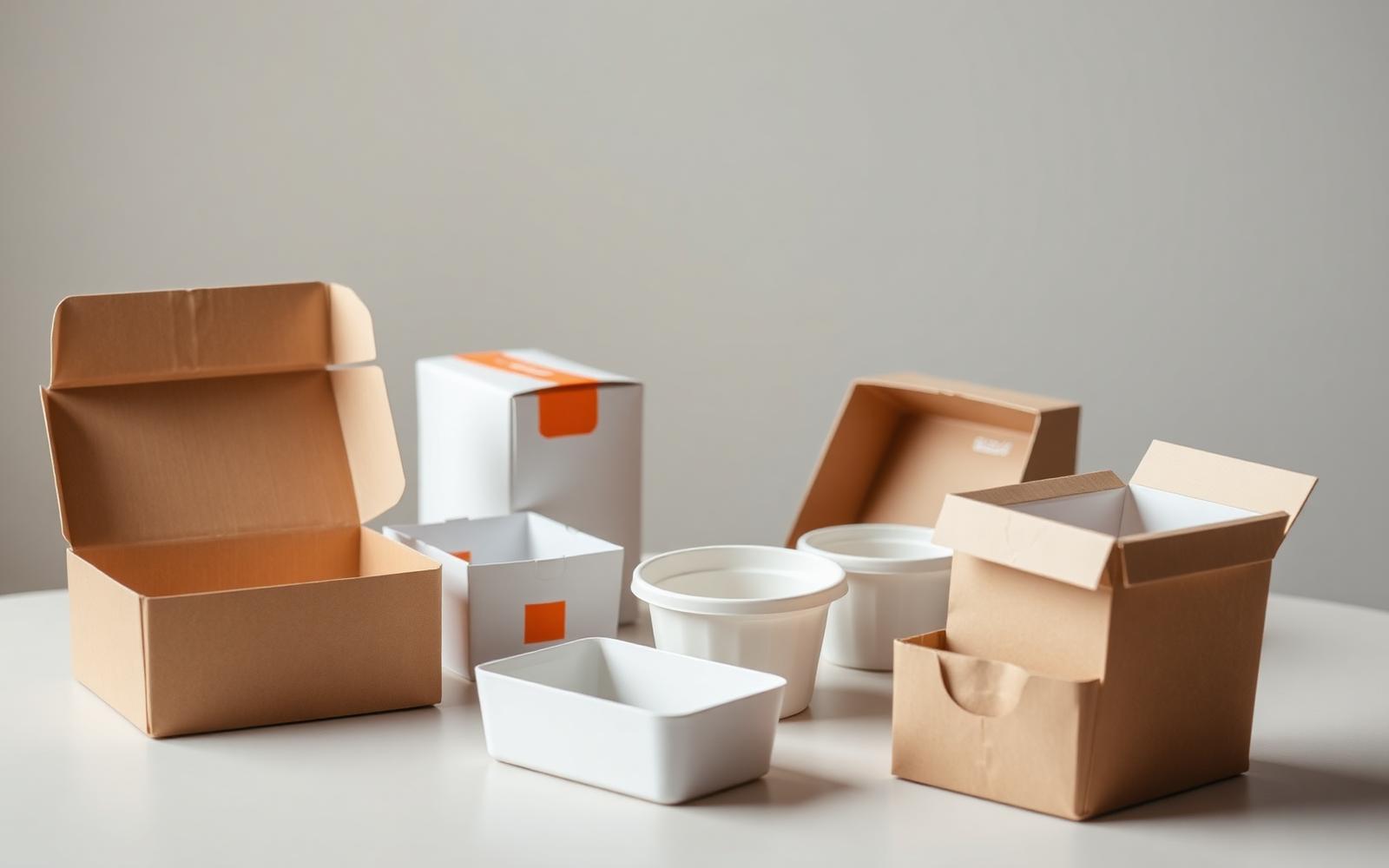
Packaging has moved from a late-stage cost line to an early design constraint. Retail buyers, e-commerce carriers, and extended producer responsibility (EPR) schemes now all price packaging decisions, which means a format chosen at concept stage can lock in years of per-unit fees. The trends below are the ones that consistently change tooling, unit cost, or listing eligibility for the hardware and consumer goods programs we run.
Trend Map: What Changed and What It Costs
Mono-Material Design Is the Highest-Leverage Change
Most recycling failures are not caused by the wrong plastic; they are caused by mixing materials that cannot be separated at speed. A PET bottle with a PVC sleeve and an aluminum-lined closure is three streams pretending to be one package.
Converting to a single polymer family, printing directly instead of sleeving, and choosing a closure liner in the same resin usually keeps the pack recyclable without changing the filling line.
Test the change against drop, top-load, and barrier requirements before committing tooling, because mono-material films often trade oxygen barrier for recyclability.
E-Commerce Packaging: Design for the Carrier, Not the Shelf
If a meaningful share of volume ships direct, the pack must survive an unattended parcel network, not a pallet.
That means qualifying against ISTA 6 or the marketplace equivalent rather than ISTA 1A alone, eliminating overbox entirely where possible, and designing an opening experience that does not require a knife near the product.
A pack that passes drop testing but requires two people to open generates returns and negative reviews, both of which cost more than the corrugate saved.
Regulatory Pressure Is Now a Line Item
- EPR fees in a growing number of US states and the EU are assessed per material, per kilogram, with penalties for hard-to-recycle formats.
- Recycled-content minimums apply to specific resins and categories, so confirm PCR availability and food-contact status before specifying it.
- Labeling claims such as recyclable or compostable must match the actual local collection reality, not the theoretical capability of the material.
- Restricted substances lists cover inks, adhesives, and coatings, not only the substrate.
Packaging Decision Checklist
- Define the distribution mix (retail pallet, club, marketplace, DTC) before selecting a format.
- Set the ti-hi pallet target and work the primary pack dimensions backward from it.
- Choose one polymer family or one fiber structure per pack and justify any exception.
- Price EPR and dimensional weight into the landed cost model, not just the converter quote.
- Qualify with the real product inside, using the actual transit profile.
- Lock artwork claims against the substances and claims rules of every market you list in.
Treated this way, packaging stops being a downstream expense and becomes one of the few levers that improves margin, compliance, and customer experience at the same time.
Filed under:Education
Related articles
All articles
LA NPDT is a Member of 2018 LED's CEO Roundtables
LA New Product Development Team is honored to be a selected member of the 2018 CEO Roundtable, hosted by Louisiana Economic Development.

AI in Product Management: Where It Actually Helps
AI is genuinely useful in parts of the product management workflow and actively harmful in others. Here is the stage-by-stage breakdown, the failure modes to watch for, and a practical adoption sequence.

Shark Tank Success for Gelato for Your Face, Powered by LA NPDT
Gelato for Your Face secured a deal with two sharks on Shark Tank with a product developed by LA NPDT, demonstrating the impact of strategic product development.
Services related to this guide
- Product design servicesIndustrial design and CAD taken all the way to manufacturable files.
- Rapid prototypingWorking prototypes in days, from 3D printing to vacuum casting.
- Electronic design servicesSchematic, PCB layout, firmware and bring-up, through to production handoff.
- Product development examplesReal projects we designed, prototyped and shipped.