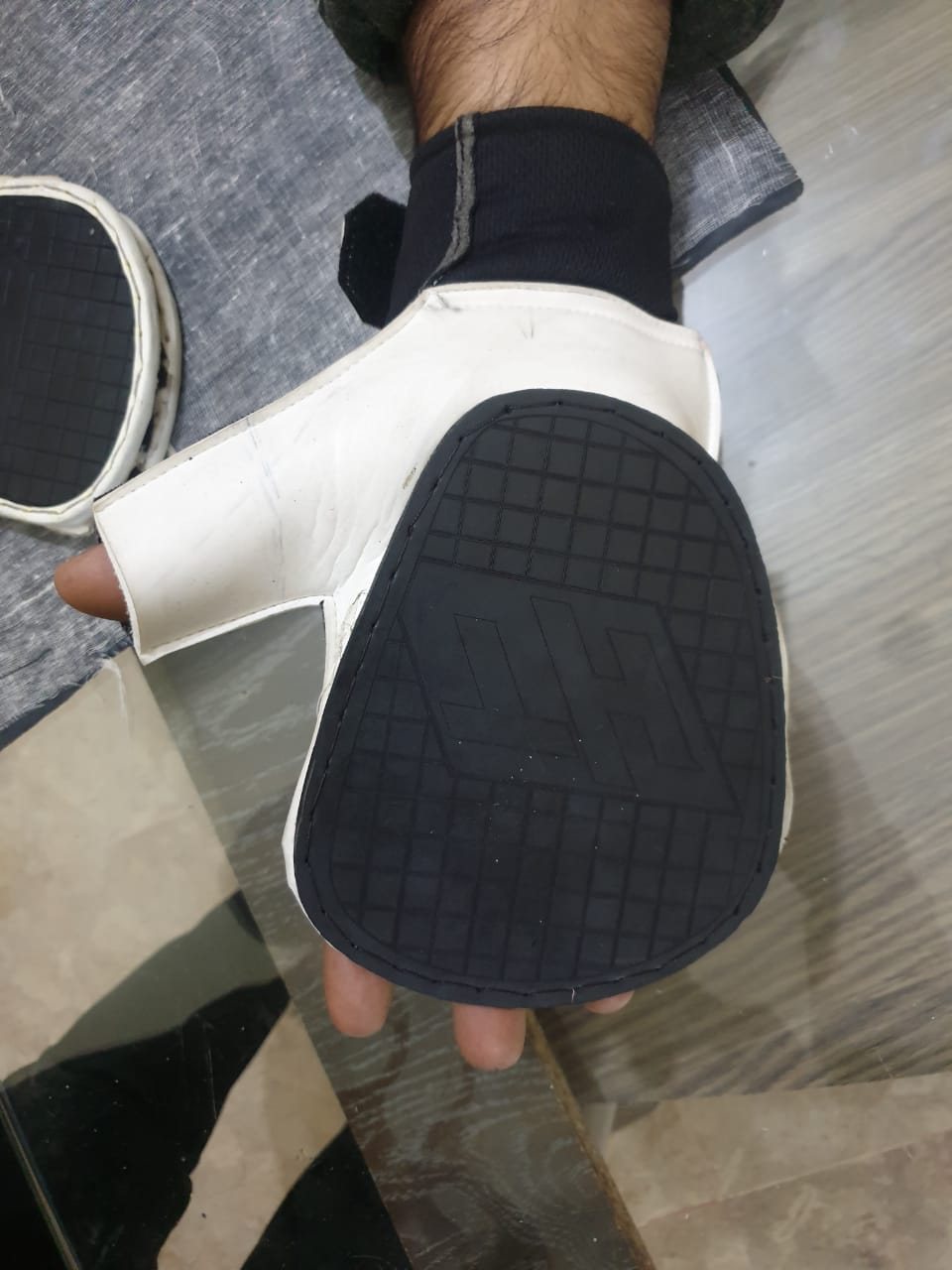
A hand-made prototype and a playable idea for a new sport
What we delivered
Industrial design, striking-pad material development, glove pattern and fit engineering, prototype rounds, DFM and manufacturing handoff
Key constraints
Racket-like rebound off a hard face, hand protection and comfort, wearable fit across hand sizes, durability on a standard court
Outcome
A production glove now used as the founding equipment of Hand Tennis — tried and endorsed by Daymond John
Anthony Soto reached out to LA NPDT with an idea most people have had without acting on it. Anyone who has picked up a tennis ball and swatted it back over the net with an open hand knows how good it feels — and how quickly it stops working. Bare hands sting, control is inconsistent, and the ball dies on impact. Anthony had already built a crude, hand-made prototype and played with it enough to know the concept had legs. What he needed was a real product.
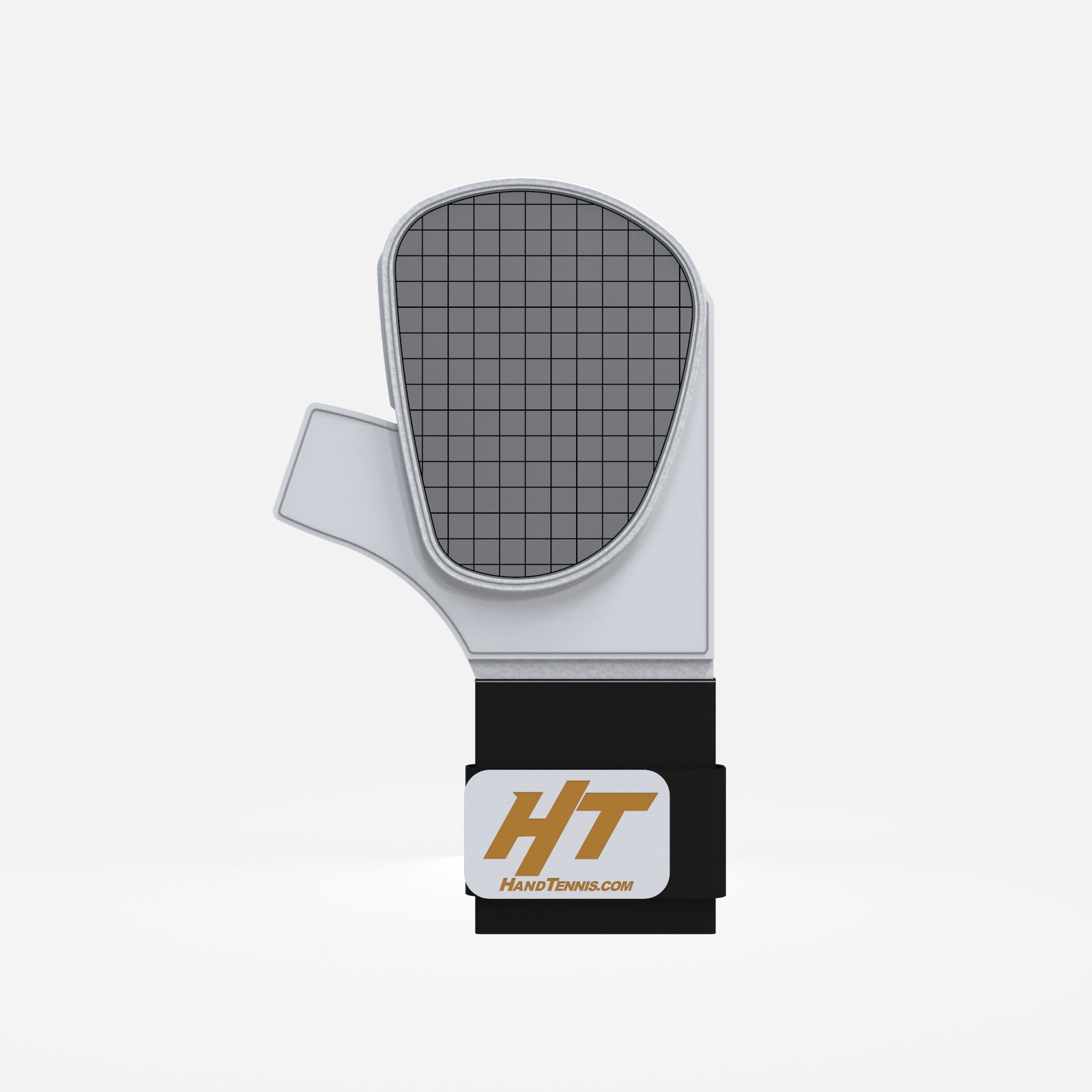
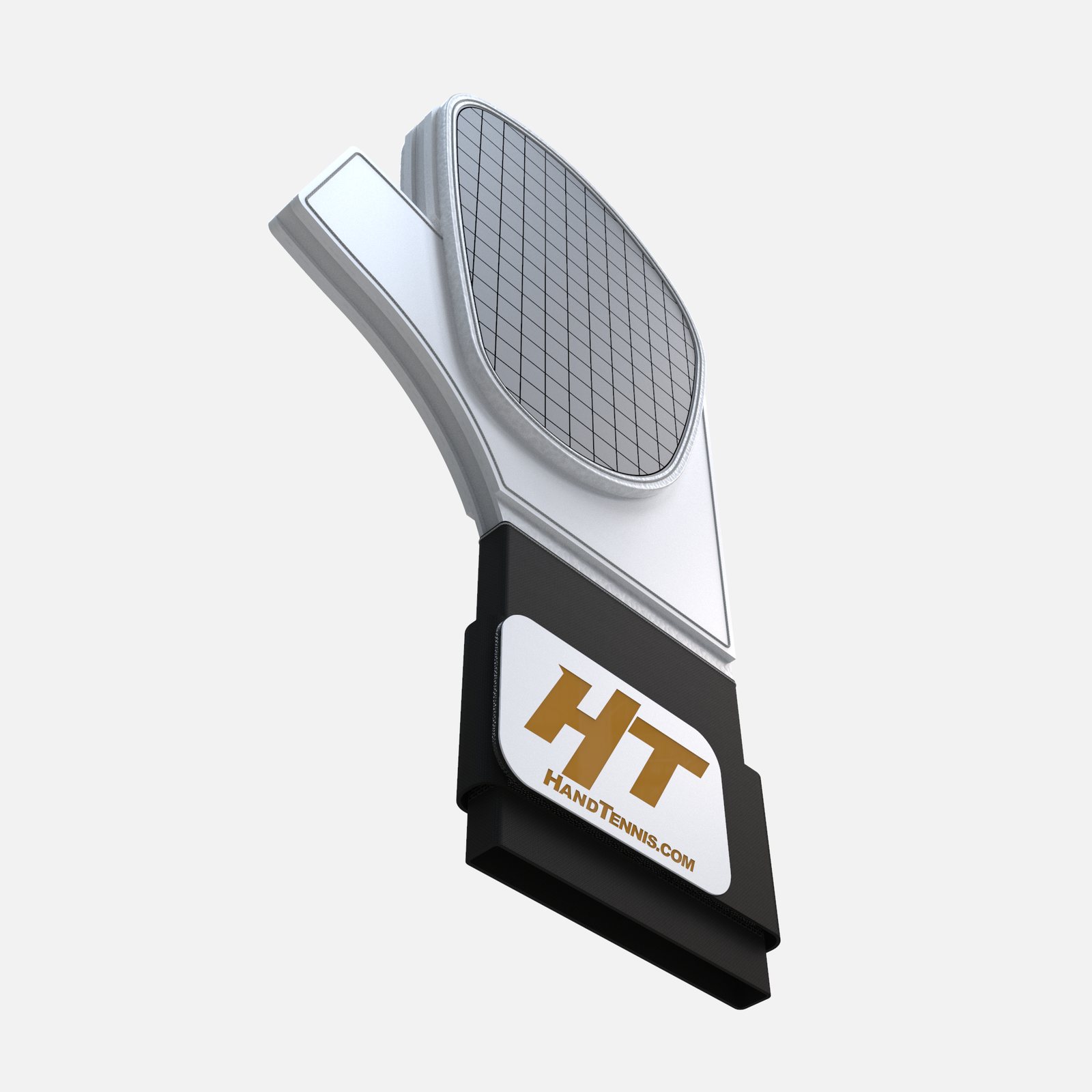
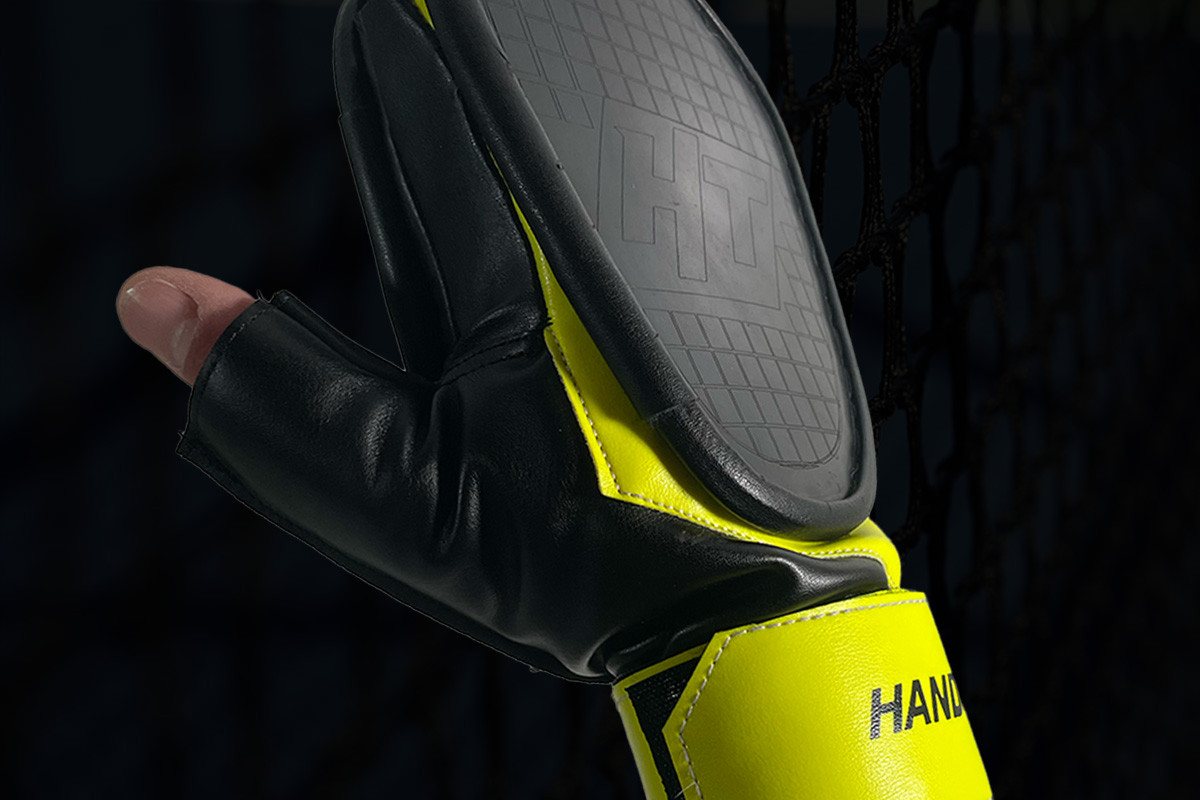
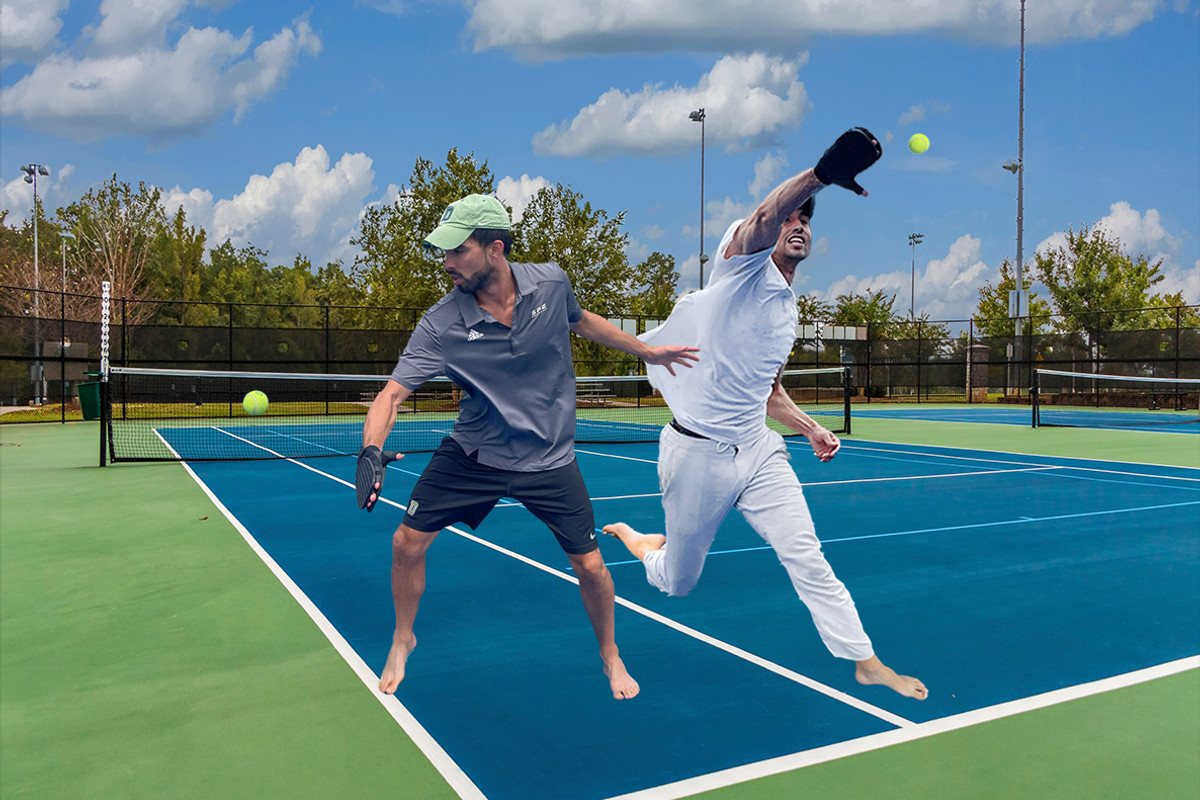
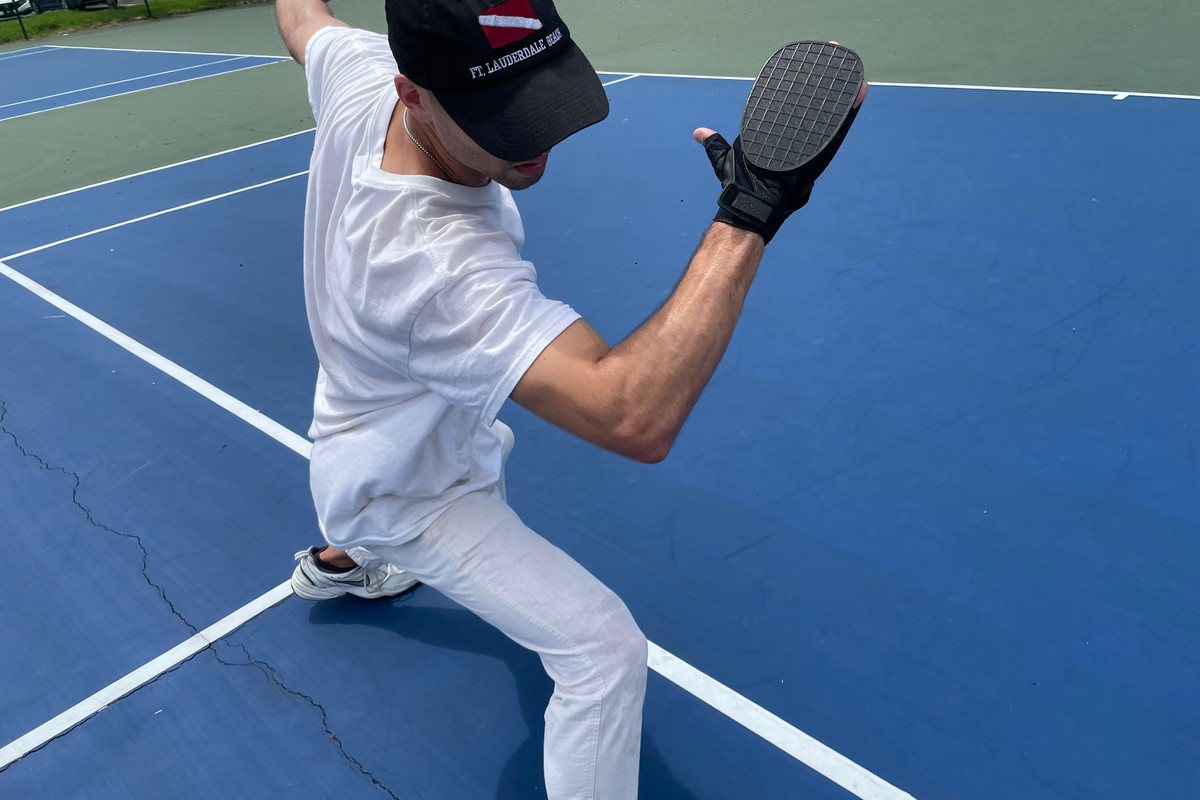
The target was specific: an MMA-style glove crossed with a hard, pickleball-like striking face, worn on the hand, capable of hitting a standard tennis ball on a standard court. Not a toy, not a paddle with straps — a glove that plays.
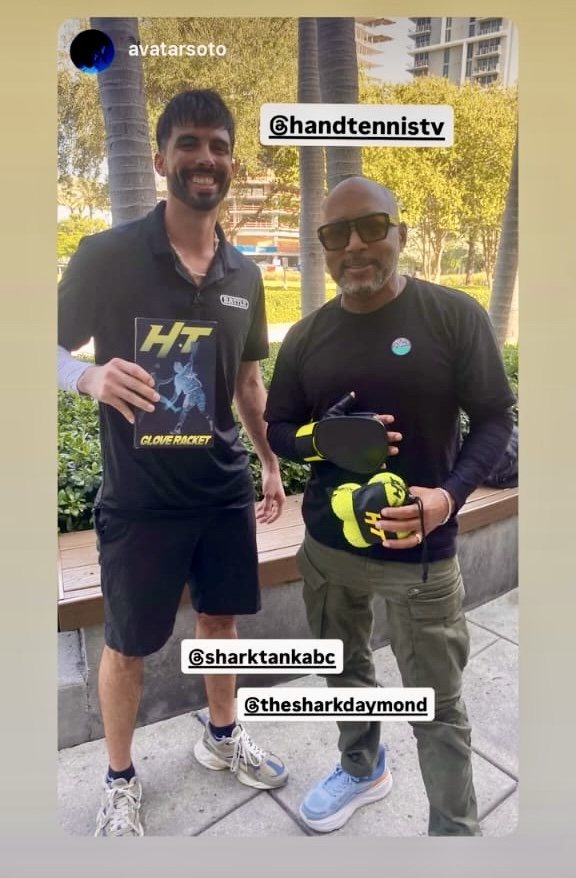
Daymond John tried a pair and gave the glove his own stamp of approval.
The Challenge: A Striking Face That Behaves Like a Racket and Wears Like a Glove
Almost every hard problem on this project lived in one component: the striking pad. It had to satisfy a set of requirements that pull against each other.
Friction. Enough surface grip to put spin on a tennis ball, without becoming tacky or grabby.
Bounce. A lively, predictable rebound so the ball carries across a full-size court — closer to a paddle than to a padded glove.
Durability. Thousands of impacts against a fuzzy, abrasive ball on hard court surfaces, without chunking, glazing or going dead.
Controlled flex. The pad had to conform to the hand and allow a slight bend so the glove felt natural — but not so much that the striking face deformed on contact and killed the shot.
Manufacturability. Whatever we landed on had to be mass-producible and bondable to a leather glove body, not a one-off lab material.
Off-the-shelf materials failed one requirement or another. Soft elastomers absorbed the ball. Rigid plastics bounced well but cracked, transmitted shock into the hand and refused to move with the glove. The answer was not a catalog part — it had to be developed.
Product Design, CAD and Engineering
We started with the hand. The glove had to load the impact into the heel and palm rather than the fingers, keep the wrist free enough to swing, and stay on the hand through a full point. From the ergonomic study we developed the glove architecture in CAD: the pad profile and its crown, the leather panel layout, the strap and closure, the seam lines, and the transition between the rigid face and the flexible body.
Each design revision was driven by play, not opinion. The CAD carried the geometry; the courts decided whether it was right.
Material Development: Finding the Right Blend
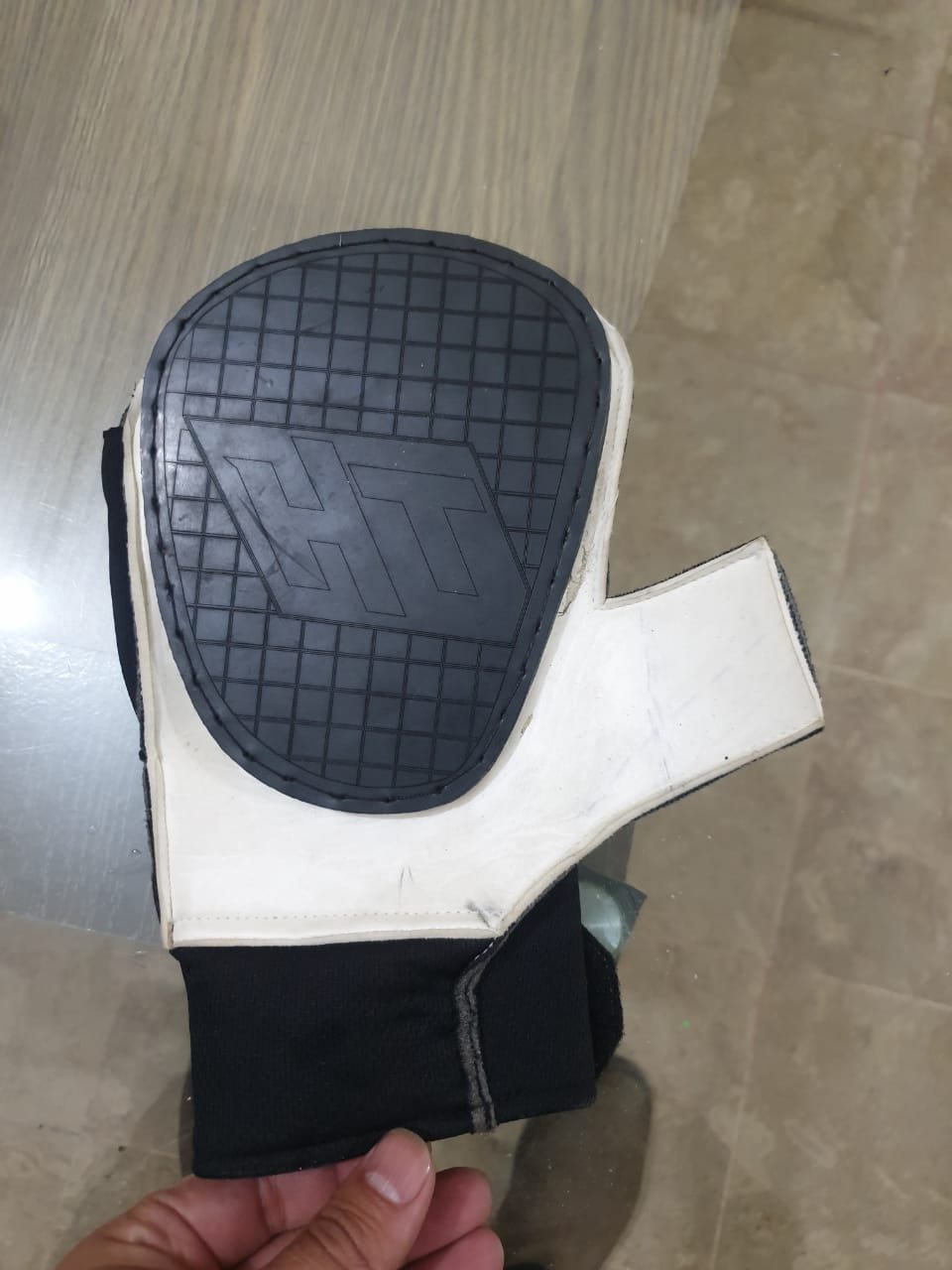
This was the core of the engineering effort. We prototyped and tested a long series of rubber and plastic blends, varying hardness, filler content and the ratio between the elastomeric and rigid phases, then hitting real tennis balls with each one.
Candidates were scored the way a player would score them — rebound height and shot depth, spin generated on slice and topspin, sound and feel at impact, shock transmitted to the palm, and surface condition after extended hitting sessions. Blends that were too soft swallowed the ball. Blends that were too hard were unforgiving and abraded the ball. Several performed well on day one and glazed over after a week of play.
The composition we converged on hit every mark the customer had set: consistent bounce, real spin, a controlled amount of flex, no premature wear, and full compatibility with the leather construction and the production process behind it.
Prototype Iterations: Solving the Stitching Problem
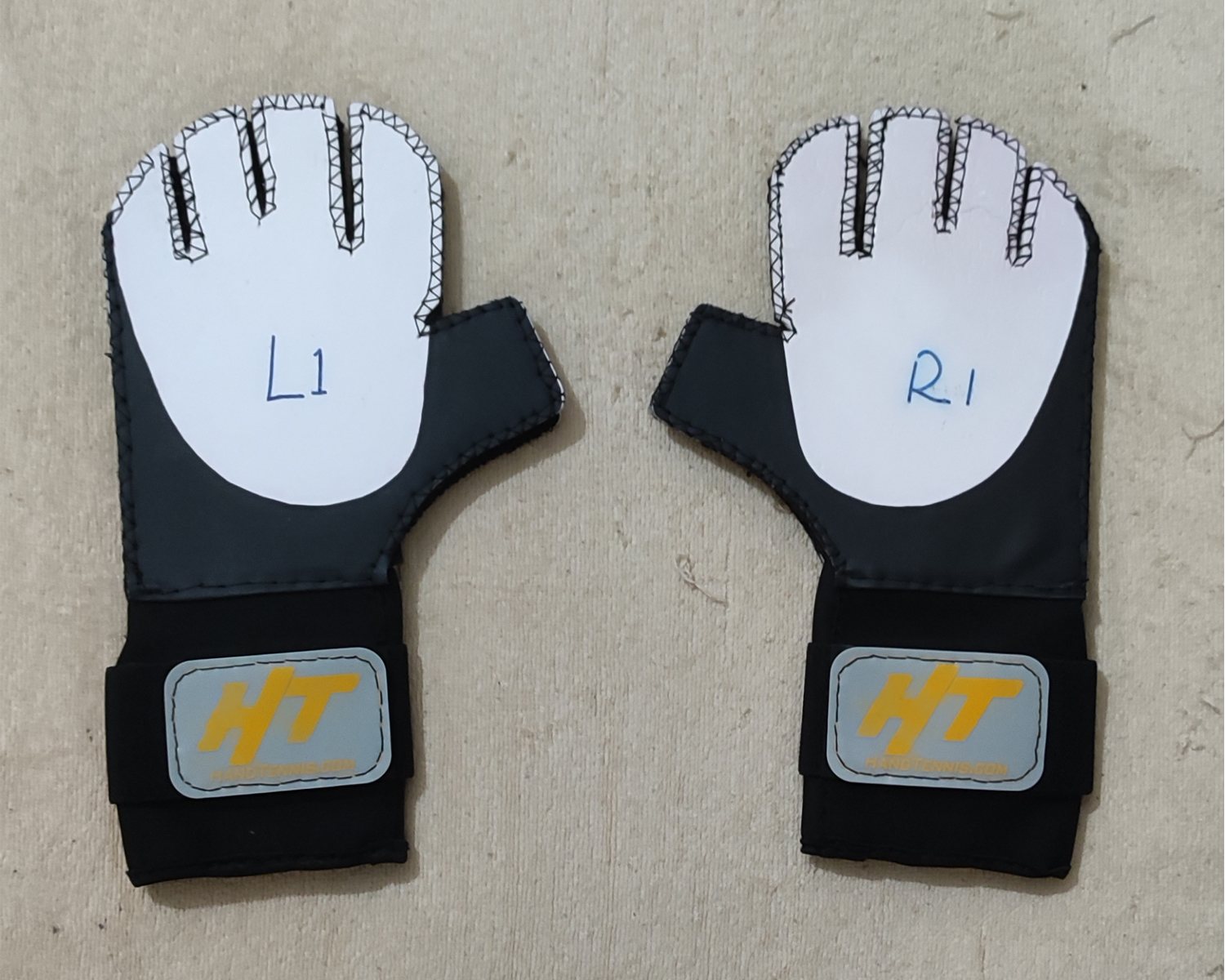
Each iteration surfaced a different manufacturing problem. The most stubborn was stitching. To keep the striking face flat and fully supported, the seam had to run very close to the edge of the pad — but a seam that close to an edge is exactly where a glove tears first, and every hit loads that line directly.
We worked through it with revised seam allowances, a reinforced binding at the pad perimeter, stitch pattern and thread changes, and adjustments to the pad edge geometry itself so the material carried some of the load instead of leaving it all to the thread. Later iterations also refined the closure and strap, the pad-to-leather bond line and overall glove fit across hand sizes.
Design for Manufacturing and First Articles
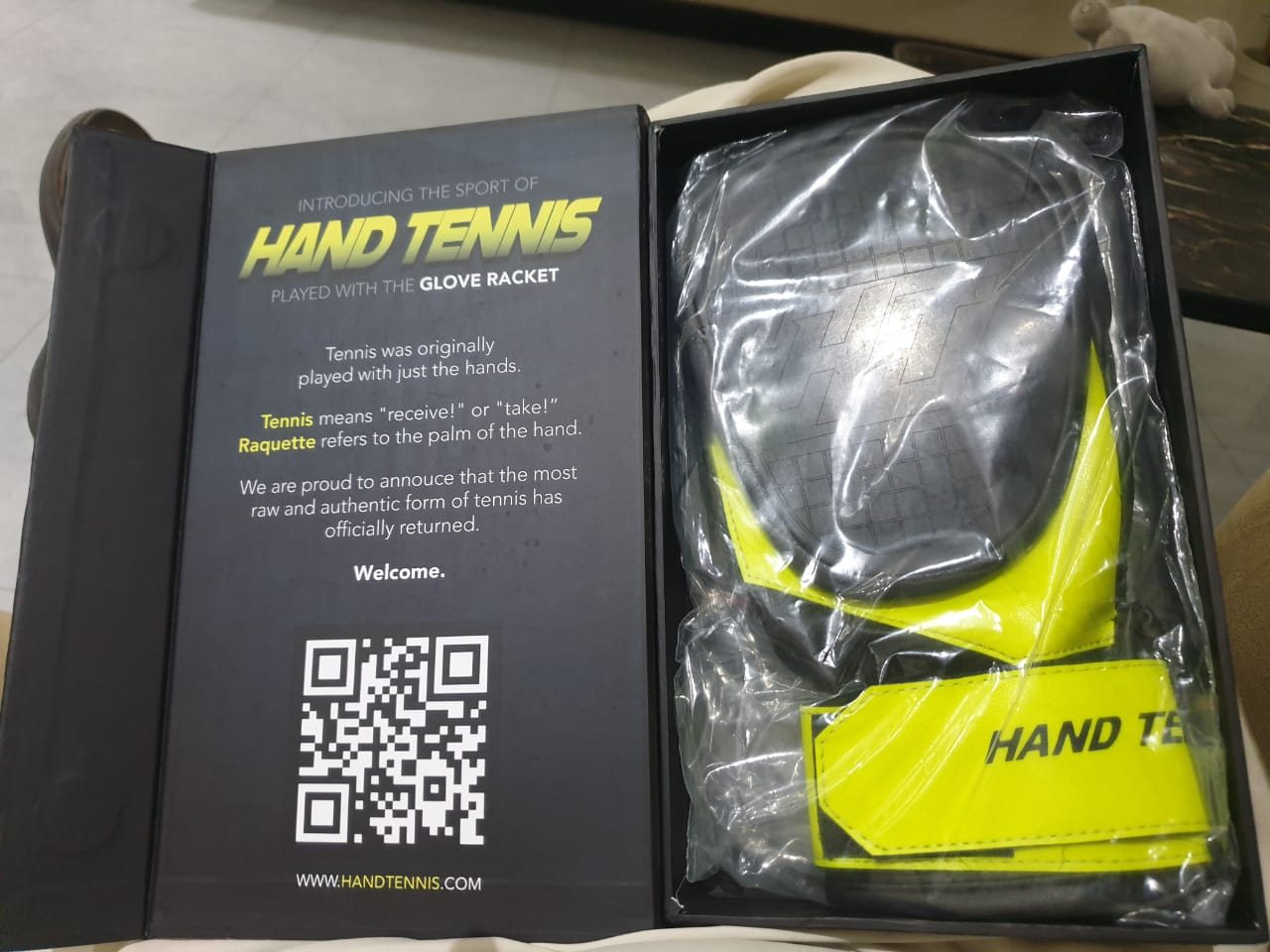
With the design proven on court, we prepared it for production: tolerances and material specifications, tooling-friendly pad geometry, a panel and assembly sequence a glove factory could actually run, sizing, and the full documentation package needed to quote and produce the product.
We then produced the first articles — the first real, sellable samples of the glove. Those samples did more than validate manufacturing. They gave Anthony something to photograph, film and put in people's hands, which is what let the marketing campaign begin long before a full production run existed.
Short-Run Production
We followed the first articles with a short-run production batch — the first inventory of the product. Short runs are the step where most inventors stall: too large for a prototype shop, too small for a factory to care about. Producing it in-house kept the launch moving and kept quality under our control while demand was still being built.
The glove did not just reach the market — it became the foundation of one. Anthony went on to establish a Hand Tennis association and is actively developing the sport, with the glove as its central piece of equipment. Every match played is played with the product we engineered.
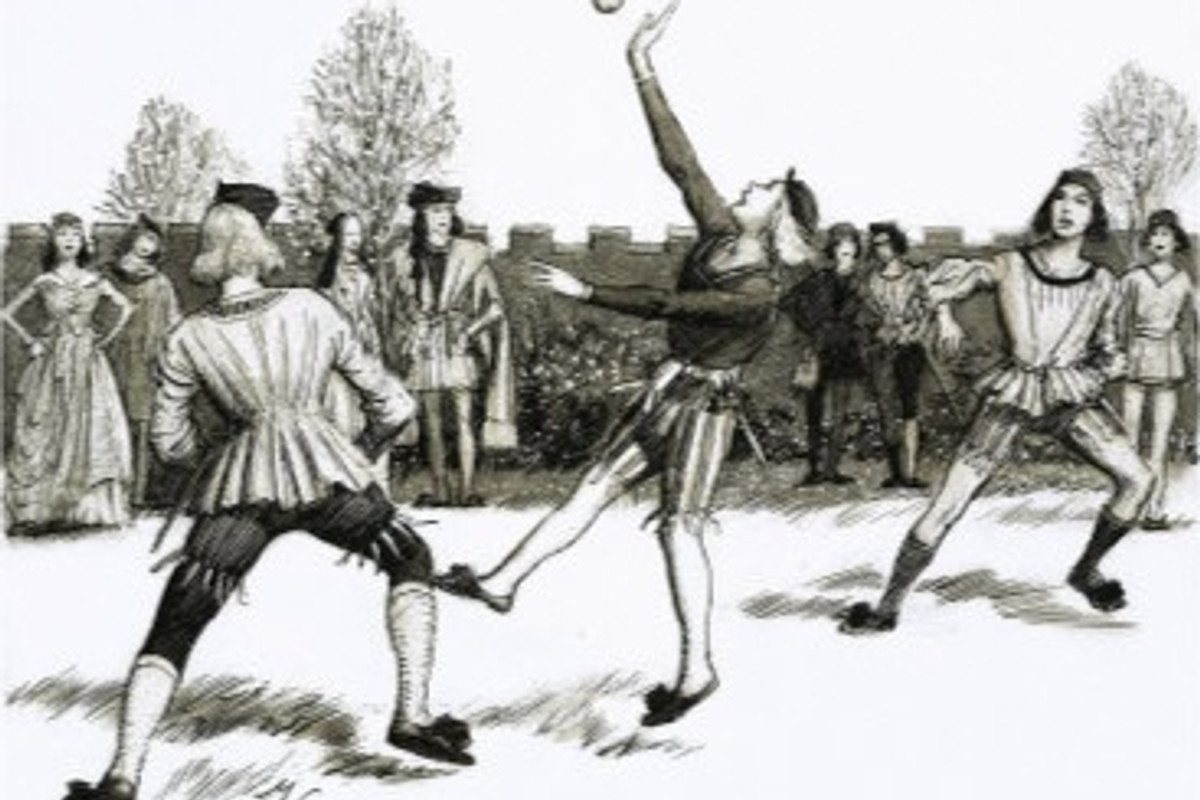
The idea itself is older than the equipment. Hitting a ball with the open hand across a net predates the racket entirely — the medieval game of jeu de paume, the “game of the palm,” is the ancestor of modern tennis. Hand Tennis brings that back with materials that make it playable at speed.
Along the way, the product picked up an endorsement most startups never get: Daymond John of Shark Tank tested a pair and liked it.
Customer testimonial
“If you're looking to invent or create anything, I would very much recommend working with LA NPDT. My experience was everything I was looking for in a design lab and more. These people went above and beyond any expectations we had from the jump and the project has been flawlessly executed. We're taking on more projects with the team and we're excited about it. Thank you so much for all the great effort!”

ANTHONY SOTO Founder Hand Tennis
services provided by la npdt:
Product design. Ergonomic study of the striking hand, glove architecture, pad profile, panel layout and closure design, developed through play testing rather than studio assumptions.
CAD and engineering. Full 3D models of the glove and striking pad across revisions, with the geometry, bond lines and seam paths defined for production.
Material development. Iterative formulation and on-court testing of rubber and plastic blends to hit the required friction, rebound, flex and wear characteristics in a mass-producible material.
Prototyping and testing. Multiple functional prototype rounds, each solving a specific failure — pad feel, edge durability, stitch strength, fit and retention.
Design for manufacturing. Tolerances, material specs, assembly sequence, sizing and the documentation package required to move to a production supplier.
First articles and short-run production. Sellable first samples for marketing and validation, followed by the first production batch that launched the product.
Have a sporting goods idea and a rough prototype?
Hand Tennis started exactly there. If your product depends on getting a material, a feel or a durability target right, that is the kind of problem we solve — from the first sketch through the first production batch. Talk to our team or explore our product development process. You can also see the finished product at Read more on Handtennis.
ATMOSPARK’s journey with us led to the creation of the Bluelement, a device that transforms humidity into potable water, aiding in diverse environments.