Our work / Stealth Shaft Support
2021 XBIZ product of the year nominee
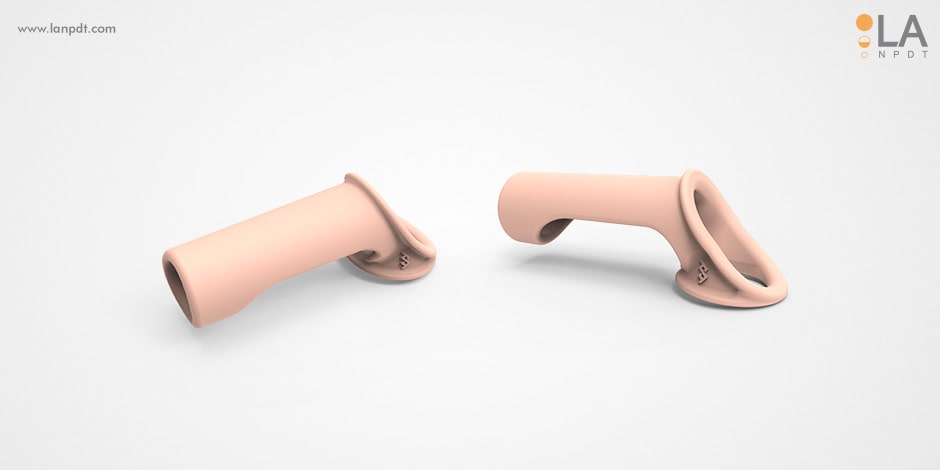
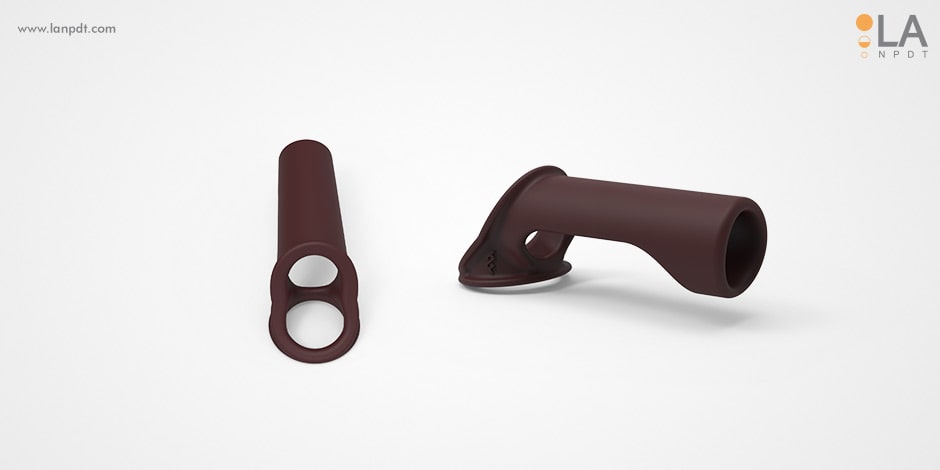
Stealth Shaft Support Prototype of a Silicone Product Design
Start a project

Written by Ralph Hill, Mechanical & electrical systems, 3D manufacturing
Prototyping Engineer
Published August 10, 2026
Silicone rubber prototyping bridges the gap between a 3D printed shape and a body-safe soft product: you print the mold, not the part, then pour liquid silicone into it and iterate until the fit and feel are right.
That is exactly how the Stealth Shaft Support was developed for Nanci Smith of Nanciland Innovations — CAD files, 3D printed molds, poured silicone prototypes, iterated into a product that is safe to wear, easy to use, and inexpensive to manufacture.
Project at a glance
- Client
- Nanci Smith, founder of Nanciland Innovations
- Industry
- Adult products
- Starting point
- A need she saw first-hand working in adult product retail
- What we delivered
- CAD, 3D-printed and CNC-machined molds, cast silicone prototypes, packaging design, manufacturer introduction
- Process
- Silicone casting into printed molds, iterated for body-safe materials and easy wear
- Outcome
- Prototypes used to raise funds and move the product into manufacturing
What the client said
★★★★★
“Never expected to invent something but had an idea in my head and was needing to get it in my hand. So I went to LA NPDT with an idea I had drawn out. The team worked hard for me to make sure they understood everything.
I am more a visual person where they are about numbers, but we were still able to work to get it exactly right. They were able to bring my idea to life. Now I have a product that is being sold around the world! Konstantin and his team did an amazing job and I definitely recommend them if you have a product you would like to get from your head to hand.”
 Nanci SmithInventor, Stealth Shaft SupportGoogle review
The client
Nanci Smith founded Nanciland Innovations after years working in adult product retail, where she heard the same problem from customers repeatedly and found nothing on the shelf that solved it well: a discreet support for people who have difficulty maintaining an erection during intercourse.
She arrived with a drawing and no engineering background. What she wanted was the thing between an idea and a business — a physical product she could hold, test and show to investors.
The challenge
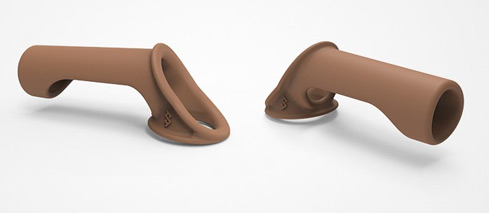
Body-safe material was the fixed constraint. Anything in direct, prolonged skin contact narrows the material field before a single dimension is drawn, and it is not a requirement you trade away later for cost or manufacturability.
Around that sat the usual soft-goods problems: the product had to be easy to put on and wear without instruction, comfortable enough to forget about, and cheap enough to manufacture that a first-time inventor could fund a run. Silicone parts also have to be designed for how they demold, which limits undercuts and geometry in ways rigid plastic does not.
- Body-safe materials only
- Easy to wear, secure in use
- Low-cost manufacturing from the start
- Geometry that a cast mold can actually release
Our solution
Soft products are prototyped by printing the mold, not the part. We modeled the product and its mold together in CAD, produced the mold cavities by 3D printing and CNC machining, then cast liquid silicone into them. Each cycle costs a fraction of tooling and returns a part that can be worn and judged the only way a wearable can be judged — physically.
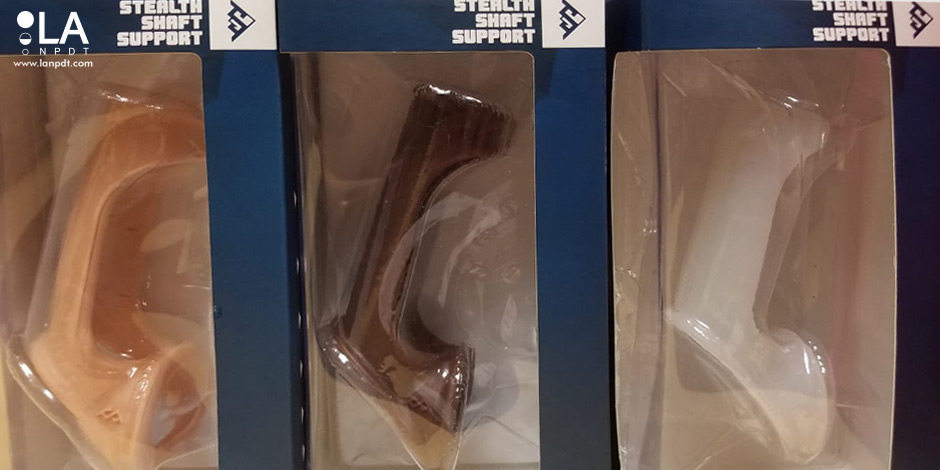
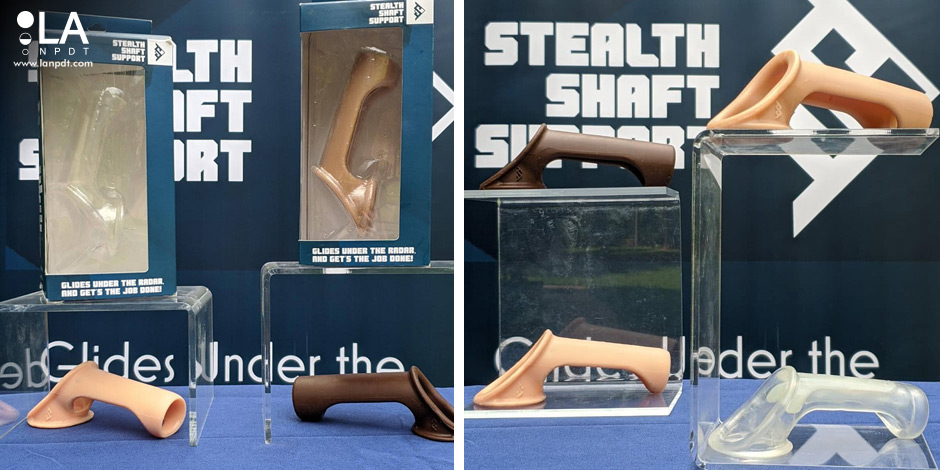
Several iterations moved the design toward the right balance of hold and comfort, with mold feasibility checked on every revision so nothing was designed that a production tool could not release. Alongside the product work, we developed packaging design and connected Nanci with a manufacturer.
The result
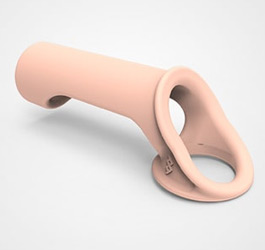
The prototypes did their job twice: they proved the design worked, and they gave Nanci something concrete to raise money against. She funded manufacturing, launched the product, and the Stealth Shaft Support went on to be covered at the AVN Novelty Expo by AVN and Venus Adult News.
The product is now sold internationally.
Client testimonial
Never expected to invent something, but I had an idea in my head and needed to get it in my hand. So I went to LA NPDT with an idea I had drawn out. The team worked hard to make sure they understood everything. I am more of a visual person where they are about numbers, but we were still able to work together to get it exactly right.
They were able to bring my idea to life and achieve exactly what I had in mind. Now I have a product that is being sold around the world! Konstantin and his team did an amazing job and I definitely recommend them if you have a product you would like to get from your head to your hand.

When to use silicone rubber prototyping
Any product that is soft, worn, gripped or in contact with skin belongs in cast silicone before it goes near production tooling. Printing the mold keeps each iteration in the hundreds of dollars, and it lets material safety, comfort and demolding be settled together rather than discovered after a tool is cut.
If your product falls in that category, see our rapid prototyping services, or the Clean Fingers shellfish glove study for another body-contact soft-goods build. CAD, molds and casting are done by our team in Ruston, Louisiana.
Mechanical design services at a glance
| Scope | Requirements, mechanical CAD, load review, fabrication drawings |
|---|---|
| Product | Structural shaft support for field installation |
| Deliverables | 3D models, weldments, tolerance drawings, bill of materials |
| Typical timeline | 4-12 weeks |
Structural parts fail at the interfaces
A support bracket is rarely defeated by the material — it is defeated by how it mounts, how it is aligned in the field, and what happens when the load is not where the drawing said it would be. We design those interfaces explicitly: fastener access, adjustment range, and tolerance for imperfect installation.
What we delivered
We modeled the assembly around the mounting envelope, reviewed load paths and material sections, and detailed the weldment with tolerances a fabrication shop can hold. The package included a bill of materials and hardware callouts so quoting and building did not require follow-up interpretation.
Frequently asked questions
Do you provide stamped engineering drawings?
We produce the design and analysis and coordinate with a licensed PE when a stamp is required.
Can you design around existing equipment?
Yes. We work from your measurements, scans or CAD of the surrounding assembly.
What files do fabricators receive?
STEP models plus dimensioned drawings with welds, finishes, materials and tolerances.
Capabilities used on this project
Rapid prototyping services
3D printing, CNC machining, urethane casting and functional prototype builds with published materials, tolerances and lead times.
Prototype design and engineering
Design for the prototype itself: CAD, tolerance stacks, material choices and assembly detail before anything is built.
The silicone rubber prototyping playbook
A need spotted from behind the counter
Nanci saw the gap while working in adult product retail, talking to customers who needed help maintaining an erection during intercourse. The best product ideas usually come from someone standing where the problem happens.
Body-safe is a hard constraint
Every material considered in prototyping had to be safe for direct skin contact. That narrowed the field before any shape work began — and it is not a constraint you relax later.
Print the mold, pour the part
We created CAD files, 3D printed the molds, then poured liquid silicone into them. This is the fastest honest route to a soft-goods prototype you can actually wear and evaluate.
Iterate cheaply, then manufacture cheaply
Each mold cycle is inexpensive, so the design iterated freely toward a safe, user-friendly result — while manufacturing and 3D printing limitations were respected throughout so production cost stayed low.
| Step | What happens | Why it beats the alternative |
|---|---|---|
| CAD | Part and mold modeled together | Mold feasibility is checked before spending |
| 3D printed mold | Mold cavity printed in-house | Days instead of weeks, cents instead of tooling costs |
| Silicone pour | Liquid silicone cast into the mold | A real soft part you can wear and test |
| Iterate | Repeat with design changes | Fit and feel refined physically, not theoretically |
Questions about this project
Straight answers from the engineers who ran the build. Have a different question? Ask us directly.
Talk to an engineerHow much does silicone rubber prototyping cost?
Printed-mold silicone prototyping typically runs $2,000 to $8,000 for a small part across several iterations — far below the cost of production tooling.
Can you 3D print silicone directly?
Rarely with good results. The reliable route is printing the mold and pouring liquid silicone into it, which is how the Stealth Shaft Support was prototyped.
Is the silicone safe for skin contact?
Material selection for body-contact products is screened for safety before prototyping begins — that was a fixed requirement on this project.
How many iterations does a wearable silicone product need?
Usually three to six. Fit and comfort can only be judged by wearing the part, so cheap fast iterations matter more than getting it right on paper.