Silicone Surface Finish & Friction: Texture, Post-Processing and Low-Friction Results
How silicone surface finish is controlled, from mold polish to post-processing and coatings, with the Leia menstrual cup low-friction case study.
September 7, 20262 min read

Written by Konstantin Dolgan, Ph.D., NPDP
Founder & CEO, Product Development Engineer
Published September 7, 2026
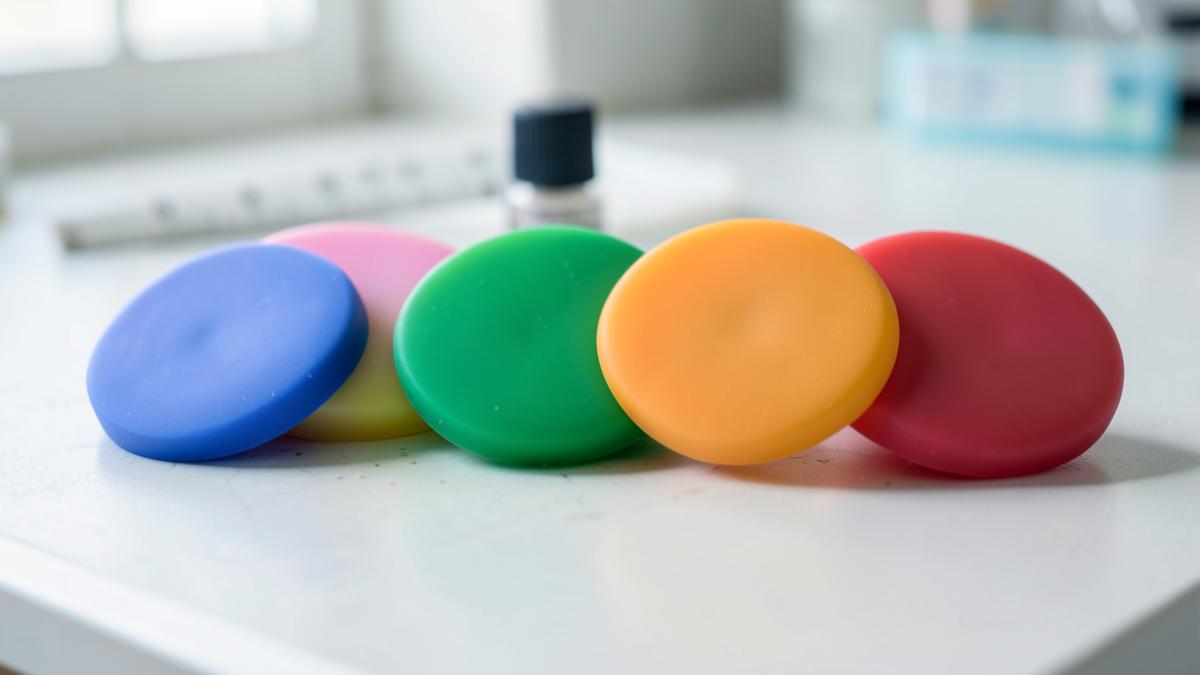
Silicone surface finish controls how a part feels, cleans, slides and looks. A glossy mold finish gives a slick, wipeable surface. A textured finish hides fingerprints and improves grip. Post-processing can add coatings that reduce friction or improve chemical resistance.
Mold surface transfer
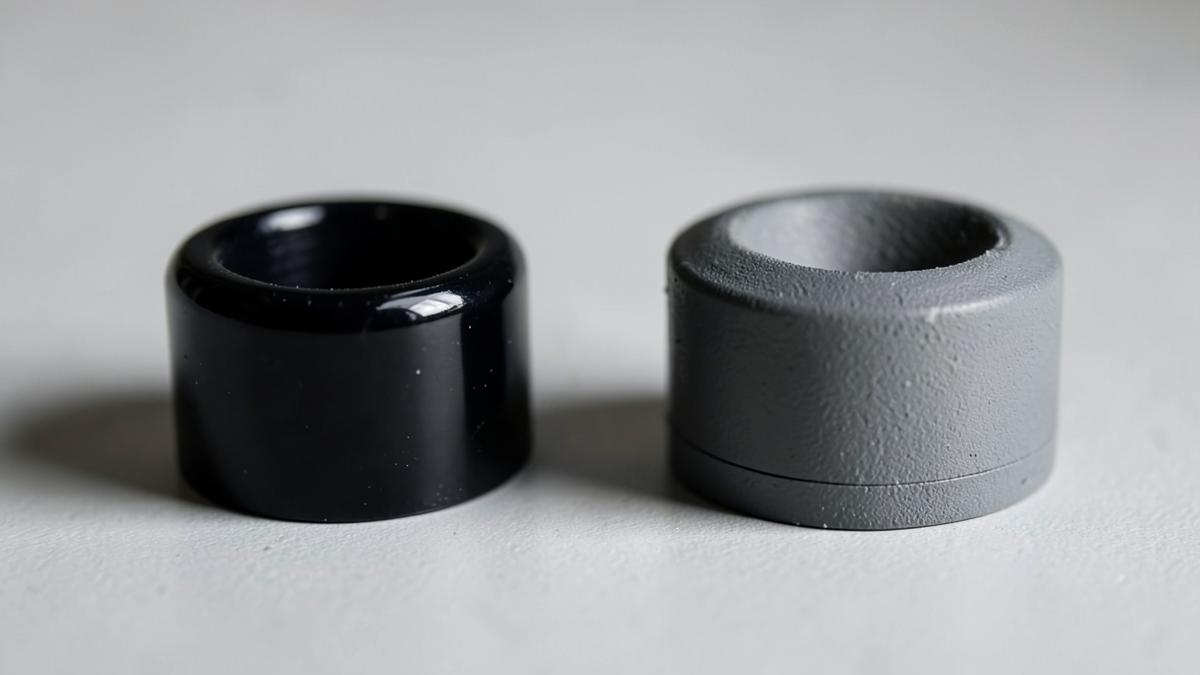
Silicone faithfully copies the mold surface. A polished steel mold yields a glossy part; a bead-blasted or etched mold yields a matte or textured part. This is the cheapest and most repeatable way to control finish because it requires no secondary operation.
Post-mold finishing
- Tumbling to remove flash and smooth edges.
- Cryogenic deflashing for thin, fragile features.
- Sanding or polishing of reachable surfaces.
- Plasma treatment to raise surface energy before coating.
Coatings
Coatings can make silicone feel silkier, reduce sticking or add antimicrobial properties. Each coating must be tested for adhesion, wear and compatibility with the silicone substrate. Coatings are common in consumer and medical devices where hand feel or cleanability matters.
Leia case: silky low-friction finish
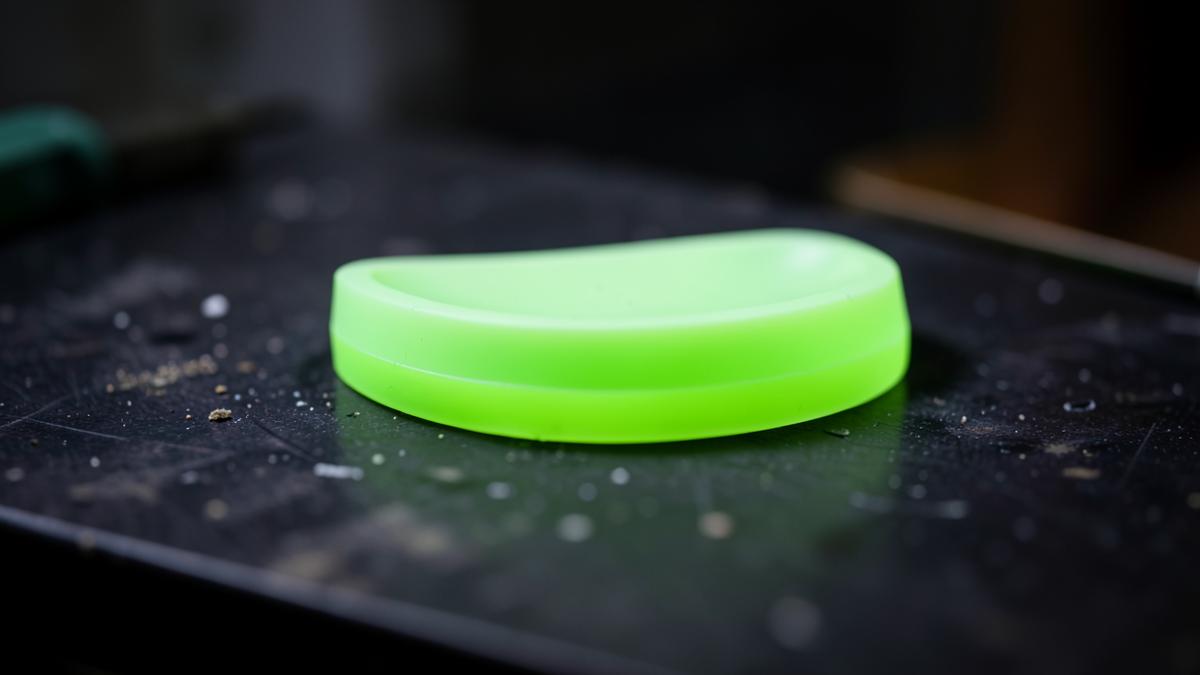
The Leia menstrual cup required a surface that was smooth, slick and comfortable rather than rubber-tacky. We worked through mold finish, material formulation and post-processing to achieve a silky feel without adding a coating that could wear off. The result is a surface that remains low-friction over repeated use and cleaning.
Design tips
Finish goal | Typical approach | Considerations |
|---|---|---|
Glossy and wipeable | High-polish mold | Shows scratches and fingerprints. |
Soft grip / matte | Bead-blast or etched mold | Hides wear, may collect residue. |
Low friction / silky | Material + mold finish + tumbling | Validate durability after sterilization. |
Antimicrobial | Coating or infused additive | Verify biocompatibility and wear. |
Texture selection and cleanability
Texture is not only cosmetic. A fine matte texture hides scratches and fingerprints and reduces the tacky, grabby feel of bare silicone, while a deep or aggressive texture traps soil and makes cleaning harder.
For food-contact and medical parts, favor shallow, uniform textures with generous radii and no sharp valleys, and confirm that the chosen cleaning or sterilization method can reach every surface.
Gloss levels also change perceived quality: a uniform satin finish usually reads as more premium than a high gloss that shows every mark.
Verifying finish on prototypes
Finish decisions should be made on parts people can hold, not on renderings. Build a small panel set that covers the finish options under consideration in the same material and durometer as the production part, then have real users handle them wet and dry.
Record which samples were preferred and why, and lock the winning finish into the drawing with a texture standard and gloss target so the molder can reproduce it. Repeat the handling test after any material, durometer or coating change, because all three shift how the surface feels.

Frequently asked questions
Can silicone be polished after molding?
Yes, but only on external, reachable surfaces. Internal channels, undercuts and thin features cannot be polished mechanically. The best finish is usually achieved at the mold.
Does surface finish affect friction more than durometer?
Both matter. A high-durometer part can still feel sticky if the surface is tacky, and a soft part can feel slick with the right finish or coating. We evaluate them together.
Can a low-friction coating last through sterilization?
Some can, but it must be tested under the actual sterilization method and cycle count. Coatings can wear or change chemistry under heat, radiation or chemical exposure.
How do you measure surface friction?
Common methods include coefficient-of-friction tests and tactile panels. For medical and consumer devices, we often run both objective measurements and user feedback to confirm the feel. Related reading See silicone rubber prototyping and manufacturing for the process map, Leia menstrual cup for a smoother, lower-friction silicone surface, and durometer and grade selection for the material side.
Services related to this guide
- Product design servicesIndustrial design and CAD taken all the way to manufacturable files.
- Rapid prototypingWorking prototypes in days, from 3D printing to vacuum casting.
- Electronic design servicesSchematic, PCB layout, firmware and bring-up, through to production handoff.
- Product development examplesReal projects we designed, prototyped and shipped.