Mitigating Early Stage Design Risk: Tools and Techniques
By embedding systematic practices for Mitigating Early Stage Design Risk, organizations can consequently minimize negative impacts while maximizing long term benefits.
December 18, 20257 min read

Written by Konstantin Dolgan, Ph.D., NPDP
Founder & CEO, Product Development Engineer
Published December 18, 2025Updated September 2, 2026
First design choices shape long-term project results and user joy. Every decision carries risk because we cannot see the future. This paper studies design risk and its effect on firms. It also shows ways to find and cut risks. These tools include proactive flow and Failure Mode and Effects Analysis (FMEA).
People make daily choices to reach their life goals. You must spot and study risks to see what might happen. This helps you predict the results of your actions.
Edge over rivals fades fast in today's quick world. Nine out of ten startups fail in their first two years. You cannot see every outcome of a design choice. Each big choice carries risk. The design might be hard to use or too costly. It might even cause harm.
However,
Check your design well before you start. This keeps risks low and increases benefits. If you skip this step, you might miss big risks. This can cause long-term damage to your firm and your users. Modern users have short attention spans. Poor design often happens when you skip user research or testing. This leads to much higher costs later in the project. It shows why Mitigating Early Stage Design Risk is vital.
Definition of Design Risk
Design risk means a product or system may fail. These risks show up as money or tech problems for a firm. Bad design or poor tests can cause delays. They may break your budget or end the project.
Risk is part of design and you must manage it. Management means finding and fixing risks early. You should solve issues before they grow. This leads to better processes and better project results.
Consequently, design risk can be described as the probability that a design aspect will negatively influence the business or its customers. Its magnitude can be expressed as:
Risk = Probability × Impact
Probability is the chance of a bad event. Impact is how bad that event is. Firms reduce risk to cut harm, boost profit, and keep customers. Mitigation lowers risk but does not stop it all. Mitigating Early Stage Design Risk makes sure benefits outweigh the risks.
Sources of Design Risk
To manage risks effectively, it is crucial to understand both their level and impact.
- Misinterpreting User Needs.
Failing to know user needs is a huge risk. If a design fails, users feel upset. You must research and get feedback during the process to cut this risk. Mitigating Early Stage Design Risk means you must listen to your users.
- Inadequate Competitor Analysis.
Designers might copy others if they do not study the market. They might also lose their unique edge. Rival analysis helps you stay new and different. Use fault tree analysis to find weak spots in other products. This helps in Mitigating Early Stage Design Risk.
- Absence of a Clear Project Plan.
Designing without a plan is like building a house without a map. A clear roadmap keeps the team aligned. It helps you deliver the right design. Good notes help you manage risk and costs. Planning is key to Mitigating Early Stage Design Risk.
- Misalignment Among Stakeholders.
Poor alignment leads to fights and slow work. Use clear paths for talk and regular reviews to stop this. Fix alignment issues early to avoid big fights. This is a smart step in Mitigating Early Stage Design Risk.
- Technical Limitations
Tight time, money, or tool limits can hurt quality. Plan ahead and use tools well to manage these risks. Watch small risks so you can focus on big ones. Mitigating Early Stage Design Risk means you must balance your limits.
Contact us today to learn how LA NPDT can assist in realizing your project.
BUSINESS RISK IN EARLY DESIGN (B‑RED)
The B‑RED method finds risks early in business development. In tough markets, spotting risks early lets you fix them with low costs. Solving risks before you launch helps you succeed long-term. Thus, B‑RED is a solid way for Mitigating Early Stage Design Risk.
Risk Prioritization Strategies
1. Visioning the “Why”
Great teams build risk thinking into their first designs. Then, meetings with all owners build trust and clear values. We ask, “What do YOU feel makes this project a success?” Answers might be budget, style, or growth. We rank these goals to build a shared vision. Being clear about trade-offs helps owners and builders work well together.
2. Probability–Impact Matrix
Early talks help find risks with a probability–impact matrix. This tool lists risks by how likely they are to happen. It shows which risks to manage and which to cut. You can use it to set a crisis level for your project. This protects your budget and schedule.
3. Weighted Scoring Method
The weighted scoring method assigns numerical values to risks based on likelihood and impact, adjusted by predetermined weights.
Steps include:
- Identifying potential risks through assessment.Assigning relative weights to likelihood and impact.Scoring risks according to likelihood and impact values.Calculating total scores by multiplying scores by weights.Ranking risks based on total scores to determine priority..

Figure 1. Benefits of Proactive Risk Management (Source Sprintzeal: proactive risks mitigation strategies)
THE ROLE OF FLOW IN RISK MANAGEMENT
Flow shows how well a team works and talks together. It shows how members adapt to change. Flow changes over time and can be reactive, active, or proactive.
Reactive flow acts only after a risk hits. Active flow reacts as risks start to show. Both ways are still slow. Proactive flow finds risks before they appear. This gives the best chance to stop them. It helps teams work with clear goals and less stress. So, proactive flow is key for Mitigating Early Stage Design Risk.
Figure 2. Risk Mitigation Strategies (Source Eventussecurity: risk assessment mitigation)
Failure Mode and Effects Analysis (Fmea)
Failure Mode and Effects Analysis (FMEA) is a tool to rank and fix risks. The U.S. military made it, and many tech firms use it now. FMEA works best for brand new types of projects. It uses a team from many roles to get many views. Good teams need a leader and a scribe to record data.
Kepner–tregoe (K‑t) Decision Analysis
Kepner–Tregoe Decision Analysis is a clear way to pick the best choice. It makes big design and buying choices easy to track and see. You define the choice, set goals, and weigh your priorities. Then, test choices against must-have rules and add up the scores. The choice with the top score wins after a final risk check.
Conclusion
Early design decisions are pivotal in determining long‑term success or failure of projects, products, and organizations. Since uncertainty is inevitable, risk accompanies every design choice.
This paper demonstrated that unmanaged risks – such as misinterpreting user needs, poor stakeholder alignment, insufficient planning, and technical constraints – can lead to serious financial, operational, and reputational damage.
Teams cut bad results and build more value by using risk tools early. Methods like proactive flow, B-RED, and FMEA help find and stop risks. You can also use matrices, scores, and K-T Decision Analysis. These tools help you fix problems before they get worse.
Risk management is not about ending all doubt. It is about making smart choices where the gains beat the costs. Teams that use Mitigating Early Stage Design Risk are ready for success. They build strong tools and stay ahead in a tough market.
Subscribe
Dive deep into the dynamic world of new product development with LA NPDT Insights Blog.
Sources of Early Stage Design Risk
Risk Source | Description |
|---|---|
Misinterpreting User Needs | Failure to grasp user requirements, leading to frustration and dissatisfaction. |
Inadequate Competitor Analysis | Lack of knowledge about competitor products and strategies, risking duplication or lack of uniqueness. |
Absence of a Clear Project Plan | Designing without a structured roadmap, affecting alignment and delivery. |
Misalignment Among Stakeholders | Poor alignment leading to disputes, misunderstandings, and delays. |
Technical Limitations | Constraints in time, budget, or resources compromising design quality. |
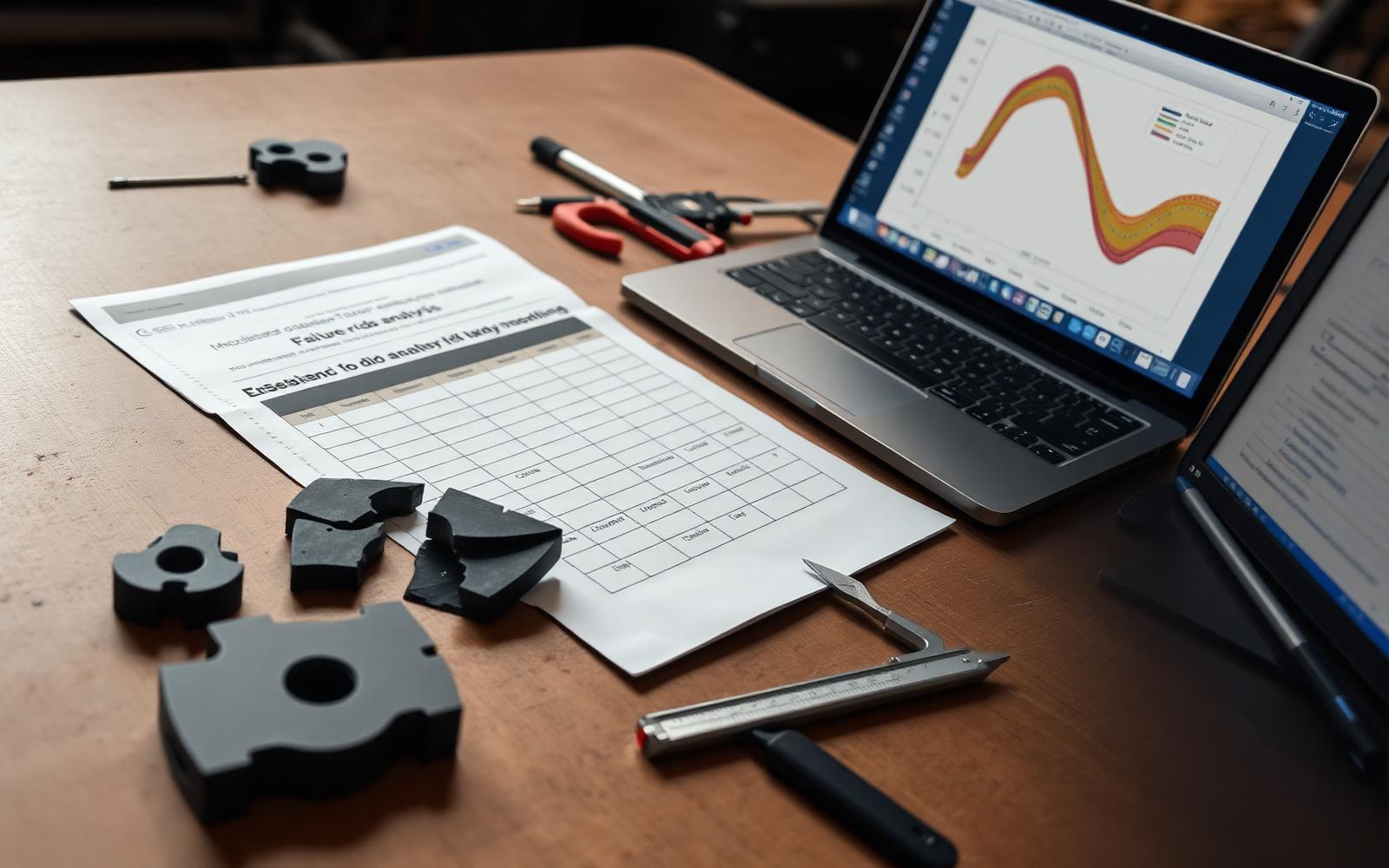
Design Failure Mode Analysis at the Concept Stage
Design failure mode analysis is usually run too late, on a design that is already tooled, when the only affordable response is a warning label. Run at the concept stage it costs a half day and reshapes the architecture, which is where the cheap fixes live.
Term | Scale | How to score it honestly |
|---|---|---|
Severity | 1-10 | Consequence to the user if the failure occurs, ignoring likelihood |
Occurrence | 1-10 | Field or test evidence from similar designs, not optimism |
Detection | 1-10 | Probability the current plan catches it before shipment; 10 means invisible |
RPN | 1-1000 | Severity x Occurrence x Detection, used only to rank, never as a pass mark |
Worked Example: A Handheld Consumer Device
Failure mode | Sev | Occ | Det | RPN | Action that retires the risk |
|---|---|---|---|---|---|
Battery door opens on drop | 7 | 5 | 4 | 140 | Latch geometry change plus 1.2 m drop test on six units |
Charge port solder fatigue | 6 | 6 | 5 | 180 | Board-level strain relief, 5,000 cycle insertion test |
Overheating during fast charge | 9 | 3 | 3 | 81 | Thermal model plus thermocouple test at 40 C ambient |
Snap fit fractures on service | 5 | 6 | 6 | 180 | Radius increase, material change to PC/ABS, 10 service cycles |
Button ingress of liquid | 6 | 4 | 7 | 168 | Gasket and IPX4 spray test |
Label wears off | 3 | 7 | 2 | 42 | Pad print to laser mark change |
Note that the highest-severity item is not the highest RPN. That is why severity above 7 should trigger action regardless of the score: a thermal event is not made acceptable by being unlikely. Rank with RPN, act on severity.
Early Stage Risk Tools and When to Use Them
- Pre-mortem workshop, week one: assume the launch failed, write the reasons, sort them into design, supply and market.
- Tolerance stack-up as soon as an assembly exists, before surfaces are refined.
- Worst-case circuit analysis when component tolerances and temperature both matter.
- Physical abuse testing on the ugliest prototype available, early, because early failures are informative and cheap.
- Design review with a manufacturer, not only with designers, before geometry is frozen.
- A living risk register with owner, action and a date the risk is retired - a score with no owner changes nothing.
Frequently asked questions
What is design risk?
Design risk means the bad things that can happen with a new design. These show up as tech, cash, or work problems. Bad tests or poor notes can cause delays or waste your budget. You cannot avoid risk, so you must manage it from the start.
Why is early stage design risk mitigation important?
Mitigating early stage design risk makes sure your gains beat your risks. If you skip this, hidden risks can hurt your firm and your fans. Fixing risks now saves money later in the project. It also leads to a smooth flow and better results.
How is design risk magnitude expressed?
You can find the size of a risk with this math: Risk = Probability × Impact. Probability is the chance a bad thing will happen. Impact is how much that event hurts. Firms cut risk to save cash and keep their buyers. Fixing risks helps but does not stop them all.
What are common sources of design risk?
Design risk often comes from misreading user needs. Poor rival analysis and weak project plans also cause issues. Teams may lack clear goals or face technical limits. You can fix these by doing user research. Study your rivals and build clear roadmaps. Talk to your team and manage tools well.
What is the B-Red Method?
The B-RED method finds risks early in business growth. Early risk detection helps you fix problems at a low cost. It also keeps your project on schedule. Solving risks before you launch helps you succeed long-term. B-RED offers a clear way to reduce early design risk.
Filed under:EducationUncategorized
Tagged:2025
Services related to this guide
- Product design servicesIndustrial design and CAD taken all the way to manufacturable files.
- Best industrial design firmsWhich studios take an idea from form to manufacturable hardware, and what they charge.
- Prototype designLooks-like, works-like or pre-production: what each proves and what it costs.
- Product development examplesReal projects we designed, prototyped and shipped.