Product Positioning: Finding the Sweet Spot Between Design, Functionality, and Pricing
Master product positioning by balancing design, functionality, and pricing to attract customers and drive growth.Ask ChatGPT
August 12, 202510 min read

Written by Yelena Rymbayeva, MPhil Communication & Media Studies, BTech Quality Control
Marketing & Product Leader, Technology Commercialization
Published August 12, 2025Updated September 2, 2026
Product Positioning: Finding the Sweet Spot Between Design, Functionality, and Pricing
Product positioning balance is more than a marketing task. It is a strategic must to find a unique spot in the global market. Consumers now face endless choices. Success requires more than small gains. You must offer something distinct to your audience. Good positioning finds the best market niche. It then drives steady, profitable growth.
Positioning is hard even in good times. Product teams want new features. Operations want to cut costs and streamline work. Sales teams chase revenue by meeting customer needs. Long growth periods led many firms to grow their product lists. Digital tools and automation gave them the scale to manage this wide range.
The goal of product positioning is simple. Make sure your product stays first in the customer’s mind when they buy. To do this, your strategy must meet three main goals:
- Differentiate the product from competing offerings
- Address the buying criteria that matter most to customers
- Communicate clearly the key attributes of the product or brand
A compelling, well-defined positioning delivers multiple advantages:
Unites internal teams around a persuasive, cohesive narrative
Attracts ideal customers while deterring low-fit prospects
Highlights your genuine unique selling proposition
Guides product development toward the most valuable features
Equips sales with focused messaging
Helps identify the most appropriate market category
Positions you a step ahead of competitors
Defining the Six Positioning Variables
- The Customer Break down every customer segment in precise detail. Markets comprise diverse groups — identifying distinct personas clarifies which needs to satisfy and which audiences to exclude.
- The Need A valid need originates with the customer, not the product. Even luxury goods fulfill psychological needs such as self-image or confidence. In mature markets, uncovering latent needs often requires advanced techniques like Hidden Needs Analysis. The ideal positioning lies where your strengths meet real customer motivations.
- Product Name and Description Craft an honest, factual description devoid of hype or superlatives. Launching novel products may demand inventive naming to establish new categories and claim blue-ocean leadership.
- Benefit Frame the benefit as the customer’s solution to their need, focusing on outcomes rather than technical specifications. If multiple benefits exist, prioritize the most compelling or integrate them into a cohesive benefits statement.
- Competitive Products and Solutions Look beyond direct rivals. List every current solution — partial or indirect — that addresses the target need. This comprehensive view reveals the true competitive set against the backdrop of your customer personas.
- Differentiator To justify its market position, the product must offer a defendable point of uniqueness. If price isn’t the focal differentiator, distinctiveness must arise from product features, delivery methods, packaging, service, or business model innovation.
Many firms spend a lot on new products. Yet they often miss how the market will see the final result. Positioning is about shaping that view. For this reason, customer insights are vital.
Strong positioning is the sweet spot. It is where your best skills meet what your customers want. To reach it, you must find your unique strengths. You must also learn what moves your customers to act.
Common positioning approaches include:
- Characteristics-based: Emphasizing defining features to build identity
- Pricing-based: Claiming the value-leader role through cost efficiency
- Application-based: Tying the offering to specific use cases
- Quality/prestige: Highlighting superior craftsmanship or status
- Competitor-based: Contrasting deliberately with rival solutions
Positioning is not a vision statement. It is also not a short-term slogan. It supports all marketing messages. It helps create messages that connect with real customer value faster.
The Positioning Triangle: A Quick Reminder
Successful positioning requires the alignment of three interrelated elements:
- How your target market makes purchasing decisions
- How competitors position their products
- What your product actually provides
Only by integrating all three dimensions can you gain the comprehensive insight needed to outperform rivals.
Steps to Uncover Your Positioning
Listen to Customers to Find Needs
Talk directly with real customers. Do not just use made-up personas. Make a clear customer journey map. It should show their full experience. This goes from first learning about your product to after they buy it.
Key components of the journey map:
- Insights: Gather data from surveys, one-on-one interviews, and usage analytics.
- Touchpoints: Catalog every interaction — website visits, social media engagements, service inquiries, and more.
- Stages: Delineate the phases of awareness, consideration, decision, and post-purchase support.
- Emotional States: Record motivations, frustrations, and emotional highs and lows at each phase.
- Moments of Truth: Highlight the three or four critical decision points where perceptions are made or changed.
Check this map to find friction points. Match your positioning with real customer needs. Track Annual Contract Value (ACV) and Lifetime Value (LTV). Watch Customer Acquisition Cost (CAC) and CAC payback to see if your changes work.
Catalog Your Distinctive Attributes
Hold a workshop with different teams. These include sales, marketing, and product. Customer success, support, and partners also join. Even some customers can be part of it. List every feature, ability, and company strength.
- Ask sales representatives how prospects describe your offering and which comparisons arise (e.g., price, functionality, service).
- Use simple tools like sticky notes to group and rank attributes by relevance and resonance.
Convert Benefits into Value — Build your Uvp
Translate each feature or attribute into the tangible value it delivers:
- Define the exact problem you solve.
- Describe the outcomes you enable.
- Explain how customers’ work or lives improve.
Find the main needs your product meets. Start by winning over a beachhead segment of loyal users. These fans build momentum for wider growth.
Avoid “feature-dump” marketing — make the link between features and real-world outcomes unmistakably clear, and choose the market category that best showcases your strengths.
Draft the Positioning Statement
Building from your Unique Value Proposition, articulate why customers should pick you over other options.
Guidelines:
- Stop chasing “unique” as a single attribute. Instead, isolate the specific combination of elements — your “special sauce” — that unlocks new value for customers.
- Double down on alignment. Ensure sales, marketing, and product development are all operating from the same positioning playbook.
- Be sharply focused. Sacrificing some prospects is beneficial — clarity helps the right customers identify themselves in your message, whereas trying to appeal to everyone dilutes your impact.
Secure Adoption
Positioning influences every internal memo and external communication. To achieve consistent execution, champion a unified message across teams with patience and persistence.
- Involve key stakeholders throughout development to foster buy-in.
- This collaboration embeds the positioning into your company’s operations and culture.
Skipping this phase risks inconsistent application and weak market impact.
Positioning Strategy Checklist (Examples)
Below is a list of well-known product positioning strategies. Consider each one in relation to your own product to see where it fits.
Against a competitor: Compare your product directly to a rival. Claim you are better in a clear way. Avis Rental Cars did this with: “We’re #2. We try harder.”
Benefits-focused: Emphasizing a key benefit that resonates with your target audience can be powerful. Volvo highlights safety, while Crest toothpaste promotes cavity prevention.
Category comparison: Stand out by linking your product to a new category. Palmolive dish soap says it “softens your hands.” This compares the soap to a lotion.

Away from a competitor: Presenting your product as the opposite of a market leader can draw attention in a crowded space. For instance, 7-UP branded itself as “The Uncola.”
Attribute-focused: Showcasing a specific product characteristic can be compelling. Ritz-Carlton emphasizes luxury, whereas Motel 6 focuses on affordability.
User-focused: You can reach users well by shaping your message for a specific group. The …For Dummies book series shows this. It helps beginners who want easy learning materials. It assumes they know nothing.
Usage occasions: Centering your positioning on when or how customers use your product can connect strongly. Jeep markets heavily around off-road adventures.
Conclusion
Global markets are more divided now. General marketing often does not work as well. Careful positioning helps you. Customer targeting helps too. This lets you match your value to real needs very closely.
These practices:
- Uncover growth opportunities
- Deepen understanding of both customers and competitors
- Optimize resource allocation
- Help exploit niche segments
Organizations that apply research-based segmentation consistently outperform rivals in sales and market share.
Customers only buy when they connect with your message. Your claims must be real and true. No hype can fix a weak message or a bad product.
Customer Journey Map Components for Positioning
Component | Description |
|---|---|
Insights | Data from surveys, interviews, and usage analytics. |
Touchpoints | Catalog of every interaction: website, social media, service. |
Stages | Phases of awareness, consideration, decision, and post-purchase. |
Emotional States | Motivations, frustrations, and emotional highs/lows. |
Moments of Truth | Three or four critical decision points. |
Turning a product positioning strategy into engineering constraints
Positioning fails when it is just marketing talk. A phrase like "premium but approachable" does not help an engineer. Give the team clear numbers. Set a cost goal and a retail price. Pick three features to beat the leader. Pick three features to match them. These six points shape a product better than brand words.
This method finds problems fast. A fine finish and a low $20 cost do not fit one list of parts. Fix these clashes in a workshop. It is cheaper than fixing them during a tooling review.
Position | Target gross margin | Where the money goes | Where you deliberately underspend | Typical failure |
|---|---|---|---|---|
Value challenger | 35-45% | Core function, durability | Finish, packaging, accessories | Feels cheap in hand at retail |
Mainstream | 45-55% | Balanced spec, reliability | Materials exotica | Indistinct; loses on price and on prestige |
Premium | 55-70% | Materials, finish, unboxing, support | Feature count | Over-featured and over-tooled for the volume |
Professional | 50-65% | Serviceability, spares, certification | Aesthetics | Consumer-grade support model |
Testing the position before you commit tooling
Positioning claims are testable well before production. Each of these checks costs days rather than months and can be run on appearance models and a landing page.
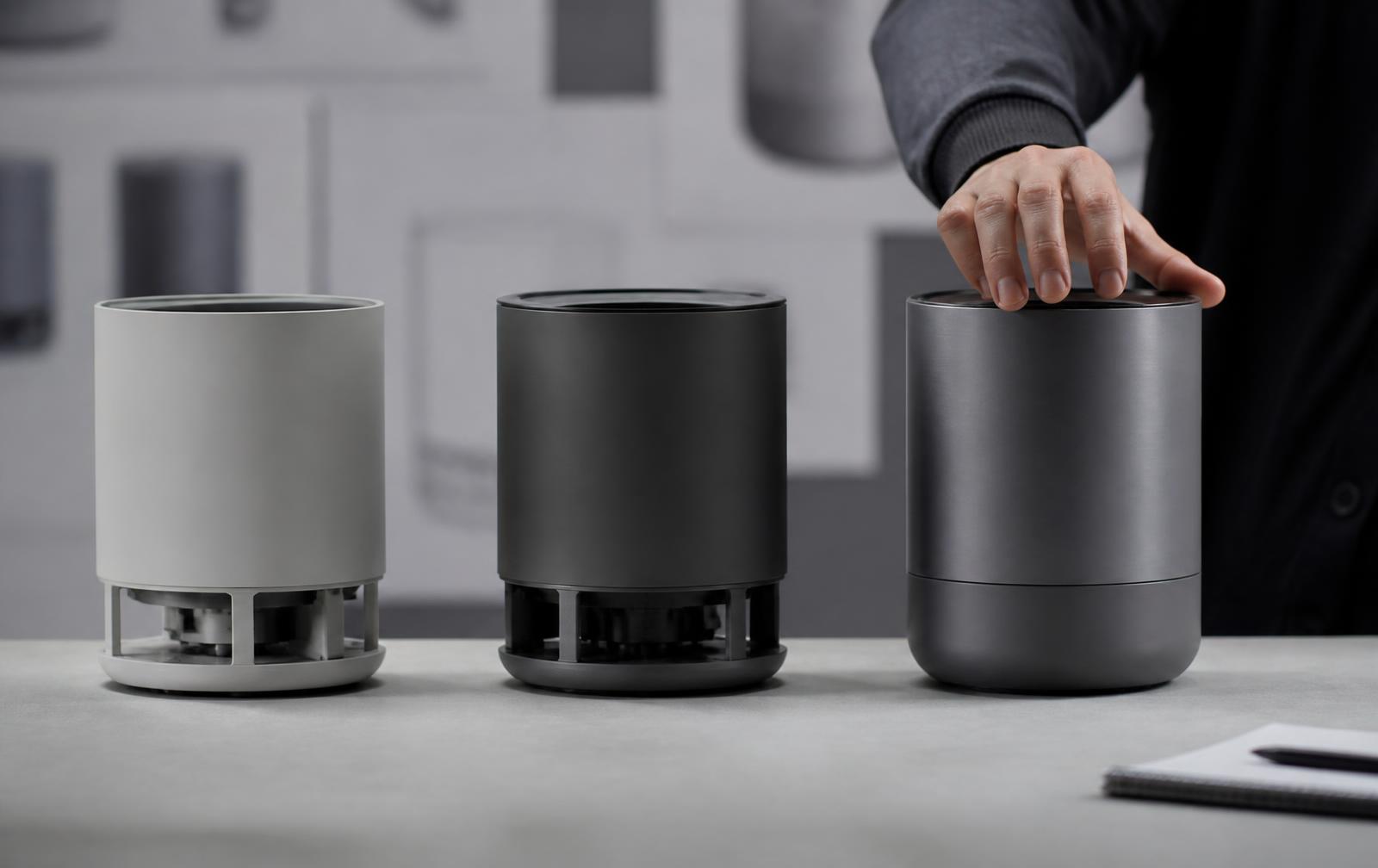
- Blind shelf test: place an appearance model beside three competitors and ask which is most expensive.
- Price-ladder survey: measure purchase intent at three price points twenty per cent apart.
- Feature trade-off exercise: force respondents to drop one feature to fund another.
- Retail buyer review: a category buyer will name the price band in under a minute.
- Landed-cost sanity check: confirm the target margin survives freight, duty and returns.
- Warranty modelling: premium positions carry premium return handling costs.
Repositioning after launch
Hardware positions stick because tooling sets them in stone. Moving upmarket often needs new tools for surfaces. Moving down means cutting features that customers will notice. Your best mid-cycle tools are packaging, bundles, colors, and sales channels. These change value without touching the mold. Plan your second-year model during the first year. Let the main tool serve both versions. Then, your new position is a finishing choice, not a capital cost.
Frequently asked questions
What is the primary purpose of product positioning?
Product positioning keeps your product first in a customer’s mind during a sale. It helps you stand out and meet key buying needs. It shows off vital traits and finds the best market niche. This method helps your firm grow over time.
What are the six key variables used to define product positioning?
Positioning uses six parts: knowing the user and their needs. You must name and describe the product. You also frame its perks, check rivals, and find a clear edge. These steps show how your product fits the market.
How does product positioning benefit a company's internal teams?
A strong strategy brings your teams together with one story. It leads developers to build useful features and gives sales a clear message. It helps you pick the right market group. This makes sure all teams share one market identity.
What is the Positioning Triangle?
The Positioning Triangle shows that three parts must match for success. These are: how users buy, how rivals act, and what you offer. Mixing these three views gives you the data to beat other firms.
What are common approaches to product positioning?
Common paths use traits, low cost, or specific use cases. Some focus on high quality or how they differ from rivals. Positioning is about how you shape what customers think. You must be active in how they see your brand.
Sources and standards
- SBIR / STTR program — Non-dilutive federal R&D funding for hardware startups.
- SBA — funding programs — Loan and investment programs available to small manufacturers.
- USPTO — patent basics — Official guidance on provisional and non-provisional filings for new products.
Positioning is a manufacturing decision, not a marketing one
For real goods, you set the position when you pick the bill of materials. The retail price sets a landed cost. That cost limits your tools and materials. This sets the look and feel. Do not wait until the design is done to pick a spot.
Position | Retail price index | Target COGS share | What the buyer is paying for |
|---|---|---|---|
Value | 1.0× | 35-45% of retail | Function at lowest defensible cost |
Mainstream | 1.5-2× | 28-35% | Reliability and familiar quality cues |
Premium | 3-5× | 20-28% | Materials, finish, service, warranty |
Professional / prosumer | 4-8× | 30-40% | Durability, serviceability, performance data |
Luxury | 8×+ | 10-20% | Brand, craft, scarcity |
Caption: directional benchmarks for consumer hardware; channel structure shifts these materially.
The three levers and what each costs
Lever | Typical unit cost impact | Perceived value impact | Notes |
|---|---|---|---|
Material upgrade (plastic → aluminium) | +$4-$25 | High | Also changes tooling and finishing |
Surface finish and texture | +$0.50-$4 | High | Cheapest credible premium signal |
Extra function / sensor | +$3-$30 | Medium | Raises support and failure surface |
Tighter tolerance and fit | +3-8% assembly cost | High | Drives the "solid" impression |
Packaging and unboxing | +$1.50-$8 | High at premium tiers | Also affects freight cost |
Extended warranty | +2-5% of price | Medium | Requires real reliability data |
How to choose a position you can defend
- Start from the buyer's alternative, not from your cost — positioning is relative to what they would otherwise buy.
- Pick one dimension to win on and be explicitly average on the others; products that claim everything read as nothing.
- Set the target retail price first, derive maximum COGS, then design inside that constraint.
- Test price sensitivity with real quotes or pre-orders, not with survey questions about willingness to pay.
- Check the channel: retail margin, distributor margin and marketplace fees can consume half the retail price.
- Confirm your position survives a competitor discounting 20% — if it does not, it is a price, not a position.
Positioning checklist before design freeze
- Target retail price and channel structure documented.
- Maximum COGS derived and reflected in the BOM.
- Chosen dimension of advantage stated in one sentence.
- Two named competitor products benchmarked physically, not from photos.
- Material and finish palette confirmed with tooling and unit cost quotes.
- Warranty and service cost modelled into the margin.
It is key to line up price, cost, and design early. This is what product discovery does. It then limits everything that follows in product engineering.
Frequently asked questions
What is a product positioning strategy?
This choice ranks a product against its rivals. It looks at price, design, and how it works. For physical goods, this sets limits. It affects material costs and how you make things.
How does positioning affect product cost?
Retail position sets a target COGS band. A premium product targets 20-28% of retail cost. A value product may run 35-45%. This choice dictates which materials and tolerances you can afford.
Should I position on design or on function?
Pick one goal and be good enough at the other. You need big scale to win on both at once. Or your price must be high enough to cover the cost.
When should positioning be decided?
Decide this before design freeze or during discovery. Positioning after engineering leads to bad prices. It often forces cost-cutting that harms the product.
Filed under:Uncategorized
Services related to this guide
- Free prototype cost calculatorFive to eight questions, an instant cost range for a first prototype.
- Prototype designLooks-like, works-like or pre-production: what each proves and what it costs.
- Rapid prototypingWorking prototypes in days, from 3D printing to vacuum casting.
- Best product development companiesHow the leading US firms compare, and which one fits your stage and budget.