
Radio Frequency Identification (RFID) Market Trends (2026–2031)
Sourced snapshot of the radio frequency identification (RFID) market: Mordor Intelligence, Grand View Research, and MarketsandMarkets size and CAGR figures, plus segments, drivers, risks, and product-development angles for hardware teams.
October 2, 20269 min read

Written by Konstantin Dolgan, Ph.D., NPDP
Founder & CEO, Product Development Engineer
Published October 2, 2026
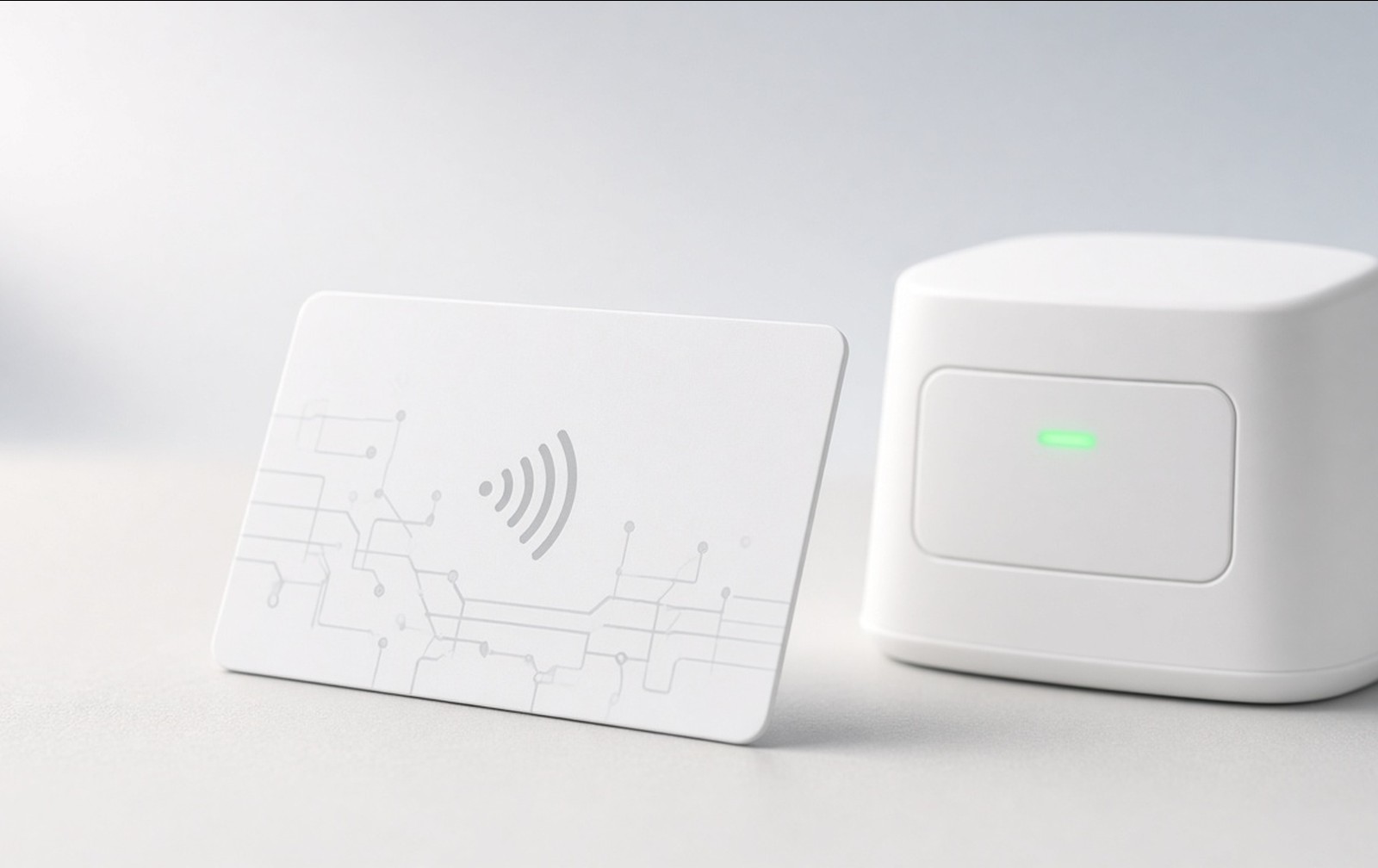
Radio Frequency Identification (RFID) uses radio waves to identify tagged objects through tags, antennas, readers, and software.
Mordor Intelligence estimates the global RFID market at USD 16.73 billion in 2025, USD 18.66 billion in 2026, and USD 32.19 billion by 2031, an 11.52% compound annual growth rate (CAGR) from 2026 to 2031.
Grand View Research estimates the global RFID technology market at USD 22.84 billion in 2025 toward USD 47.63 billion in 2030, at a 15.8% CAGR from 2025 to 2030. MarketsandMarkets estimates USD 14.58 billion in 2025 toward USD 30.47 billion in 2034, at an 8.5% CAGR. These series use different scopes and horizons and are not averaged.
- USD 18.66B
- Global RFID market in 2026, toward USD 32.19B by 2031
- Mordor Intelligence, 11.52% CAGR
- USD 22.84B
- Global RFID technology market in 2025, toward USD 47.63B by 2030
- Grand View Research, 15.8% CAGR
- USD 14.58B
- Global RFID market in 2025, toward USD 30.47B by 2034
- MarketsandMarkets, 8.5% CAGR
Scope of this report
This snapshot covers the global radio frequency identification market and the global RFID technology market as each named analyst defines it. It tracks tags, readers and infrastructure, frequency bands, applications, end users, and regions. It does not combine the analyst series, forecast a private market, or estimate revenue beyond the cited public figures.
Market size and growth
Mordor Intelligence, global RFID, 2026–2031
Mordor Intelligence values the global RFID market at USD 16.73 billion in 2025 and USD 18.66 billion in 2026, with a projection of USD 32.19 billion by 2031. Its stated CAGR is 11.52% from 2026 to 2031. North America was the largest region at 37.15% share in 2025, while Asia Pacific is the fastest region at a 12.58% CAGR.
Grand View Research, global RFID technology, 2025–2030
Grand View Research values the global RFID technology market at USD 20.10 billion in 2024 and USD 22.84 billion in 2025, with a projection of USD 47.63 billion by 2030. Its stated CAGR is 15.8% from 2025 to 2030. Its public summary says tags dominated in 2024, passive RFID led system share, high-frequency (HF) held the largest frequency share, retail led applications, and Asia Pacific is anticipated to grow fastest.
MarketsandMarkets, global RFID, 2025–2034
MarketsandMarkets values the global RFID market at USD 14.58 billion in 2025 and projects USD 30.47 billion by 2034, an 8.5% CAGR from 2025 to 2034. It reports tags at about 51% share in 2024, high frequency at 57% share in 2024, labels as the fastest form factor at a 12.4% CAGR, contactless payments as the fastest application at an 11.8% CAGR, and Asia Pacific as the fastest region at a 10.5% CAGR.
Growth drivers
- Serialization and traceability mandates. Mordor Intelligence names the FDA Drug Supply Chain Security Act (DSCSA) and EU Falsified Medicines Directive as adoption drivers.
- Retail item-level programs. Inventory accuracy, loss control, and faster fulfillment support broader tag and reader deployment.
- Warehouse and logistics automation. MarketsandMarkets names supply-chain digitalization, e-commerce inventory accuracy, and warehouse automation.
- Real-Time Location Systems (RTLS). Mordor Intelligence points to data-center and hospital demand for active RFID infrastructure.
- Lower tag costs and connected analytics. Mordor Intelligence cites sub-USD 0.04 Ultra-High Frequency (UHF) inlay pricing and Internet of Things (IoT) cloud analytics.
- Government programs. Toll and vehicle-tag programs add durable reader and infrastructure demand.
Key segments
Technology. Mordor Intelligence reports RFID tags at 52.78% share and about USD 8.83 billion in 2025. Active RFID and Real-Time Location Systems (RTLS) infrastructure is the fastest technology lane at a 12.52% CAGR, with active platforms forecast to exceed USD 6.45 billion by 2031. Grand View Research and MarketsandMarkets also identify tags as the leading offering in their public summaries.
Frequency. Mordor Intelligence reports Ultra-High Frequency (UHF) at 40.72% share in 2025 and the fastest frequency CAGR at 12.45%, with UHF size on track to surpass USD 14.9 billion by 2031.
Grand View Research and MarketsandMarkets identify high frequency (HF) as the leader in 2024, with MarketsandMarkets reporting 57%. This difference reflects source definitions and base years, not a single ranking that should be forced across reports.
Low frequency (LF) and Near Field Communication (NFC) remain distinct application choices, but no unsupported share is assigned here.
Applications and end users. Mordor Intelligence reports retail and apparel applications at 46.05% share, about USD 7.7 billion, in 2025. Data-center asset tracking is the fastest application at an 11.56% CAGR. Retail holds 34.65% of end-user share, while entertainment is the fastest end user at an 11.88% CAGR. MarketsandMarkets also names retail as the largest end-use vertical.
Where startups are building
A market share does not choose a product wedge. Product discovery can connect a specific read environment, user, and deployment problem to a testable hardware requirement. Grounded openings include:
- Anti-metal and on-liquid UHF tags and inlays for industrial and food environments
- Compact fixed portal readers and ceiling-reader kits for retail and warehouses
- Handheld and mobile-integrated RFID readers for small and mid-size businesses
- Sensor-enabled and battery-assisted tags that combine condition data with identity
- Hospital and data-center RTLS tag and infrastructure kits
- Recyclable and polyethylene terephthalate (PET) compatible smart labels for packaging compliance
- Middleware and commissioning experiences that reduce multi-site total cost of ownership
Anti-metal and on-liquid systems. Metal detunes antennas and liquids absorb radio-frequency energy, so the tag, spacer, mounting method, antenna polarization, and reader position need to be treated as one system.
This creates room for purpose-built inlays and rugged housings aimed at tools, returnable containers, food packaging, industrial assets, and other difficult surfaces. The opportunity is not a generic tag. It is a repeatable read result in a clearly defined environment.
Compact readers and simpler commissioning. Retailers, warehouses, hospitals, and data centers need more than radio performance. Fixed portals and ceiling kits must fit existing spaces, manage cables and power, and help operators understand missed reads or crowded zones.
Handheld products for smaller organizations also need clear pairing, charging, scanning, and exception workflows. A focused product can compete by reducing installation and training complexity around the reader hardware.
Sensor-enabled tags and infrastructure kits. Active and battery-assisted tags can combine identity with condition or location data, while a complete RTLS kit can package tags, anchors or readers, enclosures, mounts, and commissioning tools for one use case.
Mordor Intelligence names hospital and data-center RTLS demand among the market drivers. Teams entering this lane should define battery service, update rate, mounting, privacy, and data ownership before selecting a radio and enclosure architecture.
Reader antenna geometry, ingress protection, mounting, human factors, and service access often need product design and industrial design before a team freezes the electronics and enclosure.
Read-zone engineering. A reader that works at one angle on a workbench may miss the same tag when products move through a portal, stack in a carton, rotate on a conveyor, or sit beside metal shelving.
Early prototypes should vary antenna position, tag orientation, object spacing, reader power, motion, and the number of tags in the field. The goal is to identify the practical operating window and failure modes before industrial design, installation hardware, and software workflows are locked.
System boundaries. Hardware teams also need to decide where raw reads become trusted events. A product may filter duplicates at the reader, at an edge gateway, or in cloud software.
That choice affects processor requirements, network traffic, offline behavior, updates, privacy controls, and integration work.
Clear boundaries between tags, antennas, readers, middleware, and the customer system help a team prototype the riskiest interfaces first instead of treating RFID as one interchangeable module.
Installation and service. Portal readers, ceiling readers, and hospital or data-center location systems become installed products.
Their design must account for mounting surfaces, cable protection, power access, cleaning, tamper resistance, network commissioning, device replacement, and field diagnostics. A startup can reduce total cost of ownership by making those tasks visible and repeatable.
Service documentation, status indicators, calibration checks, and guided setup can be as important to adoption as the tag or reader radio itself.
Pilot evidence. A useful pilot should represent the intended materials, traffic, user behavior, and software handoff.
Teams can define pass and fail conditions for missed reads, unwanted reads outside the zone, simultaneous tag handling, recovery after network loss, and operator exception handling without inventing a market forecast. That evidence supports design decisions, supplier conversations, and manufacturing planning.
It also shows whether the proposed product reduces enough installation or operating friction to justify a broader deployment.
Component and supplier choices. Tag format, antenna material, chip availability, reader module, connectors, power supply, enclosure process, and mounting hardware all influence the final product architecture.
Teams should compare those choices against the required environment and pilot quantity before committing to custom tooling. A modular first build can preserve options while the team learns which read conditions and workflows matter most.
Once those risks are understood, the design can move toward fewer parts, controlled assembly, repeatable testing, and a supply path suitable for low-volume manufacturing.
Validation before scale. Repeat tests with representative objects, packaging, operators, network conditions, and installation hardware. Connect each failure to a physical or software cause. This gives manufacturing and service teams a practical acceptance test instead of a demonstration that worked once under controlled conditions.
Risks and constraints
- Privacy and governance. Mordor Intelligence names privacy and GDPR-style governance as a restraint.
- Metal and liquid interference. Both Mordor Intelligence and MarketsandMarkets identify difficult radio-frequency environments.
- Dense-read performance. Mordor Intelligence names tag collision as a constraint when many tags enter one read zone.
- Competing location technologies. Bluetooth Low Energy (BLE) and Ultra-Wideband (UWB) compete with RFID for some indoor tracking systems.
- Total cost of ownership. MarketsandMarkets identifies large multi-site deployment cost as a restraint.
- Integration complexity. Legacy warehouse management system (WMS) and enterprise resource planning (ERP) integration can slow deployment.
A working RFID prototype should test read range, orientation, shielding, tag collision, enclosure effects, commissioning, and data handoff in the intended environment, not only on an open bench.
From market size to a buildable product
Market growth does not remove the engineering risk. A buildable RFID product usually moves through discovery, design, prototyping, then design for manufacturing (DFM) and a pilot build.
Product discovery. Define the tagged object, material, read distance, orientation, reader density, installation limits, privacy requirements, workflow, and target cost through product discovery.
Product and industrial design. Develop antenna placement, electronics, reader housing, mounts, cable routing, controls, ergonomics, and service access through product design and industrial design.
Prototype and validate. Use rapid prototyping to compare tags, antennas, readers, enclosures, and commissioning flows in metal, liquid, and dense-read conditions. The prototype cost calculator can help frame an early build budget.
DFM and manufacturing. Lock suppliers, test fixtures, assembly controls, labeling, and field-installation documentation before low-volume manufacturing. For an independent review of the development plan, product development consulting or a consultation can surface gaps before pilot spend.
Key takeaways
- Mordor Intelligence estimates USD 18.66 billion in 2026 and USD 32.19 billion by 2031, at an 11.52% CAGR.
- Grand View Research and MarketsandMarkets publish different market sizes and horizons. Cite each series separately.
- Tags lead technology or offering share across all three public analyst summaries.
- Frequency leadership differs by source. Mordor Intelligence leads with UHF in 2025, while Grand View Research and MarketsandMarkets identify HF in 2024.
- Retail is the largest application or end-use lane in the cited summaries, while RTLS and data-center tracking are faster-growth openings.
- Metal, liquids, dense reads, privacy, system integration, and multi-site cost are central product risks.
Related market reports
Sources
Analyst size comparison and segment metrics
Each value stays with its named source, year, and scope. Forecast horizons differ, so the series are not averaged or blended.
| Metric | Value | Year / Period | Scope | Source |
|---|---|---|---|---|
| Market size | USD 16.73 billion | 2025 | Global radio frequency identification (RFID) | Mordor Intelligence |
| Market size | USD 18.66 billion | 2026 | Global radio frequency identification (RFID) | Mordor Intelligence |
| Market size | USD 32.19 billion | 2031 | Global radio frequency identification (RFID) | Mordor Intelligence |
| CAGR | 11.52% | 2026–2031 | Global radio frequency identification (RFID) | Mordor Intelligence |
| Market size | USD 20.10 billion | 2024 | Global RFID technology | Grand View Research |
| Market size | USD 22.84 billion | 2025 | Global RFID technology | Grand View Research |
| Market size | USD 47.63 billion | 2030 | Global RFID technology | Grand View Research |
| CAGR | 15.8% | 2025–2030 | Global RFID technology | Grand View Research |
| Market size | USD 14.58 billion | 2025 | Global radio frequency identification (RFID) | MarketsandMarkets |
| Market size | USD 30.47 billion | 2034 | Global radio frequency identification (RFID) | MarketsandMarkets |
| CAGR | 8.5% | 2025–2034 | Global radio frequency identification (RFID) | MarketsandMarkets |
| RFID tags share | 52.78% | 2025 | By technology | Mordor Intelligence |
| UHF share | 40.72% | 2025 | By frequency | Mordor Intelligence |
| Retail and apparel share | 46.05% | 2025 | By application | Mordor Intelligence |
| North America share | 37.15% | 2025 | By region | Mordor Intelligence |
| Active RFID / RTLS CAGR | 12.52% | Forecast period | By technology | Mordor Intelligence |
| Asia Pacific CAGR | 12.58% | Forecast period | By region | Mordor Intelligence |
Mordor Intelligence market size path
Global radio frequency identification market size in USD billions, using only the published data points.
Source: Mordor Intelligence, global RFID market size (USD billion). CAGR 11.52% from 2026 to 2031.
Questions founders ask about RFID
What is the RFID market size?
Mordor Intelligence estimates the global radio frequency identification (RFID) market at USD 16.73 billion in 2025, USD 18.66 billion in 2026, and USD 32.19 billion by 2031. Grand View Research estimates the global RFID technology market at USD 22.84 billion in 2025. MarketsandMarkets estimates the global RFID market at USD 14.58 billion in 2025. Always name the source and scope.
What is the CAGR for RFID?
Mordor Intelligence projects an 11.52% compound annual growth rate (CAGR) from 2026 to 2031. Grand View Research projects 15.8% from 2025 to 2030. MarketsandMarkets projects 8.5% from 2025 to 2034. The series should not be averaged.
Which RFID technology segment leads?
Mordor Intelligence reports RFID tags at 52.78% share in 2025, with about USD 8.83 billion in revenue. MarketsandMarkets reports tags at about 51% share in 2024. Grand View Research also says tags dominated in 2024.
Which RFID frequency band leads, and why do sources disagree?
Mordor Intelligence reports Ultra-High Frequency (UHF) at 40.72% share in 2025 and a 12.45% CAGR. Grand View Research says high-frequency (HF) held the largest share in 2024. MarketsandMarkets reports HF at 57% in 2024. Different definitions, years, and included applications can change the ranking, so cite the named source.
Why are retailers and pharmaceutical companies buying RFID now?
Mordor Intelligence names retail item-level rollouts and serialization mandates, including the FDA Drug Supply Chain Security Act (DSCSA) and EU Falsified Medicines Directive. MarketsandMarkets also names inventory accuracy, supply-chain digitalization, warehouse automation, and healthcare and pharmaceutical traceability.
What RFID hardware openings exist for startups?
Grounded openings include anti-metal and on-liquid UHF tags, compact portal and ceiling readers, handheld readers, sensor-enabled tags, hospital and data-center Real-Time Location Systems (RTLS) kits, recyclable smart labels, and commissioning middleware that reduces multi-site complexity.
How does a hardware team move from RFID market data to a first prototype?
Why do analyst RFID market sizes disagree?
Analysts use different scope boundaries, base years, included technology and service categories, and forecast horizons. Mordor Intelligence ends in 2031, Grand View Research in 2030, and MarketsandMarkets in 2034. Keep each figure with its named series rather than averaging them.
Building hardware for this market
If this research is the front end of a product decision, these are the parts of the work we handle in house.
- RFID reader and tag electronics
Antenna, radio, power, sensing, and interface electronics for readers and smart tags.
- Reader enclosure and industrial design
Portal, ceiling, and handheld housings designed around read performance and field use.
- RFID system prototypes
Working tag, reader, enclosure, and commissioning builds for range and interference trials.
Cite this report
Using these figures in a pitch deck, grant application or internal memo? Cite it as:
LA New Product Development Team (LA NPDT). "Radio Frequency Identification (RFID) Market Trends (2026–2031)." 2026. https://lanpdt.com/radio-frequency-identification-rfid-market-trends-2026/
Every figure is attributed to its original source in the Sources list above. Please cite the original publisher for their own data.