The product development process, stage by stage
The product development process is the path a physical product takes from an idea to units in a box: feasibility, concept design, engineering, prototyping, design for manufacturing, tooling and production, then launch.
The product development process takes a physical product from idea to shipment through seven stages: feasibility, concept design, engineering, prototyping, design for manufacturing, tooling and launch. A typical consumer product runs nine to eighteen months and $40,000 to $250,000, quoted one stage at a time so each gate is a real decision.
The product development process is the path a physical product takes from an idea to units in a box: feasibility, concept design, engineering, prototyping, design for manufacturing, tooling and production, then launch. For a typical consumer or light industrial product, the whole path runs roughly nine to eighteen months and costs somewhere between $40,000 and $250,000 depending on electronics, tooling count and certification.
Most projects do not run it end to end in one contract; they buy one stage, look at the result, and decide whether the next stage is worth it.
The seven stages
| Stage | What you decide | Typical time | Typical spend |
|---|---|---|---|
| 1. Feasibility | Whether the idea can be built and sold at a price that works | 1-3 weeks | $1,500-$6,000 |
| 2. Concept design | What it looks like, how it is used, which direction to carry forward | 2-5 weeks | $5,000-$20,000 |
| 3. Engineering | Real geometry, materials, tolerances, electronics and firmware | 4-12 weeks | $15,000-$80,000 |
| 4. Prototyping | Whether it actually works in the hand and on the bench | 2-6 weeks | $3,000-$25,000 |
| 5. Design for manufacturing | How it gets made repeatably at the target unit cost | 2-6 weeks | $5,000-$25,000 |
| 6. Tooling and pilot run | Molds, fixtures, first articles, quality plan | 8-16 weeks | $8,000-$120,000 |
| 7. Launch | Packaging, compliance, photography, sales assets, first orders | 4-8 weeks | $5,000-$40,000 |
Ranges assume one product family, not a platform. Electronics with wireless certification, food or skin contact, or anything medical push the top of every band upward. Want a number for your own project? Use the prototype cost calculator or run the idea through the free idea analyzer.
1. Feasibility: kill bad ideas cheaply
Feasibility answers three questions: can it be built with known processes, roughly what will a unit cost at your volume, and is anyone already selling it. It is the cheapest stage and the one most often skipped. A short feasibility pass catches the mechanism that cannot be molded, the battery that will not fit, and the patent that already covers the claim, before you spend engineering money. See feasibility studies.
2. Concept design: shape and use before detail
Concept work explores form, size, controls and how a person handles the product, usually as sketches, renderings and rough physical models. The output is a chosen direction with enough definition that engineering is not guessing. Trying to skip straight to CAD nearly always produces one expensive direction nobody stress-tested. See concept design.
3. Engineering: the part that makes it real
Mechanical engineering sets wall thicknesses, ribs, fasteners, seals and tolerance stacks. Electrical work covers schematic, board layout, power budget and firmware. Simulation replaces guesswork on drop, load and thermal behaviour. This is the longest stage and the one where an experienced team saves the most money, because every decision here shows up again in tooling. See mechanical engineering and electronics design.
4. Prototyping: prove it before tooling
Every prototype answers a named question: does it fit the hand, does the latch survive, does the board fit the enclosure. Looks-like units go to investors and buyers; works-like rigs go on the bench; pre-production units go to the factory. Expect at least one revision round. See prototype design.
5. Design for manufacturing: hit the unit cost
DFM pairs each part with a process and a supplier, adds draft and parting lines, removes fasteners and operations, and rechecks the bill of materials against the target price. A part that works but costs three dollars too much is not finished. See design for manufacturing.
6. Tooling and pilot run
Molds and fixtures get cut, first articles come off the tool, and dimensions are inspected against the drawing. Small tool corrections are normal; large ones mean DFM was rushed. A pilot run of a few hundred units exposes assembly and packaging problems while they are still cheap. See low-volume manufacturing.
7. Launch
Certification, packaging, product photography, video, sell sheets and listing copy all sit on the critical path, and all of them need finished units. Teams routinely underbudget this stage and then delay shipping by a month. See new product marketing.
Where projects usually go wrong
- Skipping feasibility and discovering the cost problem after tooling is cut
- Buying finish before proving the mechanism, then paying twice
- Splitting design, engineering and manufacturing across three vendors who each blame the others
- Treating certification as a launch task rather than an engineering requirement
- Ordering full production before a pilot run has exposed assembly issues
How LA NPDT runs it
We have run this process since 2015 out of Ruston, Louisiana, with design, engineering, prototyping and low-volume production under one roof, so there is no handoff between the person who drew the part and the person who has to make it.
Projects such as the QMS2GO digital voice recorder, Stir n Go, the UP Trap and Perky Paws each moved through these stages one gate at a time. You can start at any stage, and you own every file at every step. See the portfolio or compare engagement options.
Frequently asked questions
How long does the product development process take?
Nine to eighteen months for a typical physical product from idea to first shipment. Simple molded goods can be done in six; connected devices needing certification often take two years.
Can I start in the middle if I already have CAD?
Yes. Most clients arrive with sketches, a rough model or files from another vendor. We review what exists, tell you what is usable, and start at the first stage that still has open questions.
When should I file a patent?
Usually after concept design, when the claimed feature is stable but before public disclosure. Run a free patent search early, then talk to an attorney.
What does the whole process cost?
Design through production-ready files commonly lands between $40,000 and $250,000, with tooling on top. The stage table above breaks that down, and each stage is quoted separately so you never commit to the whole path at once.
Sources and standards
- USPTO — patent basics — Official guidance on provisional and non-provisional filings for new products.
- NIST Manufacturing Extension Partnership — Federal program supporting US small and mid-size manufacturers.
- ISO 9001 quality management — The quality-system standard most contract manufacturers are audited against.
Startup product development: the same process, under a runway
A funded startup runs the same phases as an established manufacturer, but every phase has to buy evidence for the next raise. This is how the process compresses without turning into guesswork.
| Milestone | Evidence it buys | Typical spend |
|---|---|---|
| Feasibility & requirements | A costed, de-risked plan you can show investors | $5k – $15k |
| Looks-like model | Demand signal: pre-orders, landing page conversion, retail interest | $3k – $10k |
| Works-like prototype | Proof the core technical risk is solved | $15k – $60k |
| Pilot / short run | Manufacturable design plus real units in real hands | $25k – $100k |
Founders on a deadline should also read how to accelerate product development and, if you are chasing non-dilutive funding, SBIR-funded product development.
Startup product development: common questions
What is startup product development?
Startup product development is the same engineering path as any hardware program, run under two extra constraints: a fixed runway and unproven demand. It front-loads the cheapest experiments — feasibility, a looks-like model, a small pilot run — so each funding milestone is bought with evidence rather than with a finished product.
How much runway should a startup budget for its first product?
Plan for 9 to 15 months and $75,000 to $250,000 for a connected consumer product taken from concept to a small production run. Simple mechanical products can be done for $25,000 to $75,000. Tooling, certification and the first inventory buy are the costs founders most often leave out.
What should a startup build first?
Build the cheapest artifact that answers your riskiest open question. If the risk is desirability, that is a looks-like model and a landing page. If the risk is technical, it is a bench-level works-like rig that ignores appearance entirely. Building a polished, fully functional unit first spends the most money on the least learning.
When should a startup bring product development in-house?
Once you are shipping more than one product a year and the design knowledge itself is a competitive asset. Before that, renting a full team — industrial design, mechanical, electrical, firmware, DFM — only for the months each skill is needed is both faster and cheaper than hiring.
Related services
- Outsourced product development
Who runs each phase when you do not have an in-house engineering team.
- Full Build and Launch Program intake
Ready to run the full process with us? Sign the NDA and brief the team here.
What founders say after working with us
“Partnering with LA NPDT was pivotal for Venthalpy. Their comprehensive expertise, from mechanical and electronics engineering to firmware and mobile app creation, brought our vision to life. Engaging a single, unified development company streamlines the journey from concept to reality.”
 Dustin MorrisCOO, Venthalpy Products
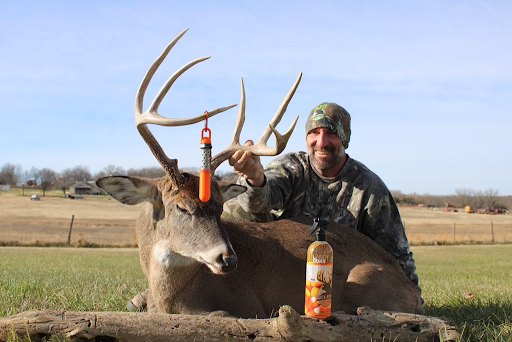
“From the first phone call Konstantin and his staff walked us through the whole process from concept to prototype to final product design and production. They are experts at what they do. LA New Product Development delivered on time and under budget. If you have an idea in your head there is no doubt they can make it a reality!”
 Shane ArmandRack Addict Attractants
“From start to finish, these guys have what you need! Fast, slow or your own pace, they are with you every step of the way with the tools, answers and solutions. They brought my idea to life and the Bait Bunker is now on its way to becoming a real thing. Give them a shot!”
 Trey VannCEO, M.O.S.S.
Three reasons founders keep working with us
- 1
One team from sketch to shipped parts. Industrial design, mechanical and electrical engineering, prototyping and manufacturing sit under one roof, so nothing is lost in a handoff.
- 2
You own the work. Native CAD, drawings and source files are yours at the end of every phase — no lock-in, no re-buying your own design later.
- 3
Fixed scope, fixed price. Every phase is quoted up front with a deliverable list and a date. No hourly meters, no surprise invoices.
If you ever thought of developing a new product, don’t wait any longer. Talk with one of our experts today.
Tell us about your product
Send us the idea, the drawing or the problem. We reply within one business day with the next practical step.
Ready to scope the work? Start your product · Request a quote