Shipping Lithium Batteries in 2026: The 30% Charge Rule and What It Means for Prototypes and Beta Units
What's changing now
For hardware founders, engineers and program managers shipping battery-powered prototypes to testers, labs and pilot sites. What changed in the 2026 air rules, how UN 38.3 and the prototype exceptions work, and how to design ship mode, packaging and logistics into the build.
October 26, 202610 min read

Written by Konstantin Dolgan, Ph.D., NPDP
Founder & CEO, Product Development Engineer
Published October 26, 2026
Short answer
Shipping lithium batteries got stricter on 1 January 2026.
Under the 2025-2026 ICAO Technical Instructions and the 67th edition of the IATA Dangerous Goods Regulations, lithium-ion batteries packed in the same box as the device they power (UN 3481, Packing Instruction 966) must now be offered for air transport at a state of charge of no more than 30% of rated capacity, unless the relevant States approve otherwise.
Batteries shipped on their own were already held to 30%, and for batteries installed inside a device 30% (or 25% on the device's own battery gauge) is strongly recommended.
Prototype cells and packs that have not passed UN 38.3 testing are a separate case: by air they can only go on cargo aircraft with government approval.
For a hardware team, the practical answer is to build a firmware ship mode that parks the battery at a known low charge, use UN 38.3 tested cells for anything you send to testers, and plan ground shipping or approvals for anything untested.
Video: dedicated LA NPDT explainer coming soon

Who this is for
This guide is for founders, electrical and firmware engineers, and program managers who are about to send battery-powered prototypes out of the lab: beta units to testers, samples to a certification lab, devices to a pilot site, or a box of spare packs to a contract manufacturer.
It applies to IoT sensors, trackers, handheld tools, wearables, edge AI devices and small robots alike. If you are still planning the beta, start with our hardware beta testing guide.
If your product is an e-bike, scooter or other micromobility device, see our CPSC lithium battery micromobility guide, and if you sell into Europe, the EU digital battery passport checklist.
What changed for shipping lithium batteries in 2026
1. The 30% state of charge limit now covers batteries packed with equipment
IATA's 2026 battery guidance says that from 1 January 2026, lithium-ion cells and batteries packed with equipment (Packing Instruction 966) must be offered for air transport at a state of charge not exceeding 30% of rated capacity.
This applies to Section I shipments and to Section II cells or batteries rated above 2.7 Wh. Anything above 30% can only ship with the approval of the State of Origin and the State of the Operator (Special Provision A331).
JAL Cargo's customer notice put it plainly: what was a "should" in 2025 became a "must" in January 2026. Batteries rated at or below 2.7 Wh remain a "should."
2. Installed batteries: strongly recommended, not yet mandatory
For lithium-ion batteries contained in equipment (Packing Instruction 967), IATA recommends shipping at no more than 30% state of charge or with an indicated battery capacity of no more than 25%, meaning the remaining capacity the user sees on the device's gauge or indicator lights.
IATA calls this a strongly recommended safety measure, not a mandatory one. The same guidance applies the 30% or 25% limit as a requirement to battery-powered vehicles with batteries above 100 Wh.
3. Spare batteries alone were already at 30% and cannot fly on passenger aircraft
Lithium-ion batteries shipped by themselves (UN 3480, Packing Instruction 965) must already be at 30% state of charge or less, and IATA's classification flowchart lists them as forbidden on passenger aircraft, so they travel as cargo aircraft only.
4. Sodium ion is now in the rules too
IATA's 2026 guidance covers sodium ion batteries with organic electrolyte (UN 3551 and UN 3552). The ICAO rules are currently silent on their state of charge when packed with or contained in equipment, and IATA recommends shipping them at no more than 30%.
5. Why regulators are pushing on charge level
IATA says batteries shipped at a reduced state of charge are less prone to thermal runaway. FAA data summarized by Lion Technology on 11 February 2026 listed 93 lithium battery incidents involving smoke, fire or extreme heat on aircraft in 2025, 80 on passenger aircraft and 13 on cargo aircraft. FAA notes that its list is not a complete record of every event.
The US picture in late 2026
In the US, the Hazardous Materials Regulations (49 CFR) cover ground and domestic shipments. Batteries shipped alone by air already face the 30% limit through Special Provision A100.
On 10 February 2026 PHMSA proposed a harmonization rule (HM-215R) that would extend that 30% limit to additional lithium-ion battery entries and to new sodium ion entries, consistent with the 2025-2026 ICAO Technical Instructions.
Comments closed on 13 April 2026, and as of 26 October 2026 the Federal Register docket shows only the proposed rule. International air shipments are prepared to the ICAO Technical Instructions, which the IATA Dangerous Goods Regulations put into practice for airlines, so check with your carrier which rules it applies.
A second 2026 rule matters for field teams.
PHMSA's materials of trade final rule, published 4 August 2026 and effective 3 September 2026, lets trade crews carry up to 30 kg per lithium battery and 500 kg per vehicle, with no limit for batteries installed in equipment, as long as the batteries are of a type that passed UN 38.3.
PHMSA also said that prototype batteries are generally transported for testing, development or certification, that those shipments are outside the materials of trade exception, and that prototypes do not have an established safety record.
In plain terms: do not assume an engineer can toss untested prototype packs in a truck under that exception.
Prototypes and UN 38.3: the part most teams miss
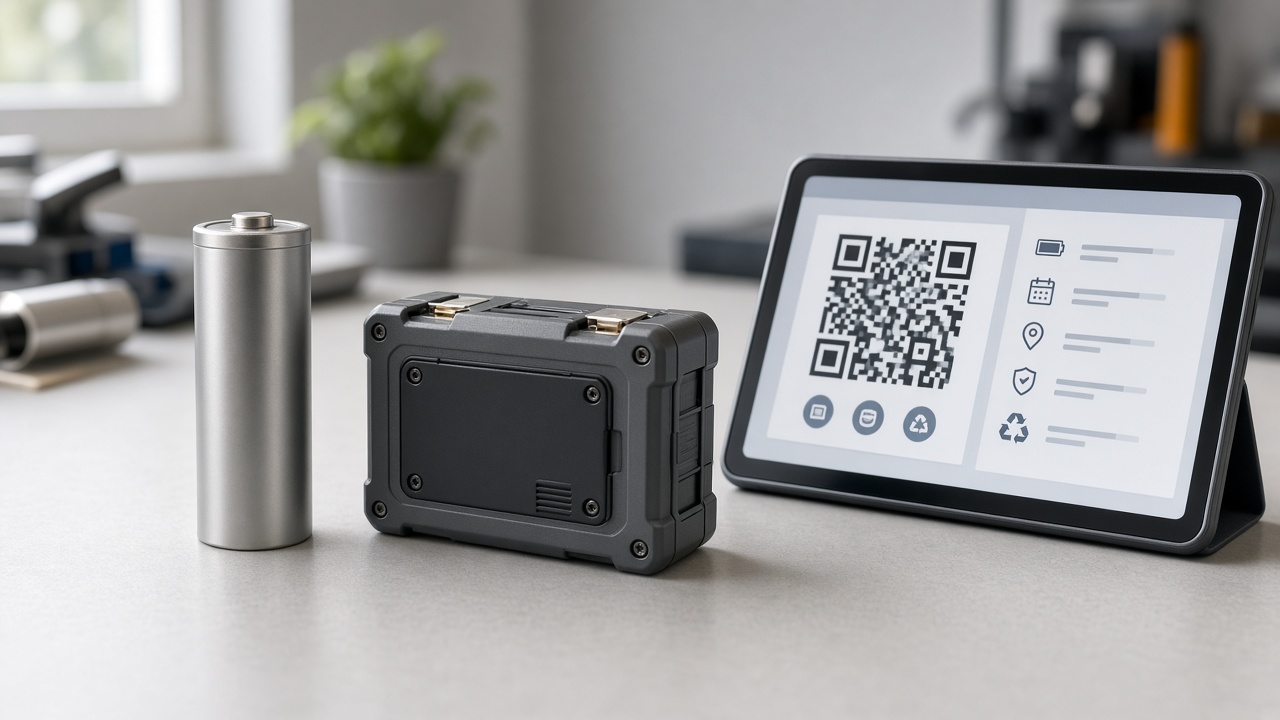
Every lithium cell and battery design must pass the tests in sub-section 38.3 of the UN Manual of Tests and Criteria before it ships under the normal rules. Manufacturers and distributors of cells, batteries and battery-powered equipment made after 30 June 2003 must also make a UN 38.3 test summary available (button cells installed in equipment are excepted), and IATA notes this can be a web page linked by URL or QR code instead of paper in every box.
Prototype and low production batteries are the exception, and the exception is narrow:
- By air, IATA says pre-production prototypes shipped for testing, and low production runs of no more than 100 cells or batteries a year, that have not passed UN 38.3 may only travel on cargo aircraft, with approval from the State of Origin and the State of the Operator (Special Provision A88).
- In the US, 49 CFR 173.185(e) excepts the same prototype and low production batteries from the testing requirement only if each cell or battery is individually packed in non-metallic inner packaging with non-combustible, non-conductive cushioning (or contained in equipment), inside a UN specification outer packaging at the Packing Group I level. They are not permitted on passenger aircraft, need prior PHMSA approval for cargo aircraft, and the shipping papers must say "Transport in accordance with § 173.185(e)."
- Damaged, defective or recalled batteries are a third case. IATA says batteries with the potential for dangerous heat, fire or short circuit are forbidden by air, and 49 CFR 173.185(f) limits them to highway, rail or vessel with special packaging. Plan for the swollen pack that comes back from a field test before it happens.
What it means for a prototype program: a custom battery pack that has not been through UN 38.3 is much harder to move than a device built on tested cells and packs. If you want beta units in testers' hands by air, either design around a UN 38.3 tested pack early or budget the time and cost to test your own pack before the beta.
Which 2026 rule applies to your prototype shipment?
What you are shipping | Classification | 2026 air rule on charge | Prototype implication |
|---|---|---|---|
Spare batteries on their own (extra packs for testers) | UN 3480, PI 965 | Must be 30% or less; forbidden on passenger aircraft | Ship spares separately, by ground or cargo aircraft; avoid them in beta kits when you can |
Device with the battery in the same box but not installed | UN 3481, PI 966 | Must be 30% or less (Section I, and Section II above 2.7 Wh); 2.7 Wh or less should be 30% | Charge check before packing; consider installing the battery before shipping |
Device with the battery installed | UN 3481, PI 967 | 30% or 25% indicated capacity strongly recommended | Ship mode firmware and a low charge default make this easy to follow |
Battery-powered vehicle above 100 Wh (for example an e-mobility prototype classed as a vehicle) | PI 952 | Must be 30% or less, or 25% indicated capacity | Build a reliable way to discharge and verify charge before crating |
Prototype cells or packs not yet UN 38.3 tested | Special Provision A88 by air; 49 CFR 173.185(e) in the US | Cargo aircraft only with government approval; never passenger aircraft | Plan ground transport or finish UN 38.3 before the beta |
Damaged or recalled units coming back from the field | Special Provision A154 by air; 49 CFR 173.185(f) in the US | Forbidden by air | Have a return kit and ground shipping plan ready |
Design it in: ship mode, battery gauges and the AI power budget
The 30% rule is a logistics rule, but most of the fix lives in the product. Teams that treat it as a design requirement during prototyping avoid a warehouse full of devices that have to be discharged by hand.
- Add a firmware ship mode that charges or discharges the battery to a target below 30% of rated capacity, then disconnects the load so the device does not drain to zero on the shelf. Make it a one-command step at the end of your test fixture or build station.
- Make the charge level verifiable. IATA allows "indicated battery capacity" of 25% for installed batteries because the user can read it on a gauge or indicator lights, so a calibrated fuel gauge and a clear indicator help shippers prove compliance.
- Know your watt-hours. IATA defines the watt-hour rating as rated capacity in ampere-hours times nominal voltage. At a typical 3.7 V nominal cell voltage, 2.7 Wh is roughly 730 mAh and 100 Wh is roughly 27 Ah, so a small wearable can sit under the 2.7 Wh line while most handheld tools and trackers sit above it. Print the Wh rating on the pack.
- Watch the power budget as features grow. On-device AI, cellular radios and brighter displays tend to push battery capacity up during development, which can move a design across the 2.7 Wh or 100 Wh lines and change how it ships. Re-check classification every time the pack changes. Our edge AI hardware prototyping guide covers how local inference affects power.
- Design the first-run experience for a 30% battery. Testers will open the box with a partly charged device, so add a "charge before first use" card and an app prompt, and make sure onboarding and firmware updates do not fail on a low battery.
- Protect terminals and prevent accidental activation. The US packing rules in 49 CFR 173.185 require short circuit protection and equipment that cannot switch on in transit (PHMSA summarizes this in its lithium battery guide), which is easier with a hardware power latch or ship mode than with tape over a button. Our enclosure design for electronics guide covers latches and access doors.
Founder checklist before you ship a battery-powered prototype
- List every shipment in the plan: beta units, lab samples, pilot site installs, spares, returns.
- Classify each one: battery alone, packed with equipment or contained in equipment, and its Wh rating.
- Confirm the cells or pack have passed UN 38.3 and that you can share the test summary by link or QR code.
- If the pack is untested, decide between ground transport under 49 CFR 173.185(e), a government approval, or testing the pack before the beta.
- Build and test ship mode, and record the charge level at packing.
- Use a trained dangerous goods shipper or your carrier's dangerous goods desk for fully regulated shipments.
- Plan the return path for damaged or swollen units before the first device leaves.
- Re-check all of the above when the battery, enclosure or feature set changes. See our board bring-up guide and prototype to pilot production guide for where this fits in the build plan.
Frequently asked questions
Does the 30% rule apply when the battery is installed in my device?
Not as a requirement in 2026. For lithium-ion batteries contained in equipment (Packing Instruction 967), IATA strongly recommends 30% state of charge or 25% indicated battery capacity. The mandatory 30% limit applies to batteries shipped alone and, from 1 January 2026, to batteries packed with equipment.
What does 2.7 Wh mean in mAh?
Watt-hours equal ampere-hours times nominal voltage. At a typical 3.7 V nominal lithium-ion cell voltage, 2.7 Wh is roughly 730 mAh. Packed-with-equipment batteries above 2.7 Wh must ship at 30% or less by air; those at or below 2.7 Wh should.
Can I fly prototype batteries that have not passed UN 38.3?
Not on passenger aircraft. IATA says untested pre-production prototypes and low production runs of up to 100 cells or batteries a year may go on cargo aircraft only with approval from the State of Origin and the State of the Operator (Special Provision A88). In the US, 49 CFR 173.185(e) also requires Packing Group I packaging and prior approval for cargo aircraft.
Does the US already require 30% for batteries packed with equipment?
PHMSA proposed on 10 February 2026 to extend its 30% state of charge provision to more lithium-ion battery entries (HM-215R), and comments closed on 13 April 2026. As of 26 October 2026 the docket shows only the proposed rule. International air shipments follow the ICAO Technical Instructions and the IATA Dangerous Goods Regulations, so confirm the rules your carrier applies.
Can our engineers drive prototype batteries to a pilot site as materials of trade?
PHMSA's materials of trade final rule (published 4 August 2026, effective 3 September 2026) raised lithium battery limits for trade crews but requires batteries of a type that passed UN 38.3, and PHMSA said prototype batteries shipped for testing, development or certification are outside that exception. Treat untested prototype packs as a regular hazardous materials shipment.
Do I need a UN 38.3 test summary for beta units?
If the cells or battery are UN 38.3 tested, the manufacturer and later distributors must make the test summary available (button cells installed in equipment are excepted). IATA notes this can be a website linked by URL or QR code with the battery, the packaging or the transport documents.
Bottom line
In 2026 the charge level of a lithium battery is part of how it ships. Hardware teams that design ship mode, battery gauges, tested packs and a return plan into the prototype will get beta units to testers faster and avoid shipments stuck at the dock.
This article explains public transport rules for product planning. It is not legal or regulatory advice, and it does not replace a trained dangerous goods shipper.
Shipping battery-powered prototypes soon?
If you are turning a battery-powered product idea into working prototypes and want a US team that designs the electronics, firmware, enclosure and battery integration and tests them in house, book an initial consultation with LA New Product Development Team: https://calendly.com/lanpdt/lanpdt-initial-consultation or call +1 318-200-0526.
See also our electronic design services, the electronic product prototyping guide and the connected device development cost guide.
Sources
- IATA, "Battery Guidance Document: Transport of Lithium Metal, Lithium Ion and Sodium Ion Batteries, Revised for the 2026 Regulations" (1 January 2026): Iata: lithium batteries guidance
- IATA, "Fact Sheet: Lithium Batteries": Iata: fact sheet lithium batteries
- JAL Cargo, "Dangerous Goods Handling in Japan Airlines from January 2026" (29 December 2025): https://www.jal.co.jp/jp/en/jalcargo/inter/news/20251229-01/
- eCFR, 49 CFR 173.185, "Lithium cells and batteries": Ecfr: section 173
- Federal Register, PHMSA, "Hazardous Materials: Harmonization With International Standards" (HM-215R, proposed rule, 10 February 2026): Federalregister: hazardous materials harmonization with international standards
- Federal Register, PHMSA, "Hazardous Materials: Reducing Burdens on Domestic Companies Using Battery-Powered Equipment in Trades" (HM-268C, final rule, 4 August 2026): Federalregister: hazardous materials reducing burdens on domestic companies using battery powered equipment in trades
- Lion Technology, "FAA: 93 Lithium Battery Air Incidents in 2025" (11 February 2026): Lion: faa 93 lithium battery air incidents in
- FAA, "Lithium Battery Incidents": Faa: incidents
- PHMSA, "Lithium Battery Guide for Shippers" (2024): Dot: Lithium Battery Guide
Tagged:ElectronicsIoTPrototyping
Services related to this guide
- Electronic design servicesSchematic, PCB layout, firmware and bring-up, through to production handoff.
- Rapid prototypingWorking prototypes in days, from 3D printing to vacuum casting.
- Product design servicesIndustrial design and CAD taken all the way to manufacturable files.
- Product development examplesReal projects we designed, prototyped and shipped.