
Industrial Inspection Drone (UAV) Market Trends (2026–2036)
Industrial inspection drones: Fact.MR values the narrow UAV inspection drones market at about USD 284.4M (2025) toward about USD 1.40B (2036) at 15.6% CAGR. Broader inspection-drone series (Fortune Business Insights) put 2025 near USD 4.0B growing at about 16.6% CAGR. FAA: U.S. commercial small-drone fleet about 966k (end 2024) toward about 1.089M (2026 base). Hardware gaps in payloads, confined-space airframes, and docked autonomy.
September 11, 20267 min read

Written by Konstantin Dolgan, Ph.D., NPDP
Founder & CEO, Product Development Engineer
Published September 11, 2026
A startup-usable snapshot of industrial inspection UAV hardware
- ~USD 284M to ~USD 1.40B
- Global UAV inspection drones market, 2025 to 2036, at 15.6% CAGR
- Fact.MR
- ~USD 4.0B to ~USD 16.0B
- Broader inspection drone market, 2025 to 2034, at about 16.6% CAGR
- Fortune Business Insights
- ~1.089M
- U.S. commercial small-drone fleet, 2026 base forecast
- FAA Aerospace Forecast
This report covers unmanned aerial systems used to inspect industrial and infrastructure assets, including towers, pipelines, tanks, roofs, bridges, wind blades, and offshore platforms. It is written for inventors, hardware startups, and product teams deciding what to design or prototype next. It is not a consumer photography drone guide and not a defense UAV brief.
In one line: Fact.MR values the global UAV inspection drones market at about USD 284.4 million in 2025 and about USD 328.7 million in 2026, projected to about USD 1,401 million by 2036 at a 15.6% CAGR for 2026 to 2036.
A broader inspection drone series from Fortune Business Insights values 2025 at about USD 4.00 billion, growing from about USD 4.7 billion in 2026 to about USD 16.00 billion by 2034 at about 16.60% CAGR. The scopes differ, so name the source every time you cite a number.
The FAA Aerospace Forecast FY 2025-2045 places the U.S. commercial small UAS fleet at about 966,000 aircraft at the end of 2024 (base), about 1,030,000 in 2025, and about 1,089,000 in 2026. That fleet is the installed base available for commercial work, including inspection.
Every figure below is traceable to a named source in the Sources section. Where monitors disagree, we show the range and say so. Browse all of our free reports on the Market Reports index.
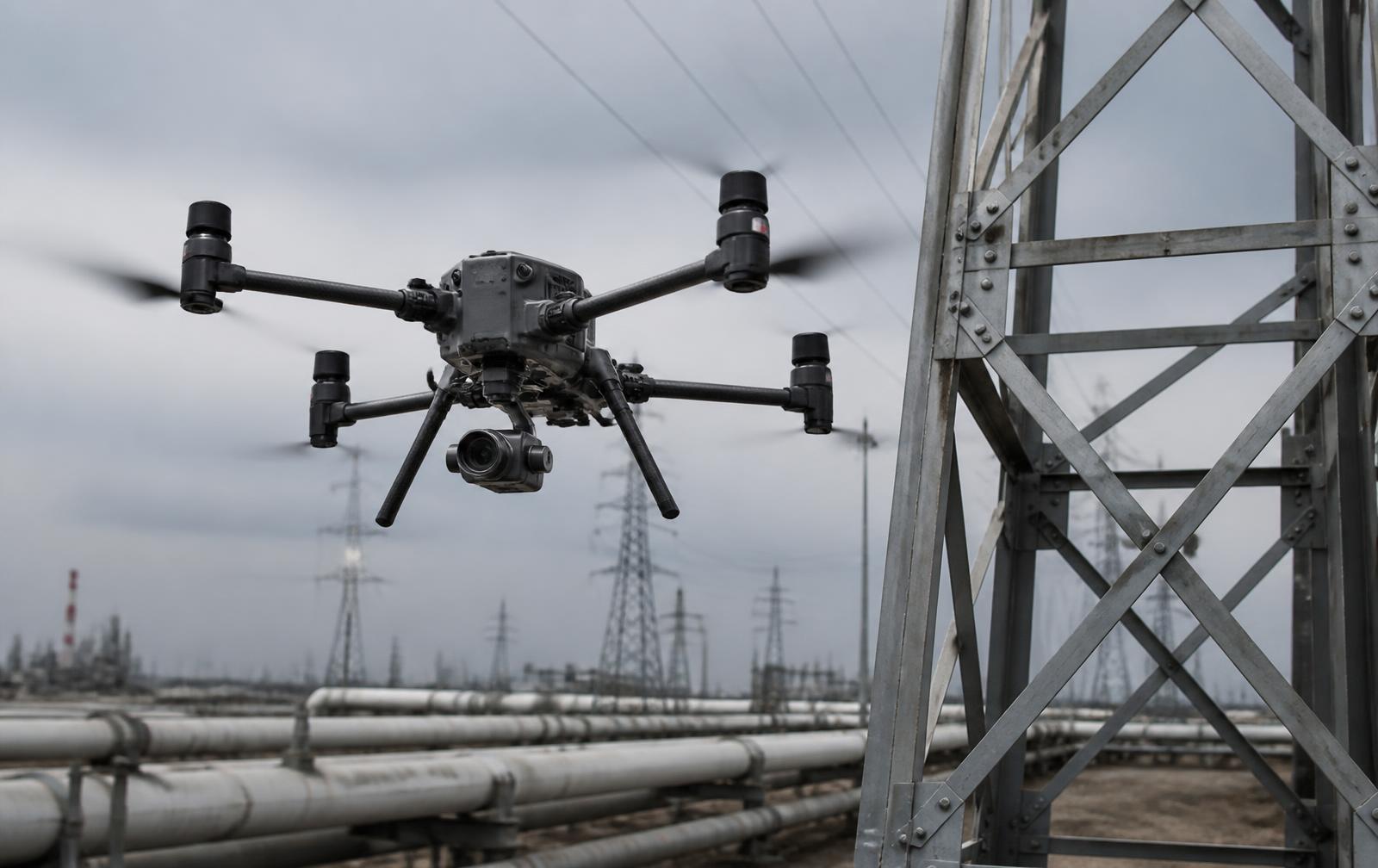
Market Size and Growth
Narrow UAV inspection drones (Fact.MR)
- 2025: about USD 284.4 million
- 2026: about USD 328.7 million
- 2036: about USD 1,401.0 million
- CAGR for 2026 to 2036: 15.6%
- Incremental opportunity cited by Fact.MR: about USD 1,072.3 million between 2026 and 2036
- United States country CAGR in the Fact.MR country table: 15.9%
- Other country CAGRs in the same table (2026 to 2036): China 18.8%, India 18.1%, Saudi Arabia 17.3%, Japan 15.4%, United Kingdom 14.8%, Germany 14.2%
Broader inspection drone market (Fortune Business Insights)
- 2025: about USD 4.00 billion
- 2026: about USD 4.7 billion
- 2034: about USD 16.00 billion
- CAGR for 2026 to 2034: about 16.60%
- North America held about 34.50% share in 2025, about USD 1.37 billion in 2025 and about USD 1.61 billion in 2026 per the regional notes
Say it clearly in any deck. Fact.MR uses a narrower UAV inspection platform and service definition. Fortune Business Insights measures a broader inspection drone market. Do not average them. Pick one series and stick to it.
U.S. Commercial Fleet Context (FAA)
- End of 2024 historical base: about 966,000 commercial small drones
- 2025 base forecast: about 1,030,000
- 2026 base forecast: about 1,089,000
- Forecast highlights document: commercial fleet about 1.18 million by 2029 on the base case
- Part 107 registration: USD 5 per drone, valid three years (FAA how to register your drone)
- Beyond visual line of sight: the FAA published a Notice of Proposed Rulemaking aimed at normalizing routine BVLOS through a proposed Part 108 pathway. Treat it as proposed rulemaking, not a final rule.
Growth Drivers
- Replacing manual work at height, including scaffolding, rope access, and ladder climbs, with flight-based records
- Inspection cadence across energy, utilities, telecom, and renewables, covering pipelines, tanks, towers, and wind blades
- Fact.MR cites the Global Wind Energy Council on about 117 GW of new wind capacity installed worldwide in 2024, which supports blade and tower inspection demand
- A clearer commercial Part 107 pathway and low registration cost of USD 5 for three years
- The proposed BVLOS rulemaking, intended to scale routine beyond visual line of sight inspection
- Payload shift from RGB-only cameras to thermal, LiDAR, multispectral, and gas detection
- In-house flight programs at large asset owners that want control of schedules and image archives
Key Segments
By type (Fact.MR 2026): rotary wing leads at about 53.7% because hover and close-range control suit towers and tanks. Fixed wing supports longer corridors, and hybrid wing is emerging for mixed-distance work.
By operation mode: remotely piloted is about 64.4%, while fully autonomous grows as site owners approve repeat flight paths. By payload: camera imaging is the base layer at about 46.2%, thermal serves energized assets and solar, and LiDAR covers bridges and corridors at higher cost.
By end use: oil and gas is about 26.8%, with utilities, telecom, construction, mining, renewables, and public infrastructure also covered. By service model: in-house is about 58.5%, while outsourced and hybrid models fill gaps for smaller sites and specialist sensors. By inspection asset: towers lead at about 29.4%, followed by pipelines, roofs, bridges, wind blades, offshore platforms, and industrial tanks.
Hardware stack for product teams: airframes and vibration isolation, gimbals, thermal, RGB and LiDAR payloads, docking stations, rugged cases, radios and Remote ID, battery management and packs, and compliance logging. Teams sizing payload bays, mounts, or controllers often start with product design and electronic product development before locking a BOM.
Where Startups Are Building
The categories below are product openings, not a ranked company list. If you are still narrowing which gap to own, product discovery is the usual first step from market map to requirements.
- Collision-tolerant and confined-space airframes for tanks, boilers, and indoor industrial volumes
- Stable dual thermal and RGB gimbal payloads for towers and substations
- Docked and repeating autonomous inspection systems for fixed industrial sites
- LiDAR and corridor-mapping kits for bridges and rights-of-way
- Operator-ready compliance hardware covering Remote ID, flight logs, and evidence packages
- Quick-change payload interfaces for multi-sensor missions
- Rugged transport cases, charging docks, and field-swappable batteries
Risks and Constraints
- BVLOS is still waiver and rulemaking dependent. Until a final Part 108 style rule lands, do not claim a final mandate date.
- Local airspace permissions still slow long corridor work.
- Battery endurance limits range and revisit frequency.
- Image capture is cheap, while analysis labor and data quality remain the bottlenecks.
- Geopolitical and supply constraints affect certain airframes and radios.
- Scope mismatch between the narrow UAV inspection series and the broader inspection drone revenue series confuses decks when sources are mixed.
- Product development consulting helps stress-test a hardware plan against Part 107 operating limits, payload mass, and landed cost before tooling.
From market size to a buildable product
Market size only shows that the field is growing. Turning this report into a shippable inspection drone product or accessory usually means walking a clear path: discovery and requirements, product design and industrial design, prototyping, then manufacturing readiness.
Product discovery and requirements. Start from the gap you can own, whether that is a confined-space airframe, a thermal payload, a dock, a LiDAR kit, or a compliance logger, and write requirements around flight time, payload mass, IP rating, RF environment, and the operating mode you intend to fly. Product discovery and a rough market size estimate keep the thesis honest before CAD begins.
Product design and industrial design. Treat vibration isolation, gimbal stiffness, thermal paths around batteries and sensors, and field service access as first-class constraints. Product design and industrial design carry those constraints into a real geometry.
Prototyping. Build to answer failure-mode questions such as EMI near high-voltage assets, drop and vibration on tower landings, heat soak at desert sites, and connector durability. Rapid prototyping answers them early, and the prototype cost calculator and our note on how much a prototype costs help you budget the round.
Manufacturing readiness. Design for manufacturing on small-run industrial accessories, supplier paths for sensors and cells, and short-run validation decide whether a pilot can scale. Low-volume manufacturing is usually the bridge, and you can book a consultation if you want that plan reviewed before you commit.
- Design for certified commercial operations and evidence logging from the first layout review.
- Treat payload mass and vibration as product features, not afterthoughts.
- Confined-space airframes, thermal payloads, and docked autonomy are realistic entry points versus competing only on commodity RGB multi-rotors.
- Thermal management and RF robustness decide whether energy buyers will trust you.
- Controller, radio, and battery management work usually needs electronic product development alongside the mechanical stack.
Key Takeaways
- Fact.MR: about USD 284.4 million in 2025 heading toward about USD 1.40 billion in 2036, a CAGR of 15.6% for 2026 to 2036.
- A broader alternate exists. Fortune Business Insights puts 2025 at about USD 4.0 billion reaching about USD 16.0 billion by 2034 at about 16.6% CAGR. Cite whichever series you use.
- FAA: the commercial small-drone fleet was about 966,000 at the end of 2024 and is forecast at about 1.089 million for 2026.
- Fact.MR 2026 shares: rotary wing 53.7%, remotely piloted 64.4%, camera imaging 46.2%, oil and gas 26.8%, towers 29.4%.
- Accessible product gaps: confined-space airframes, thermal and LiDAR payloads, docks, and compliance logging.
- If you are pricing a build, start with the prototype cost calculator or book a consultation.
If you want a second set of eyes on an inspection drone hardware thesis, book a consultation or apply to partner. Related pages: industrial product design and development and product development consulting. Related snapshots: U.S. BESS, heat pumps, EV charging, assistive robotics, e-bikes, and vertical farming.
Sources
- Fact.MR, UAV Inspection Drones Market: factmr.com/report/uav-inspection-drones-market
- Fortune Business Insights, Inspection Drone Market: fortunebusinessinsights.com/inspection-drone-market-114612
- FAA Aerospace Forecast FY 2025-2045, UAS and AAM summary: faa.gov/.../2025-uas-and-aam-summary.pdf
- FAA UAS and AAM full compendium: faa.gov/.../2025-uas-and-aam-full-document.pdf
- FAA Aerospace Forecast full document and tables: faa.gov/.../FY-2025-2045-Full-Forecast-Document-and-Tables.pdf
- FAA forecast highlights: faa.gov/.../2025-forecast-highlights.pdf
- FAA BVLOS Notice of Proposed Rulemaking: faa.gov/newsroom/BVLOS_NPRM_website_version.pdf
- FAA, how to register your drone: faa.gov/uas/getting_started/register_drone
- Global Wind Energy Council, cited in the Fact.MR bibliography for the 117 GW 2024 installation figure: Read more on Gwec
Key metrics at a glance
Every figure below appears in the report above. The Fact.MR and Fortune Business Insights series use different scopes, so they are listed separately rather than blended.
| Metric | Value | Year | Source |
|---|---|---|---|
| UAV inspection drones market size | USD 284.4 million | 2025 | Fact.MR |
| UAV inspection drones market size | USD 328.7 million | 2026 | Fact.MR |
| UAV inspection drones market size | USD 1,401.0 million | 2036 | Fact.MR |
| UAV inspection drones CAGR | 15.6% | 2026-2036 | Fact.MR |
| Broader inspection drone market size | USD 4.00 billion | 2025 | Fortune Business Insights |
| Broader inspection drone market size | USD 4.7 billion | 2026 | Fortune Business Insights |
| Broader inspection drone market size | USD 16.00 billion | 2034 | Fortune Business Insights |
| Broader inspection drone CAGR | 16.60% | 2026-2034 | Fortune Business Insights |
| North America share (broader series) | 34.50% | 2025 | Fortune Business Insights |
| U.S. commercial small-drone fleet | ~966,000 | End 2024 | FAA Aerospace Forecast |
| U.S. commercial small-drone fleet | ~1,030,000 | 2025 base | FAA |
| U.S. commercial small-drone fleet | ~1,089,000 | 2026 base | FAA |
| Rotary wing share | 53.7% | 2026 | Fact.MR |
| Remotely piloted share | 64.4% | 2026 | Fact.MR |
| Camera imaging payload share | 46.2% | 2026 | Fact.MR |
| Oil and gas end-use share | 26.8% | 2026 | Fact.MR |
| Towers asset share | 29.4% | 2026 | Fact.MR |
| U.S. country CAGR | 15.9% | 2026-2036 | Fact.MR |
Table: Key inspection drone metrics, with the source behind each figure.
UAV inspection drones market size, 2025 to 2036
Global market value in USD million on the narrower Fact.MR UAV inspection definition.
Source: Fact.MR, UAV Inspection Drones Market (2025 base; 2026 to 2036 forecast).
2026 segment shares
Leading shares within six separate segmentations of the UAV inspection drones market. Each bar belongs to its own segmentation, so the values do not add up to 100%.
Source: Fact.MR, segment shares for 2026. Each bar is a separate segmentation.
Questions founders ask about the inspection drone market
What is the inspection drone market size?
Fact.MR values the global UAV inspection drones market at about USD 284.4 million in 2025 and about USD 328.7 million in 2026, reaching about USD 1,401 million by 2036. A broader inspection drone series from Fortune Business Insights values 2025 at about USD 4.00 billion, about USD 4.7 billion in 2026, and about USD 16.00 billion by 2034. The scopes differ, so name the source every time you quote a figure.
What is the inspection drone market CAGR?
Fact.MR projects about 15.6% from 2026 through 2036 on its narrower UAV inspection definition. Fortune Business Insights projects about 16.60% from 2026 through 2034 on its broader inspection drone definition. Do not average the two series.
How large is the U.S. commercial drone fleet?
The FAA Aerospace Forecast FY 2025-2045 puts the U.S. commercial small unmanned aircraft fleet at about 966,000 at the end of 2024, about 1,030,000 in 2025, and about 1,089,000 in 2026 on the base case. The forecast highlights document projects about 1.18 million commercial aircraft by 2029.
Which inspection drone segments lead?
Using Fact.MR shares for 2026: rotary wing about 53.7% of type, remotely piloted about 64.4% of operation mode, camera imaging about 46.2% of payload, oil and gas about 26.8% of end use, in-house programs about 58.5% of service model, and towers about 29.4% of inspection assets. These are separate segmentations, so the values do not add up to 100%.
What regulations matter for U.S. inspection drone operators?
Commercial inspection flights today run under Part 107, and drone registration costs USD 5 per aircraft for three years according to the FAA. The FAA has published a Notice of Proposed Rulemaking aimed at normalizing routine beyond visual line of sight operations through a proposed Part 108 pathway. That is proposed rulemaking, not a final rule, so no final compliance date should be assumed.
How does a team move from this market data into a first prototype?
Is this the same as the utility battery storage market?
Building hardware for this market
If this research is the front end of a product decision, these are the parts of the work we handle in house.
- Flight, sensing and payload electronics
Custom boards, sensor integration and power budgets for airborne hardware.
- Airframe and payload mechanics
Lightweight structures, gimbals and mounts designed for repeatable manufacture.
- Flying prototypes
Test articles for field trials and customer demonstrations.
Cite this report
Using these figures in a pitch deck, grant application or internal memo? Cite it as:
LA New Product Development Team (LA NPDT). "Industrial Inspection Drone (UAV) Market Trends (2026–2036)." 2026. https://lanpdt.com/industrial-inspection-drone-uav-market-trends-2025/
Every figure is attributed to its original source in the Sources list above. Please cite the original publisher for their own data.