Hardware Development 101 for Software Engineers: Why Hardware Is the New Moat
AI made software fast to build and easy to copy. Physical products still take machines, suppliers, test data and certifications that take years to line up. Here is how hardware actually gets made, where your software skills carry over, and what is hard about it.
November 25, 20269 min read

Written by Konstantin Dolgan, Ph.D., NPDP
Founder & CEO, Product Development Engineer
Published November 25, 2026
Why hardware development for software engineers matters now
If you write software for a living, the ground moved under you in the last two years. Hardware development for software engineers used to be a side interest. Now it is one of the clearest ways to build something AI cannot clone in a weekend.
The software side of the shift is well documented. In March 2025, Y Combinator managing partner Jared Friedman said that for a quarter of the Winter 2025 batch, about 95% of the code was written by AI (TechCrunch, Mar 6, 2025). In Stack Overflow's 2025 Developer Survey, 84% of respondents said they use or plan to use AI tools in their development process, up from 76% the year before (Stack Overflow 2025).
When code gets cheap, the things that stay expensive become the advantage. Here is why we think hardware is one of them. Picture a machine shop and a startup selling scheduling software to that shop. A capable team with AI tools can rebuild the scheduling app in weeks. The shop's machines, trained machinists, fixtures, quality records and customer relationships took years. That gap is the moat.
Investors see it too. Venture deals in defense technology reached a record $49.1 billion in 2025, up from $27.2 billion in 2024, according to PitchBook data shared with Defense News (Jan 20, 2026). In May 2026, Anduril announced a $5 billion Series H at a $61 billion valuation and said the money would go into manufacturing capacity, R&D and production infrastructure (Anduril, May 13, 2026).
For the business side of starting a hardware company (capital, unit economics, inventory), see our guide to hardware startups: costs, timelines and risk. This article stays on the engineering side: how a physical product actually gets made.
Bits vs atoms: 5 mindset shifts
- Iterations cost money and weeks, not seconds. A new software build is a commit away. A new hardware revision can mean new boards, new machined or printed parts, and new tooling, plus shipping time from each vendor.
- Every part is a little different. No two molded or machined parts are identical. The design has to work across the whole tolerance range, which is why engineers run a tolerance stack-up before committing to parts.
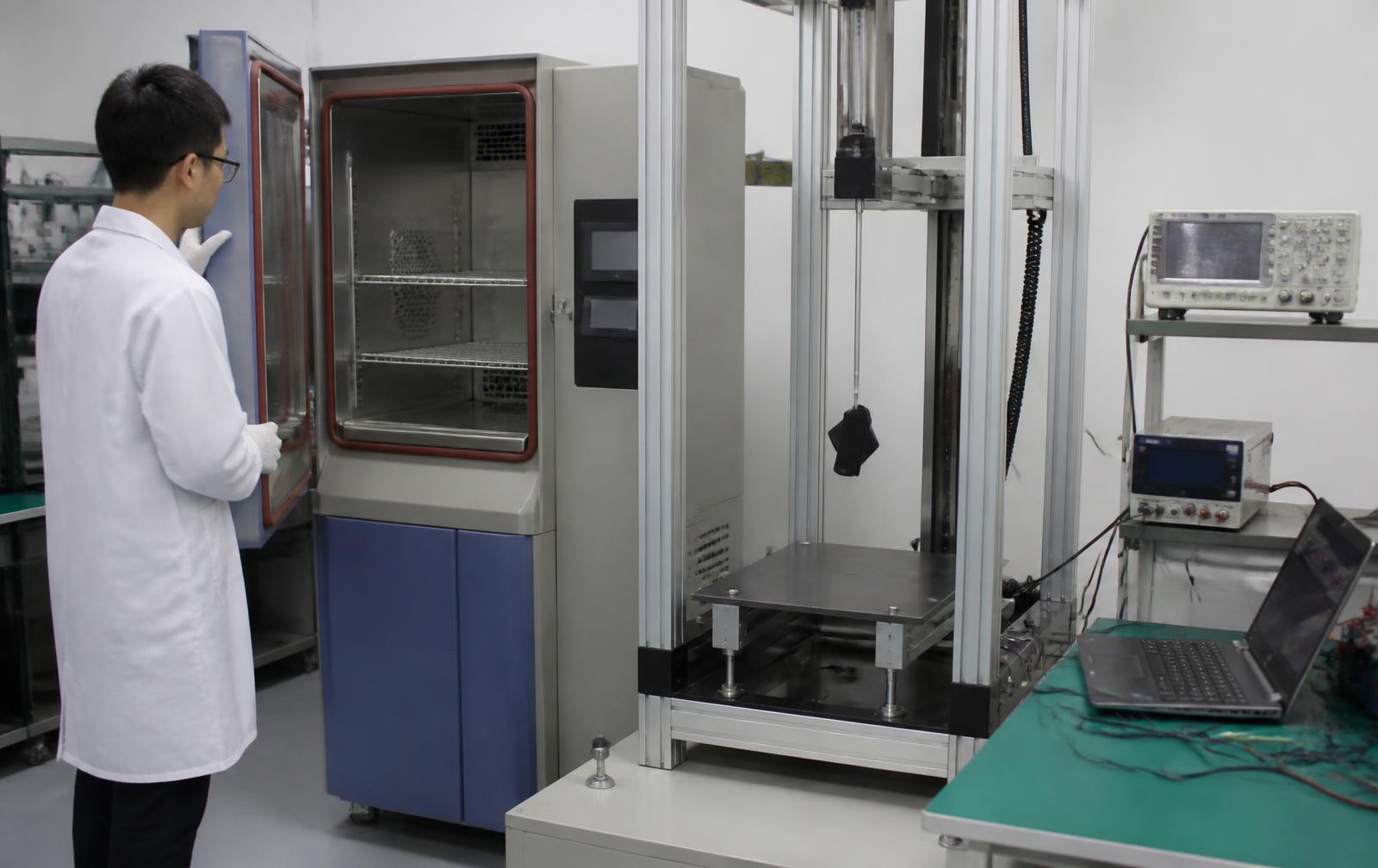
- Physics does not care about your roadmap. Heat, vibration, moisture, drop and battery behavior all show up in testing whether or not the schedule has room for them.
- Certifications come before sales. In the US, most digital electronic devices need FCC equipment authorization (certification or a Supplier's Declaration of Conformity) before they are marketed (47 CFR 15.101). To sell products covered by CE marking rules in the EU, the manufacturer has to complete the conformity assessment, keep technical documentation, sign an EU declaration of conformity and affix the CE mark (European Commission). Your sales channel may ask for more safety testing on top.
- There is no hotfix for a physical defect. Once units ship, a safety problem can turn into a recall. The US Consumer Product Safety Commission publishes those recalls and their remedies, which range from refunds to repairs and replacements (CPSC Recalls). Firmware can be updated. A cracked housing or an undersized trace cannot.
How a hardware product gets made, step by step
The names vary between companies, but most physical products move through the same gates. Each gate exists because fixing a problem gets more expensive the later you find it.
Stage | The question it answers | Typical output |
|---|---|---|
Research | Who is this for, and what must it do? | Requirements, market and competitor notes |
Concept | What could it look like and how could it work? | Sketches, concept options, early risk list |
CAD and engineering | Does the design fit, and can it be built? | 3D CAD, schematics, PCB layout, early BOM |
Looks-like and works-like prototypes | Does it look right, and does the core function work? | Appearance models and functional rigs, often separate |
EVT (engineering validation test) | Do the parts and circuits work as designed? | Component and subsystem validation |
DVT (design validation test) | Does the full design pass reliability and compliance tests with production-intent parts? | System validation, pre-compliance and certification testing |
PVT (production validation test) | Can the factory build it repeatedly and at scale? | Line validation, yield data, final regulatory testing |
DFM and DFA | Is it cheap and easy to make and assemble? | Design changes that cut cost, steps and failure points |
Tooling | Can we make parts at volume? | Molds, fixtures, test jigs |
Pilot run | Does the real line produce good units? | First small batch, process fixes |
Production | Can we ship on time at the target cost and quality? | Mass production and ongoing quality control |
The EVT, DVT and PVT definitions above follow common industry explainers from OnLogic, Instrumental and Formlabs, which also describes splitting early prototypes into looks-like and works-like models. In practice DFM and DFA are not a single step; good teams apply them from CAD onward.
We go deeper on several of these gates elsewhere: stages of product testing (EVT, DVT, PVT), board bring-up, design freeze, DFM and soft vs hard tooling. For the full sequence with timelines, see the product development process.
Where software skills transfer
More of hardware development is software than most people expect. If you write code today, these are the closest bridges:
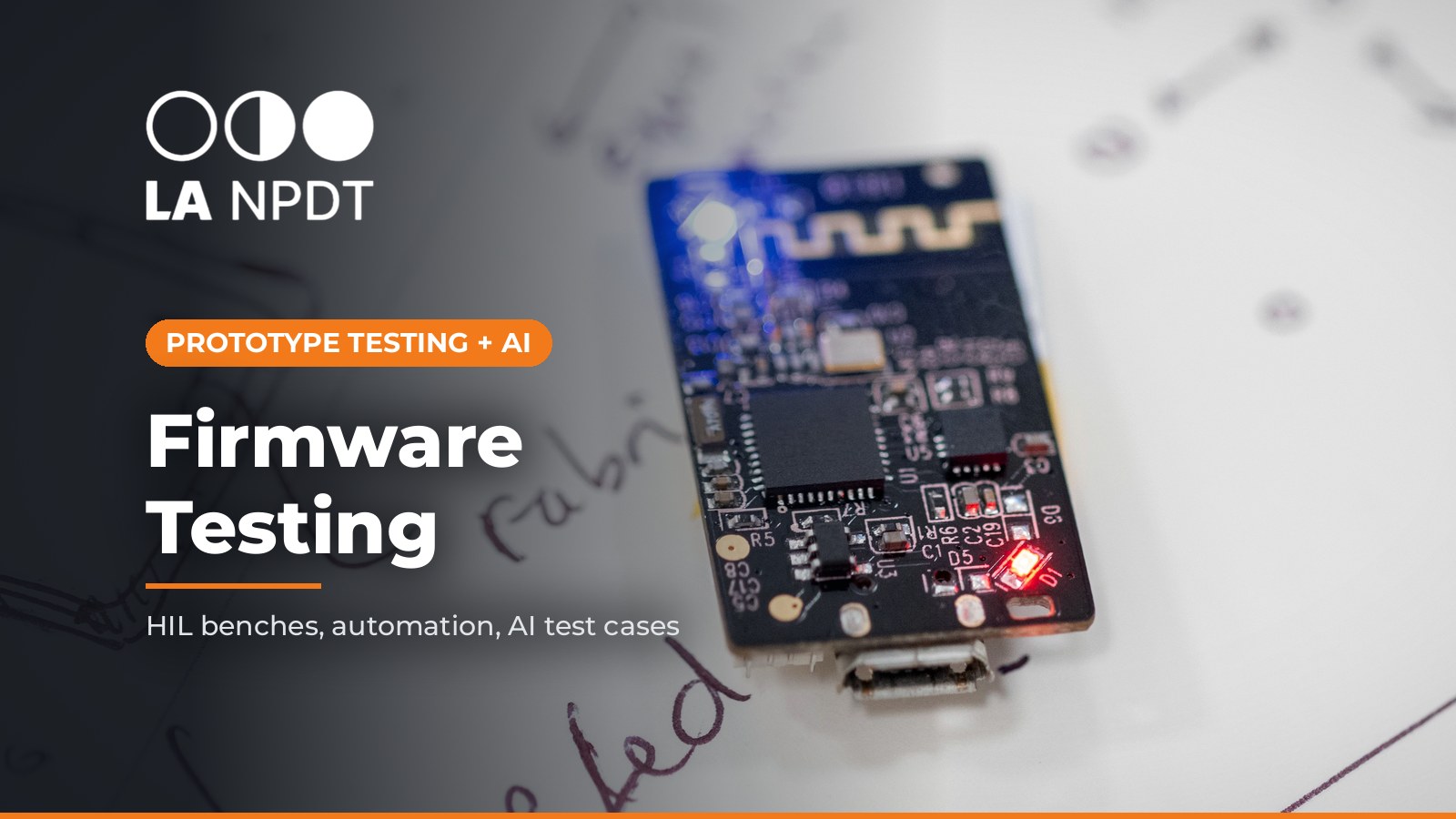
- Firmware and embedded systems: the code that runs on the microcontroller. Version control, code review and unit tests all apply; see our guide to firmware testing.
- Test automation: scripts that drive test fixtures, log results and flag failures on every unit.
- Simulation: thermal, structural and circuit simulation is code plus physics, and it catches problems before parts are cut.
- Factory and test data: yield tracking, traceability and dashboards that tell you which station is failing.
- AI and computer vision: inspection cameras and anomaly detection on the line.
What to add: patience with lead times, respect for the people on the shop floor, and the habit of asking "how will we test this?" before "how will we build this?"
AI in hardware development and manufacturing
AI is real in hardware, but it is earlier than in software.
- In design: in Digital Engineering's survey published Dec 31, 2025, engineers picked CAD and AI assistants as the area most likely to benefit from AI (56%), followed by AI-supported simulation (48%). Only 12% said they use generative design, down from 16% the year before (Digital Engineering, Engineering Technology Outlook 2026).
- In machine building: a June 2025 report published by Microsoft with IoT Analytics, based on a survey of 120 machine builders, found predictive maintenance was the most adopted AI use case (65%), and 48% of respondents were prioritizing machine vision to automate inspection (Microsoft Signals Report, Jun 2025). It is a small, vendor-published survey, so read it as a direction, not a census.
- At scale: in Deloitte's 2025 Smart Manufacturing survey of large manufacturers, 29% said they use AI or machine learning at the facility or network level (Deloitte, May 1, 2025).
What AI cannot do yet, in our experience: feel whether a snap fit is too stiff, sign off a compliance report, notice that a supplier quietly changed a resin, or replace a drop test on real units. We cover the tools that do help, and where they fall short, in AI tools for hardware prototyping in 2026 and AI CAD agents for prototypes.
The US sectors that need builders
Several US priorities point the same way: more things designed and made here.
- Chips and electronics: the CHIPS and Science Act provided $52.7 billion for the domestic semiconductor industry, including $39 billion in manufacturing incentives administered by the Commerce Department (NIST CHIPS). TSMC said in March 2025 it intends to expand its US investment to $165 billion (TSMC, Mar 4, 2025), and Micron announced plans in June 2025 to invest about $200 billion in US memory manufacturing and R&D (Micron, Jun 12, 2025). Big fabs also show how slow atoms are: Intel's first Ohio fab, first expected to produce chips in 2025, is now targeting operations in 2030 or 2031 (CNBC, Oct 21, 2026).
- Defense: the Pentagon's Drone Dominance program aims to acquire more than 200,000 small drones by 2027, and officials said the Gauntlet 2 drones were sourced from a supply chain more closely tied to the American industrial base (DefenseScoop, Sep 18, 2026). Anduril is building Arsenal-1, a hyperscale manufacturing facility in Columbus, Ohio (Anduril). Hadrian raised $260 million in July 2025 to build automated factories for aerospace and defense parts, run on its own production software (TechCrunch, Jul 17, 2025; Hadrian).
- Everyday products and reshoring: the Reshoring Initiative counted about 247,000 announced reshoring and foreign direct investment jobs in 2025, with computer and electronic products ranked second by industry (Reshoring Initiative 2025 Annual Report). The picture is uneven: Kearney's 2026 Reshoring Index stayed negative at -91, mostly because imports of computer and electronics products and apparel kept rising (Kearney, Apr 29, 2026). For context, the US accounted for 15.1% of global manufacturing value added in 2023, against 31.4% for China (NIST, 2025 Annual Report on the U.S. Manufacturing Economy).
- Tariffs on metals: under Proclamation 11021 (signed Apr 2, 2026), Section 232 duties of 50% apply to the full customs value of most imported steel and aluminum articles from Apr 6, 2026, with 25% on many derivative products and lower rates for some categories and for the UK. Proclamation 11032 (signed Jun 1, 2026) moved agricultural equipment and some residential HVAC into the reduced 15% derivative rate (Federal Register, 91 FR 18201; 91 FR 34085). Rates change often, so check the current schedule before you price a BOM. Chips have their own Section 232 rules; see our Section 232 semiconductor tariff guide. Our reshoring guide covers when bringing production home pays off.
There is also a people gap. Deloitte and The Manufacturing Institute estimated in 2024 that US manufacturing could need as many as 3.8 million new workers by 2033, and up to 1.9 million of those jobs could go unfilled (Deloitte and The Manufacturing Institute, Apr 3, 2024).
Why hardware is easier to defend, and what is hard about it
What makes it defensible: a competitor cannot prompt their way to your supplier relationships, test fixtures, yield data, certifications or trained team. Each one takes time and real money to build.
What makes it hard:
- More money up front, before revenue: prototypes, tooling, certification and first inventory.
- Longer cycles: weeks per prototype revision and months to tooling, versus hours per software release.
- Inventory: you pay for parts and units before customers pay you.
- Field risk: defects can mean returns or recalls, not a patch.
- Turning capital into capacity: Defense News reported that even with record funding, the hard part for defense startups is turning venture money into real manufacturing capacity (Defense News).
The teams that do well treat the hard parts as a plan, not a surprise: they budget for at least one more prototype round than they hope to need, and they choose a manufacturing path early.
Where newcomers can improve the field
A lot of factories still run on spreadsheets and tribal knowledge. Deloitte's 2025 survey found that human capital, material management and maintenance were among the least mature areas, and advanced production scheduling was a top investment priority (Deloitte, May 1, 2025). That leaves room for software-minded people in:
- Test automation and end-of-line test stations
- Traceability and quality data
- Production scheduling and supplier visibility
- Vision inspection and predictive maintenance
- Better tools for design reviews and change control
Your first 5 steps into hardware development
- Build one small, real thing. A dev board, a sensor and an enclosure teach more about tolerances, power and firmware than any course.
- Learn to read the full stack: a schematic, a BOM, a drawing and a test report.
- Visit a shop or a contract manufacturer. Watch how parts are fixtured, tested and packed.
- Write the test plan before the design is done. Decide how each requirement will be proven at EVT, DVT and PVT.
- Get an outside review early. A short review of the concept, risks and manufacturing path costs far less than a wasted prototype round.
How LA NPDT helps software teams build hardware
LA New Product Development Team is a full-service product development company covering product design, engineering, prototyping, testing and manufacturing support, with 1,000+ product development projects since 2015 (Read more on Lanpdt).
Software founders often come to us with working code and a rough idea of the device. We help turn that into a buildable design, working prototypes and a path to a factory.
You can see the stages on our process map and typical budgets on the product development cost page.
Moving from software into hardware?
If you are at the idea or early CAD stage, our Stage 1 Review/Analysis + Plan is a fixed $800 single payment and lays out the path from concept to prototype.
Frequently asked questions
Can a software engineer become a hardware engineer?
Yes. Firmware, embedded systems, test automation, simulation and factory data all build on software skills. The new parts to learn are electronics basics, mechanical tolerances, certification rules and how factories work.
What are EVT, DVT and PVT?
They are the three main validation gates before mass production. EVT checks that the parts and circuits work, DVT checks that the full production-intent design passes reliability and compliance testing, and PVT checks that the factory can build it repeatedly at scale.
Why is hardware harder to copy than software?
Because a hardware product depends on suppliers, tooling, test fixtures, yield data, certifications and trained people. Code can now be rebuilt quickly with AI tools; those physical assets take years.
How is AI used in hardware development today?
Mostly in CAD and AI assistants, simulation, machine vision inspection and predictive maintenance. Adoption is still early, and engineers still own physical testing and compliance sign-off.
What certifications does an electronic product need before sale?
It depends on the product and the market. In the US, most digital electronic devices need FCC equipment authorization before they are marketed. In the EU, products covered by CE rules need a conformity assessment, a signed declaration of conformity and the CE mark.
What is the first step to turn a software idea into a hardware product?
Write down what the device must do and how each requirement will be tested, then get a short engineering review of the concept, risks and manufacturing path before paying for prototypes.
Filed under:Education
Services related to this guide
- Product design servicesIndustrial design and CAD taken all the way to manufacturable files.
- Rapid prototypingWorking prototypes in days, from 3D printing to vacuum casting.
- Electronic design servicesSchematic, PCB layout, firmware and bring-up, through to production handoff.
- Product development examplesReal projects we designed, prototyped and shipped.